



Trae Dorn - Writer/Witch/Weirdo.
@traegorn.bsky.social
Nerdy Genderqueer Wiccan Witch in WI. I make (geeky/witchy) podcasts, and write (queer) novels and comics.
Ryan Kopf sued me twice.
They/Them.
All my stuff: www.trhonline.com
nerdandtie.com / bsfreewitchcraft.com / patreon.com/traegorn
Ryan Kopf sued me twice.
They/Them.
All my stuff: www.trhonline.com
nerdandtie.com / bsfreewitchcraft.com / patreon.com/traegorn
Pinned
Who wants a book trailer for The Mia Graves Saga? Because here's a book trailer for the Mia Graves Saga! #urbanfantasy #miagraves #booksky #books #queerbooks
"You only made a video about that so someone would watch it!" #internetculture #tiktok
February 18, 2026 at 10:06 PM
"You only made a video about that so someone would watch it!" #internetculture #tiktok
Reposted by Trae Dorn - Writer/Witch/Weirdo.
"The demand for endless growth and parabolic improvement, forever, stretching into the unseen horizon, is pure and unsustainable insanity, insisted upon by fools"
- Woman who gets mad at herself if she goes slower on the treadmill than she did yesterday
- Woman who gets mad at herself if she goes slower on the treadmill than she did yesterday
February 18, 2026 at 4:38 AM
"The demand for endless growth and parabolic improvement, forever, stretching into the unseen horizon, is pure and unsustainable insanity, insisted upon by fools"
- Woman who gets mad at herself if she goes slower on the treadmill than she did yesterday
- Woman who gets mad at herself if she goes slower on the treadmill than she did yesterday
So Paul Castle must have said something again, because his fans have decided to "defend" him #paulcastle #pengrooms #booksky #booktokdrama #indieauthor
February 17, 2026 at 9:50 PM
So Paul Castle must have said something again, because his fans have decided to "defend" him #paulcastle #pengrooms #booksky #booktokdrama #indieauthor
I need to talk about @illusbal.bsky.social and my comic Peregrine Lake more. #webcomic #comic #author
You can literally read it for free at www.peregrine-lake.com
Or, like, pre-order the book: a.co/d/03bFo2y3
You can literally read it for free at www.peregrine-lake.com
Or, like, pre-order the book: a.co/d/03bFo2y3
February 17, 2026 at 5:15 PM
I need to talk about @illusbal.bsky.social and my comic Peregrine Lake more. #webcomic #comic #author
You can literally read it for free at www.peregrine-lake.com
Or, like, pre-order the book: a.co/d/03bFo2y3
You can literally read it for free at www.peregrine-lake.com
Or, like, pre-order the book: a.co/d/03bFo2y3

Just a quick review of the movie #ColdStorage -- cuz I'm still doing these apparently #moviereview
February 16, 2026 at 6:07 PM
Just a quick review of the movie #ColdStorage -- cuz I'm still doing these apparently #moviereview
Just got this ad on a site.
Free *what* motherfucker? FREE *WHAT*!? 😆
Free *what* motherfucker? FREE *WHAT*!? 😆

February 15, 2026 at 6:18 PM
Just got this ad on a site.
Free *what* motherfucker? FREE *WHAT*!? 😆
Free *what* motherfucker? FREE *WHAT*!? 😆

Reposted by Trae Dorn - Writer/Witch/Weirdo.


With Discord's new policies, it's tome to move your online community to an independent forum #discord #internetcockroach
February 10, 2026 at 4:30 PM
With Discord's new policies, it's tome to move your online community to an independent forum #discord #internetcockroach

ohthankthegods... tumblr's back online
February 7, 2026 at 1:33 AM
ohthankthegods... tumblr's back online
February 6, 2026 at 10:36 PM
Le Sigh.
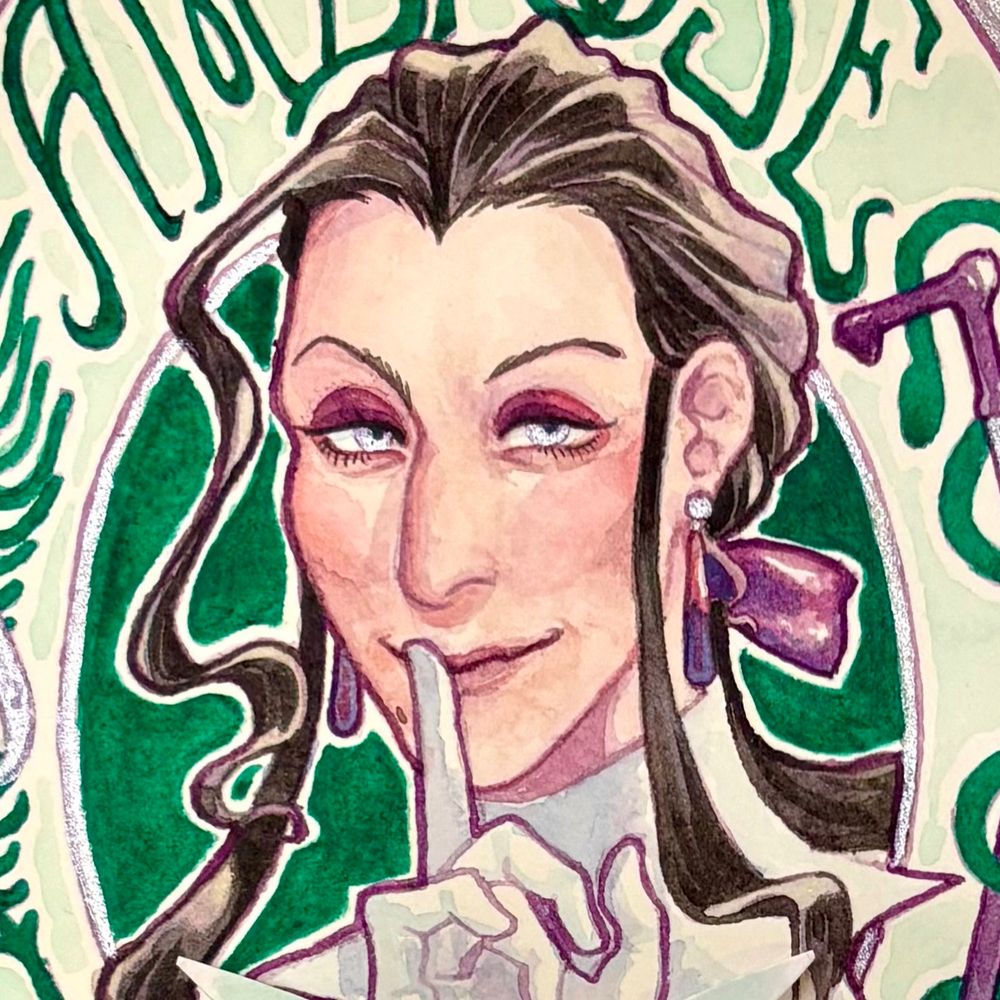
my mom, holding the proof copy of Peregrine Lake Vol 1 that she just finished reading: It would be so cool if you published these!
me: ¿¿¿we are???
me: ¿¿¿we are???
February 6, 2026 at 5:13 PM
Le Sigh.

Reposted by Trae Dorn - Writer/Witch/Weirdo.
Guest Announcement: Tappy Toe Claws! www.nobrandcon.org/p/2026/02/gu...

Guest Announcement: Tappy Toe Claws
We're excited to announce another guest for No Brand Con 2026: Tappy Toe Claws!
Tappy Toe Claws is a cosplayer, twitch streamer, podcaster and self-proclaimed, sometimes publicly-endorsed, internet f...
www.nobrandcon.org
February 5, 2026 at 7:57 PM
Guest Announcement: Tappy Toe Claws! www.nobrandcon.org/p/2026/02/gu...
We shouldn't moralize the quality of Neil Gaiman's work because he's an awful person. It's dangerous. #neilgaiman #booksky #books #americangods
February 5, 2026 at 6:39 PM
We shouldn't moralize the quality of Neil Gaiman's work because he's an awful person. It's dangerous. #neilgaiman #booksky #books #americangods
Occasionally I go to ClearSky to check who's blocked me.
And any time there's a new name, it's someone I've had zero interactions with, and I have no idea why they've done it.
Like, I'm not offended - block who you wanna block - but I am DEEPLY curious as to why they did it. 😆
And any time there's a new name, it's someone I've had zero interactions with, and I have no idea why they've done it.
Like, I'm not offended - block who you wanna block - but I am DEEPLY curious as to why they did it. 😆
February 5, 2026 at 4:20 AM
Occasionally I go to ClearSky to check who's blocked me.
And any time there's a new name, it's someone I've had zero interactions with, and I have no idea why they've done it.
Like, I'm not offended - block who you wanna block - but I am DEEPLY curious as to why they did it. 😆
And any time there's a new name, it's someone I've had zero interactions with, and I have no idea why they've done it.
Like, I'm not offended - block who you wanna block - but I am DEEPLY curious as to why they did it. 😆
February 4, 2026 at 9:09 PM
One day someone will notice.

February 4, 2026 at 8:22 PM
One day someone will notice.
Reposted by Trae Dorn - Writer/Witch/Weirdo.
This is one of my big pet peeves of American jurisprudence. Take the 9th Amendment seriously!
We do not, for example, have a 1st Amendment right to privacy, we have a 9th Amendment right to privacy.
We do not, for example, have a 1st Amendment right to privacy, we have a 9th Amendment right to privacy.

the ninth amendment has always felt to me like a sleeping giant of constitutional interpretation
February 4, 2026 at 4:30 AM
This is one of my big pet peeves of American jurisprudence. Take the 9th Amendment seriously!
We do not, for example, have a 1st Amendment right to privacy, we have a 9th Amendment right to privacy.
We do not, for example, have a 1st Amendment right to privacy, we have a 9th Amendment right to privacy.
February 3, 2026 at 11:05 PM
Reposted by Trae Dorn - Writer/Witch/Weirdo.

Wild that Neil Gaiman shared that long substack about how he’s secretly innocent because I read through it a week ago after someone was spamming it in my replies and it’s the type of shit that’s only convincing if you think “she described it as grooming, not sexual assault” is a persuasive argument

February 2, 2026 at 10:50 PM
Wild that Neil Gaiman shared that long substack about how he’s secretly innocent because I read through it a week ago after someone was spamming it in my replies and it’s the type of shit that’s only convincing if you think “she described it as grooming, not sexual assault” is a persuasive argument