



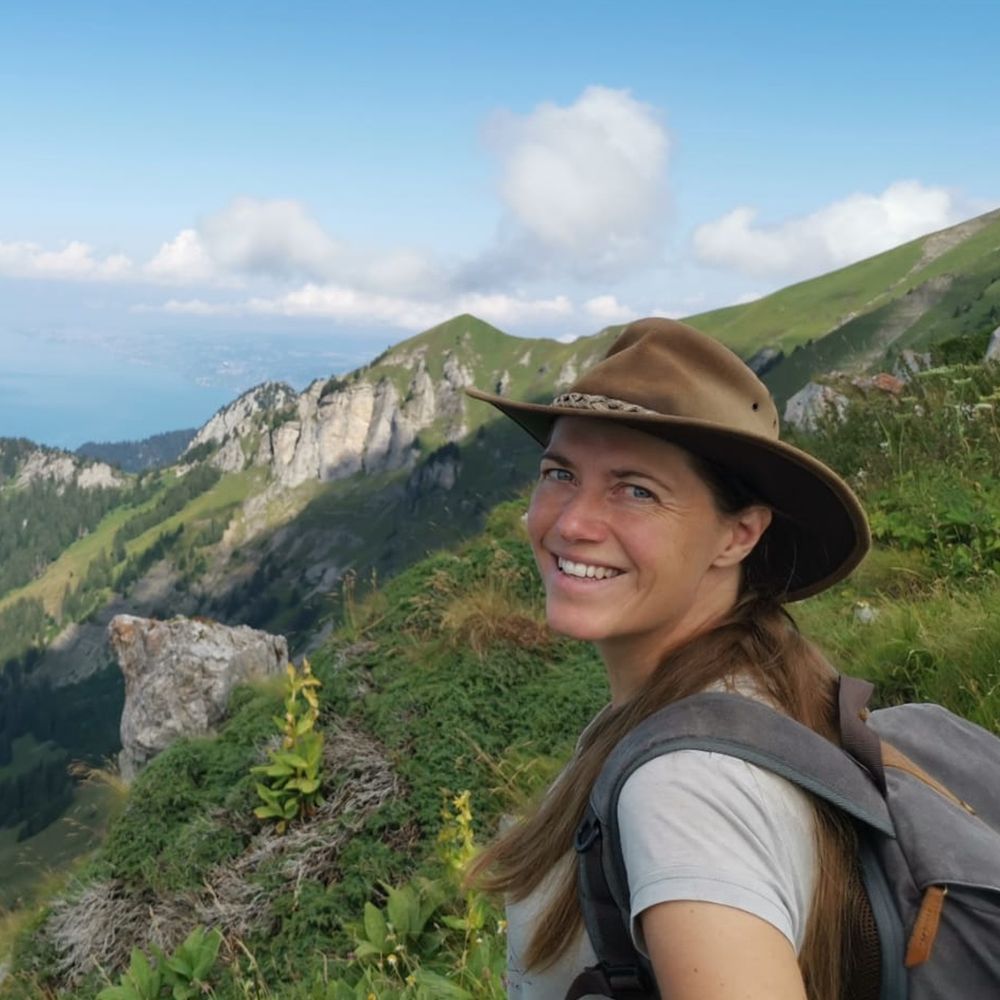
Sophie Mowles
@sophiemowles.bsky.social
Co-director of Merops – organising field courses for universities in the south of France.
Field Ecology🌳 Behavioual Ecology 🦗 Animal acoustics 🦇
Photography 📷 Environmentally conscious 💚 Vegan (sometimes difficult in rural France) 🏳️🌈 🏳️⚧️
Field Ecology🌳 Behavioual Ecology 🦗 Animal acoustics 🦇
Photography 📷 Environmentally conscious 💚 Vegan (sometimes difficult in rural France) 🏳️🌈 🏳️⚧️
Pinned
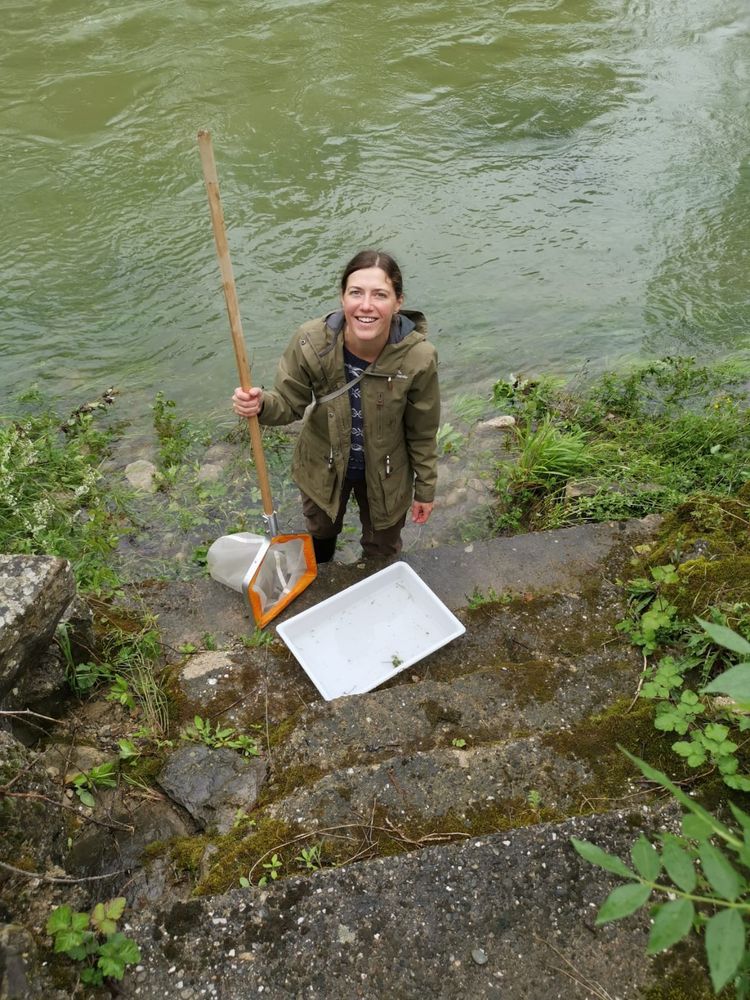
Hello world!
I’m Sophie Mowles, a former academic from the UK. I now live in the south of France and run a company organising field courses for university groups.
I’m passionate about inclusivity and believe that everyone should be able to benefit from a great field course experience.
I’m Sophie Mowles, a former academic from the UK. I now live in the south of France and run a company organising field courses for university groups.
I’m passionate about inclusivity and believe that everyone should be able to benefit from a great field course experience.
Some very busy Beavers nearby! Discovered their new worksite on a recent walk with Oscar the cat (our honorary dog...).


December 9, 2025 at 9:43 AM
Some very busy Beavers nearby! Discovered their new worksite on a recent walk with Oscar the cat (our honorary dog...).
Pretty much ready for the #BES2025 @britishecologicalsociety.org annual meeting at Edinburgh. Poster printed and uploaded, and now getting familiar with the Whova portal. Hoping Edinburgh's going to look as magical as in the website picture! www.britishecologicalsociety.org/content/bes-...

BES Annual Meeting 2025 - British Ecological Society
Join ecologists from across the world from 15-18 December at Europe's largest event dedicated to ecology.
www.britishecologicalsociety.org
December 4, 2025 at 1:19 PM
Pretty much ready for the #BES2025 @britishecologicalsociety.org annual meeting at Edinburgh. Poster printed and uploaded, and now getting familiar with the Whova portal. Hoping Edinburgh's going to look as magical as in the website picture! www.britishecologicalsociety.org/content/bes-...
Was so excited to find the caterpillars to match the butterflies. The Scarce Swallowtail caterpillar was actually found by students tree-beating for insects. We carefully put it back where it came from for it to continue its development.
This year we’ve been very lucky with our #Lepidoptera. We’ve seen Common Swallowtail caterpillars feeding on the fennel, and even a Scarce Swallowtail caterpillar in a plum tree. Both #butterflies have been nectaring on the lavender. Really great to see both the adults and larvae of these species!


November 17, 2025 at 9:39 AM
Was so excited to find the caterpillars to match the butterflies. The Scarce Swallowtail caterpillar was actually found by students tree-beating for insects. We carefully put it back where it came from for it to continue its development.
Really happy that these students got some good recordings. Multiple behaviours (feeding buzzes, social calls), and multiple species at the same time. Plus they leave having learned how to take measurements from spectrograms. Autumn field courses are great for this - lots of bat activity!
While on their field course with us, MSc students from the University of St Andrews carried out independent research projects. One group studied bat behaviour using ultrasonic recorders. Here, they’ve managed to record a Soprano Pipistrelle and a European Free-tailed Bat.
@mikemwebster.bsky.social
@mikemwebster.bsky.social
November 6, 2025 at 8:17 AM
Really happy that these students got some good recordings. Multiple behaviours (feeding buzzes, social calls), and multiple species at the same time. Plus they leave having learned how to take measurements from spectrograms. Autumn field courses are great for this - lots of bat activity!
Encountered a really nice Cirl Bunting singing on my morning walk the other day. Not the most complex song, but hearing this trill always makes me happy, knowing its scarcity back in the UK. Duly recorded on Merlin @cornellbirds.bsky.social & added to @inaturalist.bsky.social #acoustic #ornithology
October 31, 2025 at 10:59 AM
Encountered a really nice Cirl Bunting singing on my morning walk the other day. Not the most complex song, but hearing this trill always makes me happy, knowing its scarcity back in the UK. Duly recorded on Merlin @cornellbirds.bsky.social & added to @inaturalist.bsky.social #acoustic #ornithology
Among our camera trap footage from this autumn was this male Wild Boar, near a newly dug wallow adjacent to the river. We’ve not seen this behaviour before, but think he may be scent-marking with his metacarpal glands. Wild Boar continue to fascinate! @chantallyons.bsky.social
October 29, 2025 at 8:18 AM
Among our camera trap footage from this autumn was this male Wild Boar, near a newly dug wallow adjacent to the river. We’ve not seen this behaviour before, but think he may be scent-marking with his metacarpal glands. Wild Boar continue to fascinate! @chantallyons.bsky.social
A really special moment thermal-imaging with our last group of the season. There were 18 of us on the bridge and everyone was absolutely silent. We could even hear the Otters crunching their prey below as everyone watched on the tablet that the thermal camera streams to.
We were very lucky to have a nocturnal encounter with Otters during our field course with MSc students and staff from the University of St Andrews. Stood on a bridge near the field centre at night, we used our thermal camera and watched silently as this trio approached us. @mikemwebster.bsky.social
October 29, 2025 at 7:56 AM
A really special moment thermal-imaging with our last group of the season. There were 18 of us on the bridge and everyone was absolutely silent. We could even hear the Otters crunching their prey below as everyone watched on the tablet that the thermal camera streams to.
We always hope the students gain a lot of ecological knowledge in our field courses... However, we suspect a highlight might have been the "splitting an apple in half with your bare hands" technique showcased at our picnic in the Causse Méjean. Here I am presenting the apple in the customary way…

October 22, 2025 at 8:08 AM
We always hope the students gain a lot of ecological knowledge in our field courses... However, we suspect a highlight might have been the "splitting an apple in half with your bare hands" technique showcased at our picnic in the Causse Méjean. Here I am presenting the apple in the customary way…
A fantastic (and very sunny!) week in autumn. Beautiful colours in the trees, great wildlife, and enthusiastic students. A really lovely finale to this year's autumn field season.
We’d like to say a huge thank you to all the staff and students from the University of St Andrews for making your field course so special. Thanks for your enthusiasm about local ecology, and for designing fascinating field projects. Good luck with the rest of your studies! @mikemwebster.bsky.social

October 22, 2025 at 7:54 AM
A fantastic (and very sunny!) week in autumn. Beautiful colours in the trees, great wildlife, and enthusiastic students. A really lovely finale to this year's autumn field season.
Reposted by Sophie Mowles
For our second excursion with MSc students from the University of St Andrews, we headed to the #Camargue. First exploring the freshwater reedbeds to the north, then the southern salt marshes where we saw plenty of waders and Greater Flamingos. @mikemwebster.bsky.social #birds #ornithology #ecology


October 21, 2025 at 9:18 AM
For our second excursion with MSc students from the University of St Andrews, we headed to the #Camargue. First exploring the freshwater reedbeds to the north, then the southern salt marshes where we saw plenty of waders and Greater Flamingos. @mikemwebster.bsky.social #birds #ornithology #ecology
Reposted by Sophie Mowles
We spent a day with staff and MSc students from the University of St Andrews to explore the rugged uplands of the Causse Méjean. We had extraordinary views of the gorges from above the clouds, found some fantastic plants, and were lucky enough to spot 3 species of vulture. @mikemwebster.bsky.social


October 19, 2025 at 9:35 AM
We spent a day with staff and MSc students from the University of St Andrews to explore the rugged uplands of the Causse Méjean. We had extraordinary views of the gorges from above the clouds, found some fantastic plants, and were lucky enough to spot 3 species of vulture. @mikemwebster.bsky.social
Reposted by Sophie Mowles
Day 2 with MSc students from the University of St Andrews, and they are trialling their field projects. Microphones have been placed to record meadow soundscapes, audio has been reviewed from bat detectors, and model butterflies have been deployed to investigate predation. @mikemwebster.bsky.social


October 15, 2025 at 9:23 AM
Day 2 with MSc students from the University of St Andrews, and they are trialling their field projects. Microphones have been placed to record meadow soundscapes, audio has been reviewed from bat detectors, and model butterflies have been deployed to investigate predation. @mikemwebster.bsky.social
Reposted by Sophie Mowles
A great first day with our visitors from the University of St Andrews. We’ve had a drone demonstration and toured the local habitats while looking for inspiration for field projects. Highlights included plenty of invertebrates, and some amazing #fungi. @mikemwebster.bsky.social


October 13, 2025 at 1:28 PM
A great first day with our visitors from the University of St Andrews. We’ve had a drone demonstration and toured the local habitats while looking for inspiration for field projects. Highlights included plenty of invertebrates, and some amazing #fungi. @mikemwebster.bsky.social
Reposted by Sophie Mowles
Here at Merops, both Fabrizio and Sophie are keen photographers and are also happy to help those wanting to improve heir skills. We both use Canon EOS, so if any staff or students bring a compatible Canon body and want to trial a macro or telephoto lens in the field, then we can help!


October 8, 2025 at 7:43 AM
Here at Merops, both Fabrizio and Sophie are keen photographers and are also happy to help those wanting to improve heir skills. We both use Canon EOS, so if any staff or students bring a compatible Canon body and want to trial a macro or telephoto lens in the field, then we can help!
Reposted by Sophie Mowles
More #macro from Merops! We’ve done some #moth trapping, and while the moths are warming up prior to release, they remain still enough for some close-up #photography. Here are some of their portraits. L: 𝘔𝘦𝘨𝘢𝘯𝘦𝘱𝘩𝘳𝘪𝘢 𝘣𝘪𝘮𝘢𝘤𝘶𝘭𝘰𝘴𝘢, Double-spot Brocade and R: 𝘖𝘯𝘤𝘰𝘤𝘦𝘳𝘢 𝘴𝘦𝘮𝘪𝘳𝘶𝘣𝘦𝘭𝘭𝘢, Rosy-striped Knot-Horn


October 7, 2025 at 8:56 AM
More #macro from Merops! We’ve done some #moth trapping, and while the moths are warming up prior to release, they remain still enough for some close-up #photography. Here are some of their portraits. L: 𝘔𝘦𝘨𝘢𝘯𝘦𝘱𝘩𝘳𝘪𝘢 𝘣𝘪𝘮𝘢𝘤𝘶𝘭𝘰𝘴𝘢, Double-spot Brocade and R: 𝘖𝘯𝘤𝘰𝘤𝘦𝘳𝘢 𝘴𝘦𝘮𝘪𝘳𝘶𝘣𝘦𝘭𝘭𝘢, Rosy-striped Knot-Horn
Reposted by Sophie Mowles
On our field courses, we often tend to share photographs of the larger animals around, however, some of the smaller organisms are just as stunning. With #macro-photography we can really see the details of the invertebrates present here in the autumn. #macro #photography #entomology #arachnid #insect


October 6, 2025 at 8:23 AM
On our field courses, we often tend to share photographs of the larger animals around, however, some of the smaller organisms are just as stunning. With #macro-photography we can really see the details of the invertebrates present here in the autumn. #macro #photography #entomology #arachnid #insect
Reposted by Sophie Mowles
It’s autumn and some great #mushrooms are appearing in the woodlands here. We’ve found several clusters of Sulphur Tuft (𝘏𝘺𝘱𝘩𝘰𝘭𝘰𝘮𝘢 𝘧𝘢𝘴𝘤𝘪𝘤𝘶𝘭𝘢𝘳𝘦), which happens to fluoresce under UV light. Cue a nocturnal trip into the woods with a UV torch to see its amazing green glow. #mycology #fungi #mushroom


October 3, 2025 at 7:14 AM
It’s autumn and some great #mushrooms are appearing in the woodlands here. We’ve found several clusters of Sulphur Tuft (𝘏𝘺𝘱𝘩𝘰𝘭𝘰𝘮𝘢 𝘧𝘢𝘴𝘤𝘪𝘤𝘶𝘭𝘢𝘳𝘦), which happens to fluoresce under UV light. Cue a nocturnal trip into the woods with a UV torch to see its amazing green glow. #mycology #fungi #mushroom
Reposted by Sophie Mowles
We’d like to say a big thank you to our visitors from @sheffielduni.bsky.social. We had a great time hosting you all this week, and were impressed by everybody’s enthusiasm and dedication to their field projects. We wish you the best of luck with the rest of your studies! @luketdunning.bsky.social

September 17, 2025 at 8:22 AM
We’d like to say a big thank you to our visitors from @sheffielduni.bsky.social. We had a great time hosting you all this week, and were impressed by everybody’s enthusiasm and dedication to their field projects. We wish you the best of luck with the rest of your studies! @luketdunning.bsky.social
Reposted by Sophie Mowles
While here with us, students from @sheffielduni.bsky.social learned various survey skills, including #moth trapping. After identifying their findings in the morning, they were back out in the meadows and woods gathering data for their independent ecology projects. @luketdunning.bsky.social


September 16, 2025 at 6:54 AM
While here with us, students from @sheffielduni.bsky.social learned various survey skills, including #moth trapping. After identifying their findings in the morning, they were back out in the meadows and woods gathering data for their independent ecology projects. @luketdunning.bsky.social
Reposted by Sophie Mowles
With staff and students from @sheffielduni.bsky.social, we explored the Causse Méjean, an upland area famous for its rugged habitats, surrounded by deep gorges frequented by #vultures. We were lucky enough to spot Bearded Vultures, plus shrikes and some great #lepidoptera. @luketdunning.bsky.social


September 15, 2025 at 9:29 AM
With staff and students from @sheffielduni.bsky.social, we explored the Causse Méjean, an upland area famous for its rugged habitats, surrounded by deep gorges frequented by #vultures. We were lucky enough to spot Bearded Vultures, plus shrikes and some great #lepidoptera. @luketdunning.bsky.social
Reposted by Sophie Mowles
Yesterday we took our visitors from @sheffielduni.bsky.social to explore the Camargue wetlands. We observed the differences between the freshwater areas to the north and the brackish areas to the south. Highlights of our day were Western Swamp Hens and Moorish Geckos. @luketdunning.bsky.social


September 11, 2025 at 8:05 AM
Yesterday we took our visitors from @sheffielduni.bsky.social to explore the Camargue wetlands. We observed the differences between the freshwater areas to the north and the brackish areas to the south. Highlights of our day were Western Swamp Hens and Moorish Geckos. @luketdunning.bsky.social
Reposted by Sophie Mowles
Day two with @sheffielduni.bsky.social, and we’ve been exploring field techniques. Kick sampling, GPS use, plus plant and terrestrial invertebrate surveys. Highlights were more mantises, Saddle-backed Bush Crickets, plus spotting crayfish in the river. @luketdunning.bsky.social


September 10, 2025 at 5:53 AM
Day two with @sheffielduni.bsky.social, and we’ve been exploring field techniques. Kick sampling, GPS use, plus plant and terrestrial invertebrate surveys. Highlights were more mantises, Saddle-backed Bush Crickets, plus spotting crayfish in the river. @luketdunning.bsky.social
Reposted by Sophie Mowles
A great first afternoon with our visitors from the University of Sheffield. We explored the local habitats, seeing some fantastic autum wildlife including the Mediterranean Conehead Mantis. Other highlights were large Orthoptera, butterflies, and Colchicum autumn Crocuses. @luketdunning.bsky.social


September 9, 2025 at 5:57 AM
A great first afternoon with our visitors from the University of Sheffield. We explored the local habitats, seeing some fantastic autum wildlife including the Mediterranean Conehead Mantis. Other highlights were large Orthoptera, butterflies, and Colchicum autumn Crocuses. @luketdunning.bsky.social
Absolutely. A really important paper here. Fieldwork 𝘀𝗵𝗼𝘂𝗹𝗱 be safe and inclusive for everyone.
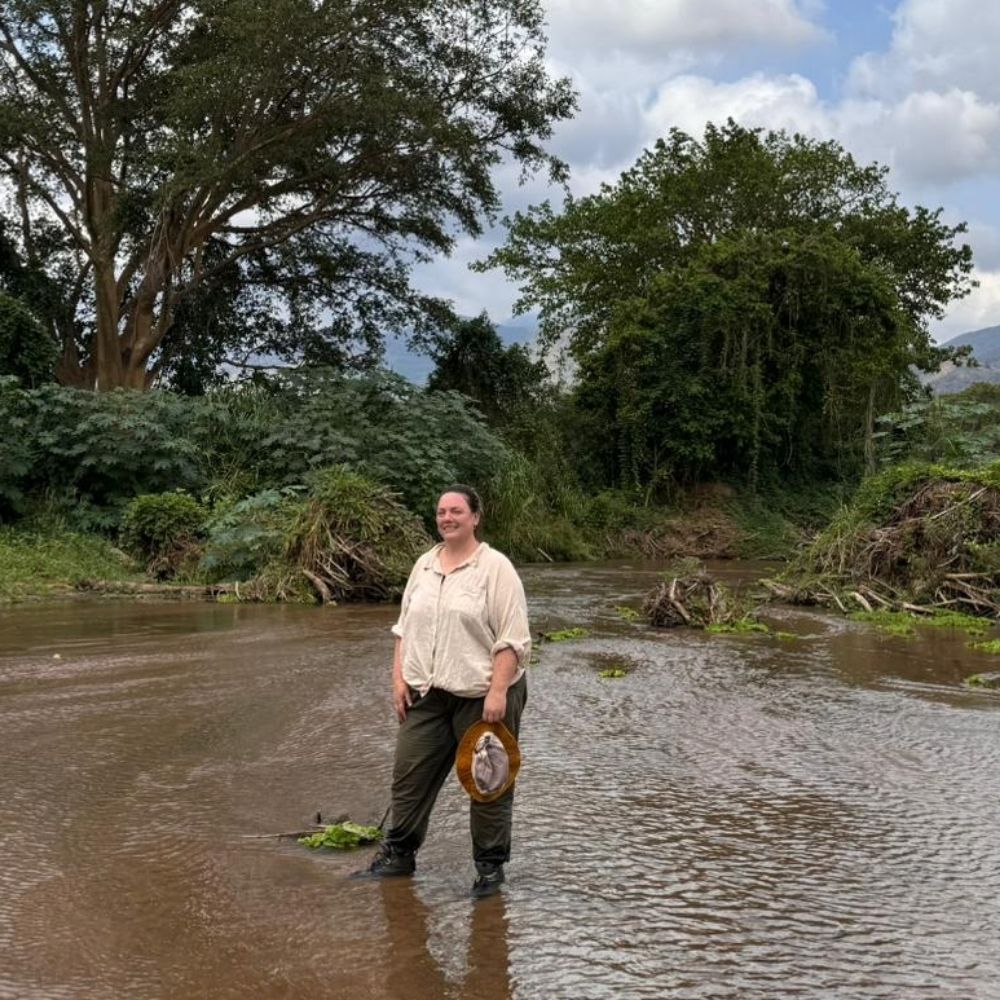
🏞️𝐅𝐢𝐞𝐥𝐝𝐰𝐨𝐫𝐤 𝐬𝐡𝐨𝐮𝐥𝐝 𝐛𝐞 𝐬𝐚𝐟𝐞 𝐚𝐧𝐝 𝐢𝐧𝐜𝐥𝐮𝐬𝐢𝐯𝐞 𝐟𝐨𝐫 𝐞𝐯𝐞𝐫𝐲𝐨𝐧𝐞, 𝐛𝐮𝐭 𝐚𝐫𝐞 𝐮𝐧𝐢𝐯𝐞𝐫𝐬𝐢𝐭𝐢𝐞𝐬 𝐝𝐨𝐢𝐧𝐠 𝐞𝐧𝐨𝐮𝐠𝐡?
Our new study looked at fieldwork policies and risk assessments from 90 UK universities offering environmental science courses.
The results are eye-opening:
besjournals.onlinelibrary.wiley.com/doi/10.1002/...
Our new study looked at fieldwork policies and risk assessments from 90 UK universities offering environmental science courses.
The results are eye-opening:
besjournals.onlinelibrary.wiley.com/doi/10.1002/...

Improving university policies and risk assessment to support inclusive fieldwork in environmental sciences
Among 90 UK higher education institutions, there was patchy mention of protected and other identity-related characteristics in fieldwork policy and risk assessments, and very limited consideration of....
besjournals.onlinelibrary.wiley.com
September 4, 2025 at 9:48 AM
Absolutely. A really important paper here. Fieldwork 𝘀𝗵𝗼𝘂𝗹𝗱 be safe and inclusive for everyone.
Nice to see our company logo sitting on the wires just outside the house!
In autumn, many migratory birds that have bred here in France prepare to undertake their journey back to Africa, and it's a great time to spot them as they aggregate. Among them is the European Bee-eater (𝘔𝘦𝘳𝘰𝘱𝘴 𝘢𝘱𝘪𝘢𝘴𝘵𝘦𝘳), known for its diet of hymenopterans, which this individual is fuelling up on.

September 1, 2025 at 8:42 AM
Nice to see our company logo sitting on the wires just outside the house!