




PeerJ
@peerj.bsky.social
Open Access publisher of academic journals PeerJ & PeerJ Computer Science, a Taylor & Francis Company.
Reposted by PeerJ

🐄 Holy (sea)cow! Published in the journal @peerj.bsky.social, an international team of paleontologists, including #NHMLA's Curator of Marine Mammals, Dr. Jorge Velez-Juarbe, identified the new species unearthed from an ancient dugong graveyard in Qatar: go.nhm.org/dugong
![Fossils of Salwasiren qatarensis, a newly described 21-million-year-old ancient sea cow species found in Al Maszhabiya [AL mahz-HA-bee-yah], a fossil site in southwestern Qatar. ARC.2023.23.008, Qatar Museums, Doha, State of Qatar. Photo by James Di Loreto, Smithsonian.](https://cdn.bsky.app/img/feed_thumbnail/plain/did:plc:v4dpm7icom54y366e76xy3mj/bafkreig3ebbljsmbfpk3nmmzmjz4veall3tul4cgbuaqmpsxlswe5przie@jpeg)
January 24, 2026 at 12:21 AM
🐄 Holy (sea)cow! Published in the journal @peerj.bsky.social, an international team of paleontologists, including #NHMLA's Curator of Marine Mammals, Dr. Jorge Velez-Juarbe, identified the new species unearthed from an ancient dugong graveyard in Qatar: go.nhm.org/dugong
Reposted by PeerJ

"Prolonged growth and extended subadult development in the Tyrannosaurus rex species complex revealed by expanded histological sampling and statistical modeling" - new in @peerj.bsky.social, by @histo-holly.bsky.social et al.
January 14, 2026 at 2:05 PM
"Prolonged growth and extended subadult development in the Tyrannosaurus rex species complex revealed by expanded histological sampling and statistical modeling" - new in @peerj.bsky.social, by @histo-holly.bsky.social et al.
Inside the Life of Tyrannosaurus rex: PeerJ spoke with Dr. Holly Woodward Ballard on Growth and Development
youtu.be/zlmeMc7P4gI
Read the full article peerj.com/articles/204...
#PeerJ #Trex #Paleontology
youtu.be/zlmeMc7P4gI
Read the full article peerj.com/articles/204...
#PeerJ #Trex #Paleontology

Inside the Life of Tyrannosaurus rex: PeerJ & Dr. Holly Woodward Ballard on Growth and Development
YouTube video by PeerJ
youtu.be
January 15, 2026 at 9:19 AM
Inside the Life of Tyrannosaurus rex: PeerJ spoke with Dr. Holly Woodward Ballard on Growth and Development
youtu.be/zlmeMc7P4gI
Read the full article peerj.com/articles/204...
#PeerJ #Trex #Paleontology
youtu.be/zlmeMc7P4gI
Read the full article peerj.com/articles/204...
#PeerJ #Trex #Paleontology
PeerJ has a brand-new website design! Easier to navigate and more user-friendly, it’s the ultimate destination for discovering groundbreaking research across disciplines.
Dive into the future of academic publishing today: peerj.com/journals/pee...
#OpenAccess #PeerJ #Science
Dive into the future of academic publishing today: peerj.com/journals/pee...
#OpenAccess #PeerJ #Science

January 9, 2026 at 3:33 PM
PeerJ has a brand-new website design! Easier to navigate and more user-friendly, it’s the ultimate destination for discovering groundbreaking research across disciplines.
Dive into the future of academic publishing today: peerj.com/journals/pee...
#OpenAccess #PeerJ #Science
Dive into the future of academic publishing today: peerj.com/journals/pee...
#OpenAccess #PeerJ #Science
Exciting news - PeerJ Computer Science has unveiled a new design.
Explore cutting-edge research with an improved, user-friendly design that makes finding and reading articles easier than ever. Check it out today!
peerj.com/journals/com...
#OpenAccess #ComputerScience #PeerJ
Explore cutting-edge research with an improved, user-friendly design that makes finding and reading articles easier than ever. Check it out today!
peerj.com/journals/com...
#OpenAccess #ComputerScience #PeerJ

January 9, 2026 at 3:30 PM
Exciting news - PeerJ Computer Science has unveiled a new design.
Explore cutting-edge research with an improved, user-friendly design that makes finding and reading articles easier than ever. Check it out today!
peerj.com/journals/com...
#OpenAccess #ComputerScience #PeerJ
Explore cutting-edge research with an improved, user-friendly design that makes finding and reading articles easier than ever. Check it out today!
peerj.com/journals/com...
#OpenAccess #ComputerScience #PeerJ
Reposted by PeerJ
A highly diverse Pennsylvanian #tetrapod ichnoassemblage from the Semily Formation (Krkonoše Piedmont Basin, Czechia)
peerj.com/articles/204...
@peerj.bsky.social #ichnology #paleontology #paleobiology
peerj.com/articles/204...
@peerj.bsky.social #ichnology #paleontology #paleobiology

January 9, 2026 at 8:17 AM
A highly diverse Pennsylvanian #tetrapod ichnoassemblage from the Semily Formation (Krkonoše Piedmont Basin, Czechia)
peerj.com/articles/204...
@peerj.bsky.social #ichnology #paleontology #paleobiology
peerj.com/articles/204...
@peerj.bsky.social #ichnology #paleontology #paleobiology
Reposted by PeerJ
Fantastic assemblage of vertebrate trace fossils from the latest Carboniferous (~300-310 mya) showing abundant & diverse amphibians & reptiles (amniotes) in alluvial & lakeside environments, Czechia, reported in @peerj.bsky.social. 🧪🐾 #FossilFriday (ht @djbirddanerd.bsky.social)
A highly diverse Pennsylvanian #tetrapod ichnoassemblage from the Semily Formation (Krkonoše Piedmont Basin, Czechia)
peerj.com/articles/204...
@peerj.bsky.social #ichnology #paleontology #paleobiology
peerj.com/articles/204...
@peerj.bsky.social #ichnology #paleontology #paleobiology
January 9, 2026 at 12:50 PM
Fantastic assemblage of vertebrate trace fossils from the latest Carboniferous (~300-310 mya) showing abundant & diverse amphibians & reptiles (amniotes) in alluvial & lakeside environments, Czechia, reported in @peerj.bsky.social. 🧪🐾 #FossilFriday (ht @djbirddanerd.bsky.social)
PeerJ has expanded its scope to reflect our commitment to putting researchers first and amplifying research impact.
Submit to PeerJ today: peerj.com #ScholComm #PeerReview
Submit to PeerJ today: peerj.com #ScholComm #PeerReview

January 9, 2026 at 12:58 PM
PeerJ has expanded its scope to reflect our commitment to putting researchers first and amplifying research impact.
Submit to PeerJ today: peerj.com #ScholComm #PeerReview
Submit to PeerJ today: peerj.com #ScholComm #PeerReview
PeerJ’s flagship journal now welcomes Chemistry, Materials Science, and select Engineering, alongside Biology, Medicine, and Environmental Sciences. Explore the refreshed site + submit: peerj.com #OpenAccess #OpenResearch
January 7, 2026 at 2:03 PM
PeerJ’s flagship journal now welcomes Chemistry, Materials Science, and select Engineering, alongside Biology, Medicine, and Environmental Sciences. Explore the refreshed site + submit: peerj.com #OpenAccess #OpenResearch
Reposted by PeerJ

PeerJ Computer Science
How are topics born? Understanding the research dynamics preceding the emergence of new areas
peerj.com/articles/cs-...
@peerj.bsky.social
How are topics born? Understanding the research dynamics preceding the emergence of new areas
peerj.com/articles/cs-...
@peerj.bsky.social
December 15, 2025 at 10:13 AM
PeerJ Computer Science
How are topics born? Understanding the research dynamics preceding the emergence of new areas
peerj.com/articles/cs-...
@peerj.bsky.social
How are topics born? Understanding the research dynamics preceding the emergence of new areas
peerj.com/articles/cs-...
@peerj.bsky.social
Fossils of a new sea cow species, Salwasiren qatarensis, were found in 21M-year-old rocks in SW Qatar, alongside extinct sharks, dolphins & turtles. Researchers at Smithsonian & Qatar Museums named it in PeerJ today.
Read more: peerj.com/articles/200...
Image credit: Alex Boersma
Read more: peerj.com/articles/200...
Image credit: Alex Boersma

December 11, 2025 at 2:47 PM
Fossils of a new sea cow species, Salwasiren qatarensis, were found in 21M-year-old rocks in SW Qatar, alongside extinct sharks, dolphins & turtles. Researchers at Smithsonian & Qatar Museums named it in PeerJ today.
Read more: peerj.com/articles/200...
Image credit: Alex Boersma
Read more: peerj.com/articles/200...
Image credit: Alex Boersma
Reposted by PeerJ
Resistance of cervical vertebrae in response to muscular stresses in pterosaurs: implications for foraging habits and skeletal pneumatization @peerj.bsky.social

Resistance of cervical vertebrae in response to muscular stresses in pterosaurs: implications for foraging habits and skeletal pneumatization
The necks of pterosaurs were flexible and provided mobility for a relatively long skull. The varied morphologies and levels of pneumatization of their cervical vertebrae reflected differences in biomechanical behavior. Here, we examined the structural resistance of the cervical vertebrae to infer the most advantageous movements during the foraging behaviors of two pterodactyloid pterosaurs. We also examined the relationship between vertebral resistance and the presence of pneumatic foramina on the bone cortex. For this purpose, we analyzed three-dimensional models of the cervical vertebrae of Anhanguera piscator and Azhdarcho lancicollis, which are hypothesized to be aquatic and terrestrial predators, respectively, and employed Finite Element Analysis (FEA) to assess and quantify the stresses experienced by the vertebrae due to the performance of six different movement scenarios. We observed that the shorter vertebrae at the ends of the neck of both species favored the proliferation of larger stresses in these regions, especially in the posterior cervicals of Anhanguera piscator and in the atlas-axis of Azhdarcho lancicollis, and that their taller neural arches aided in absorbing stress. Larger stresses at the ends of the neck are consistent with the interior trabecular reinforcement of the atlas-axis and posterior cervical vertebrae, suggesting a link between biomechanical behavior and the level of pneumatization. Additionally, mechanical requirements may have also influenced the presence, size, and number of pneumatic foramina on the vertebral cortex, as evidenced by the large lateral foramen in Anhanguera piscator and the smaller and more numerous ones bordering the neural canal in Azhdarcho lancicollis. Our inferences corroborate the differences in foraging strategies hypothesized for anhanguerids and azhdarchids. The absorption of stresses resulting from ventral pitching of the head and neck indicates that the cervical vertebrae were well-adapted for making rapid movements during predatory hunting. However, variations in the height of the neural spine indicate different mechanical behaviors between these species when raising the skull and neck, which could be faster in Anhanguera piscator while more vigorous in Azhdarcho lancicollis.
dlvr.it
November 25, 2025 at 10:15 AM
Resistance of cervical vertebrae in response to muscular stresses in pterosaurs: implications for foraging habits and skeletal pneumatization @peerj.bsky.social
Reposted by PeerJ
Reposted by PeerJ

Our recent paper in @peerj.bsky.social shows the gradual improvement in bear habitat connectivity due to land use change in the #Carpathians. We found also that up to 40% of the current corridor was stable since mid-19th century.
peerj.com/articles/202...
peerj.com/articles/202...
Impact of historical land use change on the brown bear habitat connectivity in the Polish Carpathians
Background Europe has undergone dynamic land use changes in recent decades that have affected the extent, quality, and connectivity of large carnivore habitats. However, the current distribution of la...
peerj.com
November 11, 2025 at 9:39 AM
Our recent paper in @peerj.bsky.social shows the gradual improvement in bear habitat connectivity due to land use change in the #Carpathians. We found also that up to 40% of the current corridor was stable since mid-19th century.
peerj.com/articles/202...
peerj.com/articles/202...
Reposted by PeerJ

🎉 New publication! 🐻
I’m happy to announce our new paper on land use change and #BrownBear habitat connectivity in the Polish Carpathians recently published in #PeerJ! 📚
@peerj.bsky.social ⬇️
@jagiellonskiuni.bsky.social
➡️https://peerj.com/articles/20295/
#UJ #Carpathians #Science #Research
I’m happy to announce our new paper on land use change and #BrownBear habitat connectivity in the Polish Carpathians recently published in #PeerJ! 📚
@peerj.bsky.social ⬇️
@jagiellonskiuni.bsky.social
➡️https://peerj.com/articles/20295/
#UJ #Carpathians #Science #Research
November 12, 2025 at 10:54 AM
🎉 New publication! 🐻
I’m happy to announce our new paper on land use change and #BrownBear habitat connectivity in the Polish Carpathians recently published in #PeerJ! 📚
@peerj.bsky.social ⬇️
@jagiellonskiuni.bsky.social
➡️https://peerj.com/articles/20295/
#UJ #Carpathians #Science #Research
I’m happy to announce our new paper on land use change and #BrownBear habitat connectivity in the Polish Carpathians recently published in #PeerJ! 📚
@peerj.bsky.social ⬇️
@jagiellonskiuni.bsky.social
➡️https://peerj.com/articles/20295/
#UJ #Carpathians #Science #Research
Reposted by PeerJ
Decoding the bare necessities of decapod crustacean nomenclature through the ages
peerj.com/articles/203...
@peerj.bsky.social
peerj.com/articles/203...
@peerj.bsky.social


November 12, 2025 at 12:21 PM
Decoding the bare necessities of decapod crustacean nomenclature through the ages
peerj.com/articles/203...
@peerj.bsky.social
peerj.com/articles/203...
@peerj.bsky.social
Reposted by PeerJ
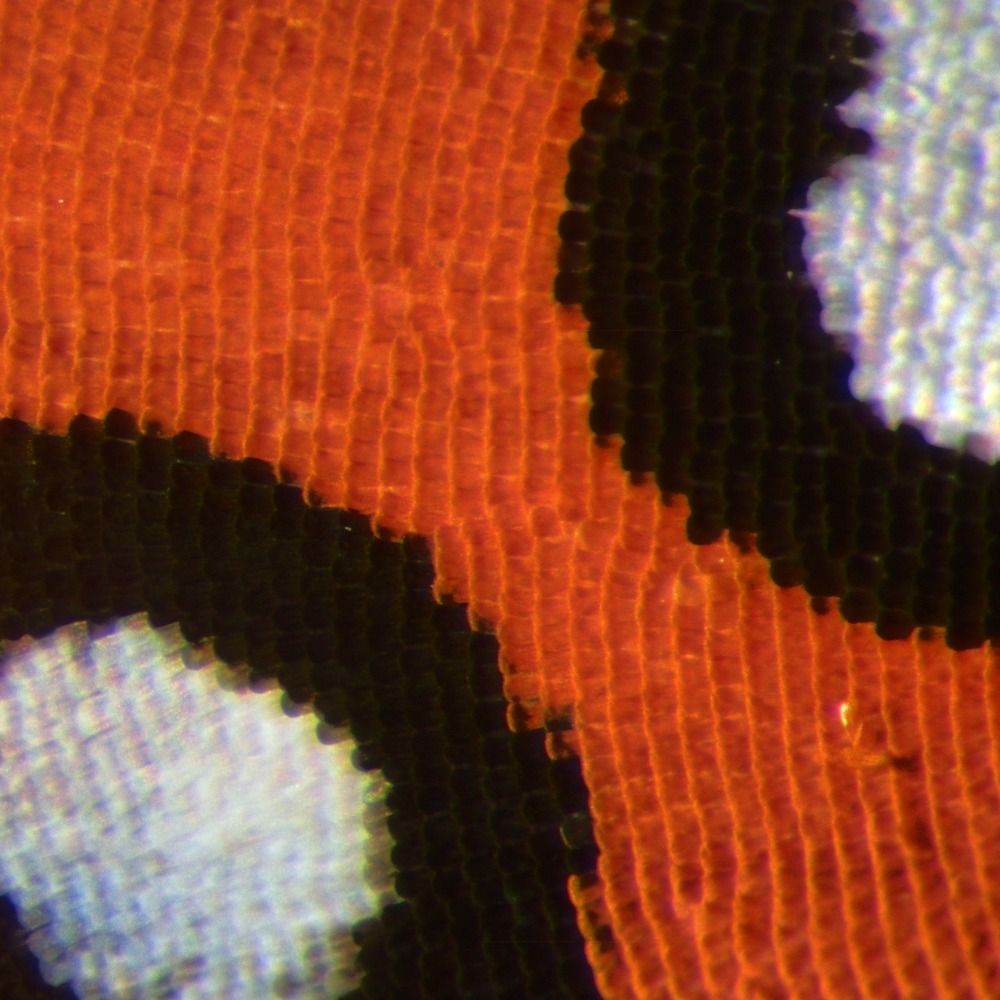
It's out, Minos transgenesis in the pantry moth by
@donyaniyaz.bsky.social
@lucalivraghi.bsky.social
High efficient, glowing eye and silk gland markers
peerj.com/articles/202...
@peerj.bsky.social
@donyaniyaz.bsky.social
@lucalivraghi.bsky.social
High efficient, glowing eye and silk gland markers
peerj.com/articles/202...
@peerj.bsky.social
November 12, 2025 at 2:40 PM
It's out, Minos transgenesis in the pantry moth by
@donyaniyaz.bsky.social
@lucalivraghi.bsky.social
High efficient, glowing eye and silk gland markers
peerj.com/articles/202...
@peerj.bsky.social
@donyaniyaz.bsky.social
@lucalivraghi.bsky.social
High efficient, glowing eye and silk gland markers
peerj.com/articles/202...
@peerj.bsky.social
PeerJ Congratulates Abdelkader Haddag - winner of the Early Career Researcher best presentation award & Carlos Cano - winner of the Best poster award at IWANN 2025
Learn more about their research on the PeerJ blog peerj.com/blog/post/11...
Learn more about their research on the PeerJ blog peerj.com/blog/post/11...


November 10, 2025 at 5:05 PM
PeerJ Congratulates Abdelkader Haddag - winner of the Early Career Researcher best presentation award & Carlos Cano - winner of the Best poster award at IWANN 2025
Learn more about their research on the PeerJ blog peerj.com/blog/post/11...
Learn more about their research on the PeerJ blog peerj.com/blog/post/11...
Reposted by PeerJ
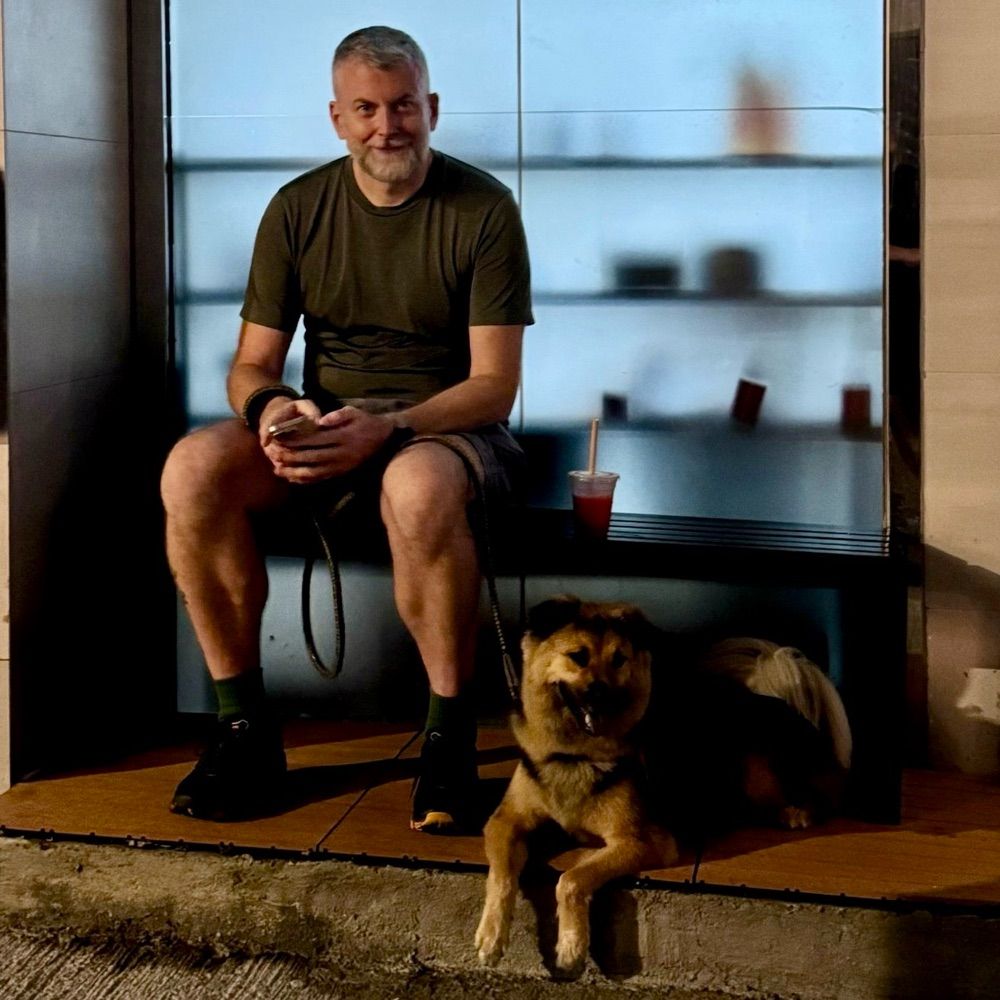
2025.
Effectiveness of seed dispersal by foxes in areas with different human disturbances in southern Chile
peerj.com/articles/201...
@peerj.bsky.social
Effectiveness of seed dispersal by foxes in areas with different human disturbances in southern Chile
peerj.com/articles/201...
@peerj.bsky.social
Effectiveness of seed dispersal by foxes in areas with different human disturbances in southern Chile
Frugivorous mammals play a key role in forest regeneration by dispersing seeds yet their effectiveness can vary with landscape disturbance and the native or exotic status of the plant species. In the ...
peerj.com
October 23, 2025 at 1:06 AM
2025.
Effectiveness of seed dispersal by foxes in areas with different human disturbances in southern Chile
peerj.com/articles/201...
@peerj.bsky.social
Effectiveness of seed dispersal by foxes in areas with different human disturbances in southern Chile
peerj.com/articles/201...
@peerj.bsky.social
Reposted by PeerJ

🚨 New paper published in @peerj.bsky.social by Profs Tim Ryan, Joan Richtsmeier, and colleagues! Give it a look! 🔗 peerj.com/articles/201...

October 23, 2025 at 2:46 PM
🚨 New paper published in @peerj.bsky.social by Profs Tim Ryan, Joan Richtsmeier, and colleagues! Give it a look! 🔗 peerj.com/articles/201...
Reposted by PeerJ

DNA metabarcoding of mites from small soil samples: limited agreement with morphological identifications but improved results from long-read sequencing
peerj.com/articles/202...
@peerj.bsky.social
peerj.com/articles/202...
@peerj.bsky.social
DNA metabarcoding of mites from small soil samples: limited agreement with morphological identifications but improved results from long-read sequencing
The characterization of soil mite (Acari) communities traditionally follows morphological identifications of specimens extracted from soil, which is a highly laborious and time-consuming process. Meta...
peerj.com
October 22, 2025 at 9:42 AM
DNA metabarcoding of mites from small soil samples: limited agreement with morphological identifications but improved results from long-read sequencing
peerj.com/articles/202...
@peerj.bsky.social
peerj.com/articles/202...
@peerj.bsky.social
Reposted by PeerJ
Easier said than done: unexpected hurdles to preparing ∼1,000 cranial CT scans for data collection from an online digital repository
peerj.com/articles/201...
#ComputedTomography #DigitalRepositories #Anthropology #Paleontology #Bioinformatics @peerj.bsky.social
peerj.com/articles/201...
#ComputedTomography #DigitalRepositories #Anthropology #Paleontology #Bioinformatics @peerj.bsky.social
Easier said than done: unexpected hurdles to preparing ∼1,000 cranial CT scans for data collection from an online digital repository
Background As science becomes more open and accessible, researchers are increasingly encouraged—and sometimes required—to share their digital data on public repositories. While this promotes transpare...
doi.org
October 20, 2025 at 8:38 AM
Easier said than done: unexpected hurdles to preparing ∼1,000 cranial CT scans for data collection from an online digital repository
peerj.com/articles/201...
#ComputedTomography #DigitalRepositories #Anthropology #Paleontology #Bioinformatics @peerj.bsky.social
peerj.com/articles/201...
#ComputedTomography #DigitalRepositories #Anthropology #Paleontology #Bioinformatics @peerj.bsky.social
Reposted by PeerJ
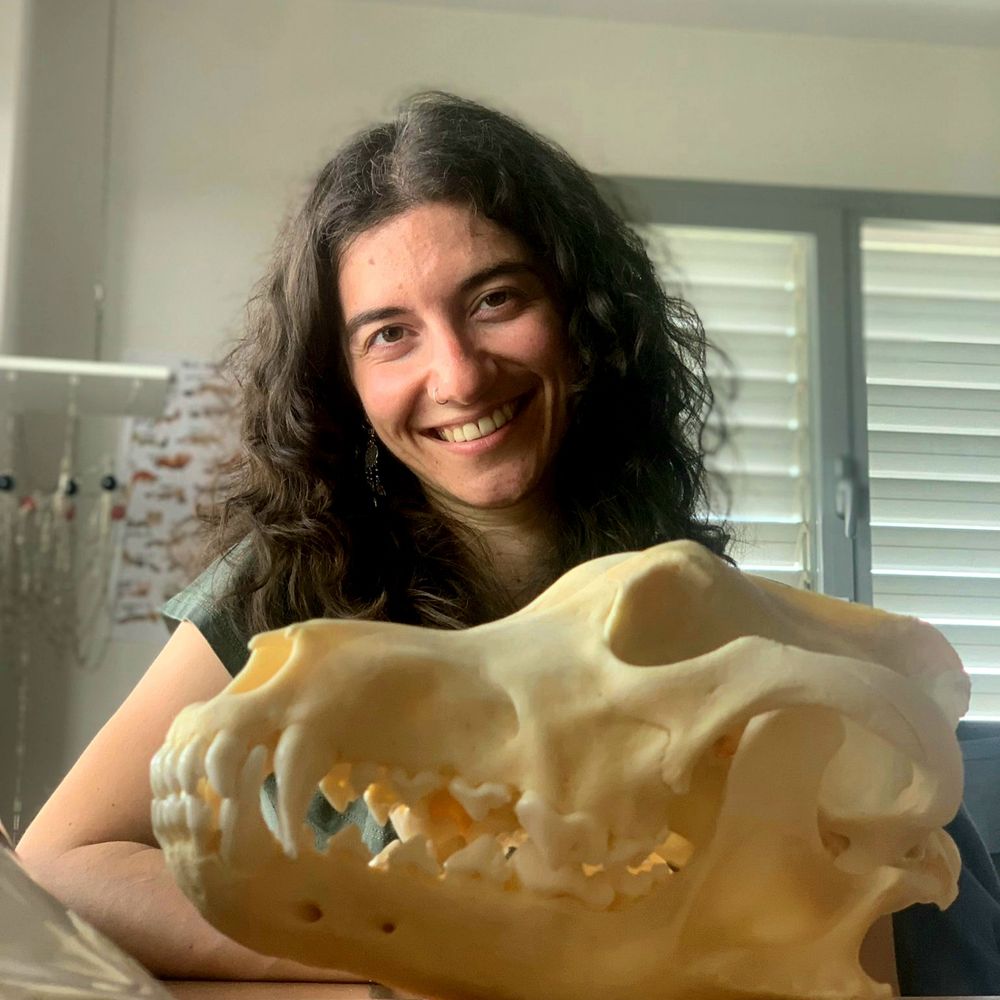
📢New paper out!
💩🧬🧪Our Methods article about how preservation methods impact on genotyping success of feces is now published in @peerj.bsky.social peerj.com/articles/20154 #Biodiversity #ConservationBiology #Ecology #Genetics #Genomics #wolfConsevol
@consevol.bsky.social @ebdonana.bsky.social
🧵👇
💩🧬🧪Our Methods article about how preservation methods impact on genotyping success of feces is now published in @peerj.bsky.social peerj.com/articles/20154 #Biodiversity #ConservationBiology #Ecology #Genetics #Genomics #wolfConsevol
@consevol.bsky.social @ebdonana.bsky.social
🧵👇
Impact of two field preservation methods on genotyping success of feces
Non-invasive samples, such as feces, remain an important source of DNA for genetic analyses in molecular ecology and conservation genetics, especially when working with elusive or endangered species. ...
peerj.com
October 9, 2025 at 5:01 PM
📢New paper out!
💩🧬🧪Our Methods article about how preservation methods impact on genotyping success of feces is now published in @peerj.bsky.social peerj.com/articles/20154 #Biodiversity #ConservationBiology #Ecology #Genetics #Genomics #wolfConsevol
@consevol.bsky.social @ebdonana.bsky.social
🧵👇
💩🧬🧪Our Methods article about how preservation methods impact on genotyping success of feces is now published in @peerj.bsky.social peerj.com/articles/20154 #Biodiversity #ConservationBiology #Ecology #Genetics #Genomics #wolfConsevol
@consevol.bsky.social @ebdonana.bsky.social
🧵👇
Reposted by PeerJ

Gonzalo Salazar has his first thesis paper published today in @peerj.bsky.social
We show that the invert taxa of the very understudied salares of the Lithium Triangle differ greatly between sites and will need assessing individually
peerj.com/articles/20042
We show that the invert taxa of the very understudied salares of the Lithium Triangle differ greatly between sites and will need assessing individually
peerj.com/articles/20042
Identifying knowledge gaps in hypersaline systems supporting the global electrical transition: invertebrate community structure in salars from the lithium triangle
Following decades of mining impacts, South America’s hypersaline wetlands (salars) face increasing threats from lithium extraction to support global decarbonisation. Although globally important, salar...
peerj.com
October 13, 2025 at 9:23 AM
Gonzalo Salazar has his first thesis paper published today in @peerj.bsky.social
We show that the invert taxa of the very understudied salares of the Lithium Triangle differ greatly between sites and will need assessing individually
peerj.com/articles/20042
We show that the invert taxa of the very understudied salares of the Lithium Triangle differ greatly between sites and will need assessing individually
peerj.com/articles/20042
Reposted by PeerJ

PeerJ
Aquatic sloths (Thalassocnus) from the Miocene of Chile and the evolution of marine mammal herbivory in the Pacific Ocean @peerj.bsky.social peerj.com/articles/198...
Aquatic sloths (Thalassocnus) from the Miocene of Chile and the evolution of marine mammal herbivory in the Pacific Ocean @peerj.bsky.social peerj.com/articles/198...
Aquatic sloths (Thalassocnus) from the Miocene of Chile and the evolution of marine mammal herbivory in the Pacific Ocean
The evolution of marine mammals in South America includes unique and extinct lineages found nowhere else in the world, such as the walrus-convergent whale Odobenocetops and multiple aquatic sloth spec...
peerj.com
October 14, 2025 at 8:51 PM
PeerJ
Aquatic sloths (Thalassocnus) from the Miocene of Chile and the evolution of marine mammal herbivory in the Pacific Ocean @peerj.bsky.social peerj.com/articles/198...
Aquatic sloths (Thalassocnus) from the Miocene of Chile and the evolution of marine mammal herbivory in the Pacific Ocean @peerj.bsky.social peerj.com/articles/198...