


Kenneth De Baets
@djbirddanerd.bsky.social
Paleobiologist @IBE_Warszawa into cephalopods, parasites, funny tees and movies; Paleontology/Evolution Section Editor @PeerJLife
; previously @palaeofau. Avatar after Jacek Yerka also on @djbirddanerd@ecoevo.social
; previously @palaeofau. Avatar after Jacek Yerka also on @djbirddanerd@ecoevo.social

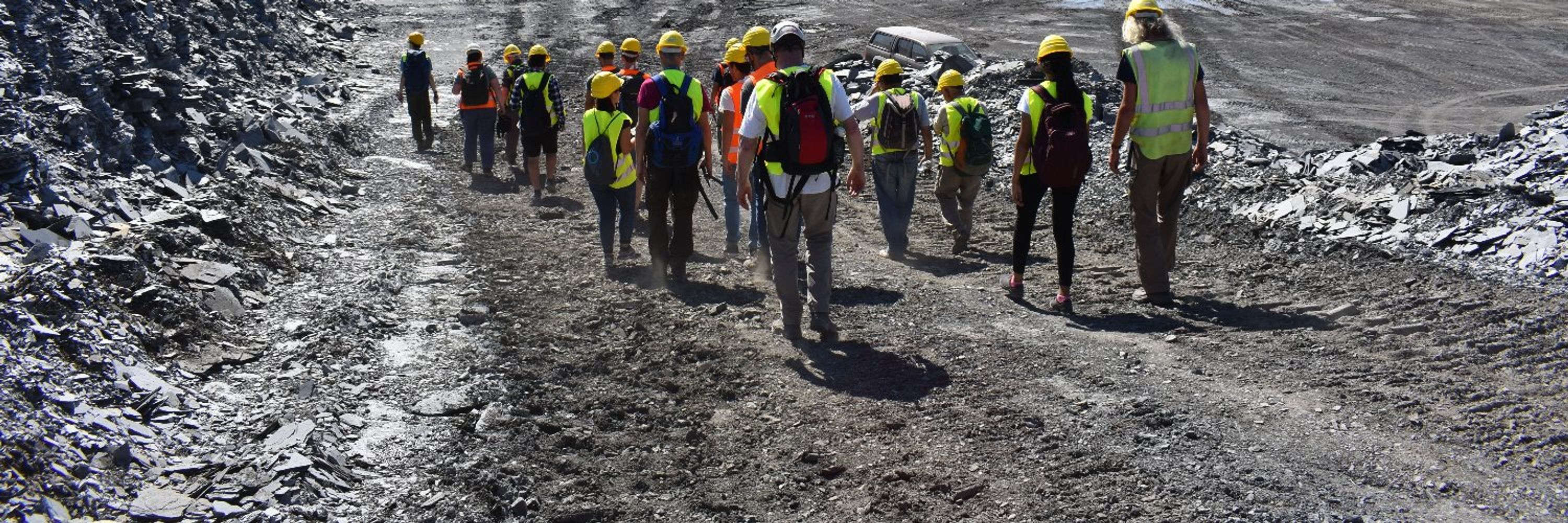
www.cambridge.org/core/blog/20...
A blog post on our article: dx.doi.org/10.1017/jpa.2025.10190
#Paleobiology #Trilobites #Paleoparasitology #Paleopathology
A blog post on our article: dx.doi.org/10.1017/jpa.2025.10190
#Paleobiology #Trilobites #Paleoparasitology #Paleopathology

Fossil freeloaders: Rare evidence of parasitism in Ordovician Trilobites « Earth & Environmental Science# « Cambridge Core Blog
A new study of from the Middle Ordovician of Estonia reveals some of the earliest evidence for parasitism in the fossil record. Olev Vinn at the University of Tartu and colleagues argue that dome and ...
www.cambridge.org
January 7, 2026 at 7:15 AM
www.cambridge.org/core/blog/20...
A blog post on our article: dx.doi.org/10.1017/jpa.2025.10190
#Paleobiology #Trilobites #Paleoparasitology #Paleopathology
A blog post on our article: dx.doi.org/10.1017/jpa.2025.10190
#Paleobiology #Trilobites #Paleoparasitology #Paleopathology
Reposted by Kenneth De Baets
Temperatures plummeted in Poland today, with the city of Łódź recording -15.8°C at 8 a.m.
Even Hel, on Poland's northern Baltic coast, has frozen over, at -1.5°C.
Even Hel, on Poland's northern Baltic coast, has frozen over, at -1.5°C.

January 6, 2026 at 12:00 PM
Temperatures plummeted in Poland today, with the city of Łódź recording -15.8°C at 8 a.m.
Even Hel, on Poland's northern Baltic coast, has frozen over, at -1.5°C.
Even Hel, on Poland's northern Baltic coast, has frozen over, at -1.5°C.
Reposted by Kenneth De Baets

#MolluscMonday Another fossil in the galleries of the South Australia Museum, the heteromorph ammonite Tropaeum imperator, Collected from Early Cretaceous rocks at Coober Pedy, this is claimed to be the largest known ammonite from Australia with an uncoiled length of 3 metres.

December 15, 2025 at 6:27 AM
#MolluscMonday Another fossil in the galleries of the South Australia Museum, the heteromorph ammonite Tropaeum imperator, Collected from Early Cretaceous rocks at Coober Pedy, this is claimed to be the largest known ammonite from Australia with an uncoiled length of 3 metres.
Reposted by Kenneth De Baets
Some more shenanigans on the Ctenophora Porifera debate from @rcply.bsky.social academic.oup.com/mbe/advance-...

Sponges, ctenophores and the statistical significance of syntenies
Abstract. Shared fusions between ancestral chromosomal linkage groups have previously been used to support phylogenetic groupings, notably sponges with cni
academic.oup.com
December 10, 2025 at 6:41 PM
Some more shenanigans on the Ctenophora Porifera debate from @rcply.bsky.social academic.oup.com/mbe/advance-...
Reposted by Kenneth De Baets

Irrsinn: Die #EU will #Verbrennerverbot kippen. So verlieren wir den Anschluss an China bei der Elektromobilität und damit auch große Teile unserer #Autoindustrie. Die #Klimaschutzziele kippen wir gleich mit über Bord.
👉 Fakten und Hintergründe im Video
👉 Fakten und Hintergründe im Video
- YouTube
Enjoy the videos and music you love, upload original content, and share it all with friends, family, and the world on YouTube.
youtu.be
December 11, 2025 at 5:58 PM
Irrsinn: Die #EU will #Verbrennerverbot kippen. So verlieren wir den Anschluss an China bei der Elektromobilität und damit auch große Teile unserer #Autoindustrie. Die #Klimaschutzziele kippen wir gleich mit über Bord.
👉 Fakten und Hintergründe im Video
👉 Fakten und Hintergründe im Video

Reposted by Kenneth De Baets

Made a site comparing the sizes of living things :)
The great Julius Csotonyi spent 5 months painting over 60 illustrations for the site, no ai used
> neal.fun/size-of-life/
The great Julius Csotonyi spent 5 months painting over 60 illustrations for the site, no ai used
> neal.fun/size-of-life/
December 10, 2025 at 4:03 PM
Made a site comparing the sizes of living things :)
The great Julius Csotonyi spent 5 months painting over 60 illustrations for the site, no ai used
> neal.fun/size-of-life/
The great Julius Csotonyi spent 5 months painting over 60 illustrations for the site, no ai used
> neal.fun/size-of-life/
Reposted by Kenneth De Baets

Der unter dem Namen „Beeple” bekannte Künstler hat auf der Art Basel in Miami mit einer auffälligen neuen Installation für Aufsehen gesorgt. Das Werk mit dem Titel „Regular Animals” zeigt unter anderem Elon Musk, Mark Zuckerberg und Andy Warhol als Roboterhunde, die Bilder ausscheiden. (CNN)
December 6, 2025 at 7:45 AM
Der unter dem Namen „Beeple” bekannte Künstler hat auf der Art Basel in Miami mit einer auffälligen neuen Installation für Aufsehen gesorgt. Das Werk mit dem Titel „Regular Animals” zeigt unter anderem Elon Musk, Mark Zuckerberg und Andy Warhol als Roboterhunde, die Bilder ausscheiden. (CNN)
Reposted by Kenneth De Baets

#Oops: The seminal paper that has been used for 25 years to justify that the use of #Glyphosate is safe has been retracted.
▶️ www.sciencedirect.com/science/arti...
"Concerns were raised regarding the authorship of this paper, validity of the research findings…"
▶️ www.sciencedirect.com/science/arti...
"Concerns were raised regarding the authorship of this paper, validity of the research findings…"

December 1, 2025 at 1:11 PM
#Oops: The seminal paper that has been used for 25 years to justify that the use of #Glyphosate is safe has been retracted.
▶️ www.sciencedirect.com/science/arti...
"Concerns were raised regarding the authorship of this paper, validity of the research findings…"
▶️ www.sciencedirect.com/science/arti...
"Concerns were raised regarding the authorship of this paper, validity of the research findings…"
Reposted by Kenneth De Baets
Another nice example of the long-term "it's all connected!" of the ocean-atmosphere system. When the Benguela Upwelling System shifted gears in the late Miocene, it made southern Africa more arid. 🧪⚒️
Link: www.nature.com/articles/s43...
Link: www.nature.com/articles/s43...

December 6, 2025 at 8:17 AM
Another nice example of the long-term "it's all connected!" of the ocean-atmosphere system. When the Benguela Upwelling System shifted gears in the late Miocene, it made southern Africa more arid. 🧪⚒️
Link: www.nature.com/articles/s43...
Link: www.nature.com/articles/s43...
Reposted by Kenneth De Baets
here are some of the cave ostracods that only live as epibionts on cave crayfish. I assume their freaky long legs are so they don't fall off

December 5, 2025 at 12:36 AM
here are some of the cave ostracods that only live as epibionts on cave crayfish. I assume their freaky long legs are so they don't fall off
The database is vital for studying Permian–Triassic stratigraphy, diversity, and evolution—and it spotlights the broader need to fund taxonomic expertise, collect new data, integrate scattered resources, and build sustainable, accessible, community-driven infrastructure. doi.org/10.1017/pab....
The critical importance of public and up-to-date, expert-vetted ...
doi.org
December 4, 2025 at 7:44 AM
The database is vital for studying Permian–Triassic stratigraphy, diversity, and evolution—and it spotlights the broader need to fund taxonomic expertise, collect new data, integrate scattered resources, and build sustainable, accessible, community-driven infrastructure. doi.org/10.1017/pab....
Large databases depend on taxonomic foundations that are often under-cited. hal.science/hal-04951445 include all 260 source publications and show how expert cleaning reduces species counts by half—reinforcing how crucial taxonomic rigor is for reliable deep-time biodiversity metrics.
Increasing the equitability of data citation in paleontology: capacity building for the big data future | Paleobiology | Cambridge Core
Increasing the equitability of data citation in paleontology: capacity building for the big data future - Volume 50 Issue 2
doi.org
December 4, 2025 at 7:44 AM
Large databases depend on taxonomic foundations that are often under-cited. hal.science/hal-04951445 include all 260 source publications and show how expert cleaning reduces species counts by half—reinforcing how crucial taxonomic rigor is for reliable deep-time biodiversity metrics.
Up-to-date data reshape our understanding. For the Permian–Triassic, the new vetted dataset (hal.science/hal-04951445v5) shows diversity trends that differ sharply from PBDB, highlighting how exhaustive, expert-curated compilations can dramatically change interpretations of extinction and recovery.

December 4, 2025 at 7:38 AM
Up-to-date data reshape our understanding. For the Permian–Triassic, the new vetted dataset (hal.science/hal-04951445v5) shows diversity trends that differ sharply from PBDB, highlighting how exhaustive, expert-curated compilations can dramatically change interpretations of extinction and recovery.
hal.science/hal-04951445 compiled ~12,000 conodont entries from 260 publications across four continents—an expertly vetted dataset enabling high-resolution diversity, biogeographic, biochronologic, and macroecological analyses, with plans for annual updates.
A database of conodont occurrences between the Changhsingian (Late Permian) and the Spathian (Olenekian, Early Triassic)
We introduce here a database of global occurrences of conodont species around the Permian/Triassic boundary (PTB, ca. 251.9 Ma). The PTB is known for its biotic crisis, i.e. the most important mass extinction event of the whole Phanerozoic, which profoundly impacted the marine biosphere and was followed by a complex biotic recovery during the whole Early Triassic Epoch (ca. 5 myrs). The PTB crisis has been extensively studied and conodonts survived to it but their evolution around the PTB was barely studied quantitatively. We provide here the most complete database of conodont occurrences in the latest Permian and the Early Triassic. It is a data compilation from the available literature, a csv file of about 12,000 entries, gathering a total of 260 publications dated from 1967 to 2022. The database includes taxonomic, sampling, sedimentological, temporal, (paleo)geographical and bibliographical information. The minimum unit, i.e. a row in the table, corresponds to a conodont species in a sample. The temporal resolution is the stage and substage, ranging from the Changhsingian (Late Permian) to the end of the Spathian (Olenekian, Early Triassic). The database allows a large range of investigations such as diversity, biogeographic, macroecological and biochronological studies that can be investigated at different geographic scale thanks to the GPS coordinates associated to each occurrence. The database can be downloaded and used freely as far as this associated datapaper is cited in any resulting publication. It will be updated once a year with new publications and taxonomic updates.
hal.science
December 4, 2025 at 7:38 AM
hal.science/hal-04951445 compiled ~12,000 conodont entries from 260 publications across four continents—an expertly vetted dataset enabling high-resolution diversity, biogeographic, biochronologic, and macroecological analyses, with plans for annual updates.
Conodont research faces the same challenges: these tiny vertebrates are vital for biostratigraphy, paleotemperature studies, biodiversity work, and extinction research. Their record is key to understanding crises across the Permian–Triassic, including the end-Permian and Smithian events.
The critical importance of public and up-to-date, expert-vetted ...
doi.org
December 4, 2025 at 7:37 AM
Conodont research faces the same challenges: these tiny vertebrates are vital for biostratigraphy, paleotemperature studies, biodiversity work, and extinction research. Their record is key to understanding crises across the Permian–Triassic, including the end-Permian and Smithian events.
High-quality paleontological datasets take years to assemble. They require fieldwork, curation, expert taxonomic study, and major resource investment. Despite tech advances, funding for this foundational work is shrinking (doi.org/10.1093/zool...) —even though tech can’t replace taxonomic expertise.

The taxonomic impediment: a shortage of taxonomists, not the lack of technical approaches
For almost 30 years, there have been active discussions about the taxonomic impediment and the challenge this represents to address the current human-induc
doi.org
December 4, 2025 at 7:37 AM
High-quality paleontological datasets take years to assemble. They require fieldwork, curation, expert taxonomic study, and major resource investment. Despite tech advances, funding for this foundational work is shrinking (doi.org/10.1093/zool...) —even though tech can’t replace taxonomic expertise.
Public digital infrastructure (doi.org/10.32942/X2D...) has transformed our analyses, but its value depends entirely on data quality. PBDB remains central, yet cleaning and vetting data is still essential—especially as new resources like the Late Permian–Early Triassic conodont dataset emerge.
Fossils for Future: the billion-dollar case for paleontology’s digital infrastructure
doi.org
December 4, 2025 at 7:36 AM
Public digital infrastructure (doi.org/10.32942/X2D...) has transformed our analyses, but its value depends entirely on data quality. PBDB remains central, yet cleaning and vetting data is still essential—especially as new resources like the Late Permian–Early Triassic conodont dataset emerge.
In my my recommendation of hal.science/hal-04951445v5, i highlight "The critical importance of public and up-to-date, expert-vetted #fossil #databases" paleo.peercommunityin.org/articles/rec...
A database of conodont occurrences between the Changhsingian (Late Permian) and the Spathian (Olenekian, Early Triassic)
We introduce here a database of global occurrences of conodont species around the Permian/Triassic boundary (PTB, ca. 251.9 Ma). The PTB is known for its biotic crisis, i.e. the most important mass extinction event of the whole Phanerozoic, which profoundly impacted the marine biosphere and was followed by a complex biotic recovery during the whole Early Triassic Epoch (ca. 5 myrs). The PTB crisis has been extensively studied and conodonts survived to it but their evolution around the PTB was barely studied quantitatively. We provide here the most complete database of conodont occurrences in the latest Permian and the Early Triassic. It is a data compilation from the available literature, a csv file of about 12,000 entries, gathering a total of 260 publications dated from 1967 to 2022. The database includes taxonomic, sampling, sedimentological, temporal, (paleo)geographical and bibliographical information. The minimum unit, i.e. a row in the table, corresponds to a conodont species in a sample. The temporal resolution is the stage and substage, ranging from the Changhsingian (Late Permian) to the end of the Spathian (Olenekian, Early Triassic). The database allows a large range of investigations such as diversity, biogeographic, macroecological and biochronological studies that can be investigated at different geographic scale thanks to the GPS coordinates associated to each occurrence. The database can be downloaded and used freely as far as this associated datapaper is cited in any resulting publication. It will be updated once a year with new publications and taxonomic updates.
hal.science
December 4, 2025 at 7:36 AM
In my my recommendation of hal.science/hal-04951445v5, i highlight "The critical importance of public and up-to-date, expert-vetted #fossil #databases" paleo.peercommunityin.org/articles/rec...
You can find my recommendation and the original reviews here: doi.org/10.24072/pci...
The critical importance of public and up-to-date, expert-vetted ...
paleo.peercommunityin.org
December 2, 2025 at 2:20 PM
You can find my recommendation and the original reviews here: doi.org/10.24072/pci...
It was a pleasure to handle and recommend: A #database of #conodont occurrences between the Changhsingian (Late #Permian) and the Spathian (Olenekian, Early #Triassic) by Pauline Guenser, Marc Leu, Axelle Zacaï, Nicolas Goudemand, Gilles Escarguel (2025) for #PCI #Paleontology
A database of conodont occurrences between the Changhsingian (Late Permian) and the Spathian (Olenekian, Early Triassic)
We introduce here a database of global occurrences of conodont species around the Permian/Triassic boundary (PTB, ca. 251.9 Ma). The PTB is known for its biotic crisis, i.e. the most important mass extinction event of the whole Phanerozoic, which profoundly impacted the marine biosphere and was followed by a complex biotic recovery during the whole Early Triassic Epoch (ca. 5 myrs). The PTB crisis has been extensively studied and conodonts survived to it but their evolution around the PTB was barely studied quantitatively. We provide here the most complete database of conodont occurrences in the latest Permian and the Early Triassic. It is a data compilation from the available literature, a csv file of about 12,000 entries, gathering a total of 260 publications dated from 1967 to 2022. The database includes taxonomic, sampling, sedimentological, temporal, (paleo)geographical and bibliographical information. The minimum unit, i.e. a row in the table, corresponds to a conodont species in a sample. The temporal resolution is the stage and substage, ranging from the Changhsingian (Late Permian) to the end of the Spathian (Olenekian, Early Triassic). The database allows a large range of investigations such as diversity, biogeographic, macroecological and biochronological studies that can be investigated at different geographic scale thanks to the GPS coordinates associated to each occurrence. The database can be downloaded and used freely as far as this associated datapaper is cited in any resulting publication. It will be updated once a year with new publications and taxonomic updates.
hal.science
December 2, 2025 at 2:20 PM
Reposted by Kenneth De Baets

DAFNEE, a useful database of academic-friendly journals in #Ecology and Evolutionary #Biology
academic.oup.com/jeb/advance-...
academic.oup.com/jeb/advance-...

Time to publish responsibly: DAFNEE, a database of academia-friendly journals in ecology and evolutionary biology
Abstract. The current economics of scientific publishing reveal a profound imbalance: academia pays prices far exceeding the actual costs of publication. R
academic.oup.com
December 2, 2025 at 7:06 AM
DAFNEE, a useful database of academic-friendly journals in #Ecology and Evolutionary #Biology
academic.oup.com/jeb/advance-...
academic.oup.com/jeb/advance-...
Reposted by Kenneth De Baets

Look at this MANPAD-ahh nematode
(note: slow motion video 83.3× slower than real time)
From the paper www.pnas.org/doi/full/10....
(note: slow motion video 83.3× slower than real time)
From the paper www.pnas.org/doi/full/10....
December 1, 2025 at 3:15 AM
Look at this MANPAD-ahh nematode
(note: slow motion video 83.3× slower than real time)
From the paper www.pnas.org/doi/full/10....
(note: slow motion video 83.3× slower than real time)
From the paper www.pnas.org/doi/full/10....
Reposted by Kenneth De Baets
On the Factor Fexcectorn and autism bicycle AI slop study: I got an answer from Springer Nature this morning that this scientific paper will be retracted! 🧪
Full story: nobreakthroughs.substack.com/p/riding-the...
Full story: nobreakthroughs.substack.com/p/riding-the...

Riding the Autism Bicycle to Retraction Town
Does anyone *really* know their Factor Fexcectorn?
nobreakthroughs.substack.com
November 28, 2025 at 5:25 AM
On the Factor Fexcectorn and autism bicycle AI slop study: I got an answer from Springer Nature this morning that this scientific paper will be retracted! 🧪
Full story: nobreakthroughs.substack.com/p/riding-the...
Full story: nobreakthroughs.substack.com/p/riding-the...
Reposted by Kenneth De Baets
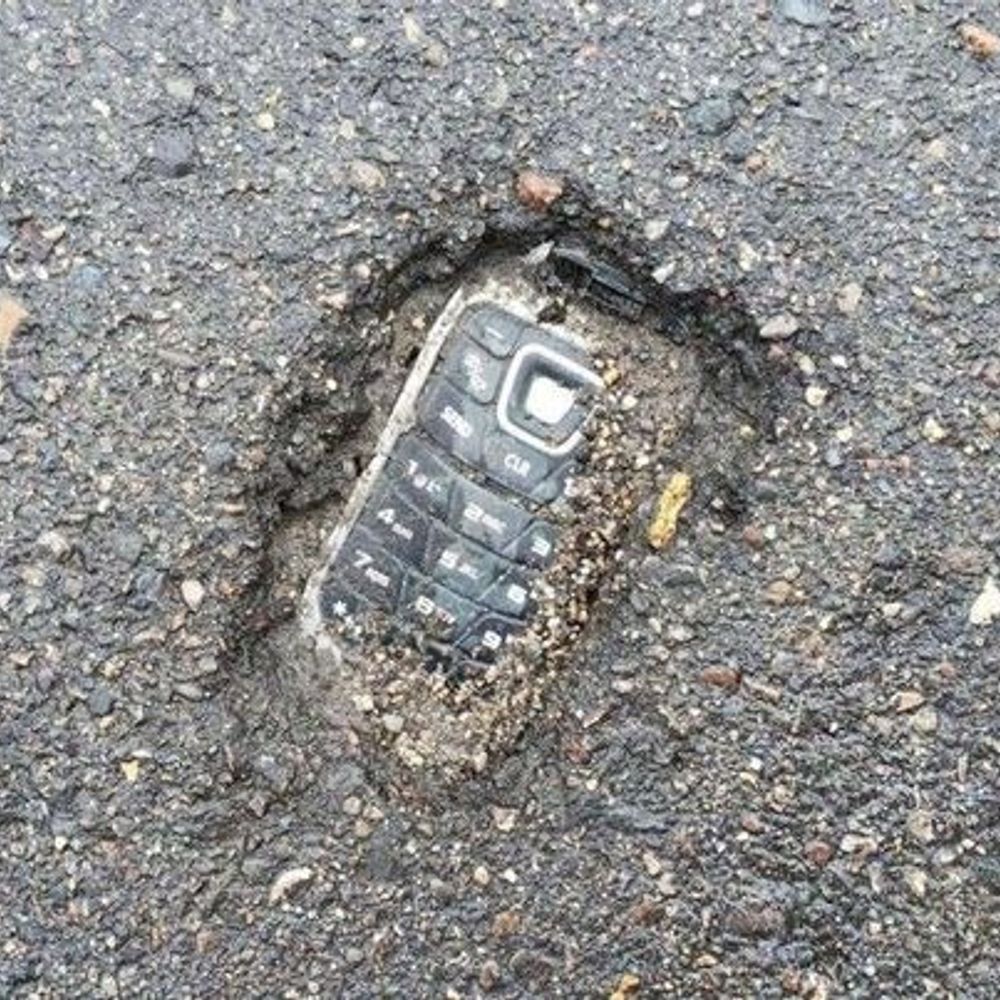
Hey @nature.com, have you got an explanation for how the hell THIS happened? & especially why you accepted a paper with such a bizarre piece of genAI slop in it?!
& more to the point, why we should take you seriously at all going forward?
www.nature.com/articles/s41...
& more to the point, why we should take you seriously at all going forward?
www.nature.com/articles/s41...

November 27, 2025 at 3:03 PM
Hey @nature.com, have you got an explanation for how the hell THIS happened? & especially why you accepted a paper with such a bizarre piece of genAI slop in it?!
& more to the point, why we should take you seriously at all going forward?
www.nature.com/articles/s41...
& more to the point, why we should take you seriously at all going forward?
www.nature.com/articles/s41...