



Nicolas Alexandre
@nicmalexandre.bsky.social
Reposted by Nicolas Alexandre

New paper on ecosystem-wide PFAS contamination at Holloman AFB, New Mexico
authors.elsevier.com/c/1lAOb3Ao6B...
authors.elsevier.com/c/1lAOb3Ao6B...

May 28, 2025 at 5:03 PM
New paper on ecosystem-wide PFAS contamination at Holloman AFB, New Mexico
authors.elsevier.com/c/1lAOb3Ao6B...
authors.elsevier.com/c/1lAOb3Ao6B...
Reposted by Nicolas Alexandre

Excited to share an invited commentary about the fantastic and ambitious work by @nicmalexandre.bsky.social and colleagues in @globalchangebio.bsky.social on Anna's Hummingbird beaks. It was a joy to write about, congratulations on a super cool study!
onlinelibrary.wiley.com/doi/10.1111/...
onlinelibrary.wiley.com/doi/10.1111/...

Fitting the Bill in an Urban World: Hummingbird Beak Shape Responds to Anthropogenic Factors
Click on the article title to read more.
onlinelibrary.wiley.com
May 23, 2025 at 1:48 PM
Excited to share an invited commentary about the fantastic and ambitious work by @nicmalexandre.bsky.social and colleagues in @globalchangebio.bsky.social on Anna's Hummingbird beaks. It was a joy to write about, congratulations on a super cool study!
onlinelibrary.wiley.com/doi/10.1111/...
onlinelibrary.wiley.com/doi/10.1111/...
Take a look at @science.org's article describing our work in
@globalchangebio.bsky.social showing that beak morphology of hummingbirds has changed in association with feeders!
science.org/content/arti...
@globalchangebio.bsky.social showing that beak morphology of hummingbirds has changed in association with feeders!
science.org/content/arti...
May 21, 2025 at 1:28 PM
Take a look at @science.org's article describing our work in
@globalchangebio.bsky.social showing that beak morphology of hummingbirds has changed in association with feeders!
science.org/content/arti...
@globalchangebio.bsky.social showing that beak morphology of hummingbirds has changed in association with feeders!
science.org/content/arti...
🚨New paper alert!🚨
We show that hummingbird beaks have changed in shape & size since around WWII, driven by the rise of commercialized feeders! 🧵
📄 Paper: dx.doi.org/10.1111/gcb....
#ornithology #evolution #GlobalChangeBiology
We show that hummingbird beaks have changed in shape & size since around WWII, driven by the rise of commercialized feeders! 🧵
📄 Paper: dx.doi.org/10.1111/gcb....
#ornithology #evolution #GlobalChangeBiology
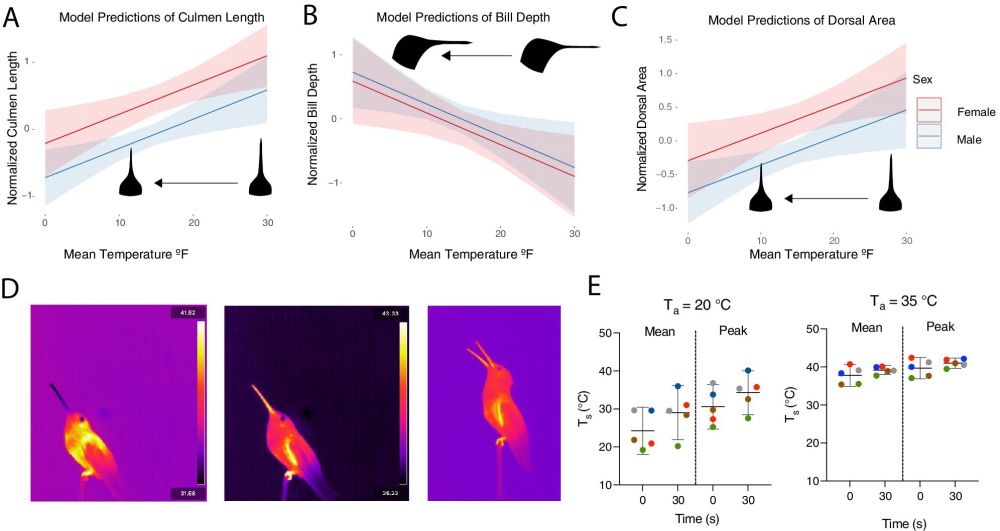
Supplemental Feeding as a Driver of Population Expansion and Morphological Change in Anna's Hummingbirds
Bird beaks are highly adaptable, with the potential to undergo rapid morphological shifts in response to environmental change such as climatic variation or food availability. Anna's Hummingbirds (Cal...
dx.doi.org
May 21, 2025 at 1:20 PM
🚨New paper alert!🚨
We show that hummingbird beaks have changed in shape & size since around WWII, driven by the rise of commercialized feeders! 🧵
📄 Paper: dx.doi.org/10.1111/gcb....
#ornithology #evolution #GlobalChangeBiology
We show that hummingbird beaks have changed in shape & size since around WWII, driven by the rise of commercialized feeders! 🧵
📄 Paper: dx.doi.org/10.1111/gcb....
#ornithology #evolution #GlobalChangeBiology
Gemmel et al sequence the Tuatara genome in 2020 and found the lineage diverged from snakes and lizards 250 Mya. The tuatara genome is 2.4× larger than the anole genome but 64% of it is repetitive sequences and has the highest
percentage of methylation for an amniote #2025MMM doi.org/10.1038/s415...
percentage of methylation for an amniote #2025MMM doi.org/10.1038/s415...

March 14, 2025 at 1:42 AM
Gemmel et al sequence the Tuatara genome in 2020 and found the lineage diverged from snakes and lizards 250 Mya. The tuatara genome is 2.4× larger than the anole genome but 64% of it is repetitive sequences and has the highest
percentage of methylation for an amniote #2025MMM doi.org/10.1038/s415...
percentage of methylation for an amniote #2025MMM doi.org/10.1038/s415...
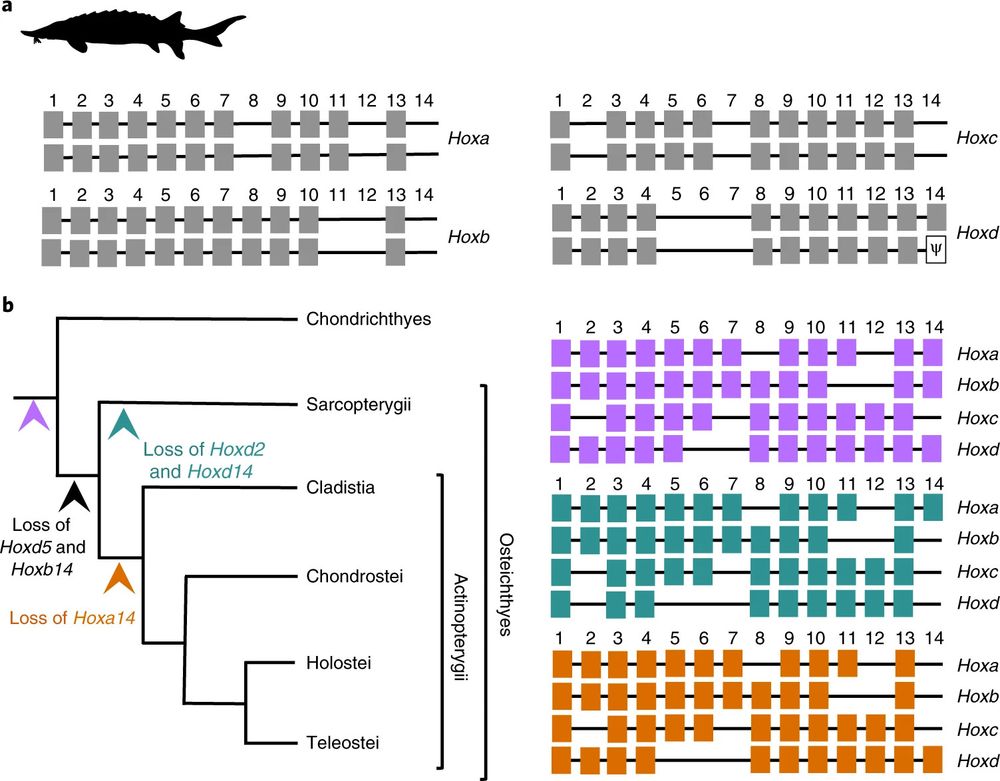
Sturgeons have undergone multiple whole-genome duplications, making some species octoploid (8x their original genome)! A. stellatus is a “low-ploidy” sturgeon, but its DNA still carries echoes of ancient duplications. #2025MMM doi.org/10.1038/s415...

March 14, 2025 at 1:40 AM
Sturgeons have undergone multiple whole-genome duplications, making some species octoploid (8x their original genome)! A. stellatus is a “low-ploidy” sturgeon, but its DNA still carries echoes of ancient duplications. #2025MMM doi.org/10.1038/s415...
The genomes of arbuscular mycorrhizal (AM) fungi reveal they have lost some metabolic pathways relative to free-living fungi. Kobayashi et al 2018 find that thiamine, vitamin B6, and some glucose-producing polysaccharide hydrolases biosynthesis is absent in AM #2025MMM #RIP doi.org/10.1186/s128...

March 14, 2025 at 1:18 AM
The genomes of arbuscular mycorrhizal (AM) fungi reveal they have lost some metabolic pathways relative to free-living fungi. Kobayashi et al 2018 find that thiamine, vitamin B6, and some glucose-producing polysaccharide hydrolases biosynthesis is absent in AM #2025MMM #RIP doi.org/10.1186/s128...
Glomeromycotina is a lineage of early diverging fungi that establish arbuscular mycorrhizal (AM) symbiosis with land plants. Morin et al 2019 find that AM genomes contain a lot more species-specific genes than other fungi, which reflects their unique lifestyle #2025MMM doi.org/10.1111/nph....

March 14, 2025 at 1:10 AM
Glomeromycotina is a lineage of early diverging fungi that establish arbuscular mycorrhizal (AM) symbiosis with land plants. Morin et al 2019 find that AM genomes contain a lot more species-specific genes than other fungi, which reflects their unique lifestyle #2025MMM doi.org/10.1111/nph....
Zhao et al in 2019 sequenced 545 genomes of ginkgos and found 3 centers of genetic diversity in China. Ginkgos grown outside China trace their ancestry to the East population, and American and European trees carry genetic variation that is rare in wild populations. doi.org/10.1038/s414... #2025MMM

March 14, 2025 at 1:09 AM
Zhao et al in 2019 sequenced 545 genomes of ginkgos and found 3 centers of genetic diversity in China. Ginkgos grown outside China trace their ancestry to the East population, and American and European trees carry genetic variation that is rare in wild populations. doi.org/10.1038/s414... #2025MMM
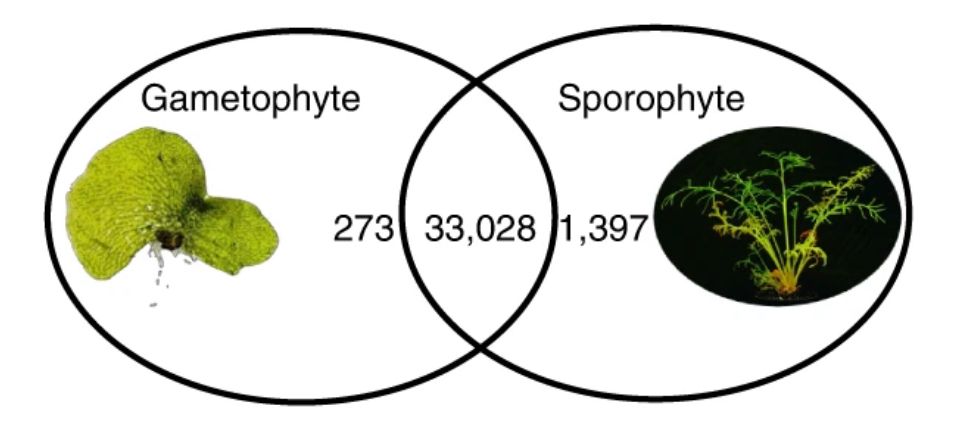
A fern genome contains all the instructions for two independent multi-cellular phases: a gametophyte (prothallus) and a sporophyte (fern). Yet, Marchant et al 2023 find only 273 and 1,397 genes were specifically expressed in the gametophyte and sporophyte #2025MMM #RIP doi.org/10.1038/s414...
March 14, 2025 at 12:43 AM
A fern genome contains all the instructions for two independent multi-cellular phases: a gametophyte (prothallus) and a sporophyte (fern). Yet, Marchant et al 2023 find only 273 and 1,397 genes were specifically expressed in the gametophyte and sporophyte #2025MMM #RIP doi.org/10.1038/s414...
Ferns are the second most species-rich lineage of land plants. Fujiwara et al 2023 found that fern genome sizes have grown as fern have diversified, showing large structural complexity between different fern species due to whole genome duplications and polyploidy #2025MMM doi.org/10.1093/aob/...

March 14, 2025 at 12:37 AM
Ferns are the second most species-rich lineage of land plants. Fujiwara et al 2023 found that fern genome sizes have grown as fern have diversified, showing large structural complexity between different fern species due to whole genome duplications and polyploidy #2025MMM doi.org/10.1093/aob/...
The frilled shark (Chlamydoselachus anguineus) has barely changed for 80 million years! 🦈 Its DNA reveals it's one of the most ancient sharks, diverging before most modern species existed. A true relic of deep-sea evolution! 🌊 #2025MMM doi.org/10.1155/2013...

March 14, 2025 at 12:31 AM
The frilled shark (Chlamydoselachus anguineus) has barely changed for 80 million years! 🦈 Its DNA reveals it's one of the most ancient sharks, diverging before most modern species existed. A true relic of deep-sea evolution! 🌊 #2025MMM doi.org/10.1155/2013...