



Marina Wang
@marinacoladas.bsky.social
Freelance journalist of science and other things weird and wonderful. Up for hire.
Bylines in Hakai Magazine, Scientific American, Atlas Obscura, etc.
marina-wang.com
Bylines in Hakai Magazine, Scientific American, Atlas Obscura, etc.
marina-wang.com
With Valentine's around the corner, kisses be everywhere! The romantic smooch may be ubiquitous in Western culture, but many places around the world don't kiss and express affection in other ways. Here's the ancient origins of kissing:
www.history.com/articles/anc...
www.history.com/articles/anc...

The Ancient Origins of Kissing
The romantic smooch is old but not universal.
www.history.com
February 2, 2026 at 8:55 PM
With Valentine's around the corner, kisses be everywhere! The romantic smooch may be ubiquitous in Western culture, but many places around the world don't kiss and express affection in other ways. Here's the ancient origins of kissing:
www.history.com/articles/anc...
www.history.com/articles/anc...
An inquiring student leads researchers to discover they've unknowingly held on to the world's oldest ribbon worm. This is the Story of B:
www.scientificamerican.com/article/meet...
www.scientificamerican.com/article/meet...

Meet ‘Baseodiscus the Eldest,’ a record-setting worm more than 27 years old
Ribbon worms can grow to enormous lengths, and one named Baseodiscus the Eldest is showing how little we know about them—including how long they live
www.scientificamerican.com
January 31, 2026 at 5:55 PM
An inquiring student leads researchers to discover they've unknowingly held on to the world's oldest ribbon worm. This is the Story of B:
www.scientificamerican.com/article/meet...
www.scientificamerican.com/article/meet...
Thrilled to come up with a history quiz for @nytimes.com! Featuring sausage bans and bees. 🐝🌭
www.nytimes.com/interactive/...
www.nytimes.com/interactive/...

Flashback: Your Weekly History Quiz, Jan. 31, 2026
Can you sort 8 historical events?
www.nytimes.com
January 31, 2026 at 2:05 AM
Thrilled to come up with a history quiz for @nytimes.com! Featuring sausage bans and bees. 🐝🌭
www.nytimes.com/interactive/...
www.nytimes.com/interactive/...

Reposted by Marina Wang

🦇🦍🦉 Do you root for the weird, wild, under-appreciated species of the world? The slime molds and sunflower stars; the cormorants and caddisflies?
So do we. And we need your help! A donation of any amount goes straight to supporting narrative journalism about biodiversity. Pls spread the word! 🐢🐛🌵
So do we. And we need your help! A donation of any amount goes straight to supporting narrative journalism about biodiversity. Pls spread the word! 🐢🐛🌵
Donate to bioGraphic
Support our cause by donating to bioGraphic.
give.calacademy.org
November 26, 2025 at 6:11 PM
🦇🦍🦉 Do you root for the weird, wild, under-appreciated species of the world? The slime molds and sunflower stars; the cormorants and caddisflies?
So do we. And we need your help! A donation of any amount goes straight to supporting narrative journalism about biodiversity. Pls spread the word! 🐢🐛🌵
So do we. And we need your help! A donation of any amount goes straight to supporting narrative journalism about biodiversity. Pls spread the word! 🐢🐛🌵
Reposted by Marina Wang

With Trump pushing offshore oil drilling, including around St. Matthew Island (alaskapublic.org/news/politic...), it's a great time to re-up my story about oil and the origins of western marine science in Alaska, and how long-term monitoring helped reveal a different kind of oil "spill" there:

Keeping Watch Over Seabirds at the World’s Edge | Hakai Magazine
In Alaska, one of the longest-running and most comprehensive seabird monitoring projects is equal parts tedium, adventure, truth, and beauty.
hakaimagazine.com
November 25, 2025 at 7:35 PM
With Trump pushing offshore oil drilling, including around St. Matthew Island (alaskapublic.org/news/politic...), it's a great time to re-up my story about oil and the origins of western marine science in Alaska, and how long-term monitoring helped reveal a different kind of oil "spill" there:
CITES, an international body governing the trade of endangered species, is meeting this week to decide which species get protection.
But how do they decide, and what gets left behind?
www.biographic.com/triaging-the...
But how do they decide, and what gets left behind?
www.biographic.com/triaging-the...

Triaging the Global Wildlife Trade - bioGraphic
Can we take a more systematic approach to protecting endangered species from international trade?
www.biographic.com
November 25, 2025 at 8:04 PM
CITES, an international body governing the trade of endangered species, is meeting this week to decide which species get protection.
But how do they decide, and what gets left behind?
www.biographic.com/triaging-the...
But how do they decide, and what gets left behind?
www.biographic.com/triaging-the...

With tiny hands rummaging through rubbish, raccoons are showing early signs of domestication 🗑️🐼
My latest for @sciam.bsky.social.
www.scientificamerican.com/article/racc...
My latest for @sciam.bsky.social.
www.scientificamerican.com/article/racc...

City Raccoons Are Evolving to Look More Like Pets
City-dwelling raccoons seem to be evolving a shorter snout—a telltale feature of our pets and other domesticated animals
www.scientificamerican.com
November 17, 2025 at 6:44 PM
With tiny hands rummaging through rubbish, raccoons are showing early signs of domestication 🗑️🐼
My latest for @sciam.bsky.social.
www.scientificamerican.com/article/racc...
My latest for @sciam.bsky.social.
www.scientificamerican.com/article/racc...
Reposted by Marina Wang
I, for one, welcome our new trash panda overlords.
But for real, fascinating science on how we might be seeing the very early stages of domestication in action in wild animals. 🧪
By @marinacoladas.bsky.social for @sciam.bsky.social
But for real, fascinating science on how we might be seeing the very early stages of domestication in action in wild animals. 🧪
By @marinacoladas.bsky.social for @sciam.bsky.social

City Raccoons Are Evolving to Look More Like Pets
City-dwelling raccoons seem to be evolving a shorter snout—a telltale feature of our pets and other domesticated animals
www.scientificamerican.com
November 14, 2025 at 2:27 PM
I, for one, welcome our new trash panda overlords.
But for real, fascinating science on how we might be seeing the very early stages of domestication in action in wild animals. 🧪
By @marinacoladas.bsky.social for @sciam.bsky.social
But for real, fascinating science on how we might be seeing the very early stages of domestication in action in wild animals. 🧪
By @marinacoladas.bsky.social for @sciam.bsky.social
Beaked whales are the most elusive large animals on the planet. They live offshore, dive deep, and are nearly impossible to distinguish from each other visually. But with acoustics and genetics, scientists finally have inroads on how to study these mysterious whales. 🐬🔍
nautil.us/hunting-the-...
nautil.us/hunting-the-...

Hunting the Most Elusive Whale
Historically, beaked whales have been near impossible to study. But modern acoustic and genetic technologies are giving scientists new hope.
nautil.us
September 23, 2025 at 10:47 PM
Beaked whales are the most elusive large animals on the planet. They live offshore, dive deep, and are nearly impossible to distinguish from each other visually. But with acoustics and genetics, scientists finally have inroads on how to study these mysterious whales. 🐬🔍
nautil.us/hunting-the-...
nautil.us/hunting-the-...
Reposted by Marina Wang
We’re doing this work because we believe that informed and inspired people will build a better relationship with the natural world. And we intentionally produce bioGraphic for regular people—not just politicians or professors—because it’s regular people, everywhere, who push our societies to change.

September 16, 2025 at 3:16 PM
We’re doing this work because we believe that informed and inspired people will build a better relationship with the natural world. And we intentionally produce bioGraphic for regular people—not just politicians or professors—because it’s regular people, everywhere, who push our societies to change.
The Convention on International Trade in Endangered Species is the world's largest agreement overseeing wildlife trafficking. Yet hundreds of species slip through the cracks. What gets protected? And is there a systematic solution?
🦌🐼🐯
www.biographic.com/triaging-the...
🦌🐼🐯
www.biographic.com/triaging-the...
Triaging the Global Wildlife Trade - bioGraphic
Can we take a more systematic approach to protecting endangered species from international trade?
www.biographic.com
September 8, 2025 at 11:23 PM
The Convention on International Trade in Endangered Species is the world's largest agreement overseeing wildlife trafficking. Yet hundreds of species slip through the cracks. What gets protected? And is there a systematic solution?
🦌🐼🐯
www.biographic.com/triaging-the...
🦌🐼🐯
www.biographic.com/triaging-the...
Reposted by Marina Wang
You absolutely need to know about this fish that has Forehead Sex Teeth 🧪

Behold the Gloriously Weird Spotted Ratfish. It Has Teeth on Its Forehead for Sex
Researchers have finally traced the origin of the spotted ratfish’s bizarre forehead teeth, which are used for mating
www.scientificamerican.com
September 5, 2025 at 6:16 PM
You absolutely need to know about this fish that has Forehead Sex Teeth 🧪
Reposted by Marina Wang
In an alternate universe, I am an epidemiologist. What can we learn about animal burrows when we train cameras on them? Who visits them? Many curious animals and, well, that could be worrisome: www.biographic.com/aardvark-bur... 🧪🦤🌍 #conservation #biodiversity
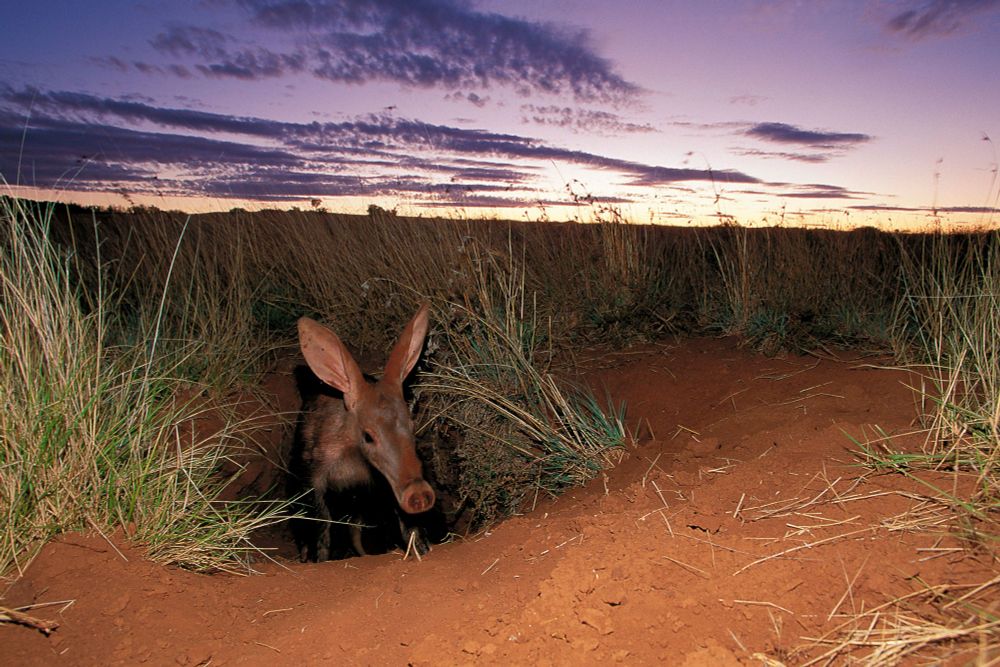
Aardvark Burrows Could be Ground Zero for the Next Pandemic - bioGraphic
Animals of all kinds mix and mingle in underground burrows, offering troubling opportunities for diseases to jump species.
www.biographic.com
August 22, 2025 at 2:31 PM
In an alternate universe, I am an epidemiologist. What can we learn about animal burrows when we train cameras on them? Who visits them? Many curious animals and, well, that could be worrisome: www.biographic.com/aardvark-bur... 🧪🦤🌍 #conservation #biodiversity
Filled with blubber, a beluga’s melon is squishy with good bounce. They can make different shapes and movements with these fat stores, and scientists documented how different wiggles are used for communication.
#ThrowbackThursday to possibly my favorite comic.
hakaimagazine.com/videos-visua...
#ThrowbackThursday to possibly my favorite comic.
hakaimagazine.com/videos-visua...

Say It with a Beluga Bauble Wobble | Hakai Magazine
Melon shape is to belugas what expressive eyebrows are to people.
hakaimagazine.com
August 21, 2025 at 5:39 PM
Filled with blubber, a beluga’s melon is squishy with good bounce. They can make different shapes and movements with these fat stores, and scientists documented how different wiggles are used for communication.
#ThrowbackThursday to possibly my favorite comic.
hakaimagazine.com/videos-visua...
#ThrowbackThursday to possibly my favorite comic.
hakaimagazine.com/videos-visua...
Bird poop is rich with nutrients and has a huge impact on the environment, yet scientists know next to nothing about scat at sea. Rearview poopcams strapped to shearwaters reveal a lot about these fowl movements.
My first for @audubon.org!
www.audubon.org/magazine/poo...
My first for @audubon.org!
www.audubon.org/magazine/poo...

Poop-Cam Footage Shows These Seabirds Fertilize the Ocean With Their Body Weight Per Day in Guano
Recording Streaked Shearwaters gave scientists a new window into the role seabirds play in fueling marine food webs—and possibly spreading avian flu—far from land.
www.audubon.org
August 18, 2025 at 5:29 PM
Bird poop is rich with nutrients and has a huge impact on the environment, yet scientists know next to nothing about scat at sea. Rearview poopcams strapped to shearwaters reveal a lot about these fowl movements.
My first for @audubon.org!
www.audubon.org/magazine/poo...
My first for @audubon.org!
www.audubon.org/magazine/poo...
Reposted by Marina Wang
There’s an exciting new poop paper, and @marinacoladas.bsky.social is on it. www.audubon.org/magazine/poo...

Poop-Cam Footage Shows These Seabirds Fertilize the Ocean With Their Body Weight Per Day in Guano
Recording Streaked Shearwaters gave scientists a new window into the role seabirds play in fueling marine food webs—and possibly spreading avian flu—far from land.
www.audubon.org
August 18, 2025 at 4:53 PM
There’s an exciting new poop paper, and @marinacoladas.bsky.social is on it. www.audubon.org/magazine/poo...

Reposted by Marina Wang

It feels like we're going backward, but there are hopeful projects underway, like the MPA network off the British Columbia coast. If done right, it “could be a real, meaningful model for reconciliation” with First Nations. My latest in @biographic.bsky.social.
www.biographic.com/welcome-to-t...
www.biographic.com/welcome-to-t...

Welcome to the Great Bear Sea
After decades of discord, Canada and First Nations are working together to build a network of marine protected areas stretching from Vancouver Island to Alaska.
www.biographic.com
July 24, 2025 at 5:03 PM
It feels like we're going backward, but there are hopeful projects underway, like the MPA network off the British Columbia coast. If done right, it “could be a real, meaningful model for reconciliation” with First Nations. My latest in @biographic.bsky.social.
www.biographic.com/welcome-to-t...
www.biographic.com/welcome-to-t...
Reposted by Marina Wang

Note to freelancers: I'm open to pitches for @nationalobserver.com! We pay pretty well, and we're flexible with timelines for assigned stories. I don't need a long pitch — think 2 paragraphs — but please give an idea of what your story is.
Some recently published freelance pieces:
Some recently published freelance pieces:
June 24, 2025 at 11:09 PM
Note to freelancers: I'm open to pitches for @nationalobserver.com! We pay pretty well, and we're flexible with timelines for assigned stories. I don't need a long pitch — think 2 paragraphs — but please give an idea of what your story is.
Some recently published freelance pieces:
Some recently published freelance pieces:
My first story for New Scientist! 🐬
Turns out it's not just humans that like feeding other animals. The tables have turned.
Turns out it's not just humans that like feeding other animals. The tables have turned.

Researchers have documented orcas seemingly gifting rays, seals and fish to scientists and divers, which could suggest they have theory of mind and engage in altruism – even across species

What does it mean when an orca wants to share its lunch with you?
www.newscientist.com
July 2, 2025 at 8:50 AM
My first story for New Scientist! 🐬
Turns out it's not just humans that like feeding other animals. The tables have turned.
Turns out it's not just humans that like feeding other animals. The tables have turned.
It’s not just humans that love feeding other animals! A new study documents killer whales trying to feed seabirds, rays, and fish to humans.
The behavior shows that kindness and curiosity are more than just human traits.
🐬🍽️
www.newscientist.com/article/2486...
The behavior shows that kindness and curiosity are more than just human traits.
🐬🍽️
www.newscientist.com/article/2486...

What does it mean when an orca wants to share its lunch with you?
Researchers have documented orcas seemingly gifting rays, seals and fish to scientists and divers, which could suggest they have theory of mind and engage in altruism – even across species
www.newscientist.com
June 30, 2025 at 9:03 PM
It’s not just humans that love feeding other animals! A new study documents killer whales trying to feed seabirds, rays, and fish to humans.
The behavior shows that kindness and curiosity are more than just human traits.
🐬🍽️
www.newscientist.com/article/2486...
The behavior shows that kindness and curiosity are more than just human traits.
🐬🍽️
www.newscientist.com/article/2486...
In remote forests of west Africa, wildlife traffickers are filling orders for hundreds of hornbill skulls. The bulbous-billed birds are protected in Asia, but conservationists now worry the market has shifted to African birds.
My latest for @nautil.us
nautil.us/the-hornbill...
My latest for @nautil.us
nautil.us/the-hornbill...

The Hornbills Left Behind
Protecting Asian species may have shifted poachers’ focus to African birds
nautil.us
June 19, 2025 at 10:30 PM
In remote forests of west Africa, wildlife traffickers are filling orders for hundreds of hornbill skulls. The bulbous-billed birds are protected in Asia, but conservationists now worry the market has shifted to African birds.
My latest for @nautil.us
nautil.us/the-hornbill...
My latest for @nautil.us
nautil.us/the-hornbill...