



Krishna Mudumbi
@krishnamudumbi.bsky.social
• Assistant Professor at Vanderbilt and the Ingram Cancer Center
• Studying membrane protein signaling using single-molecule microscopy
• Mentorship and science advocacy in all its forms
https://lab.vanderbilt.edu/mudumbi-lab/
• Studying membrane protein signaling using single-molecule microscopy
• Mentorship and science advocacy in all its forms
https://lab.vanderbilt.edu/mudumbi-lab/
Pinned
De novo design of phosphotyrosine peptide binders
Phosphorylation on tyrosine is a key step in many signaling pathways. Despite recent progress in de novo design of protein binders, there are no current methods for designing binders that recognize phosphorylated proteins and peptides; this is a challenging problem as phosphate groups are highly charged, and phosphorylation often occurs within unstructured regions. Here we introduce RoseTTAFold Diffusion 2 for Molecular Interfaces (RFD2-MI), a deep generative framework for the design of binders for protein, ligand, and covalently modified protein targets. We demonstrate the power and versatility of this method by designing binders for four critical phosphotyrosine sites on three clinically relevant targets: Cluster of Differentiation 3 (CD3ε), Epidermal Growth Factor Receptor (EGFR), Insulin Receptor (INSR) and Signal Transducer and Activator of Transcription 5 (STAT5). Experimental characterization shows that the designs bind their phosphotyrosine containing targets with affinities comparable to native binding sites and have negligible binding to non-phosphorylated targets or phosphopeptides with different sequences. X-ray crystal structures of generated binders to CD3ε and EGFR are very close to the design models, demonstrating the accuracy of the design approach. A designed binder to an EGFR intracellular region phosphorylated upon EGF activation co-localizes with the receptor following EGF stimulation in single-particle tracking (SPT) experiments, demonstrating pY specific recognition in living cells. RFD2-MI provides a generalizable all-atom diffusion framework for probing and modulating phosphorylation-dependent signaling, and more generally, for developing research tools and targeted therapeutics against post-translationally modified proteins. ### Competing Interest Statement The authors have declared no competing interest. NIH NCI, 1K99CA293001
www.biorxiv.org
Not new, but a new to us update:
The first preprint out of my lab! We joined forces with @kinasekid.bsky.social @jasonzxzhang.bsky.social and David Baker to study protein phosphorylation! Congrats to Isabella from my lab on her first first author paper! tinyurl.com/43jwwfua
The first preprint out of my lab! We joined forces with @kinasekid.bsky.social @jasonzxzhang.bsky.social and David Baker to study protein phosphorylation! Congrats to Isabella from my lab on her first first author paper! tinyurl.com/43jwwfua
Reposted by Krishna Mudumbi
Very excited to share my love of crystallography in this article celebrating over 100 years of X-ray methods and the Nobel Prize for BBC and the Nobel Foundation:
www.nobelprize.org/stories/x-ra...
www.nobelprize.org/stories/x-ra...

How X-rays and crystals revealed the true nature of things - NobelPrize.org
The story behind the 100-year-old discovery that continues to render Nobel Prizes.
www.nobelprize.org
February 11, 2026 at 5:54 PM
Very excited to share my love of crystallography in this article celebrating over 100 years of X-ray methods and the Nobel Prize for BBC and the Nobel Foundation:
www.nobelprize.org/stories/x-ra...
www.nobelprize.org/stories/x-ra...
Reposted by Krishna Mudumbi
Fellow new PI success PSA! @krishnamudumbi.bsky.social et al have an awesome preprint out! Super psyched to connect with @jasonzxzhang.bsky.social as well, I see collaborations in our future 😀
Not new, but a new to us update:
The first preprint out of my lab! We joined forces with @kinasekid.bsky.social @jasonzxzhang.bsky.social and David Baker to study protein phosphorylation! Congrats to Isabella from my lab on her first first author paper! tinyurl.com/43jwwfua
The first preprint out of my lab! We joined forces with @kinasekid.bsky.social @jasonzxzhang.bsky.social and David Baker to study protein phosphorylation! Congrats to Isabella from my lab on her first first author paper! tinyurl.com/43jwwfua
De novo design of phosphotyrosine peptide binders
Phosphorylation on tyrosine is a key step in many signaling pathways. Despite recent progress in de novo design of protein binders, there are no current methods for designing binders that recognize phosphorylated proteins and peptides; this is a challenging problem as phosphate groups are highly charged, and phosphorylation often occurs within unstructured regions. Here we introduce RoseTTAFold Diffusion 2 for Molecular Interfaces (RFD2-MI), a deep generative framework for the design of binders for protein, ligand, and covalently modified protein targets. We demonstrate the power and versatility of this method by designing binders for four critical phosphotyrosine sites on three clinically relevant targets: Cluster of Differentiation 3 (CD3ε), Epidermal Growth Factor Receptor (EGFR), Insulin Receptor (INSR) and Signal Transducer and Activator of Transcription 5 (STAT5). Experimental characterization shows that the designs bind their phosphotyrosine containing targets with affinities comparable to native binding sites and have negligible binding to non-phosphorylated targets or phosphopeptides with different sequences. X-ray crystal structures of generated binders to CD3ε and EGFR are very close to the design models, demonstrating the accuracy of the design approach. A designed binder to an EGFR intracellular region phosphorylated upon EGF activation co-localizes with the receptor following EGF stimulation in single-particle tracking (SPT) experiments, demonstrating pY specific recognition in living cells. RFD2-MI provides a generalizable all-atom diffusion framework for probing and modulating phosphorylation-dependent signaling, and more generally, for developing research tools and targeted therapeutics against post-translationally modified proteins. ### Competing Interest Statement The authors have declared no competing interest. NIH NCI, 1K99CA293001
www.biorxiv.org
February 9, 2026 at 1:28 AM
Fellow new PI success PSA! @krishnamudumbi.bsky.social et al have an awesome preprint out! Super psyched to connect with @jasonzxzhang.bsky.social as well, I see collaborations in our future 😀
Reposted by Krishna Mudumbi
It was such a fun journey working with Krishna’s lab and @kinasekid.bsky.social! Really excited to see where this phospho-binder technology goes!
Not new, but a new to us update:
The first preprint out of my lab! We joined forces with @kinasekid.bsky.social @jasonzxzhang.bsky.social and David Baker to study protein phosphorylation! Congrats to Isabella from my lab on her first first author paper! tinyurl.com/43jwwfua
The first preprint out of my lab! We joined forces with @kinasekid.bsky.social @jasonzxzhang.bsky.social and David Baker to study protein phosphorylation! Congrats to Isabella from my lab on her first first author paper! tinyurl.com/43jwwfua
De novo design of phosphotyrosine peptide binders
Phosphorylation on tyrosine is a key step in many signaling pathways. Despite recent progress in de novo design of protein binders, there are no current methods for designing binders that recognize phosphorylated proteins and peptides; this is a challenging problem as phosphate groups are highly charged, and phosphorylation often occurs within unstructured regions. Here we introduce RoseTTAFold Diffusion 2 for Molecular Interfaces (RFD2-MI), a deep generative framework for the design of binders for protein, ligand, and covalently modified protein targets. We demonstrate the power and versatility of this method by designing binders for four critical phosphotyrosine sites on three clinically relevant targets: Cluster of Differentiation 3 (CD3ε), Epidermal Growth Factor Receptor (EGFR), Insulin Receptor (INSR) and Signal Transducer and Activator of Transcription 5 (STAT5). Experimental characterization shows that the designs bind their phosphotyrosine containing targets with affinities comparable to native binding sites and have negligible binding to non-phosphorylated targets or phosphopeptides with different sequences. X-ray crystal structures of generated binders to CD3ε and EGFR are very close to the design models, demonstrating the accuracy of the design approach. A designed binder to an EGFR intracellular region phosphorylated upon EGF activation co-localizes with the receptor following EGF stimulation in single-particle tracking (SPT) experiments, demonstrating pY specific recognition in living cells. RFD2-MI provides a generalizable all-atom diffusion framework for probing and modulating phosphorylation-dependent signaling, and more generally, for developing research tools and targeted therapeutics against post-translationally modified proteins. ### Competing Interest Statement The authors have declared no competing interest. NIH NCI, 1K99CA293001
www.biorxiv.org
January 29, 2026 at 1:40 PM
It was such a fun journey working with Krishna’s lab and @kinasekid.bsky.social! Really excited to see where this phospho-binder technology goes!
Not new, but a new to us update:
The first preprint out of my lab! We joined forces with @kinasekid.bsky.social @jasonzxzhang.bsky.social and David Baker to study protein phosphorylation! Congrats to Isabella from my lab on her first first author paper! tinyurl.com/43jwwfua
The first preprint out of my lab! We joined forces with @kinasekid.bsky.social @jasonzxzhang.bsky.social and David Baker to study protein phosphorylation! Congrats to Isabella from my lab on her first first author paper! tinyurl.com/43jwwfua
De novo design of phosphotyrosine peptide binders
Phosphorylation on tyrosine is a key step in many signaling pathways. Despite recent progress in de novo design of protein binders, there are no current methods for designing binders that recognize phosphorylated proteins and peptides; this is a challenging problem as phosphate groups are highly charged, and phosphorylation often occurs within unstructured regions. Here we introduce RoseTTAFold Diffusion 2 for Molecular Interfaces (RFD2-MI), a deep generative framework for the design of binders for protein, ligand, and covalently modified protein targets. We demonstrate the power and versatility of this method by designing binders for four critical phosphotyrosine sites on three clinically relevant targets: Cluster of Differentiation 3 (CD3ε), Epidermal Growth Factor Receptor (EGFR), Insulin Receptor (INSR) and Signal Transducer and Activator of Transcription 5 (STAT5). Experimental characterization shows that the designs bind their phosphotyrosine containing targets with affinities comparable to native binding sites and have negligible binding to non-phosphorylated targets or phosphopeptides with different sequences. X-ray crystal structures of generated binders to CD3ε and EGFR are very close to the design models, demonstrating the accuracy of the design approach. A designed binder to an EGFR intracellular region phosphorylated upon EGF activation co-localizes with the receptor following EGF stimulation in single-particle tracking (SPT) experiments, demonstrating pY specific recognition in living cells. RFD2-MI provides a generalizable all-atom diffusion framework for probing and modulating phosphorylation-dependent signaling, and more generally, for developing research tools and targeted therapeutics against post-translationally modified proteins. ### Competing Interest Statement The authors have declared no competing interest. NIH NCI, 1K99CA293001
www.biorxiv.org
January 29, 2026 at 12:57 PM
Not new, but a new to us update:
The first preprint out of my lab! We joined forces with @kinasekid.bsky.social @jasonzxzhang.bsky.social and David Baker to study protein phosphorylation! Congrats to Isabella from my lab on her first first author paper! tinyurl.com/43jwwfua
The first preprint out of my lab! We joined forces with @kinasekid.bsky.social @jasonzxzhang.bsky.social and David Baker to study protein phosphorylation! Congrats to Isabella from my lab on her first first author paper! tinyurl.com/43jwwfua
Impromptu board games and cookies for those of us that lost power doing Snowmageddon!

January 26, 2026 at 2:40 AM
Impromptu board games and cookies for those of us that lost power doing Snowmageddon!
Mini golf with @phdgprotein86.bsky.social and Jeeyeon Cha's labs, followed by pizza!
Great way to kick off the first lab outing of the year!
Great way to kick off the first lab outing of the year!

January 23, 2026 at 3:15 AM
Mini golf with @phdgprotein86.bsky.social and Jeeyeon Cha's labs, followed by pizza!
Great way to kick off the first lab outing of the year!
Great way to kick off the first lab outing of the year!

January 14, 2026 at 1:28 AM
Reposted by Krishna Mudumbi
Remembering today that having your heart broken is a necessary step on the path to becoming fully human. Whichever heartbreak is your first, it’s probably critical that a state break your heart so that you can develop a political imagination. If this is your first, I’m sorry and also welcome.

January 8, 2026 at 10:33 PM
Remembering today that having your heart broken is a necessary step on the path to becoming fully human. Whichever heartbreak is your first, it’s probably critical that a state break your heart so that you can develop a political imagination. If this is your first, I’m sorry and also welcome.
Reposted by Krishna Mudumbi

Burnette Lab paper: "Pharmacological Inhibition of β Myosin II Disrupts Sarcomere Assembly in Human iPSC-Derived Cardiac Myocytes" is out! This image is of beta myosin II filaments in an iPSC-derived cardiac myocyte. #CellBiology
onlinelibrary.wiley.com/doi/10.1002/...
onlinelibrary.wiley.com/doi/10.1002/...

January 7, 2026 at 5:25 PM
Burnette Lab paper: "Pharmacological Inhibition of β Myosin II Disrupts Sarcomere Assembly in Human iPSC-Derived Cardiac Myocytes" is out! This image is of beta myosin II filaments in an iPSC-derived cardiac myocyte. #CellBiology
onlinelibrary.wiley.com/doi/10.1002/...
onlinelibrary.wiley.com/doi/10.1002/...
Anything from Tool really, but Ænima is a classic from the mid 90s

December 28, 2025 at 4:26 AM
Anything from Tool really, but Ænima is a classic from the mid 90s
High stakes poker game at the CDB holiday party with my office at stake!
Rest assured that I managed to keep my office - the PI poker face is a real thing!
Rest assured that I managed to keep my office - the PI poker face is a real thing!

December 13, 2025 at 8:28 PM
High stakes poker game at the CDB holiday party with my office at stake!
Rest assured that I managed to keep my office - the PI poker face is a real thing!
Rest assured that I managed to keep my office - the PI poker face is a real thing!
Reposted by Krishna Mudumbi
What an amazing #CellBio2025! What I took away was that the cell bio community was just as vibrant as ever. Despite the challenges of the past year, I heard so much exciting science and celebrated many accomplishments of my friends and colleagues! Thank you! 🙏🏾


December 11, 2025 at 2:22 PM
What an amazing #CellBio2025! What I took away was that the cell bio community was just as vibrant as ever. Despite the challenges of the past year, I heard so much exciting science and celebrated many accomplishments of my friends and colleagues! Thank you! 🙏🏾
Happy Nobel Prize Day to those that celebrate! Thanks for highlighting our work its connection to Stanley Cohen!

⭐ Happy Nobel Prize Day! Vanderbilt Nobel Laureate Stanley Cohen transformed biology with his discovery of EGF. Today, that legacy lives on through researchers like @krishnamudumbi.bsky.social, who is pushing the study of signal transduction into new territory. 🎥 Watch the video!
December 10, 2025 at 11:55 PM
Happy Nobel Prize Day to those that celebrate! Thanks for highlighting our work its connection to Stanley Cohen!
Reposted by Krishna Mudumbi
Happening tomorrow! Bring your own coffee 😁
Attending #CellBio2025? Come join the Signaling Squad at our mini symposium on “Spatiotemporal Control of Cell Signaling Across Scales” in Room 120 from 9-11 am!
I’m not saying we’re the best because there are so many great sessions, but it may be a save the best for last situation 😉
I’m not saying we’re the best because there are so many great sessions, but it may be a save the best for last situation 😉
December 9, 2025 at 3:37 PM
Happening tomorrow! Bring your own coffee 😁
Excited to host this session on Wednesday with these lovely ladies and some new friends that we made as well! Come check out the amazing talks that were selected!
Attending #CellBio2025? Come join the Signaling Squad at our mini symposium on “Spatiotemporal Control of Cell Signaling Across Scales” in Room 120 from 9-11 am!
I’m not saying we’re the best because there are so many great sessions, but it may be a save the best for last situation 😉
I’m not saying we’re the best because there are so many great sessions, but it may be a save the best for last situation 😉
December 9, 2025 at 12:59 AM
Excited to host this session on Wednesday with these lovely ladies and some new friends that we made as well! Come check out the amazing talks that were selected!

December 8, 2025 at 1:03 PM
I'm such a sucker for beautifully animated biological processes! This is a really great watch!
Today, our animation synthesizing decades of research on actin-mediated endocytosis in budding yeast was published:
journals.biologists.com/jcs/article/...
The result of a fantastic Iwasa-Drubin lab collaboration.
@margotriggi.bsky.social @jiwasa.bsky.social
movie.biologists.com/video/10.124...
journals.biologists.com/jcs/article/...
The result of a fantastic Iwasa-Drubin lab collaboration.
@margotriggi.bsky.social @jiwasa.bsky.social
movie.biologists.com/video/10.124...

December 3, 2025 at 5:38 AM
I'm such a sucker for beautifully animated biological processes! This is a really great watch!
I found myself fully agreeing with and reflected by this essay and felt that it really hit the mark for me!
I find that being my authentic silly self makes me a better scientist and, hopefully, a better mentor (I'll report back on the latter bit in a few more years with more data points)!
I find that being my authentic silly self makes me a better scientist and, hopefully, a better mentor (I'll report back on the latter bit in a few more years with more data points)!

"In the end, I have come to realize that being authentic at work is not a weakness, but rather a strength." #ScienceWorkingLife https://scim.ag/49B7hRv

November 26, 2025 at 7:34 AM
I found myself fully agreeing with and reflected by this essay and felt that it really hit the mark for me!
I find that being my authentic silly self makes me a better scientist and, hopefully, a better mentor (I'll report back on the latter bit in a few more years with more data points)!
I find that being my authentic silly self makes me a better scientist and, hopefully, a better mentor (I'll report back on the latter bit in a few more years with more data points)!
Reposted by Krishna Mudumbi

The Leading Edge Fellows gathered this week to celebrate Zara Weinberg, a beloved member of our community. Our 7th cohort of Leading Edge Fellows (2026) will be named in her honor.
The Zara Weinberg Leading Edge Cohort application is now open! Due Feb 2.
www.leadingedgesymposium.org/apply/
The Zara Weinberg Leading Edge Cohort application is now open! Due Feb 2.
www.leadingedgesymposium.org/apply/

November 5, 2025 at 5:48 PM
The Leading Edge Fellows gathered this week to celebrate Zara Weinberg, a beloved member of our community. Our 7th cohort of Leading Edge Fellows (2026) will be named in her honor.
The Zara Weinberg Leading Edge Cohort application is now open! Due Feb 2.
www.leadingedgesymposium.org/apply/
The Zara Weinberg Leading Edge Cohort application is now open! Due Feb 2.
www.leadingedgesymposium.org/apply/
Reposted by Krishna Mudumbi
Just as with real science, we were scooped by the @krishnamudumbi.bsky.social lab, but there were 10 Chrystal Starbird’s in lab today. I mean, down to the tattoos, the glasses, and the luggage (since I’m always traveling), they committed!
Happy Halloween! 🎃
Happy Halloween! 🎃


October 31, 2025 at 9:30 PM
Just as with real science, we were scooped by the @krishnamudumbi.bsky.social lab, but there were 10 Chrystal Starbird’s in lab today. I mean, down to the tattoos, the glasses, and the luggage (since I’m always traveling), they committed!
Happy Halloween! 🎃
Happy Halloween! 🎃
They say imitation is the sincerest form of flatter, but what does it mean that my lab is imitating me for Halloween, historically a time where you're supposed to be dressed up as someone scary? 🤔


October 27, 2025 at 7:29 PM
They say imitation is the sincerest form of flatter, but what does it mean that my lab is imitating me for Halloween, historically a time where you're supposed to be dressed up as someone scary? 🤔
Late post, but the lab has a new grad student, Isabella!
Not sure if we can sustain the tradition of new students peeling off the protective plastic on new lab equipment though!
Not sure if we can sustain the tradition of new students peeling off the protective plastic on new lab equipment though!

September 25, 2025 at 2:42 PM
Late post, but the lab has a new grad student, Isabella!
Not sure if we can sustain the tradition of new students peeling off the protective plastic on new lab equipment though!
Not sure if we can sustain the tradition of new students peeling off the protective plastic on new lab equipment though!
A nice highlight of what we hope to tackle in our lab!
Also, check out all the cool things the other faculty at Vandy are doing!
news.vanderbilt.edu/2025/09/08/n...
Also, check out all the cool things the other faculty at Vandy are doing!
news.vanderbilt.edu/2025/09/08/n...
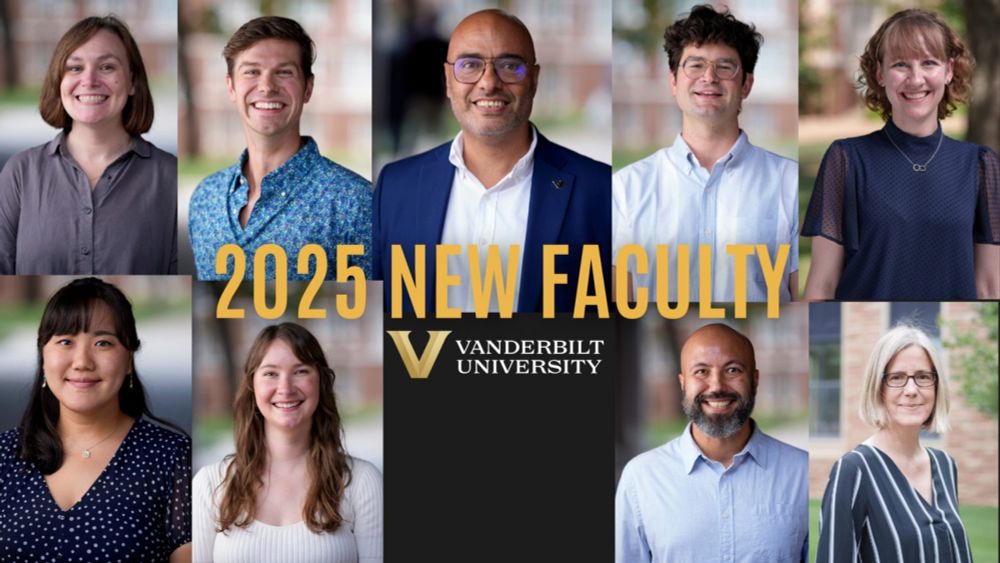
NEW FACULTY: Professors explain how their research could better the world
Hear from Vanderbilt's newest faculty on the positive impact their research could have on society.
news.vanderbilt.edu
September 9, 2025 at 1:34 AM
A nice highlight of what we hope to tackle in our lab!
Also, check out all the cool things the other faculty at Vandy are doing!
news.vanderbilt.edu/2025/09/08/n...
Also, check out all the cool things the other faculty at Vandy are doing!
news.vanderbilt.edu/2025/09/08/n...
Big #NewPI step today - had the lab submit abstracts for @ascbiology.bsky.social 2025!
ASCB was one of my first conferences as a trainee, and I've loved it since!
ASCB was one of my first conferences as a trainee, and I've loved it since!
September 4, 2025 at 2:56 AM
Big #NewPI step today - had the lab submit abstracts for @ascbiology.bsky.social 2025!
ASCB was one of my first conferences as a trainee, and I've loved it since!
ASCB was one of my first conferences as a trainee, and I've loved it since!
Replace this with HaloTag and I'd feel very attacked right now!

August 16, 2025 at 2:30 PM
Replace this with HaloTag and I'd feel very attacked right now!