



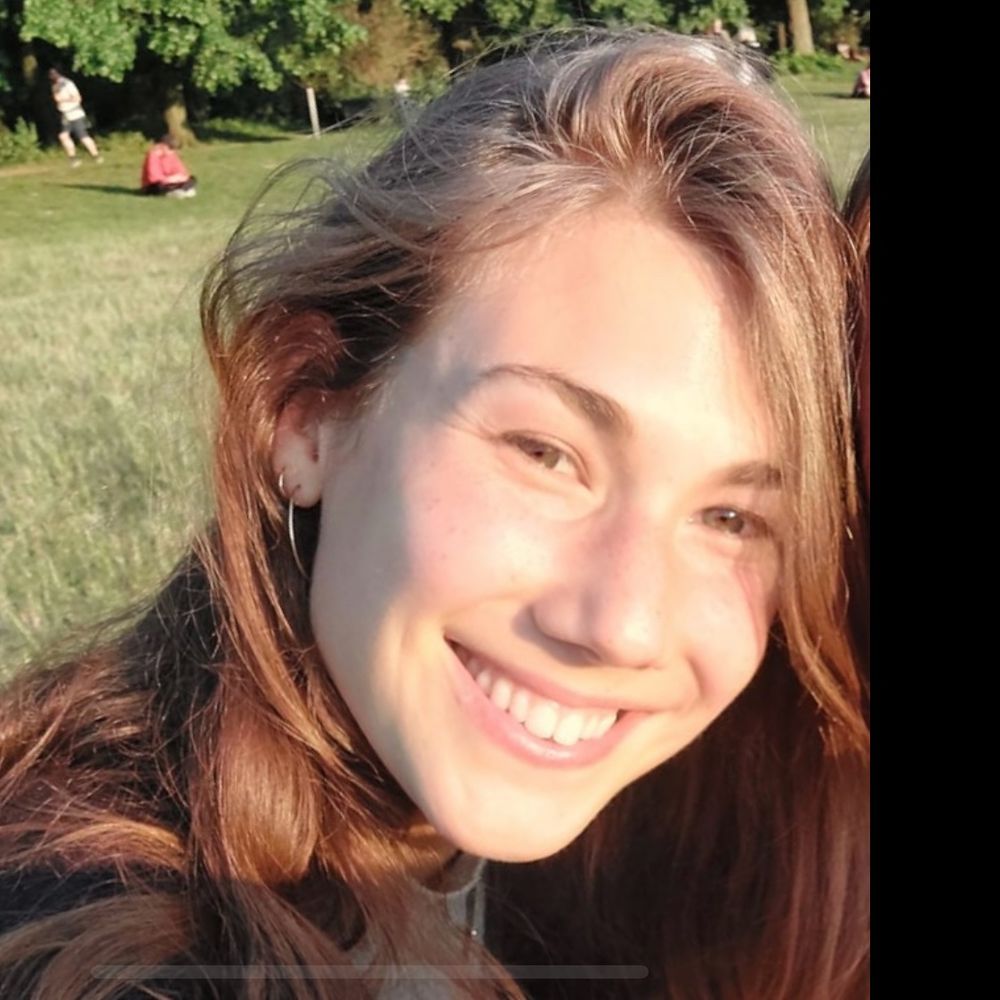
Karin Schann
@karin555.bsky.social
Scientist at the CNB-CSIC Madrid
SynBio enthusiast 🧬🦠
Microbial engineering | Synthetic metabolism | Biosensors
Berlin 🇩🇪 | Madrid 🇪🇸 | Groningen 🇳🇱
SynBio enthusiast 🧬🦠
Microbial engineering | Synthetic metabolism | Biosensors
Berlin 🇩🇪 | Madrid 🇪🇸 | Groningen 🇳🇱
Reposted by Karin Schann
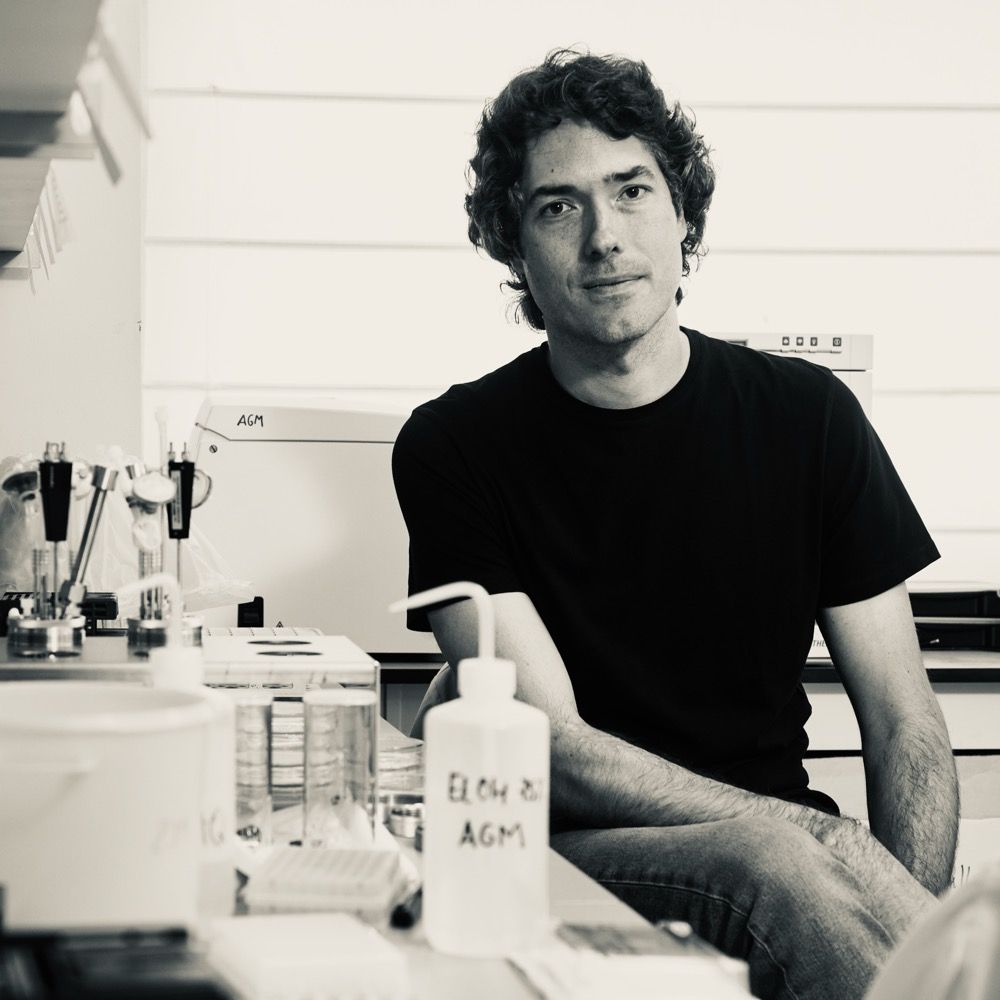
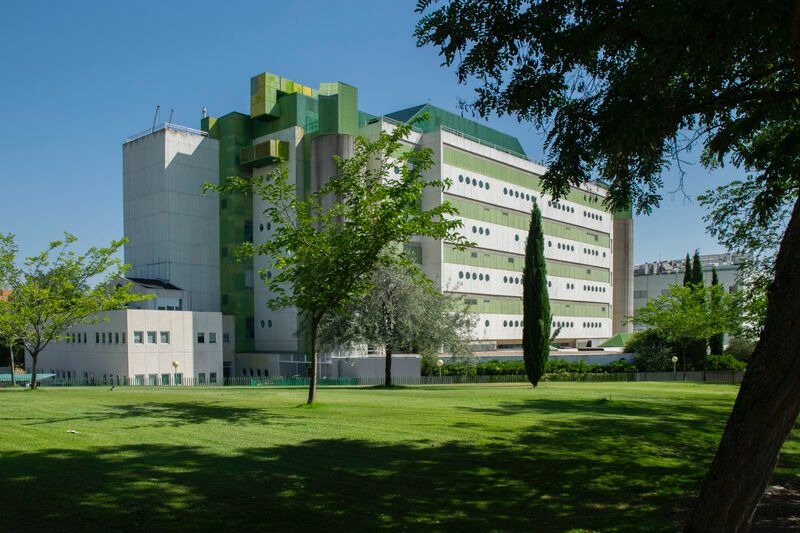
We are offering a #PhD candidate position (Spanish FPI) to work with us at the @cnb-csic.bsky.social in Madrid. The project you would be part of: establish a #biofoundry at our institution, to optimize #synbio experiments from #design to #test. If interested, get in touch!


May 30, 2025 at 7:22 AM
We are offering a #PhD candidate position (Spanish FPI) to work with us at the @cnb-csic.bsky.social in Madrid. The project you would be part of: establish a #biofoundry at our institution, to optimize #synbio experiments from #design to #test. If interested, get in touch!
Reposted by Karin Schann
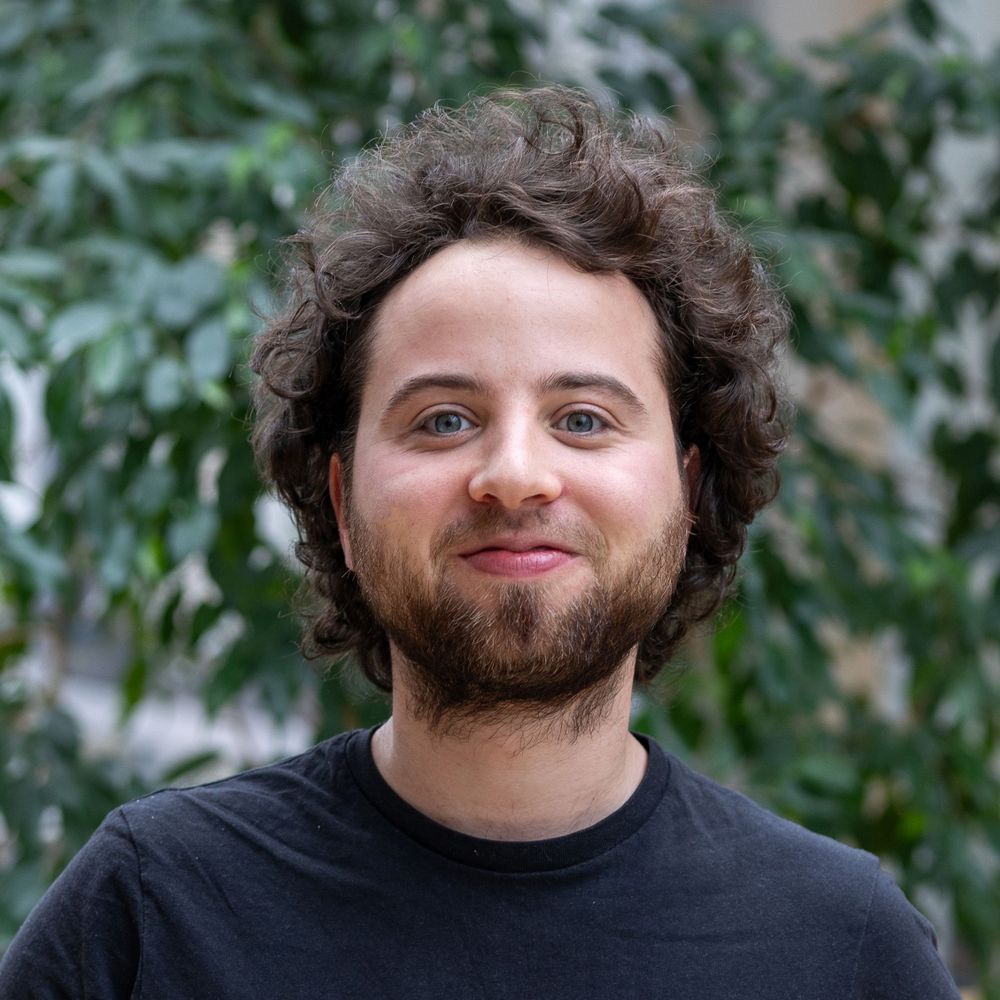
Excited to share a main project from my PhD, out now in
@naturecomms.bsky.social! 📝
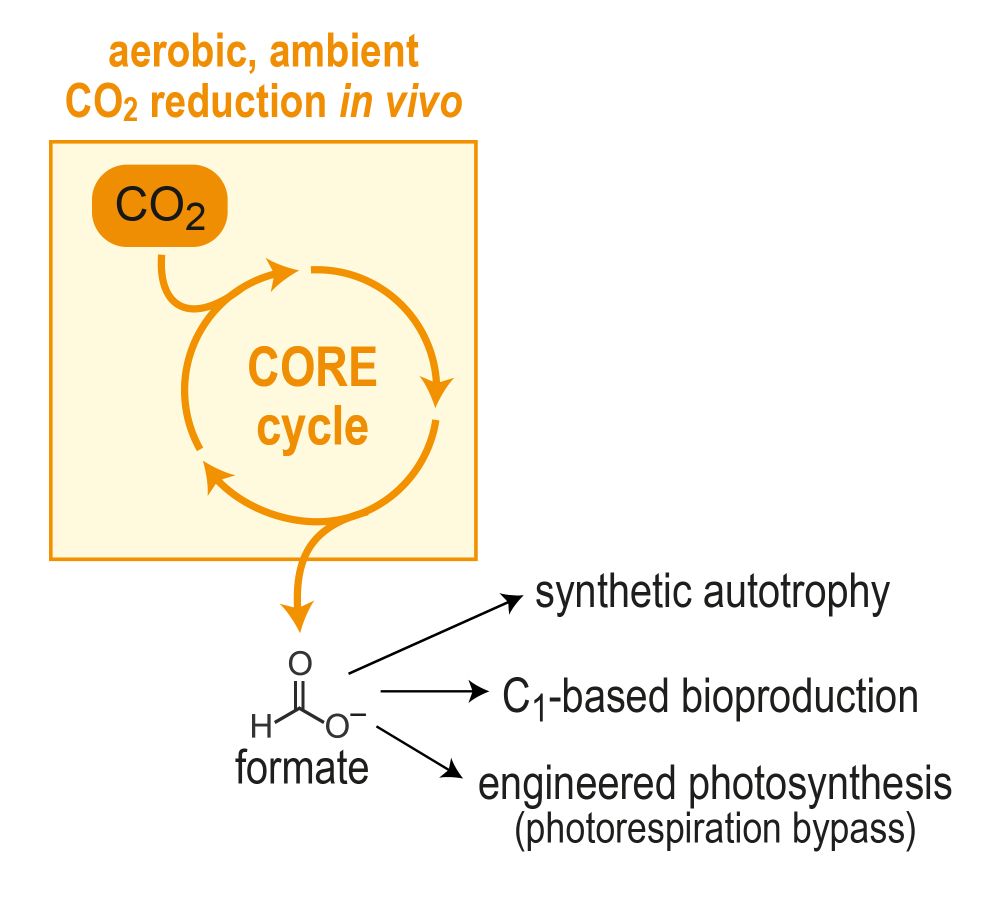
We've designed and brought to life the “CORE cycle” – a new-to-nature pathway that provides a novel route for biological CO2 capture 🦠🌱
nature.com/articles/s41...
Take a look! Thread below... 🧵
@naturecomms.bsky.social! 📝
We've designed and brought to life the “CORE cycle” – a new-to-nature pathway that provides a novel route for biological CO2 capture 🦠🌱
nature.com/articles/s41...
Take a look! Thread below... 🧵
April 4, 2025 at 10:03 AM
Excited to share a main project from my PhD, out now in
@naturecomms.bsky.social! 📝
We've designed and brought to life the “CORE cycle” – a new-to-nature pathway that provides a novel route for biological CO2 capture 🦠🌱
nature.com/articles/s41...
Take a look! Thread below... 🧵
@naturecomms.bsky.social! 📝
We've designed and brought to life the “CORE cycle” – a new-to-nature pathway that provides a novel route for biological CO2 capture 🦠🌱
nature.com/articles/s41...
Take a look! Thread below... 🧵
Reposted by Karin Schann
Interested in Sustainability, Metabolic Engineering and Evolution?
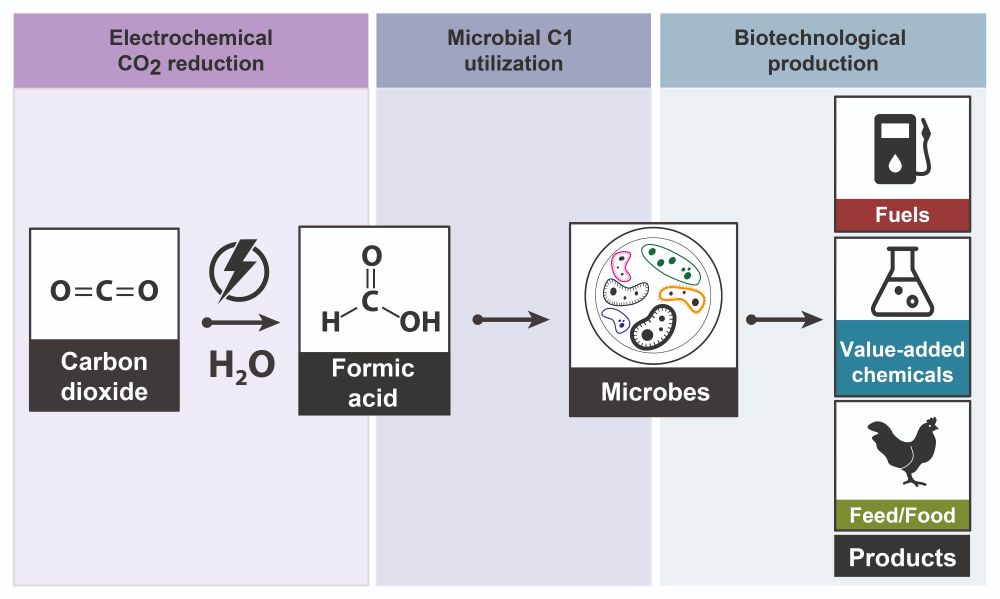
Check out how we convinced E. coli to grow on the CO2-derived substrate formic acid using the synthetic Serine Threonine Cycle! ♻️🌱🦠
OPEN ACCESS publication to be found here:
🚨 doi.org/10.1016/j.ym... 🚨
#MEvoSky #microsky
(1/🧵)
Check out how we convinced E. coli to grow on the CO2-derived substrate formic acid using the synthetic Serine Threonine Cycle! ♻️🌱🦠
OPEN ACCESS publication to be found here:
🚨 doi.org/10.1016/j.ym... 🚨
#MEvoSky #microsky
(1/🧵)
March 6, 2025 at 10:10 AM
Interested in Sustainability, Metabolic Engineering and Evolution?
Check out how we convinced E. coli to grow on the CO2-derived substrate formic acid using the synthetic Serine Threonine Cycle! ♻️🌱🦠
OPEN ACCESS publication to be found here:
🚨 doi.org/10.1016/j.ym... 🚨
#MEvoSky #microsky
(1/🧵)
Check out how we convinced E. coli to grow on the CO2-derived substrate formic acid using the synthetic Serine Threonine Cycle! ♻️🌱🦠
OPEN ACCESS publication to be found here:
🚨 doi.org/10.1016/j.ym... 🚨
#MEvoSky #microsky
(1/🧵)
Reposted by Karin Schann
Really happy to share that our work on constructing six glyoxylate / glycolate sensors covering a three order of magnitude concentration range is out now in Nature Communications ! 🔥
Read below to see how we developed the sensors and what they are good for 🥳.
www.nature.com/articles/s41...
Read below to see how we developed the sensors and what they are good for 🥳.
www.nature.com/articles/s41...
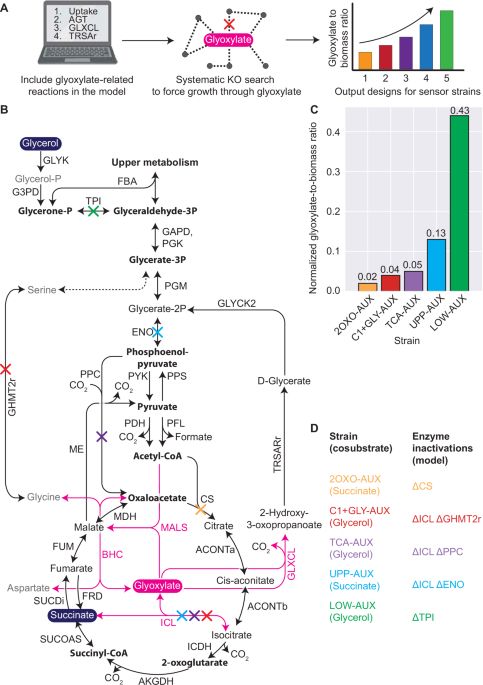
Computation-aided designs enable developing auxotrophic metabolic sensors for wide-range glyoxylate and glycolate detection - Nature Communications
Auxotrophic metabolic sensors (AMS) are vital for bioengineering but are often time-consuming to develop. Here, the authors present a workflow for designing versatile AMS, demonstrating their use for ...
www.nature.com
March 4, 2025 at 6:03 PM
Really happy to share that our work on constructing six glyoxylate / glycolate sensors covering a three order of magnitude concentration range is out now in Nature Communications ! 🔥
Read below to see how we developed the sensors and what they are good for 🥳.
www.nature.com/articles/s41...
Read below to see how we developed the sensors and what they are good for 🥳.
www.nature.com/articles/s41...
Reposted by Karin Schann
Hello Bluesky community,
transitioning from passive observer to active participant on this platform, I want to quickly introduce myself:
I am a synthetic biologist with a passion for enzymes and metabolic pathways that enable microbial growth on CO2/CO2-derived carbon sources.
transitioning from passive observer to active participant on this platform, I want to quickly introduce myself:
I am a synthetic biologist with a passion for enzymes and metabolic pathways that enable microbial growth on CO2/CO2-derived carbon sources.

February 14, 2025 at 12:38 PM
Hello Bluesky community,
transitioning from passive observer to active participant on this platform, I want to quickly introduce myself:
I am a synthetic biologist with a passion for enzymes and metabolic pathways that enable microbial growth on CO2/CO2-derived carbon sources.
transitioning from passive observer to active participant on this platform, I want to quickly introduce myself:
I am a synthetic biologist with a passion for enzymes and metabolic pathways that enable microbial growth on CO2/CO2-derived carbon sources.
Reposted by Karin Schann
Some of the 🚫🪞🦠 authors got grants to do exactly this. We've discussed pros & cons of this by now, but the grant text actually is a great example of how blatantly we exaggerate in proposals. In 2019, they propose to create mirror cells within 6 yrs. In 2024, they write such a feat is far away. 1/2


December 15, 2024 at 9:05 AM
Some of the 🚫🪞🦠 authors got grants to do exactly this. We've discussed pros & cons of this by now, but the grant text actually is a great example of how blatantly we exaggerate in proposals. In 2019, they propose to create mirror cells within 6 yrs. In 2024, they write such a feat is far away. 1/2
Such a special day with these amazing people! Feeling so grateful for all the memories and the wonderful time spend together. I'll miss working with you! 🫶🏼🧬🦋
Pre-Xmas Lab lunch incl farewell of Karin Schann, @sebwenk.bsky.social, @glekasp.bsky.social & Fra Demaria. We will miss you in 2025 😢. So privileged to work with this super-special bunch of people 👇

December 12, 2024 at 7:09 PM
Such a special day with these amazing people! Feeling so grateful for all the memories and the wonderful time spend together. I'll miss working with you! 🫶🏼🧬🦋
Reposted by Karin Schann
💥💥💥 !!! Please re-post !!! 💥💥💥
Hello Community,
We’re excited to announce that we’re moving to Groningen in January 2025 to embark on a new chapter in our research careers. For this, we need a house/flat and we hope to find a nice place with your help.
Hello Community,
We’re excited to announce that we’re moving to Groningen in January 2025 to embark on a new chapter in our research careers. For this, we need a house/flat and we hope to find a nice place with your help.

December 9, 2024 at 3:21 PM
💥💥💥 !!! Please re-post !!! 💥💥💥
Hello Community,
We’re excited to announce that we’re moving to Groningen in January 2025 to embark on a new chapter in our research careers. For this, we need a house/flat and we hope to find a nice place with your help.
Hello Community,
We’re excited to announce that we’re moving to Groningen in January 2025 to embark on a new chapter in our research careers. For this, we need a house/flat and we hope to find a nice place with your help.
Reposted by Karin Schann
We developed a brand new #CRISPR toolkit for Cupriavidus necator, a biotechnological platform for CO2 (and derivatives) valorization.
The system is based on self-splicing introns and allows us to get mutants within 48h and with efficiencies up to 80%
doi.org/10.1101/2024.11.24.625072 [1/n]
The system is based on self-splicing introns and allows us to get mutants within 48h and with efficiencies up to 80%
doi.org/10.1101/2024.11.24.625072 [1/n]

November 25, 2024 at 1:59 PM
We developed a brand new #CRISPR toolkit for Cupriavidus necator, a biotechnological platform for CO2 (and derivatives) valorization.
The system is based on self-splicing introns and allows us to get mutants within 48h and with efficiencies up to 80%
doi.org/10.1101/2024.11.24.625072 [1/n]
The system is based on self-splicing introns and allows us to get mutants within 48h and with efficiencies up to 80%
doi.org/10.1101/2024.11.24.625072 [1/n]
Reposted by Karin Schann
My first paper post on BlueSky: today our preprint on an an efficient SIBR-Cas tool for genome editing of my favorite C. necator (bug growing on H2, CO2 and formate came online www.biorxiv.org/content/10.1... #syntheticbiology #C1

Streamlined and efficient genome editing in Cupriavidus necator H16 using an optimised SIBR-Cas system
Cupriavidus necator H16 is a promising microbial platform strain for CO2 valorisation. While C. necator is amenable to genome editing, existing tools are often inefficient or rely on lengthy protocols...
www.biorxiv.org
November 25, 2024 at 5:47 PM
My first paper post on BlueSky: today our preprint on an an efficient SIBR-Cas tool for genome editing of my favorite C. necator (bug growing on H2, CO2 and formate came online www.biorxiv.org/content/10.1... #syntheticbiology #C1
Reposted by Karin Schann

EMBL Sabbatical Visitor fellowship offers senior scientists an opportunity to spend up to 1 year at EMBL, fostering collaboration, research exchange and exploring new fields in a vibrant and interdisciplinary environment! The sabbaticals are funded up to 15 000 ,- €.
November 25, 2024 at 8:56 AM
EMBL Sabbatical Visitor fellowship offers senior scientists an opportunity to spend up to 1 year at EMBL, fostering collaboration, research exchange and exploring new fields in a vibrant and interdisciplinary environment! The sabbaticals are funded up to 15 000 ,- €.