



Gravity Exploration Institute
@gravitycardiff.bsky.social
A research institute in the School of Physics and Astronomy at Cardiff University, focused on detecting gravitational waves and understanding their sources.
Reposted by Gravity Exploration Institute
Back in 2016, our scientists from @gravitycardiff.bsky.social explained the our first detection of gravitational waves youtu.be/Lcxt097G4Ps?...
(Featuring our now spokesperson Prof. Fairhurst enjoying paddling in a swimming pool)
#GW10Years
(Featuring our now spokesperson Prof. Fairhurst enjoying paddling in a swimming pool)
#GW10Years

The First Ever Detection of Gravitational Waves
YouTube video by Cardiff University
youtu.be
February 11, 2026 at 11:38 AM
Back in 2016, our scientists from @gravitycardiff.bsky.social explained the our first detection of gravitational waves youtu.be/Lcxt097G4Ps?...
(Featuring our now spokesperson Prof. Fairhurst enjoying paddling in a swimming pool)
#GW10Years
(Featuring our now spokesperson Prof. Fairhurst enjoying paddling in a swimming pool)
#GW10Years
This art, depicting the most massive merger detected to date, was created by our GEI PhD student, Sama Al-Shammari:
In July, the LVK collaboration announced the detection of the most massive black hole merger to date, named GW231123. A black hole 103 times the mass of our sun and another 137 times the mass of our sun merged to form a black 225 times the mass of our sun!

January 6, 2026 at 4:37 PM
This art, depicting the most massive merger detected to date, was created by our GEI PhD student, Sama Al-Shammari:
A 2025 news round-up from one of our GEI PhD students:
2025 was an eventful year for gravitational waves! Here is a brief round-up of some of the biggest gravitational wave news stories from last year:

January 6, 2026 at 4:33 PM
A 2025 news round-up from one of our GEI PhD students:
Reposted by Gravity Exploration Institute
We are pleased to announce our discovery of #GW241011 and #GW241110
Both come from binary black holes where one black hole is much larger than the other. The larger black holes have large spin. Could these black holes have formed in a previous merger?
ligo.org/science-summ...
#O4IsHere 🔭🧪⚛️☄️
Both come from binary black holes where one black hole is much larger than the other. The larger black holes have large spin. Could these black holes have formed in a previous merger?
ligo.org/science-summ...
#O4IsHere 🔭🧪⚛️☄️

October 29, 2025 at 1:58 PM
We are pleased to announce our discovery of #GW241011 and #GW241110
Both come from binary black holes where one black hole is much larger than the other. The larger black holes have large spin. Could these black holes have formed in a previous merger?
ligo.org/science-summ...
#O4IsHere 🔭🧪⚛️☄️
Both come from binary black holes where one black hole is much larger than the other. The larger black holes have large spin. Could these black holes have formed in a previous merger?
ligo.org/science-summ...
#O4IsHere 🔭🧪⚛️☄️
Reposted by Gravity Exploration Institute
A new mini-documentary by our colleagues at @uofgravity.bsky.social celebrating the 10th anniversary of our first detection and the progress in #GravitationalWave astronomy
youtu.be/SqhFtkQ4f2c
#GW10Years 🔭🧪⚛️🎢
youtu.be/SqhFtkQ4f2c
#GW10Years 🔭🧪⚛️🎢

University of Glasgow celebrates 10th anniversary of first gravitational wave detection
YouTube video by University of Glasgow
youtu.be
September 13, 2025 at 1:18 PM
A new mini-documentary by our colleagues at @uofgravity.bsky.social celebrating the 10th anniversary of our first detection and the progress in #GravitationalWave astronomy
youtu.be/SqhFtkQ4f2c
#GW10Years 🔭🧪⚛️🎢
youtu.be/SqhFtkQ4f2c
#GW10Years 🔭🧪⚛️🎢
Reposted by Gravity Exploration Institute
The latest issue of @ligomagazine.bsky.social is out now and free to read
🎉 Celebrate 10 years of gravitational-wave astronomy with us 🎉
ligo.org/wp-content/u...
🔭🧪⚛️ #GW10Years
🎉 Celebrate 10 years of gravitational-wave astronomy with us 🎉
ligo.org/wp-content/u...
🔭🧪⚛️ #GW10Years

September 13, 2025 at 6:55 PM
The latest issue of @ligomagazine.bsky.social is out now and free to read
🎉 Celebrate 10 years of gravitational-wave astronomy with us 🎉
ligo.org/wp-content/u...
🔭🧪⚛️ #GW10Years
🎉 Celebrate 10 years of gravitational-wave astronomy with us 🎉
ligo.org/wp-content/u...
🔭🧪⚛️ #GW10Years
Today we celebrate the 10th anniversary of the first detection of gravitational waves by @ligo.org 🎉 Research by members of the Gravity Exploration Institute in Cardiff helped lay the foundation for that detection, which opened an exciting new window to the universe. Read more about it here:

A decade of discovery: Academics celebrate 10 years since the first detection of gravitational waves amid announcement of exciting new breakthrough
Scientists celebrate anniversary and tests of Stephen Hawking's black hole area theorem
www.cardiff.ac.uk
September 14, 2025 at 3:37 PM
Today we celebrate the 10th anniversary of the first detection of gravitational waves by @ligo.org 🎉 Research by members of the Gravity Exploration Institute in Cardiff helped lay the foundation for that detection, which opened an exciting new window to the universe. Read more about it here:
“Black holes this massive are forbidden through standard stellar evolution models. One possibility is that the two black holes in this binary formed through earlier mergers of smaller black holes.”
July 14, 2025 at 3:44 PM
“Black holes this massive are forbidden through standard stellar evolution models. One possibility is that the two black holes in this binary formed through earlier mergers of smaller black holes.”
From the article: “This is the most massive black hole binary we’ve observed through gravitational waves, and it presents a real challenge to our understanding of black hole formation,” says Professor Mark Hannam, from Cardiff University and a member of the LIGO Scientific Collaboration.
July 14, 2025 at 3:43 PM
From the article: “This is the most massive black hole binary we’ve observed through gravitational waves, and it presents a real challenge to our understanding of black hole formation,” says Professor Mark Hannam, from Cardiff University and a member of the LIGO Scientific Collaboration.
Read more about the new announcement, including a quote from the Gravity Exploration Institute's @markdhannam.bsky.social here:
ligo.org/ligo-virgo-k...
ligo.org/ligo-virgo-k...
July 14, 2025 at 3:41 PM
Read more about the new announcement, including a quote from the Gravity Exploration Institute's @markdhannam.bsky.social here:
ligo.org/ligo-virgo-k...
ligo.org/ligo-virgo-k...
Reposted by Gravity Exploration Institute
My summary of the latest @ligo.org observation paper.
Massive black holes!
open.substack.com/pub/fictiona...
Massive black holes!
open.substack.com/pub/fictiona...

GW231123: an unearthly signal
A report on some actual science
open.substack.com
July 14, 2025 at 1:12 PM
My summary of the latest @ligo.org observation paper.
Massive black holes!
open.substack.com/pub/fictiona...
Massive black holes!
open.substack.com/pub/fictiona...
Several members from Cardiff's Gravity Exploration Institute will be taking part in this special gravitational wave science ceilidh (traditional Scottish dance) in Glasgow this week!

Hundreds of scientists are set to take part in the first performance of a new Scottish country dance inspired by the ripples in spacetime whose existence was first theorised by Albert Einstein.
More: gla.ac/3ICip4Q
#GR24Amaldi16 #GravitationalWaves #Glasgow
@uofgravity.bsky.social
More: gla.ac/3ICip4Q
#GR24Amaldi16 #GravitationalWaves #Glasgow
@uofgravity.bsky.social
July 13, 2025 at 2:41 PM
Several members from Cardiff's Gravity Exploration Institute will be taking part in this special gravitational wave science ceilidh (traditional Scottish dance) in Glasgow this week!
Prof Stephen Fairhurst of the Gravity Exploration Institute in Cardiff is the new spokesperson for the LIGO Scientific Collaboration! He is the first person from a non-US institution to hold this position. We are very pleased and proud that his many years of work within the LSC have been recognised.
We are pleased to introduce our new spokesperson, Prof. Stephen Fairhurst of @gravitycardiff.bsky.social!
"I look forward to working with the excellent scientists and engineers in the collaboration"
ligo.org/lsc-welcomes...
"I look forward to working with the excellent scientists and engineers in the collaboration"
ligo.org/lsc-welcomes...

May 21, 2025 at 1:45 PM
Prof Stephen Fairhurst of the Gravity Exploration Institute in Cardiff is the new spokesperson for the LIGO Scientific Collaboration! He is the first person from a non-US institution to hold this position. We are very pleased and proud that his many years of work within the LSC have been recognised.
Reposted by Gravity Exploration Institute
🎉 We have reached 200 #GravitationalWave candidates in O4! 🎉
The fourth observing run (O4) of our detector network has had the best performance so far, with more candidates than ever before! We are currently busy analysing all these wonderful data and look forward to sharing results
#O4IsHere 🔭☄️
The fourth observing run (O4) of our detector network has had the best performance so far, with more candidates than ever before! We are currently busy analysing all these wonderful data and look forward to sharing results
#O4IsHere 🔭☄️
March 19, 2025 at 1:34 PM
🎉 We have reached 200 #GravitationalWave candidates in O4! 🎉
The fourth observing run (O4) of our detector network has had the best performance so far, with more candidates than ever before! We are currently busy analysing all these wonderful data and look forward to sharing results
#O4IsHere 🔭☄️
The fourth observing run (O4) of our detector network has had the best performance so far, with more candidates than ever before! We are currently busy analysing all these wonderful data and look forward to sharing results
#O4IsHere 🔭☄️
Reposted by Gravity Exploration Institute
Nine years ago we announced to the world that we have detected #GravitationalWaves we did it!
youtu.be/lslUF9gdYI8
youtu.be/lslUF9gdYI8
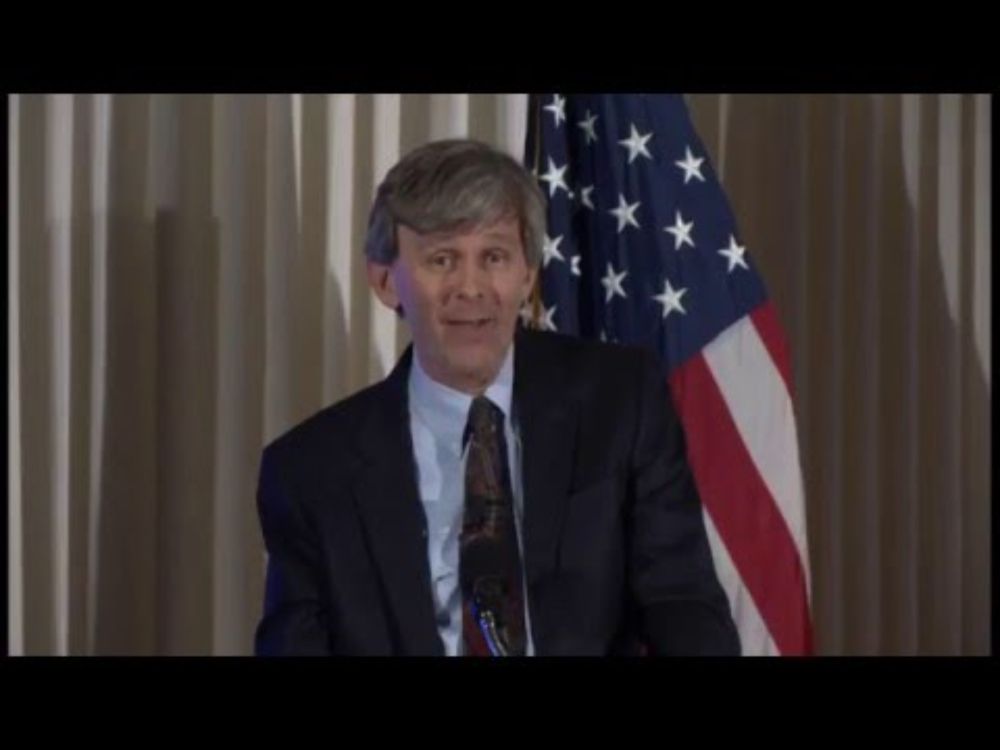
LIGO -- Dave Reitze We have Detected Gravitational Waves
YouTube video by sciencejedi
youtu.be
February 11, 2025 at 4:26 PM
Nine years ago we announced to the world that we have detected #GravitationalWaves we did it!
youtu.be/lslUF9gdYI8
youtu.be/lslUF9gdYI8
You can read the paper here: journals.aps.org/prd/abstract...
Or the preprint version here: arxiv.org/abs/2009.14611
Or the preprint version here: arxiv.org/abs/2009.14611
Toward real-time detection of unmodeled gravitational wave transients using convolutional neural networks
Convolutional neural networks (CNNs) have demonstrated potential for the real-time analysis of data from gravitational wave detector networks for the specific case of signals from coalescing compact-o...
journals.aps.org
February 10, 2025 at 2:00 PM
You can read the paper here: journals.aps.org/prd/abstract...
Or the preprint version here: arxiv.org/abs/2009.14611
Or the preprint version here: arxiv.org/abs/2009.14611
Compared to other unmodelled transient searches currently used for the LIGO and Virgo detectors, MLy is not only much faster, it also uses only a fraction of the computing power, making it extremely efficient.
February 10, 2025 at 1:54 PM
Compared to other unmodelled transient searches currently used for the LIGO and Virgo detectors, MLy is not only much faster, it also uses only a fraction of the computing power, making it extremely efficient.
...those from core-collapse supernovae, gamma ray bursts, or unknown sources.
Our new pipeline, MLy (pronounced “Emily”) will be able to detect such unmodelled signals within seconds, which is important for quickly triggering follow up searches in electromagnetic radiation and energetic particles.
Our new pipeline, MLy (pronounced “Emily”) will be able to detect such unmodelled signals within seconds, which is important for quickly triggering follow up searches in electromagnetic radiation and energetic particles.
February 10, 2025 at 1:54 PM
...those from core-collapse supernovae, gamma ray bursts, or unknown sources.
Our new pipeline, MLy (pronounced “Emily”) will be able to detect such unmodelled signals within seconds, which is important for quickly triggering follow up searches in electromagnetic radiation and energetic particles.
Our new pipeline, MLy (pronounced “Emily”) will be able to detect such unmodelled signals within seconds, which is important for quickly triggering follow up searches in electromagnetic radiation and energetic particles.
Although CNNs have previously been used for analysing gravitational waves from sources with modelled signals, such as binary black holes and neutron stars, this is the first time the method has been usefully applied for the real-time detection of unmodelled signals in LIGO-Virgo data, such as...
February 10, 2025 at 1:54 PM
Although CNNs have previously been used for analysing gravitational waves from sources with modelled signals, such as binary black holes and neutron stars, this is the first time the method has been usefully applied for the real-time detection of unmodelled signals in LIGO-Virgo data, such as...
A recent paper from the GEI presents the first convolutional neural network (CNN) analysis pipeline for the detection of generic transient gravitational waves signals, with sensitivity across a wide range of signal parameters, used for real-time searches in data from the LIGO and Virgo detectors.


February 10, 2025 at 1:54 PM
A recent paper from the GEI presents the first convolutional neural network (CNN) analysis pipeline for the detection of generic transient gravitational waves signals, with sensitivity across a wide range of signal parameters, used for real-time searches in data from the LIGO and Virgo detectors.
Reposted by Gravity Exploration Institute

Living Reviews in Relativity welcomes B. S. Sathyaprakash! Expert from Penn State University and Cardiff University joins as new Associate Editor for Gravitational Waves:
link.springer.com/journal/4111... #LivingRevRelativ #MeetTheEditors
link.springer.com/journal/4111... #LivingRevRelativ #MeetTheEditors

January 25, 2025 at 7:28 PM
Living Reviews in Relativity welcomes B. S. Sathyaprakash! Expert from Penn State University and Cardiff University joins as new Associate Editor for Gravitational Waves:
link.springer.com/journal/4111... #LivingRevRelativ #MeetTheEditors
link.springer.com/journal/4111... #LivingRevRelativ #MeetTheEditors
Happy New Year! Blwyddyn Newydd Dda!
January 1, 2025 at 12:49 AM
Happy New Year! Blwyddyn Newydd Dda!
The people who attended those workshops helped shape the field of gravitational physics over the next 50 years and many are still active today.
December 13, 2024 at 5:39 PM
The people who attended those workshops helped shape the field of gravitational physics over the next 50 years and many are still active today.
... physicists and mathematicians could discuss relativity and gravitation. Experts came from around the world to discuss that year's topic, to present their recent work, to learn more about what others were doing in their field, and to spend time together, strengthening their scientific community.
December 13, 2024 at 5:39 PM
... physicists and mathematicians could discuss relativity and gravitation. Experts came from around the world to discuss that year's topic, to present their recent work, to learn more about what others were doing in their field, and to spend time together, strengthening their scientific community.
The first Gregynog Relativity Workshop was held at Gregynog Hall in Mid Wales, September 1-3, 1975. The topic was Thermodynamic Properties of Gravitational Fields.
#flashbackfriday
When Bernard Schutz @bschutz.bsky.social moved to Cardiff in 1974, he began to organize workshops where...
#flashbackfriday
When Bernard Schutz @bschutz.bsky.social moved to Cardiff in 1974, he began to organize workshops where...

December 13, 2024 at 5:39 PM
The first Gregynog Relativity Workshop was held at Gregynog Hall in Mid Wales, September 1-3, 1975. The topic was Thermodynamic Properties of Gravitational Fields.
#flashbackfriday
When Bernard Schutz @bschutz.bsky.social moved to Cardiff in 1974, he began to organize workshops where...
#flashbackfriday
When Bernard Schutz @bschutz.bsky.social moved to Cardiff in 1974, he began to organize workshops where...