



Gesa Hoffmann
@gesahoffmann.bsky.social
Postdoc at the @MPIMP in Potsdam with Marco Incarbone.
Fascinated by all things plant pathogen and trying to understand the mysteries of plant virus vertical transmission. 🦠🌱💚
Fascinated by all things plant pathogen and trying to understand the mysteries of plant virus vertical transmission. 🦠🌱💚
Pinned
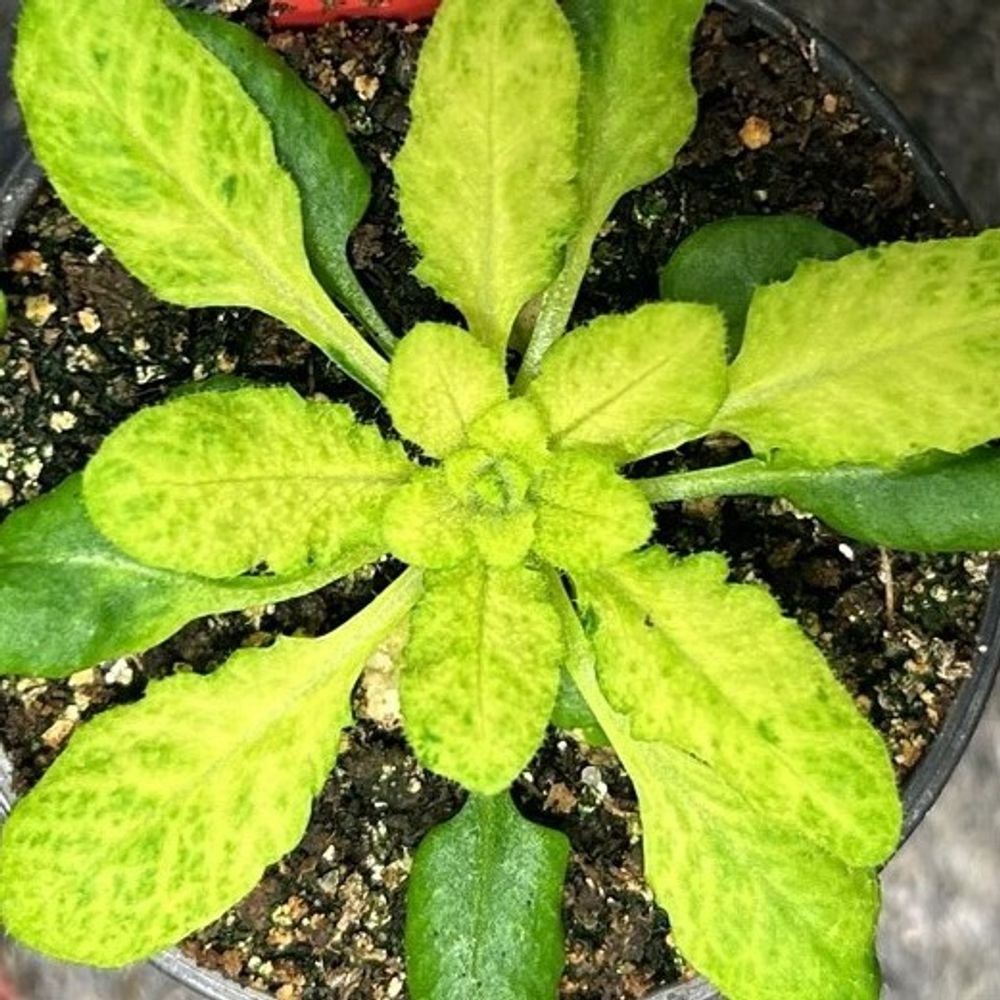
Preprint alert! It is my great pleasure to announce the first manuscript from the lab, a story that started @gmivienna.bsky.social and was mainly accomplished by the intrepid @gesahoffmann.bsky.social at @mpi-mp-potsdam.bsky.social. A brief thread with our findings
www.biorxiv.org/content/10.1...
www.biorxiv.org/content/10.1...

AGO5 restricts virus vertical transmission in plant gametophytes
The propagation of a viral infection from a host parent to its progeny is known as vertical transmission, or seed transmission in plants. It allows viral infections to rapidly spread locally via polle...
www.biorxiv.org
Have you ever wondered how it is possible that systemically infected plants produce (a certain percentage of) healthy progeny? 💚
Check out the first preprint of the @incavirus.bsky.social lab and first preprint of my postdoc! 🍀
We'd be very happy about feedback and discussions!
Check out the first preprint of the @incavirus.bsky.social lab and first preprint of my postdoc! 🍀
We'd be very happy about feedback and discussions!
Reposted by Gesa Hoffmann
🔬 EXPERT VIEW 🔬
In this review, Cox & Czymmek cover the recent developments of expansion microscopy techniques in plant systems and provides examples of their applications in plant biology research.
🔗 doi.org/10.1093/jxb/...
#PlantScience 🧪 @kcox-bioguy.bsky.social
In this review, Cox & Czymmek cover the recent developments of expansion microscopy techniques in plant systems and provides examples of their applications in plant biology research.
🔗 doi.org/10.1093/jxb/...
#PlantScience 🧪 @kcox-bioguy.bsky.social

December 27, 2025 at 4:45 PM
🔬 EXPERT VIEW 🔬
In this review, Cox & Czymmek cover the recent developments of expansion microscopy techniques in plant systems and provides examples of their applications in plant biology research.
🔗 doi.org/10.1093/jxb/...
#PlantScience 🧪 @kcox-bioguy.bsky.social
In this review, Cox & Czymmek cover the recent developments of expansion microscopy techniques in plant systems and provides examples of their applications in plant biology research.
🔗 doi.org/10.1093/jxb/...
#PlantScience 🧪 @kcox-bioguy.bsky.social
Reposted by Gesa Hoffmann
Defence-mediated phloem restriction of a plant virus facilitates insect transmission
www.nature.com/articles/s41...
www.nature.com/articles/s41...
Defence-mediated phloem restriction of a plant virus facilitates insect transmission - Nature Communications
How plant viruses are restricted to the phloem are long-standing questions in plant virology. The paper shows PENETRATION3 activity and callose deposition confine plant viruses to the phloem, which fa...
www.nature.com
December 23, 2025 at 2:22 PM
Defence-mediated phloem restriction of a plant virus facilitates insect transmission
www.nature.com/articles/s41...
www.nature.com/articles/s41...
Reposted by Gesa Hoffmann

🎄✨ Season’s greetings from UPSC!
Looking ahead to the new year - are you an early career plant scientist interested in new research ideas and collaborations?
🌾Apply for the UPSC Early Career Symposium, April 2026!🧪
🗓 Deadline: 11 January 2026
👉 www.upsc.se/early-career...
Looking ahead to the new year - are you an early career plant scientist interested in new research ideas and collaborations?
🌾Apply for the UPSC Early Career Symposium, April 2026!🧪
🗓 Deadline: 11 January 2026
👉 www.upsc.se/early-career...


December 23, 2025 at 10:12 AM
🎄✨ Season’s greetings from UPSC!
Looking ahead to the new year - are you an early career plant scientist interested in new research ideas and collaborations?
🌾Apply for the UPSC Early Career Symposium, April 2026!🧪
🗓 Deadline: 11 January 2026
👉 www.upsc.se/early-career...
Looking ahead to the new year - are you an early career plant scientist interested in new research ideas and collaborations?
🌾Apply for the UPSC Early Career Symposium, April 2026!🧪
🗓 Deadline: 11 January 2026
👉 www.upsc.se/early-career...
Reposted by Gesa Hoffmann
Are you an experienced PhD student or postdoc in plant science looking to connect, present your work, and discuss career paths?
Join us at the 3rd Early Career Plant Researchers Network Meeting, Halle (Saale), 20–21 April 2026
Deadline: 23 January 2026
plant-ecr-networking.eu
Join us at the 3rd Early Career Plant Researchers Network Meeting, Halle (Saale), 20–21 April 2026
Deadline: 23 January 2026
plant-ecr-networking.eu

December 19, 2025 at 2:48 PM
Are you an experienced PhD student or postdoc in plant science looking to connect, present your work, and discuss career paths?
Join us at the 3rd Early Career Plant Researchers Network Meeting, Halle (Saale), 20–21 April 2026
Deadline: 23 January 2026
plant-ecr-networking.eu
Join us at the 3rd Early Career Plant Researchers Network Meeting, Halle (Saale), 20–21 April 2026
Deadline: 23 January 2026
plant-ecr-networking.eu
Thank you @scienceslam.de for this wonderful night in Hamburg! 👩🔬🎤
I had a blast, learned a lot and thoroughly enjoyed slamming about vertical transmission of plant viruses 🦠💚
I had a blast, learned a lot and thoroughly enjoyed slamming about vertical transmission of plant viruses 🦠💚

December 17, 2025 at 7:53 AM
Thank you @scienceslam.de for this wonderful night in Hamburg! 👩🔬🎤
I had a blast, learned a lot and thoroughly enjoyed slamming about vertical transmission of plant viruses 🦠💚
I had a blast, learned a lot and thoroughly enjoyed slamming about vertical transmission of plant viruses 🦠💚
Reposted by Gesa Hoffmann

Organelles do NOT have a single uniform pH.
And if you think they must, because “protons diffuse fast,” this paper is for you.
A thread on why that assumption is wrong; and what we found instead. 🧵 1/n
And if you think they must, because “protons diffuse fast,” this paper is for you.
A thread on why that assumption is wrong; and what we found instead. 🧵 1/n

Organelles harbour pH gradients https://www.biorxiv.org/content/10.64898/2025.12.12.694065v1
December 17, 2025 at 12:46 AM
Organelles do NOT have a single uniform pH.
And if you think they must, because “protons diffuse fast,” this paper is for you.
A thread on why that assumption is wrong; and what we found instead. 🧵 1/n
And if you think they must, because “protons diffuse fast,” this paper is for you.
A thread on why that assumption is wrong; and what we found instead. 🧵 1/n
Reposted by Gesa Hoffmann

The Clavel Group is recruiting a new postdoc for two possible projects dealing with plant-virus interactions and selective autophagy! More (wordy) details below ⬇️🌱🦠

December 16, 2025 at 5:15 PM
The Clavel Group is recruiting a new postdoc for two possible projects dealing with plant-virus interactions and selective autophagy! More (wordy) details below ⬇️🌱🦠
Reposted by Gesa Hoffmann

🧪🌱 Sooo… our paper on how SPOROCYTELESS/NOZZLE controls the onset of megasporogenesis is finally out in @natcomms.nature.com 🎉🎉! This is one of the major projects of my postdoc at #LuciaColombo’s lab at #UniMI. www.nature.com/articles/s41... 🧶 1/7
SPOROCYTELESS/NOZZLE cooperates with MADS-domain transcription factors to regulate an auxin-dependent network controlling Megaspore-Mother-Cell differentiation - Nature Communications
In plants, the MMC represents the precursor of the female germline. Here, the authors show that SPL/NZZ, together with ovule-identity MADS-domain transcription factors, controls MMC differentiation by...
www.nature.com
December 15, 2025 at 9:56 PM
🧪🌱 Sooo… our paper on how SPOROCYTELESS/NOZZLE controls the onset of megasporogenesis is finally out in @natcomms.nature.com 🎉🎉! This is one of the major projects of my postdoc at #LuciaColombo’s lab at #UniMI. www.nature.com/articles/s41... 🧶 1/7
Reposted by Gesa Hoffmann

An embryo-derived peptide signal directs endosperm polarity in Arabidopsis https://www.biorxiv.org/content/10.64898/2025.12.11.693621v1
December 14, 2025 at 6:01 AM
An embryo-derived peptide signal directs endosperm polarity in Arabidopsis https://www.biorxiv.org/content/10.64898/2025.12.11.693621v1
Reposted by Gesa Hoffmann
🧬 TECHNICAL INNOVATION 🧬
CRISPR/Cas technology is an emerging tool for identifying nucleic acid sequences.
Hak et al. present a user-friendly, extraction-free, rapid protocol for specific on-site detection of plant viruses using CRISPR/Cas13a.
🔗 doi.org/10.1093/jxb/...
#PlantScience 🧪
CRISPR/Cas technology is an emerging tool for identifying nucleic acid sequences.
Hak et al. present a user-friendly, extraction-free, rapid protocol for specific on-site detection of plant viruses using CRISPR/Cas13a.
🔗 doi.org/10.1093/jxb/...
#PlantScience 🧪

December 2, 2025 at 2:11 PM
🧬 TECHNICAL INNOVATION 🧬
CRISPR/Cas technology is an emerging tool for identifying nucleic acid sequences.
Hak et al. present a user-friendly, extraction-free, rapid protocol for specific on-site detection of plant viruses using CRISPR/Cas13a.
🔗 doi.org/10.1093/jxb/...
#PlantScience 🧪
CRISPR/Cas technology is an emerging tool for identifying nucleic acid sequences.
Hak et al. present a user-friendly, extraction-free, rapid protocol for specific on-site detection of plant viruses using CRISPR/Cas13a.
🔗 doi.org/10.1093/jxb/...
#PlantScience 🧪
Have you ever wondered how it is possible that systemically infected plants produce (a certain percentage of) healthy progeny? 💚
Check out the first preprint of the @incavirus.bsky.social lab and first preprint of my postdoc! 🍀
We'd be very happy about feedback and discussions!
Check out the first preprint of the @incavirus.bsky.social lab and first preprint of my postdoc! 🍀
We'd be very happy about feedback and discussions!
Preprint alert! It is my great pleasure to announce the first manuscript from the lab, a story that started @gmivienna.bsky.social and was mainly accomplished by the intrepid @gesahoffmann.bsky.social at @mpi-mp-potsdam.bsky.social. A brief thread with our findings
www.biorxiv.org/content/10.1...
www.biorxiv.org/content/10.1...
AGO5 restricts virus vertical transmission in plant gametophytes
The propagation of a viral infection from a host parent to its progeny is known as vertical transmission, or seed transmission in plants. It allows viral infections to rapidly spread locally via polle...
www.biorxiv.org
December 2, 2025 at 1:34 PM
Have you ever wondered how it is possible that systemically infected plants produce (a certain percentage of) healthy progeny? 💚
Check out the first preprint of the @incavirus.bsky.social lab and first preprint of my postdoc! 🍀
We'd be very happy about feedback and discussions!
Check out the first preprint of the @incavirus.bsky.social lab and first preprint of my postdoc! 🍀
We'd be very happy about feedback and discussions!
Reposted by Gesa Hoffmann

Glad to have this finally published: www.sciencedirect.com/science/arti... lots of new data since the #preprint. If you are into selective #autophagy, #evolution, #proteostasis Please have a look!

December 1, 2025 at 5:44 PM
Glad to have this finally published: www.sciencedirect.com/science/arti... lots of new data since the #preprint. If you are into selective #autophagy, #evolution, #proteostasis Please have a look!
Reposted by Gesa Hoffmann
It's great to see this work finally out! @newphyt.bsky.social
Here we showed that auxin production after fertilization is a conserved, paternal-triggered mechanism for seed initiation in angiosperms.
Here we showed that auxin production after fertilization is a conserved, paternal-triggered mechanism for seed initiation in angiosperms.

#Genomic #imprinting in an early-diverging lineage
✉ nph.onlinelibrary.wiley.com/doi/10.1111/...
#Letter article by Florez-Rueda et al.
@WileyPlantSci #PlantScience
✉ nph.onlinelibrary.wiley.com/doi/10.1111/...
#Letter article by Florez-Rueda et al.
@WileyPlantSci #PlantScience

December 1, 2025 at 2:15 PM
It's great to see this work finally out! @newphyt.bsky.social
Here we showed that auxin production after fertilization is a conserved, paternal-triggered mechanism for seed initiation in angiosperms.
Here we showed that auxin production after fertilization is a conserved, paternal-triggered mechanism for seed initiation in angiosperms.
Reposted by Gesa Hoffmann
In vivo RNA structure influences the translation and stability of plant long noncoding RNAs #research #PlantCommunications cell.com/plant-commun...

October 28, 2025 at 9:35 AM
In vivo RNA structure influences the translation and stability of plant long noncoding RNAs #research #PlantCommunications cell.com/plant-commun...
Reposted by Gesa Hoffmann
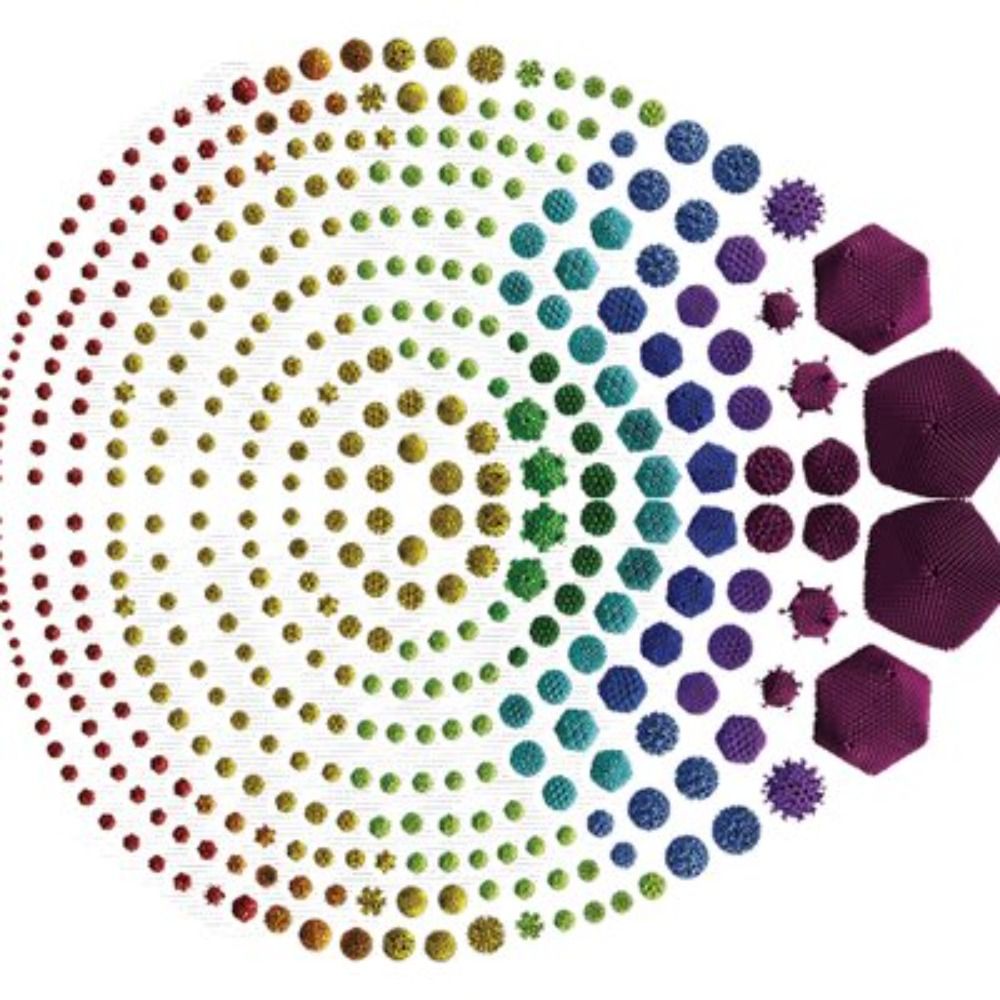
Check out our latest paper on mirusviruses, one of the most remarkable new groups of protist viruses - extremely diverse, carry lots of spliceosomal introns (including new homing introns) and are at the evolutionary crossroads between tailed phages and herpesviruses! www.nature.com/articles/s41...

Widespread and intron-rich mirusviruses are predicted to reproduce in nuclei of unicellular eukaryotes - Nature Microbiology
Environmental metagenomic explorations show that Mirusviricota lineages lack essential replication and transcription genes and contain spliceosomal introns, suggesting nuclear reproduction.
www.nature.com
November 28, 2025 at 4:43 PM
Check out our latest paper on mirusviruses, one of the most remarkable new groups of protist viruses - extremely diverse, carry lots of spliceosomal introns (including new homing introns) and are at the evolutionary crossroads between tailed phages and herpesviruses! www.nature.com/articles/s41...
Reposted by Gesa Hoffmann

Great talk by @delphinem-p.bsky.social from @geminiteamlab.bsky.social yesterday: “Hijacking the Plant #Spliceosome” on how alternative splicing drives #viral infection and #tomato fruit development 🍅
Thanks to our host @incavirus.bsky.social for organizing this insightful seminar! 👏
Thanks to our host @incavirus.bsky.social for organizing this insightful seminar! 👏

November 27, 2025 at 9:42 AM
Great talk by @delphinem-p.bsky.social from @geminiteamlab.bsky.social yesterday: “Hijacking the Plant #Spliceosome” on how alternative splicing drives #viral infection and #tomato fruit development 🍅
Thanks to our host @incavirus.bsky.social for organizing this insightful seminar! 👏
Thanks to our host @incavirus.bsky.social for organizing this insightful seminar! 👏
Reposted by Gesa Hoffmann
Looking for a #PhDposition in #PlantScience ?
Our #IMPRS @mpi-mp-potsdam.bsky.social and @unipotsdam.bsky.social is #hiring !
📅 Apply by 10 January 2026
More info:
👉 www.mpimp-golm.mpg.de/IMPRS-PhD
Please share this post to plant it in the right feed 🌱 #PlantSciJobs
Our #IMPRS @mpi-mp-potsdam.bsky.social and @unipotsdam.bsky.social is #hiring !
📅 Apply by 10 January 2026
More info:
👉 www.mpimp-golm.mpg.de/IMPRS-PhD
Please share this post to plant it in the right feed 🌱 #PlantSciJobs

November 28, 2025 at 8:05 AM
Looking for a #PhDposition in #PlantScience ?
Our #IMPRS @mpi-mp-potsdam.bsky.social and @unipotsdam.bsky.social is #hiring !
📅 Apply by 10 January 2026
More info:
👉 www.mpimp-golm.mpg.de/IMPRS-PhD
Please share this post to plant it in the right feed 🌱 #PlantSciJobs
Our #IMPRS @mpi-mp-potsdam.bsky.social and @unipotsdam.bsky.social is #hiring !
📅 Apply by 10 January 2026
More info:
👉 www.mpimp-golm.mpg.de/IMPRS-PhD
Please share this post to plant it in the right feed 🌱 #PlantSciJobs
Reposted by Gesa Hoffmann

And now we have Arabidopsis plants with 8 chromosomes instead of 10 and no obvious phenotypic differences, this week in @science.org
#PlantScience
Paper here: www.science.org/doi/10.1126/...
Perspective here:
www.science.org/doi/10.1126/...
#PlantScience
Paper here: www.science.org/doi/10.1126/...
Perspective here:
www.science.org/doi/10.1126/...

CRISPR-Cas–mediated heritable chromosome fusions in Arabidopsis
The genome of Arabidopsis thaliana consists of 10 chromosomes. By inducing CRISPR-Cas–mediated breaks at subcentromeric and subtelomeric sequences, we fused entire chromosome arms, obtaining two eight...
www.science.org
November 21, 2025 at 10:20 AM
And now we have Arabidopsis plants with 8 chromosomes instead of 10 and no obvious phenotypic differences, this week in @science.org
#PlantScience
Paper here: www.science.org/doi/10.1126/...
Perspective here:
www.science.org/doi/10.1126/...
#PlantScience
Paper here: www.science.org/doi/10.1126/...
Perspective here:
www.science.org/doi/10.1126/...
Reposted by Gesa Hoffmann

TEs aren’t just genomic parasites, they’re also engines of genomic novelty.
Our new study with ~2,000 Z. tritici genomes shows repeated TE mobilization waves during global expansion.
With @danielcroll.bsky.social & @guidopuccetti.bsky.social
🧬 www.nature.com/articles/s41...
#TEworldwide
Our new study with ~2,000 Z. tritici genomes shows repeated TE mobilization waves during global expansion.
With @danielcroll.bsky.social & @guidopuccetti.bsky.social
🧬 www.nature.com/articles/s41...
#TEworldwide

Historic transposon mobilisation waves create distinct pools of adaptive variants in a major crop pathogen - Nature Communications
In this study, the authors analysed a large genomic dataset to trace how jumping genes shaped the global spread of a major wheat pathogen and reveal bursts of activity over decades that drove adaptati...
www.nature.com
November 12, 2025 at 1:17 PM
TEs aren’t just genomic parasites, they’re also engines of genomic novelty.
Our new study with ~2,000 Z. tritici genomes shows repeated TE mobilization waves during global expansion.
With @danielcroll.bsky.social & @guidopuccetti.bsky.social
🧬 www.nature.com/articles/s41...
#TEworldwide
Our new study with ~2,000 Z. tritici genomes shows repeated TE mobilization waves during global expansion.
With @danielcroll.bsky.social & @guidopuccetti.bsky.social
🧬 www.nature.com/articles/s41...
#TEworldwide
Reposted by Gesa Hoffmann

Excited to share our latest work on the factors that determine what genes we find (and don't find!) in GWAS and burden tests.
We describe a critical concept that we call *specificity*.
Led by Jeff Spence and Hakhamanesh Mostafavi:
We describe a critical concept that we call *specificity*.
Led by Jeff Spence and Hakhamanesh Mostafavi:

How do GWAS and rare variant burden tests rank gene signals?
In new work @nature.com with @hakha.bsky.social, @jkpritch.bsky.social, and our wonderful coauthors we find that the key factors are what we call Specificity, Length, and Luck!
🧬🧪🧵
www.nature.com/articles/s41...
In new work @nature.com with @hakha.bsky.social, @jkpritch.bsky.social, and our wonderful coauthors we find that the key factors are what we call Specificity, Length, and Luck!
🧬🧪🧵
www.nature.com/articles/s41...

Specificity, length and luck drive gene rankings in association studies - Nature
Genetic association tests prioritize candidate genes based on different criteria.
www.nature.com
November 7, 2025 at 4:08 AM
Excited to share our latest work on the factors that determine what genes we find (and don't find!) in GWAS and burden tests.
We describe a critical concept that we call *specificity*.
Led by Jeff Spence and Hakhamanesh Mostafavi:
We describe a critical concept that we call *specificity*.
Led by Jeff Spence and Hakhamanesh Mostafavi:
Reposted by Gesa Hoffmann

How many plant species are buzz pollinated? After more than six years in the making, our paper on the convergent evolution of buzz pollinated flowers is out in @journal-evo.bsky.social. Thanks @draverbee.bsky.social @roszenil.bsky.social and all co-authors for your hard work! doi.org/10.1093/evol...

October 23, 2025 at 4:50 AM
How many plant species are buzz pollinated? After more than six years in the making, our paper on the convergent evolution of buzz pollinated flowers is out in @journal-evo.bsky.social. Thanks @draverbee.bsky.social @roszenil.bsky.social and all co-authors for your hard work! doi.org/10.1093/evol...
Reposted by Gesa Hoffmann

News for mushroom lovers: With the Flora Incognita app, you can now identify numerous #mushroom species in Central Europe based on images. These results can give you a good initial indication of what you have found 🍄 😱https://floraincognita.com

October 13, 2025 at 12:04 PM
News for mushroom lovers: With the Flora Incognita app, you can now identify numerous #mushroom species in Central Europe based on images. These results can give you a good initial indication of what you have found 🍄 😱https://floraincognita.com
It was wonderful to have Bijun with us @mpi-mp-potsdam.bsky.social & @incavirus.bsky.social to finally "use our microscope to its full potential" as our core-facility put it! 🔬
Congrats to all, esp. @bijuntang.bsky.social and @xanderjones.bsky.social ! Super happy to be a part of this great story!
Congrats to all, esp. @bijuntang.bsky.social and @xanderjones.bsky.social ! Super happy to be a part of this great story!


October 10, 2025 at 7:09 AM
It was wonderful to have Bijun with us @mpi-mp-potsdam.bsky.social & @incavirus.bsky.social to finally "use our microscope to its full potential" as our core-facility put it! 🔬
Congrats to all, esp. @bijuntang.bsky.social and @xanderjones.bsky.social ! Super happy to be a part of this great story!
Congrats to all, esp. @bijuntang.bsky.social and @xanderjones.bsky.social ! Super happy to be a part of this great story!
Reposted by Gesa Hoffmann

How do geminiviruses maximize their limited coding capacity? Our recent preprint uncovers splicing of viral transcripts as one more strategy used by this viral family. We show that RNA splicing is prevalent in the geminivirus TYLCV — and required for infectivity! www.biorxiv.org/content/10.1...

Pervasive splicing in a plant DNA virus
Viruses maximize their limited coding space through strategies that increase transcript and protein diversity. In mammalian viruses, splicing is a well-established mechanism for proteome expansion, ye...
www.biorxiv.org
October 3, 2025 at 1:13 PM
How do geminiviruses maximize their limited coding capacity? Our recent preprint uncovers splicing of viral transcripts as one more strategy used by this viral family. We show that RNA splicing is prevalent in the geminivirus TYLCV — and required for infectivity! www.biorxiv.org/content/10.1...
Reposted by Gesa Hoffmann
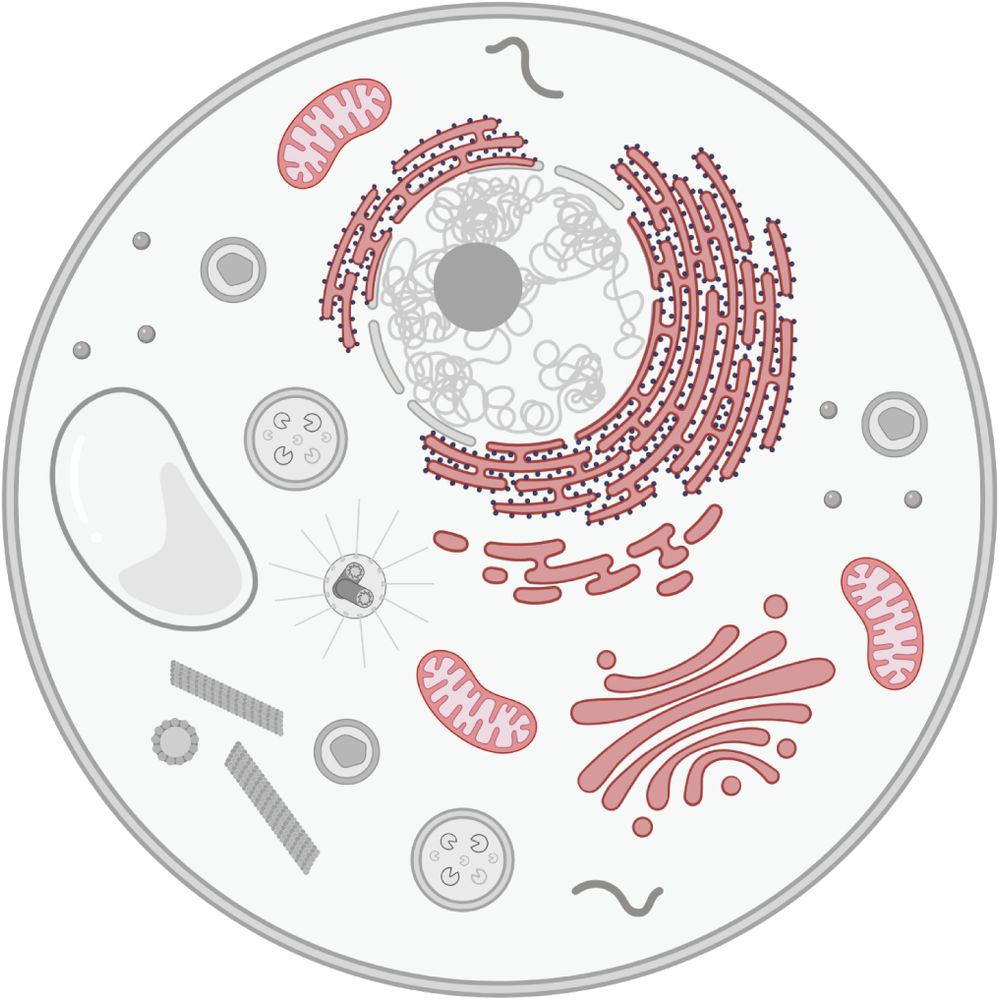
Historically, viruses were thought to primarily use host cell's translational machinery. New work from @harvardcellbio.bsky.social faculty Amy Lee reveals that a giant DNA virus encodes its own IF4F initiation complex, suggesting an unexpected evolutionary innovation. www.biorxiv.org/content/10.1...

Giant DNA viruses encode a hallmark translation initiation complex of eukaryotic life
In contrast to living organisms, viruses were long thought to lack protein synthesis machinery and instead depend on host factors to translate viral transcripts. Here, we discover that giant DNA virus...
www.biorxiv.org
October 2, 2025 at 6:10 PM
Historically, viruses were thought to primarily use host cell's translational machinery. New work from @harvardcellbio.bsky.social faculty Amy Lee reveals that a giant DNA virus encodes its own IF4F initiation complex, suggesting an unexpected evolutionary innovation. www.biorxiv.org/content/10.1...