




Galaxy Map
@galaxymap.bsky.social
The first accurate and detailed maps of the Milky Way and ways to promote and visualize them (including VR).
Website: https://kevinjardine.dev
Tip jar: https://tiptopjar.com/kevinjardine
Also follow me on @galaxy_map@mastodon.social
Website: https://kevinjardine.dev
Tip jar: https://tiptopjar.com/kevinjardine
Also follow me on @galaxy_map@mastodon.social
Pinned
Galaxy Map
@galaxymap.bsky.social
· Jan 8

The Phantom Arm
Can Gaia DR4 improve our maps of the inner galaxy?
kevinjardine.dev
I've put up one of the most ambitious (and lengthy) articles I've written on the Milky Way. The timing works out well because this year is the 75th anniversary of the detection of the 21 cm line, one of the events that started the Golden Age of galactic cartography.
kevinjardine.dev/blog/post-16/
kevinjardine.dev/blog/post-16/
Reposted by Galaxy Map

The programme of EAS 2026 is now available! 🔭 #galactic
This year, @emily.space, Josefa Großschedl, and I are chairing a special session! We are co-organising it with notably @mac0598.bsky.social on the topic of young stars, clusters & association in the Milky Way!
#EAS2026Lausanne
This year, @emily.space, Josefa Großschedl, and I are chairing a special session! We are co-organising it with notably @mac0598.bsky.social on the topic of young stars, clusters & association in the Milky Way!
#EAS2026Lausanne

January 30, 2026 at 11:52 AM
The programme of EAS 2026 is now available! 🔭 #galactic
This year, @emily.space, Josefa Großschedl, and I are chairing a special session! We are co-organising it with notably @mac0598.bsky.social on the topic of young stars, clusters & association in the Milky Way!
#EAS2026Lausanne
This year, @emily.space, Josefa Großschedl, and I are chairing a special session! We are co-organising it with notably @mac0598.bsky.social on the topic of young stars, clusters & association in the Milky Way!
#EAS2026Lausanne
Reposted by Galaxy Map
All stars move relative to us, and while relatively slow, their positions do detectably change over decades.
I wrote a #Python program to calculate a star's location in the sky at a given epoch (time). Gonna need it for updating @celestiaproject.bsky.social.
#CelestiaProject #astronomy #star
I wrote a #Python program to calculate a star's location in the sky at a given epoch (time). Gonna need it for updating @celestiaproject.bsky.social.
#CelestiaProject #astronomy #star
February 16, 2026 at 9:16 AM
All stars move relative to us, and while relatively slow, their positions do detectably change over decades.
I wrote a #Python program to calculate a star's location in the sky at a given epoch (time). Gonna need it for updating @celestiaproject.bsky.social.
#CelestiaProject #astronomy #star
I wrote a #Python program to calculate a star's location in the sky at a given epoch (time). Gonna need it for updating @celestiaproject.bsky.social.
#CelestiaProject #astronomy #star
My wife loves #chocolates and #boardgames so for Valentine's Day I got her a box of Belgian pralines and we played a round of Star Realms. Blowing up each other's galactic bases may not have *quite* fit the theme of the day but was fun. I squeeked to victory with 11 authority points remaining.

February 14, 2026 at 4:07 PM
My wife loves #chocolates and #boardgames so for Valentine's Day I got her a box of Belgian pralines and we played a round of Star Realms. Blowing up each other's galactic bases may not have *quite* fit the theme of the day but was fun. I squeeked to victory with 11 authority points remaining.
Normally my maps of the Milky Way focus on specific objects (star clusters, HII regions), or density distributions (dust, hot stars). I sometimes extrapolate beyond these to larger OB associations or star formation regions (eg. Ori OB1) but very rarely do I try to discern spiral arms.
February 12, 2026 at 8:25 AM
Normally my maps of the Milky Way focus on specific objects (star clusters, HII regions), or density distributions (dust, hot stars). I sometimes extrapolate beyond these to larger OB associations or star formation regions (eg. Ori OB1) but very rarely do I try to discern spiral arms.
Love this image of IC 342.
Credit: Credit: NASA/JPL-Caltech/J. Turner (UCLA)
Credit: Credit: NASA/JPL-Caltech/J. Turner (UCLA)

February 11, 2026 at 11:02 AM
Love this image of IC 342.
Credit: Credit: NASA/JPL-Caltech/J. Turner (UCLA)
Credit: Credit: NASA/JPL-Caltech/J. Turner (UCLA)
Messier 58 - another barred spiral galaxy. But does not seem to have an inner ring. Credit: Adam Block/Mount Lemmon SkyCenter/University of Arizona

February 11, 2026 at 8:11 AM
Messier 58 - another barred spiral galaxy. But does not seem to have an inner ring. Credit: Adam Block/Mount Lemmon SkyCenter/University of Arizona
Continuing my search for nearby barred spiral galaxies to compare to the Milky Way. Here's Messier 91. Credit: NOIRLab/NSF/AURA

February 10, 2026 at 4:00 PM
Continuing my search for nearby barred spiral galaxies to compare to the Milky Way. Here's Messier 91. Credit: NOIRLab/NSF/AURA
I'm continuing on with my galactic structure experiments. I've been looking at another paper on HII regions in the inner galaxy.
ui.adsabs.harvard.edu/abs/2009ApJ....
ui.adsabs.harvard.edu/abs/2009ApJ....
Resolution of the Distance Ambiguity for Galactic H II Regions
We resolve the kinematic distance ambiguity for 266 inner Galaxy H II regions out of a sample of 291 using existing H I and <SUP>13</SUP>CO sky surveys. Our sample contains all H II regions with measu...
ui.adsabs.harvard.edu
February 10, 2026 at 8:43 AM
I'm continuing on with my galactic structure experiments. I've been looking at another paper on HII regions in the inner galaxy.
ui.adsabs.harvard.edu/abs/2009ApJ....
ui.adsabs.harvard.edu/abs/2009ApJ....
Reposted by Galaxy Map

It's just over a year since we joined @bsky.app. Check out our updated #StarterPack and see what's changed!
February 6, 2026 at 12:44 PM
It's just over a year since we joined @bsky.app. Check out our updated #StarterPack and see what's changed!
Interesting. In my experience astronomers tend to oversell their research so that "here's an interesting new theory to investigate" becomes "we have revolutionized astronomy".
But it *is* an interesting theory to investigate.
ras.ac.uk/news-and-pre...
But it *is* an interesting theory to investigate.
ras.ac.uk/news-and-pre...

'Dark matter, not a black hole, could power Milky Way's heart'
drupal-media[data-view-mode=half_page_width] { display: inline-block; width: 50%; } Our Milky Way galaxy may not have a supermassive black hole at its centre
but rat...
ras.ac.uk
February 7, 2026 at 10:26 AM
Interesting. In my experience astronomers tend to oversell their research so that "here's an interesting new theory to investigate" becomes "we have revolutionized astronomy".
But it *is* an interesting theory to investigate.
ras.ac.uk/news-and-pre...
But it *is* an interesting theory to investigate.
ras.ac.uk/news-and-pre...
A beautiful image of a galaxy with a prominent inner ring and fragmentary spiral arms. Not that I think that the Milky Way looks like this but another example of how diverse the structure of disk galaxies can be.
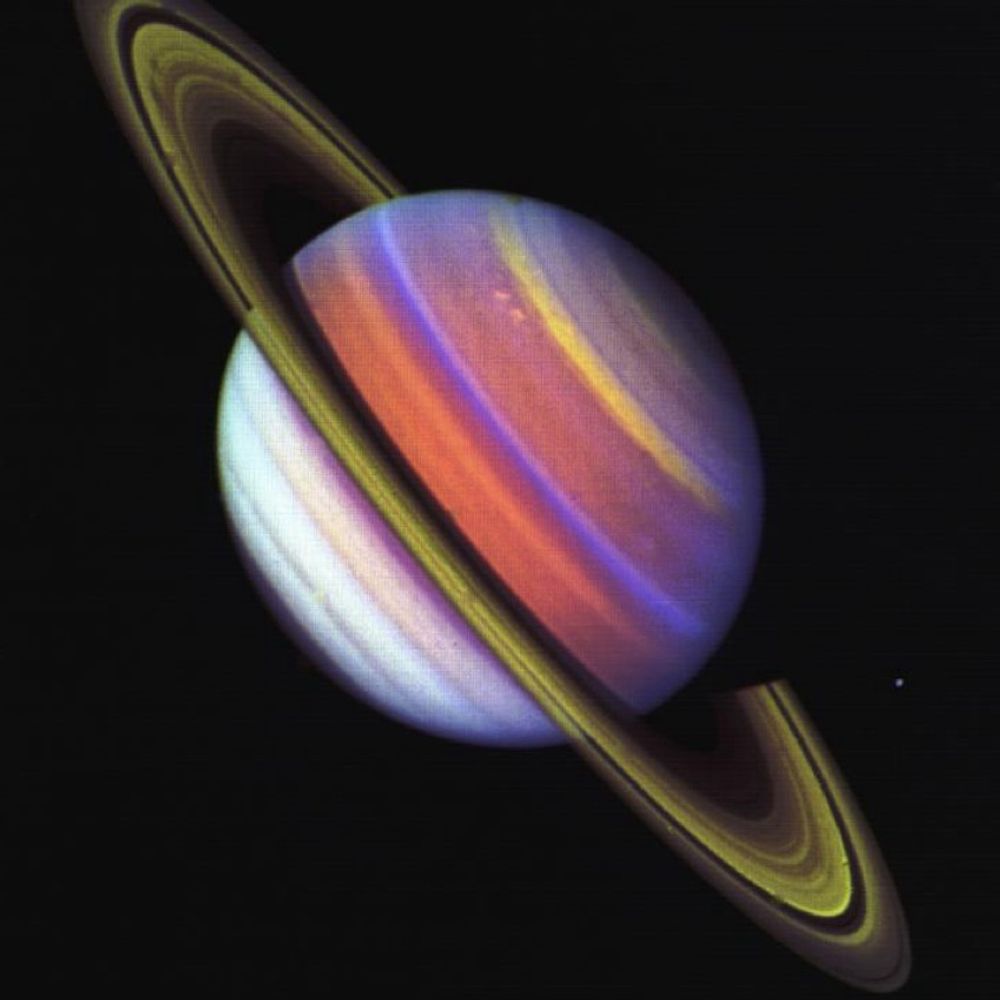
🔭 Spiral Galaxy NGC 1512: Wide Field
Image Credit & Copyright: Daniel Stern
apod.nasa.gov/apod/ap26020...
Image Credit & Copyright: Daniel Stern
apod.nasa.gov/apod/ap26020...

February 4, 2026 at 11:31 AM
A beautiful image of a galaxy with a prominent inner ring and fragmentary spiral arms. Not that I think that the Milky Way looks like this but another example of how diverse the structure of disk galaxies can be.
A few days ago I put up a 12 kpc map of the Milky Way using masers (blue), an estimated bar position and a new catalog of about 500 HII regions with Gaia-derived distances (red). Here's an enhanced version of that including star density from a new OB star catalog. The galactic centre is down.

February 4, 2026 at 8:15 AM
A few days ago I put up a 12 kpc map of the Milky Way using masers (blue), an estimated bar position and a new catalog of about 500 HII regions with Gaia-derived distances (red). Here's an enhanced version of that including star density from a new OB star catalog. The galactic centre is down.
With the availability of a new catalog of about 500 HII regions with Gaia-derived distances, I combined them with masers out to 12 kpc as explained a couple of days ago and have been tweaking my two arm Milky Way schematic. Here is the latest version.

February 2, 2026 at 9:26 AM
With the availability of a new catalog of about 500 HII regions with Gaia-derived distances, I combined them with masers out to 12 kpc as explained a couple of days ago and have been tweaking my two arm Milky Way schematic. Here is the latest version.
I still don't see the point of Artemis and I expect that I never will.
We’re proud to stand shoulder to shoulder with our international partners in Artemis. Our European Service Module is at the heart of NASA’s Orion spacecraft. Together, we're extending humankind’s presence in space and demonstrating that multilateral and inclusive cooperation is vital for our future.

January 31, 2026 at 11:02 PM
I still don't see the point of Artemis and I expect that I never will.
I just heard recently that the Andromeda galaxy is a barred spiral galaxy. That was not so obvious to me in visual images or even in this Spitzer infrared image.

January 31, 2026 at 10:58 AM
I just heard recently that the Andromeda galaxy is a barred spiral galaxy. That was not so obvious to me in visual images or even in this Spitzer infrared image.
I mentioned a few weeks ago that a research term have finally put out a catalog of about 500 HII regions with Gaia-derived distances. Here's an image out to a radius of 9 kpc that I created in Blender with the galactic centre to the right.

January 31, 2026 at 10:05 AM
I mentioned a few weeks ago that a research term have finally put out a catalog of about 500 HII regions with Gaia-derived distances. Here's an image out to a radius of 9 kpc that I created in Blender with the galactic centre to the right.
We've haven't found many or any truly Earth-like planets but that doesn't mean that they are rare. They are just hard to detect using our current techniques. A new experiment is trying something different.

After 3 decades, astronomers have found >6000 planets, but nothing quite like our own. The new Terra Hunting Experiment in the Canary Islands is designed to find what we're really looking for: an Earth-size planet in an Earth-like orbit around a Sun-like star. 🧪🔭
www.sciencenews.org/article/eart...
www.sciencenews.org/article/eart...

January 29, 2026 at 5:42 PM
We've haven't found many or any truly Earth-like planets but that doesn't mean that they are rare. They are just hard to detect using our current techniques. A new experiment is trying something different.
Yikes. In this letter, Michele Dougherty, who among other roles is the current Astronomer Royal, is asking UK astronomers to prepare for up to 60% cuts. Granted, she also mentions flat funding as a possibility but the fact that a 60% cut is even mentioned must be incredibly demoralizing.

In UK astro news, the Executive Chair of our funding council #STFC, Prof Michele Dougherty, has written to the community. TL;DR: skint. Bad times ahead for UK astro, particle physics, facilities etc 🧪🔭


January 29, 2026 at 10:35 AM
Yikes. In this letter, Michele Dougherty, who among other roles is the current Astronomer Royal, is asking UK astronomers to prepare for up to 60% cuts. Granted, she also mentions flat funding as a possibility but the fact that a 60% cut is even mentioned must be incredibly demoralizing.
I hope I live long enough in good health to be able to see some of these results!

We are already at the Gaia NIR and the engagement of the Spanish Community meeting at the Spanish Space Agency in Sevilla indico.icc.ub.edu/e/GaiaNIRSev... for three days of present and future of #ESAGaia @icc-ub.bsky.social @ieec.cat

The Gaia NIR mission and the engagement of the Spanish Community
The proposal of a new astrometric space mission, GaiaNIR, was submitted to ESA in response to the call for Voyage 2050 and was recommended by the Senior Committee. Built on the Gaia principles, GaiaNI...
indico.icc.ub.edu
January 28, 2026 at 11:33 AM
I hope I live long enough in good health to be able to see some of these results!
Astronomy needs some good news and this is the best!
The power of persistence and community unity! What a great win for #Astronomy
American company (AES Andes) was planning on building an industrial facility in the Atacama desert. This would've produced light pollution affecting the pristine skies where some big telescopes are.
Well .... no more!
🔭
American company (AES Andes) was planning on building an industrial facility in the Atacama desert. This would've produced light pollution affecting the pristine skies where some big telescopes are.
Well .... no more!
🔭

Paranal: Night Sky Secured – A Triumph for the Astronomers’ Protest
The planned industrial facility near ESO Paranal has been halted, ensuring the protection of the unique night sky for astronomical research.
www.mpe.mpg.de
January 27, 2026 at 9:21 PM
Astronomy needs some good news and this is the best!
I usually produce maps using highly luminous hot OB stars. Just for variety, here is a density map based on a larger set of stars - everything warmer than the Sun. I've labelled three mysterious regions that Gaia DR4 might help us understand,

January 19, 2026 at 8:37 AM
I usually produce maps using highly luminous hot OB stars. Just for variety, here is a density map based on a larger set of stars - everything warmer than the Sun. I've labelled three mysterious regions that Gaia DR4 might help us understand,
This afternoon I am reading papers proposing that the inner Milky Way is dominated by a bar surrounded by a prominent ring. So a bit like Messier 95.

January 17, 2026 at 4:50 PM
This afternoon I am reading papers proposing that the inner Milky Way is dominated by a bar surrounded by a prominent ring. So a bit like Messier 95.
Busy today labelling bits of the hydrogen HI4PI lbv models in my new HI4PI VR world.

January 17, 2026 at 12:35 PM
Busy today labelling bits of the hydrogen HI4PI lbv models in my new HI4PI VR world.
I've started working on an article on Gaia DR4 and the outer galaxy for February and to give away the conclusion in advance: my revised model of the Milky Way looks like this, but the usual caveats apply: there are limited masers available, and HI4PI velocity does not derive from rotation alone.

January 15, 2026 at 9:03 AM
I've started working on an article on Gaia DR4 and the outer galaxy for February and to give away the conclusion in advance: my revised model of the Milky Way looks like this, but the usual caveats apply: there are limited masers available, and HI4PI velocity does not derive from rotation alone.