



Dr. Rod Taylor
@fossilrod.bsky.social
Palaeontologist, science interpreter, nature lover and music collector.
Reposted by Dr. Rod Taylor

This #FossilFriday, how about a little look forward in the #Ediacaran to the post Kotlin Crisis extinction event strata in in Newfoundland. doi.org/10.1130/G542...
The post-extinction biotas are dominated by discs such as #Aspidella terranovica and the giant protistan #Palaeopascichnus.
The post-extinction biotas are dominated by discs such as #Aspidella terranovica and the giant protistan #Palaeopascichnus.


February 6, 2026 at 2:44 PM
This #FossilFriday, how about a little look forward in the #Ediacaran to the post Kotlin Crisis extinction event strata in in Newfoundland. doi.org/10.1130/G542...
The post-extinction biotas are dominated by discs such as #Aspidella terranovica and the giant protistan #Palaeopascichnus.
The post-extinction biotas are dominated by discs such as #Aspidella terranovica and the giant protistan #Palaeopascichnus.
Reposted by Dr. Rod Taylor
Here is a writeup of our work on #Aninoides and how it helped us to uncover a little bit of Beothuk astronomy. Obviously :-)
With huge thanks to @julialaite.bsky.social
gazette.mun.ca/research/dig...
With huge thanks to @julialaite.bsky.social
gazette.mun.ca/research/dig...

Digging up history
What do a fossil, a comet and Beothuk history have in common?
gazette.mun.ca
January 30, 2026 at 2:47 PM
Here is a writeup of our work on #Aninoides and how it helped us to uncover a little bit of Beothuk astronomy. Obviously :-)
With huge thanks to @julialaite.bsky.social
gazette.mun.ca/research/dig...
With huge thanks to @julialaite.bsky.social
gazette.mun.ca/research/dig...
A big post this #FossilFriday, folks! We've just published our paper describing the age of the #Ediacaran Inner Meadow fossil site in #Newfoundland, and it has VERY important ramifications about what we (think we) know about extinction in the Ediacaran...
Happy #FossilFriday how does a thread about the Inner Meadow biota and unexpected age for the fossils, and a refocusing of Martin Brasier’s #KotlinCrisis sound?
We’ve been trickling out our findings from Inner Meadow including #Charnia brasieri, #Aninoides and there's even cooler stuff in review. 🧵
We’ve been trickling out our findings from Inner Meadow including #Charnia brasieri, #Aninoides and there's even cooler stuff in review. 🧵


January 30, 2026 at 2:44 PM
A big post this #FossilFriday, folks! We've just published our paper describing the age of the #Ediacaran Inner Meadow fossil site in #Newfoundland, and it has VERY important ramifications about what we (think we) know about extinction in the Ediacaran...
Reposted by Dr. Rod Taylor
Happy #FossilFriday we just got page proofs of our paper on the diversity and geochronology of our #InnerMeadow site so let’s celebrate by sharing the first #Erniettomorph from the #Ediacaran of Newfoundland, #Phyllozoon (right) with a bonus #Bradgatia top left.

January 23, 2026 at 1:06 PM
Happy #FossilFriday we just got page proofs of our paper on the diversity and geochronology of our #InnerMeadow site so let’s celebrate by sharing the first #Erniettomorph from the #Ediacaran of Newfoundland, #Phyllozoon (right) with a bonus #Bradgatia top left.
This #FossilFriday, we travel to Bay St. George, #Newfoundland for #Carboniferous plants: Lepidodendron tree elements and an unidentified fern.
From the exhibits at @johnsongeocentre.bsky.social.
From the exhibits at @johnsongeocentre.bsky.social.

January 16, 2026 at 4:18 PM
This #FossilFriday, we travel to Bay St. George, #Newfoundland for #Carboniferous plants: Lepidodendron tree elements and an unidentified fern.
From the exhibits at @johnsongeocentre.bsky.social.
From the exhibits at @johnsongeocentre.bsky.social.
#FossilFriday at its best!!
Happy #FossilFriday from a wet cold La Niña Newfoundland. How about a new #Ediacaran fossil teaser, from a brand new fossil site north of St. John’s? This is one of several remarkable fossils that came out of a rockfall and discovered by my PhD student Pascal Olschewski. A new species of #Arborea!


January 16, 2026 at 4:04 PM
#FossilFriday at its best!!
This #FossilFriday: a wonderful new piece of research based on the #Ediacaran fossils of #Newfoundland. The name Aninoides is derived partly from the language of the Beothuk, the indigenous people of Newfoundland. Please read below to learn more!
Just before Christmas we published a new rangeomorph genus #Aninoides, the first new rangeomorph genus that has been introduced for a while I believe.
I promised to explain the name after the break so here we are!
Happy New Year and happy #FossilFriday!
I promised to explain the name after the break so here we are!
Happy New Year and happy #FossilFriday!


January 9, 2026 at 4:24 PM
This #FossilFriday: a wonderful new piece of research based on the #Ediacaran fossils of #Newfoundland. The name Aninoides is derived partly from the language of the Beothuk, the indigenous people of Newfoundland. Please read below to learn more!
Reposted by Dr. Rod Taylor
This #FossilFriday I am teasing some images of a forthcoming new Ediacaran genus. It is a relative of #Charnia which has hogged attention these last 3 years. My PhD student Simon is lead author. It lived on the deep dark ocean floor of the #Ediacaran Fermeuse Formation in Nfld (Inner Meadow).


December 12, 2025 at 4:13 PM
This #FossilFriday I am teasing some images of a forthcoming new Ediacaran genus. It is a relative of #Charnia which has hogged attention these last 3 years. My PhD student Simon is lead author. It lived on the deep dark ocean floor of the #Ediacaran Fermeuse Formation in Nfld (Inner Meadow).
Reposted by Dr. Rod Taylor
❓ Did you miss our recent public talk by Dr Duncan McIlroy on Charnwood Forest's newest fossil?
🌟 We've got you covered - watch the recording on our Youtube channel and discover the wonders of our fossil, Charnia brasieri!
🌐 youtube.com/live/poR8iv7...
🌟 We've got you covered - watch the recording on our Youtube channel and discover the wonders of our fossil, Charnia brasieri!
🌐 youtube.com/live/poR8iv7...

December 18, 2025 at 10:15 AM
❓ Did you miss our recent public talk by Dr Duncan McIlroy on Charnwood Forest's newest fossil?
🌟 We've got you covered - watch the recording on our Youtube channel and discover the wonders of our fossil, Charnia brasieri!
🌐 youtube.com/live/poR8iv7...
🌟 We've got you covered - watch the recording on our Youtube channel and discover the wonders of our fossil, Charnia brasieri!
🌐 youtube.com/live/poR8iv7...
This #FossilFriday, another beautiful #Newfoundland fossil: an orthocerid nautiloid from #Ordovician rocks in western Newfoundland. It's a great teaching specimen, as it shows both the internal chamber walls (septae) and the central air/water canal (siphuncle).
Photos: Chris Brown
Photos: Chris Brown


December 19, 2025 at 1:51 PM
This #FossilFriday, another beautiful #Newfoundland fossil: an orthocerid nautiloid from #Ordovician rocks in western Newfoundland. It's a great teaching specimen, as it shows both the internal chamber walls (septae) and the central air/water canal (siphuncle).
Photos: Chris Brown
Photos: Chris Brown
Reposted by Dr. Rod Taylor
This #Ediacaran #FossilFriday beauty was uncovered the 1st day Inner Meadow. We are so looking forward to sharing this one with the world. A new genus related to #Charnia (in press) it will be named for its comet-like shape, but the disc here is accidental (none of the other 9 specimens have it).

November 28, 2025 at 3:26 PM
This #Ediacaran #FossilFriday beauty was uncovered the 1st day Inner Meadow. We are so looking forward to sharing this one with the world. A new genus related to #Charnia (in press) it will be named for its comet-like shape, but the disc here is accidental (none of the other 9 specimens have it).
This #FossilFriday, here's the holotype of the #Ediacaran organism Charniodiscus concentricus from Charnwood Forest in the UK. The illustration and colour coding reveal how the organism's branches were actually preserved on different bedding planes. From doi.org/10.3389/fear...

December 5, 2025 at 12:33 PM
This #FossilFriday, here's the holotype of the #Ediacaran organism Charniodiscus concentricus from Charnwood Forest in the UK. The illustration and colour coding reveal how the organism's branches were actually preserved on different bedding planes. From doi.org/10.3389/fear...
#Fractofusus is the most common organism at many of the #Ediacaran fossil sites in #Newfoundland, and it's also one of the best preserved. Here we can see the complex branching they possessed, preserved in exquisite detail.
#FossilFriday #FractofususFriday
#FossilFriday #FractofususFriday


November 14, 2025 at 6:27 PM
#Fractofusus is the most common organism at many of the #Ediacaran fossil sites in #Newfoundland, and it's also one of the best preserved. Here we can see the complex branching they possessed, preserved in exquisite detail.
#FossilFriday #FractofususFriday
#FossilFriday #FractofususFriday
It’s #newspeciesday this #FossilFriday, and it’s a special one this time. A very happy day for the MUN Paleobiology research group! 😃❤️
This #FossilFriday I’m excitedly sharing a new #Ediacaran #Charnia brasieri named for my PhD Supervisor & friend Martin Brasier who died 2014. I’ve wanted to name something for him ever since but I wanted it to be something special. When I saw the first one from Inner Meadow I knew it was the 1 🧵


October 31, 2025 at 10:53 AM
It’s #newspeciesday this #FossilFriday, and it’s a special one this time. A very happy day for the MUN Paleobiology research group! 😃❤️
Reposted by Dr. Rod Taylor
A bit late on #FossilFriday but this Ediacaran Mistaken point specimen has been on my desk haunting me this last month. It is the paratype of #Beothukis mistakensis. All know specimens of this sp. on the E Surface are oriented nearly perpendicular to the palaeocurrent doi.org/10.3389/fear...

October 24, 2025 at 6:55 PM
A bit late on #FossilFriday but this Ediacaran Mistaken point specimen has been on my desk haunting me this last month. It is the paratype of #Beothukis mistakensis. All know specimens of this sp. on the E Surface are oriented nearly perpendicular to the palaeocurrent doi.org/10.3389/fear...
This #fossilfriday, we move in time to the #Permian when the #amphibian Seymouria sanjuanensis lived in what is New Mexico today. Clusters of large animals like this one are rarely found in the #fossil record, especially this well preserved.
Photo: Amy Henrici
Photo: Amy Henrici

October 24, 2025 at 6:17 PM
This #fossilfriday, we move in time to the #Permian when the #amphibian Seymouria sanjuanensis lived in what is New Mexico today. Clusters of large animals like this one are rarely found in the #fossil record, especially this well preserved.
Photo: Amy Henrici
Photo: Amy Henrici
Reposted by Dr. Rod Taylor
This is such a beautiful fossil to work with. As soon the first specimen appeared i loved the architecture & pulled rank, calling dibs on working on it (which i seldom do). This is the artwork of our new #Charnia that i produced for the journal to go in the graphical abstract.
#sciart #paleoart
#sciart #paleoart

October 17, 2025 at 2:11 PM
Reposted by Dr. Rod Taylor
Happy #FossilFriday from the #Ediacaran of Newfoundland and our #InnerMeadow site, teasing this beauty of a #Charnia which will get a name any day now. This specimen was found just a couple of weeks ago (after acceptance of the paper) & is c. 35cm long & 8cm wide (before retrodeformation)…,,

October 17, 2025 at 2:11 PM
Happy #FossilFriday from the #Ediacaran of Newfoundland and our #InnerMeadow site, teasing this beauty of a #Charnia which will get a name any day now. This specimen was found just a couple of weeks ago (after acceptance of the paper) & is c. 35cm long & 8cm wide (before retrodeformation)…,,
This #FossilFriday: a spectacular 3D reconstruction of Waptia fieldensis, an arthropod from the 500 million year old (Cambrian) Burgess Shale, produced by Lars Fields.
To learn more, visit doi.org/10.1098/rsos.... 😃
To learn more, visit doi.org/10.1098/rsos.... 😃
September 26, 2025 at 5:01 PM
This #FossilFriday: a spectacular 3D reconstruction of Waptia fieldensis, an arthropod from the 500 million year old (Cambrian) Burgess Shale, produced by Lars Fields.
To learn more, visit doi.org/10.1098/rsos.... 😃
To learn more, visit doi.org/10.1098/rsos.... 😃
Reposted by Dr. Rod Taylor
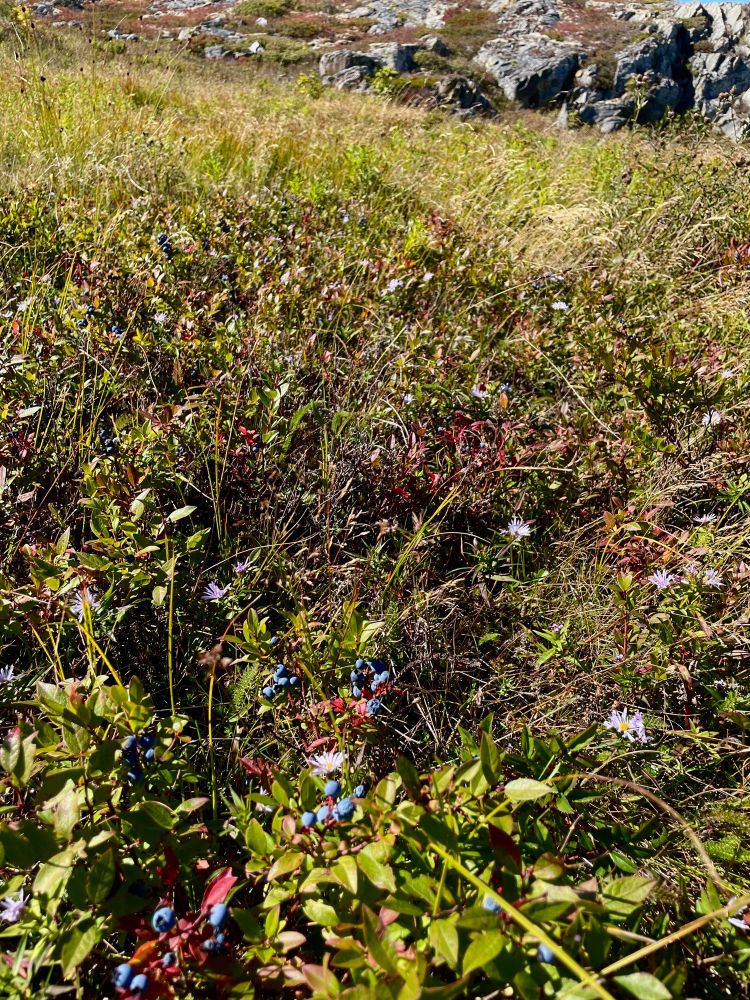
Happy #FossilFriday from the #Ediacaran of Inner Meadow in Newfoundland. The meadow is beautiful this time of year and it is great for the clearing work. Here is a newly exposed #Charnia masoni. The first masoni from this site, our faunal list is getting long!

September 26, 2025 at 12:51 PM
Happy #FossilFriday from the #Ediacaran of Inner Meadow in Newfoundland. The meadow is beautiful this time of year and it is great for the clearing work. Here is a newly exposed #Charnia masoni. The first masoni from this site, our faunal list is getting long!
This #TrilobiteTuesday: A beautifully preserved Badulesia tenera, a Middle Cambrian #trilobite from the Middle Cambrian Manuels River Formation in #Newfoundland. It had a set of distinctive ridges on the cephalon (head), making it easy to recognize.

September 23, 2025 at 2:22 PM
This #TrilobiteTuesday: A beautifully preserved Badulesia tenera, a Middle Cambrian #trilobite from the Middle Cambrian Manuels River Formation in #Newfoundland. It had a set of distinctive ridges on the cephalon (head), making it easy to recognize.
Reposted by Dr. Rod Taylor
happy #FossilFriday! in the 1820’s a captive Beothuk woman Shanawdithit created a word list including jiggamint (spiky gooseberry). She was the last of her people & from what we know a truly amazing person.
In the 1970’s punk icon John Lyndon (Johnny Rotten) inspired a generation with angst and..
In the 1970’s punk icon John Lyndon (Johnny Rotten) inspired a generation with angst and..


September 19, 2025 at 11:25 AM
happy #FossilFriday! in the 1820’s a captive Beothuk woman Shanawdithit created a word list including jiggamint (spiky gooseberry). She was the last of her people & from what we know a truly amazing person.
In the 1970’s punk icon John Lyndon (Johnny Rotten) inspired a generation with angst and..
In the 1970’s punk icon John Lyndon (Johnny Rotten) inspired a generation with angst and..
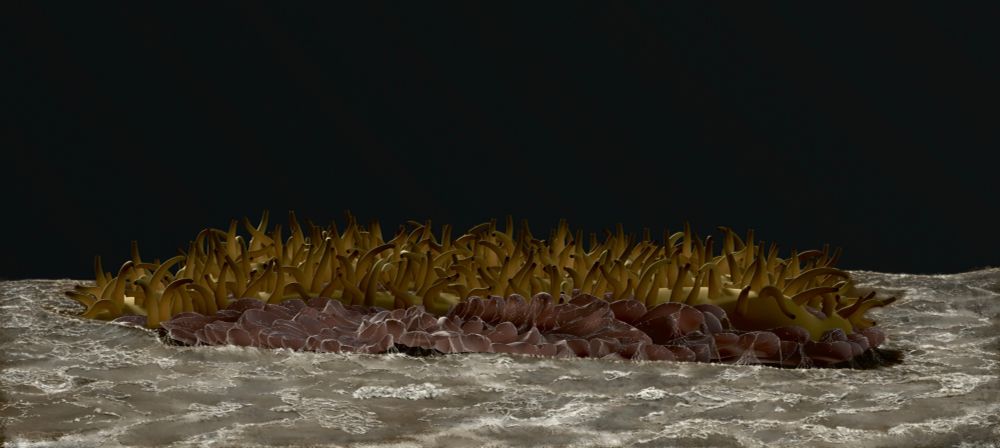
Lydonia jiggamintia, a newly described #Ediacaran organism from #Newfoundland, on the matground-covered seafloor overgrowing a decaying Fractofusus andersoni. Palaeontology isn't just about describing new organisms, it's also about understanding how they lived.
Paper available here: bit.ly/4gQ1xF7
Paper available here: bit.ly/4gQ1xF7

September 19, 2025 at 12:26 PM
Lydonia jiggamintia, a newly described #Ediacaran organism from #Newfoundland, on the matground-covered seafloor overgrowing a decaying Fractofusus andersoni. Palaeontology isn't just about describing new organisms, it's also about understanding how they lived.
Paper available here: bit.ly/4gQ1xF7
Paper available here: bit.ly/4gQ1xF7
New #Ediacaran paper alert! the sponge-like #Lydonia jiggamintia is named for the spiky-topped punk legend John Lydon [aka Johnny Rotten]. The species name is derived from the word for gooseberry in the language of the Beothuk people of Newfoundland.
palaeo-electronica.org/content/2025...
palaeo-electronica.org/content/2025...

Lydonia jiggamintia
The macrofossil Lydonia jiggamintia gen. et sp. nov. from the Ediacaran of Newfoundland (Canada): From pseudofossil to metazoan-grade organism
palaeo-electronica.org
September 16, 2025 at 6:39 PM
New #Ediacaran paper alert! the sponge-like #Lydonia jiggamintia is named for the spiky-topped punk legend John Lydon [aka Johnny Rotten]. The species name is derived from the word for gooseberry in the language of the Beothuk people of Newfoundland.
palaeo-electronica.org/content/2025...
palaeo-electronica.org/content/2025...
A great post for #FossilFriday, describing our ongoing #Ediacaran palaeontological research here in #Newfoundland.
These things are big, reaching more than 50cm in length!
These things are big, reaching more than 50cm in length!
Happy #FossilFriday from Johnson Discovery Surface in @discoverygeoparknl.bsky.social, famous for its #Fractofusus andersoni, but which also has large enigmatic forms dubbed #Blackbrookia (now considered a pseudofossil). The JDS material is however covered in pimples or meshes not seen in the type.


September 5, 2025 at 1:12 PM
A great post for #FossilFriday, describing our ongoing #Ediacaran palaeontological research here in #Newfoundland.
These things are big, reaching more than 50cm in length!
These things are big, reaching more than 50cm in length!