



@flannerm.bsky.social
Reposted
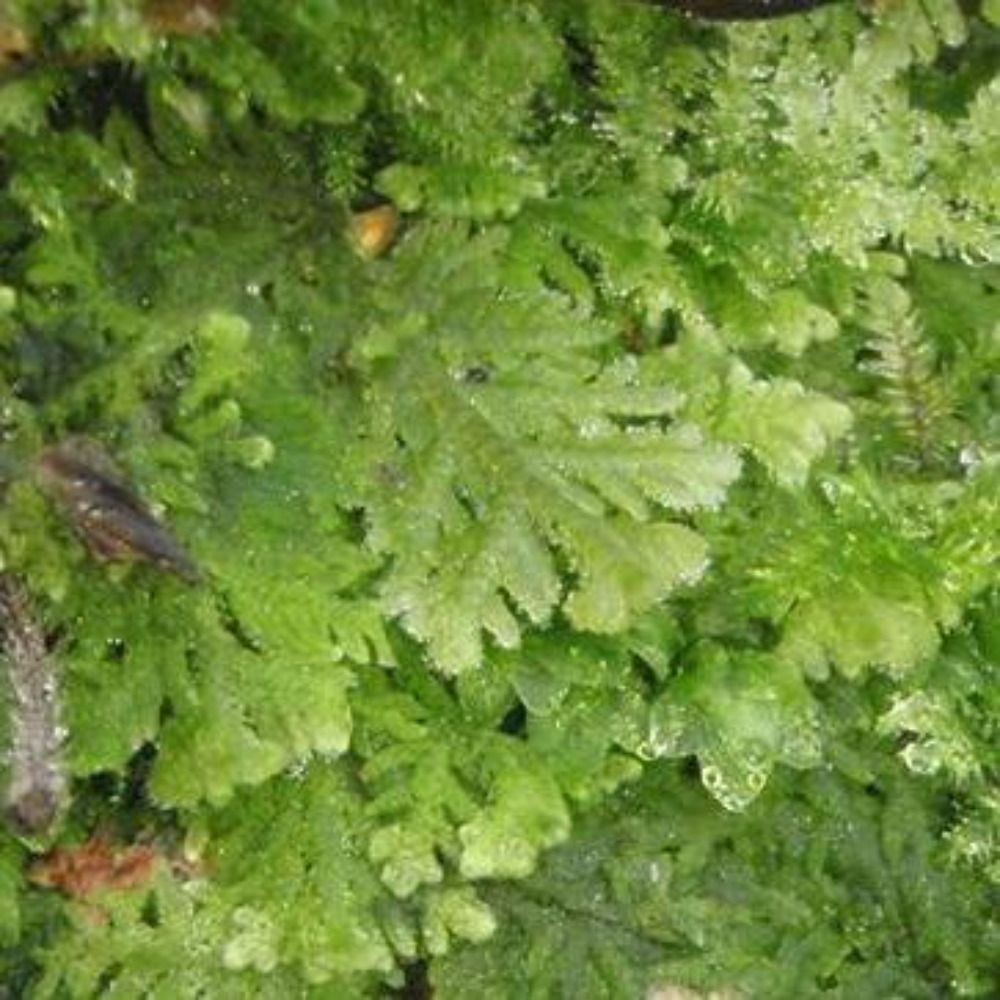
Catoscopium nigritum from "Barrie Sands" in south Wales collected by Edward Morell Holmes probably in the 1890s. In the moss collection of Henry Guermonprez at @portsmouthnh.bsky.social
@bbsbryology.bsky.social
#bryophytes
@bbsbryology.bsky.social
#bryophytes

January 12, 2026 at 7:56 PM
Catoscopium nigritum from "Barrie Sands" in south Wales collected by Edward Morell Holmes probably in the 1890s. In the moss collection of Henry Guermonprez at @portsmouthnh.bsky.social
@bbsbryology.bsky.social
#bryophytes
@bbsbryology.bsky.social
#bryophytes
Reposted
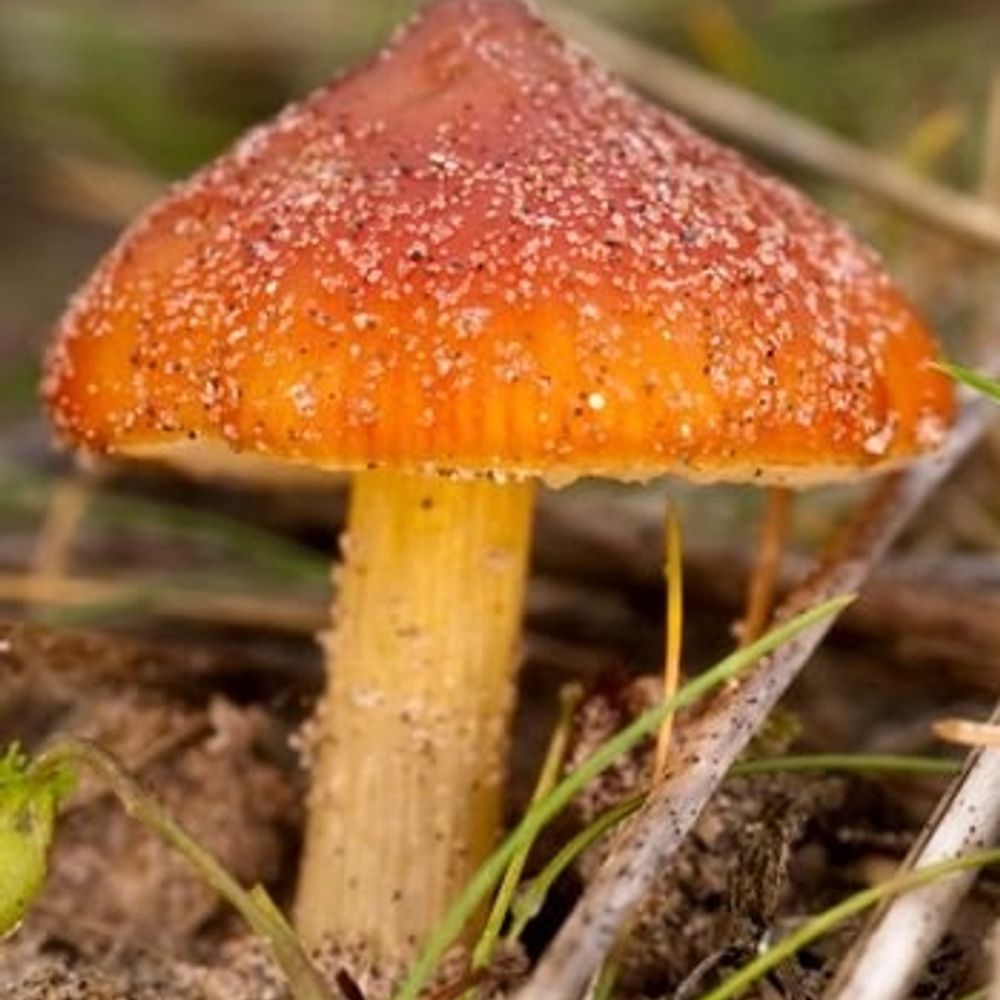
A beautiful watercolour of an Amanita by Louis C. C. Krieger. The details are really astonishing. From University of Michigan Herbarium, Krieger's Watercolors of Fungi #FungiFriends #FungiFriday quod.lib.umich.edu/f/fuwatic

January 9, 2026 at 11:21 AM
A beautiful watercolour of an Amanita by Louis C. C. Krieger. The details are really astonishing. From University of Michigan Herbarium, Krieger's Watercolors of Fungi #FungiFriends #FungiFriday quod.lib.umich.edu/f/fuwatic
Post from Herbarium World on historical herbaria and specifically the Chinese plants collected by Pierre d'Incarville herbariumworld.wordpress.com/2026/01/05/a...

Archives and Herbaria: Pierre d’Incarville
On the left, specimen of Litchi chinensis collected by Pierre d’Incarville in China in 1740. National Museum of Natural History, Paris I find Archives of Natural History an interesting journa…
herbariumworld.wordpress.com
January 8, 2026 at 4:57 PM
Post from Herbarium World on historical herbaria and specifically the Chinese plants collected by Pierre d'Incarville herbariumworld.wordpress.com/2026/01/05/a...
Reposted
Madeleine Françoise Basseporte (1701–1780) was a French painter.
From 1741 until her death, she served as the Royal Painter for the King's Garden and Cabinet (now the Jardin des Plantes), an unprecedented appointment for a woman artist at the time.
#WomensArt
From 1741 until her death, she served as the Royal Painter for the King's Garden and Cabinet (now the Jardin des Plantes), an unprecedented appointment for a woman artist at the time.
#WomensArt


July 8, 2025 at 2:52 AM
Madeleine Françoise Basseporte (1701–1780) was a French painter.
From 1741 until her death, she served as the Royal Painter for the King's Garden and Cabinet (now the Jardin des Plantes), an unprecedented appointment for a woman artist at the time.
#WomensArt
From 1741 until her death, she served as the Royal Painter for the King's Garden and Cabinet (now the Jardin des Plantes), an unprecedented appointment for a woman artist at the time.
#WomensArt
Post from Herbarium World on the In Search of Thoreau's Flowers exhibit at the Gregg Museum of Art and Design in Raleigh with works by Leah Sobsey and Robin Vuchnich herbariumworld.wordpress.com/2025/12/15/b...

Botany and Art: Thoreau
Leah Sobsey’s Wavy Leaf Aster Symphyotrichum undulate, cyanotype with Thoreau’s handwritten notes in the background, on glass with 23K gold leaf (2022). Courtesy of the artist. Though I had just tr…
herbariumworld.wordpress.com
December 18, 2025 at 11:59 PM
Post from Herbarium World on the In Search of Thoreau's Flowers exhibit at the Gregg Museum of Art and Design in Raleigh with works by Leah Sobsey and Robin Vuchnich herbariumworld.wordpress.com/2025/12/15/b...
Reposted

Through the power of digitisation, this work can be carried out at an unprecedented level.
Over 7 million of Kew's plant and fungal specimens have now stepped out of the archives and into the hands of the world 🌿
Dive into our datal, and tell us what you find!
www.kew.org/read-and-wat...
Over 7 million of Kew's plant and fungal specimens have now stepped out of the archives and into the hands of the world 🌿
Dive into our datal, and tell us what you find!
www.kew.org/read-and-wat...

How herbarium specimens hold the key to combating climate change
Many see them as dried, perhaps useless plant specimens of little purpose - but did you know that our specimens are actively being used to combat climate change?
www.kew.org
December 17, 2025 at 3:32 PM
Through the power of digitisation, this work can be carried out at an unprecedented level.
Over 7 million of Kew's plant and fungal specimens have now stepped out of the archives and into the hands of the world 🌿
Dive into our datal, and tell us what you find!
www.kew.org/read-and-wat...
Over 7 million of Kew's plant and fungal specimens have now stepped out of the archives and into the hands of the world 🌿
Dive into our datal, and tell us what you find!
www.kew.org/read-and-wat...
This is definitely something to think about @nataliajagielska.bsky.social

And I use "stylized" in quotes given it's a normal style in the region to realistically capture the natural world with. "Realism" is also a style.
bsky.app/profile/nata...
bsky.app/profile/nata...
Before the European Enlightenment, cultures across the world engaged scientifically with the natural history, and showcased it visually with their own unique visual language and perception of the living world. I do not understand the current aversion to different "styles" in scientific visual art.
December 16, 2025 at 10:37 AM
This is definitely something to think about @nataliajagielska.bsky.social
Reposted
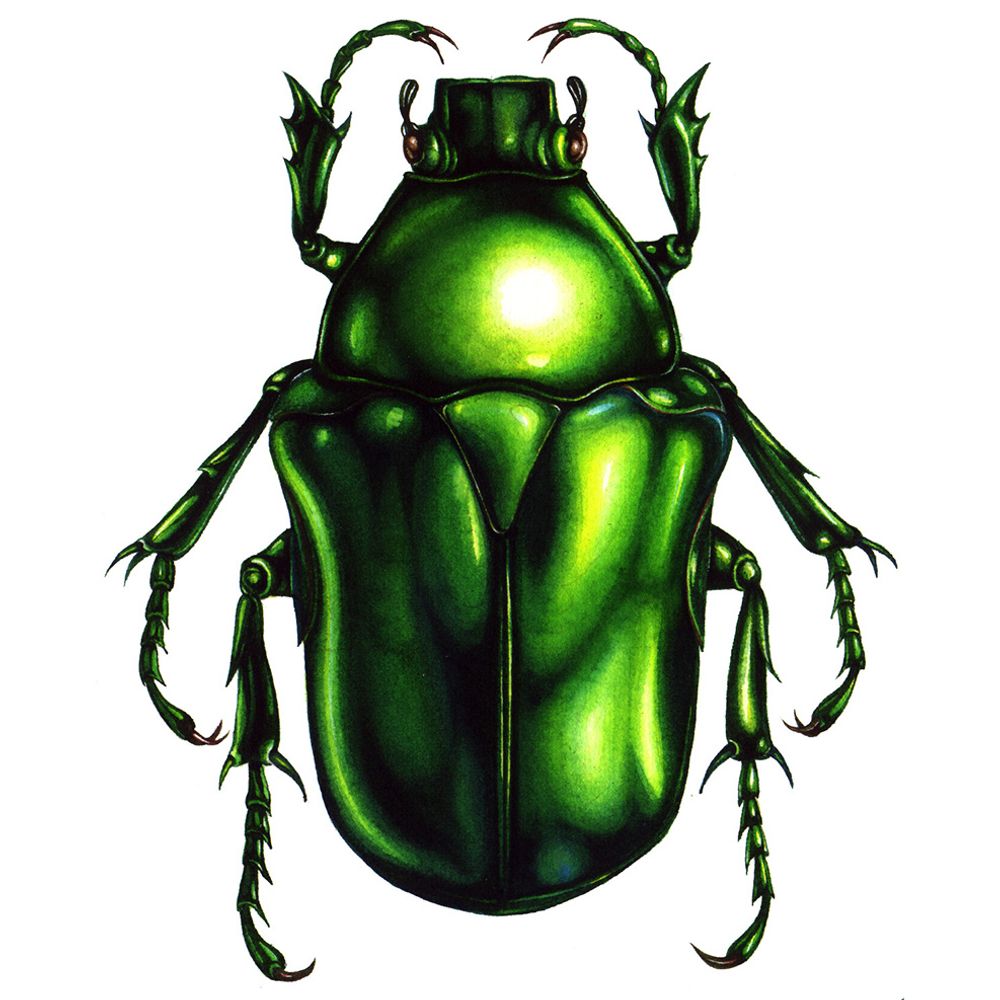
New blog on doing #botanicalillustrations of Scottish urban #wildflowers for an #identificationguide:
lizzieharper.co.uk/2025/12/guid...
I am passionate about the beauty, diversity, and resilience of "weeds", so this was a dream job. Most of the species were growing within half a mile of my home!
lizzieharper.co.uk/2025/12/guid...
I am passionate about the beauty, diversity, and resilience of "weeds", so this was a dream job. Most of the species were growing within half a mile of my home!


December 12, 2025 at 12:04 PM
New blog on doing #botanicalillustrations of Scottish urban #wildflowers for an #identificationguide:
lizzieharper.co.uk/2025/12/guid...
I am passionate about the beauty, diversity, and resilience of "weeds", so this was a dream job. Most of the species were growing within half a mile of my home!
lizzieharper.co.uk/2025/12/guid...
I am passionate about the beauty, diversity, and resilience of "weeds", so this was a dream job. Most of the species were growing within half a mile of my home!
Post from Herbarium World about the Plants on Paper Exhibit at the Yale Haas Family Arts Library: herbariumworld.wordpress.com/2025/12/08/b...

Botany and Art in New Haven
Pages on Eva Ekeblat from Dmitry Sayenko’s Botanica: de Historia Stirpium Commentarii Insignes = Notable Commentaires on the History of Plants (2014). Haas Family Arts Library, Yale Universit…
herbariumworld.wordpress.com
December 12, 2025 at 11:30 PM
Post from Herbarium World about the Plants on Paper Exhibit at the Yale Haas Family Arts Library: herbariumworld.wordpress.com/2025/12/08/b...
Reposted

iNaturalist projects represent a valuable resource for aggregating plant observations and engaging society: A case study of the Flora of Mongolia project
Shukherdorj Baasanmunkh, et al.
nph.onlinelibrary.wiley.com/doi/10.1002/...
#PlantScience #LatestIssue @inaturalist.bsky.social
Shukherdorj Baasanmunkh, et al.
nph.onlinelibrary.wiley.com/doi/10.1002/...
#PlantScience #LatestIssue @inaturalist.bsky.social

December 12, 2025 at 1:51 AM
iNaturalist projects represent a valuable resource for aggregating plant observations and engaging society: A case study of the Flora of Mongolia project
Shukherdorj Baasanmunkh, et al.
nph.onlinelibrary.wiley.com/doi/10.1002/...
#PlantScience #LatestIssue @inaturalist.bsky.social
Shukherdorj Baasanmunkh, et al.
nph.onlinelibrary.wiley.com/doi/10.1002/...
#PlantScience #LatestIssue @inaturalist.bsky.social
You've worked hard this year, and thought hard!
And here we go, last post of the year, which is always a round-up of all the posts I have written over the year - enjoy! makingsciencepublic.com/2025/12/12/m...

Making Science Public 2025: End-of-year round-up of blog posts
This year has been quite a year! First, I had to move the blog to a new independent home after the University of Nottingham shut down their blogging platform (I wrote two posts, one reflecting on t…
makingsciencepublic.com
December 12, 2025 at 11:41 AM
You've worked hard this year, and thought hard!
Reposted
The iris rhizome is the source of orris root, which is cultivated and aged for years before use in perfumery. The sweet, earthy, woody quality comes from triterpenoid breakdown into irones, which are close in structure and aroma to violet ionones, and responsible for the characteristic scent.


December 10, 2025 at 4:29 PM
The iris rhizome is the source of orris root, which is cultivated and aged for years before use in perfumery. The sweet, earthy, woody quality comes from triterpenoid breakdown into irones, which are close in structure and aroma to violet ionones, and responsible for the characteristic scent.
Reposted
Citrus aurantium flower yields neroli oil by steam distillation, which has delicate tones marked by a sharp slightly terpenic top note that is pleasantly bitter, floral, fresh, citrusy, and herbal. The fruit rind is expressed, yielding oils that are classically citrus. Pix: @mobotgarden Herbarium


December 10, 2025 at 6:08 PM
Citrus aurantium flower yields neroli oil by steam distillation, which has delicate tones marked by a sharp slightly terpenic top note that is pleasantly bitter, floral, fresh, citrusy, and herbal. The fruit rind is expressed, yielding oils that are classically citrus. Pix: @mobotgarden Herbarium
From studying Hans Sloane to William Henry Fox Talbot, @trichocolea.bsky.social, you are a multi-faceted man.
Moss specimens from the 1810s in the herbarium of William Henry Fox Talbot, the photography pioneer, at the British Library, including some supplied by his cousin Jane Talbot (1796–1874)
You can read about the family and their moss interests in BJHS: dx.doi.org/10.1017/S000... #bryology #bryophytes
You can read about the family and their moss interests in BJHS: dx.doi.org/10.1017/S000... #bryology #bryophytes


December 6, 2025 at 10:59 AM
From studying Hans Sloane to William Henry Fox Talbot, @trichocolea.bsky.social, you are a multi-faceted man.
Post from Herbarium World on botany and sculpture at the Storm King Art Center herbariumworld.wordpress.com/2025/12/01/m...

More Botany and Art: Storm King
The Arch (1975) by Alexander Calder. Storm King Art Center As I was finishing up the last series of posts on herbaria and art, I was also traveling, first to western Connecticut to see family, and …
herbariumworld.wordpress.com
December 5, 2025 at 9:52 PM
Post from Herbarium World on botany and sculpture at the Storm King Art Center herbariumworld.wordpress.com/2025/12/01/m...
Reposted

A #botany achievement: I determined my first #Palicourea #Rubiaceae specimen to species- P. atlantica!! But my collaborator and coffee family mentor Charlotte Taylor’s name still made it to the label, since she is an author of the species.
May not seem like much, but feels like a big deal to me! 🤓
May not seem like much, but feels like a big deal to me! 🤓

December 4, 2025 at 11:38 PM
A #botany achievement: I determined my first #Palicourea #Rubiaceae specimen to species- P. atlantica!! But my collaborator and coffee family mentor Charlotte Taylor’s name still made it to the label, since she is an author of the species.
May not seem like much, but feels like a big deal to me! 🤓
May not seem like much, but feels like a big deal to me! 🤓
Reposted
Ever seen fungal illustrations? 🍄 Our Fungarium Sequencing Project Team is thrilled to show some of the original illustrations that were created when the species were first described as new to science. In some cases, this is the only visual reference material of the original fungus that we have! 🧵👇

December 2, 2025 at 11:07 AM
Ever seen fungal illustrations? 🍄 Our Fungarium Sequencing Project Team is thrilled to show some of the original illustrations that were created when the species were first described as new to science. In some cases, this is the only visual reference material of the original fungus that we have! 🧵👇
Reposted
Good thread about scientific illustrations, and the current oversimplification in images. When you look in the microscope, the reality you see rarely matches the drawn textbook images.
The hidden danger of Biorender
(& the death of scientific illustration)
A short thread 🧵
(& the death of scientific illustration)
A short thread 🧵


December 1, 2025 at 1:56 PM
Good thread about scientific illustrations, and the current oversimplification in images. When you look in the microscope, the reality you see rarely matches the drawn textbook images.
Post from Herbarium World on Nature Prints and pressed plant photographs including the work of the Indian artist Mridula Vichitra herbariumworld.wordpress.com/2025/11/25/h...

Herbaria and Art: Nature Prints and Photographs
Photograph of pressed trumpet vine flower, Mridula Vichitra The artists I’ve highlighted in the last three posts (1,2,3) are all well-known in the art world, but there are a great many more artists…
herbariumworld.wordpress.com
December 1, 2025 at 11:52 PM
Post from Herbarium World on Nature Prints and pressed plant photographs including the work of the Indian artist Mridula Vichitra herbariumworld.wordpress.com/2025/11/25/h...
Reposted
What #EYABeauty lies on the inside of this unassuming folder? We're showing off Elsie Wakefield's fungi illustrations today 🍄 Wakefield became Head of Mycology at Kew Gardens in 1915 and our Archives hold her personal papers collection, which includes letters, illustrations and photographs. #KewLA


November 30, 2025 at 10:00 PM
What #EYABeauty lies on the inside of this unassuming folder? We're showing off Elsie Wakefield's fungi illustrations today 🍄 Wakefield became Head of Mycology at Kew Gardens in 1915 and our Archives hold her personal papers collection, which includes letters, illustrations and photographs. #KewLA
Thanks @strasser.bsky.social for this post. We should all do this after we use BHL images, then the work of the wonderful Biodiversity Heritiage Library would get around. @biodivlibrary.bsky.social

Clicking on it reveals that it's available in high resolution and under public domain. ♥️
And so I have my image without paying a dime to a stock image side, and instead, can use the money to donate to the Biodiversity Heritage Library!
8/9
And so I have my image without paying a dime to a stock image side, and instead, can use the money to donate to the Biodiversity Heritage Library!
8/9

November 30, 2025 at 1:14 PM
Thanks @strasser.bsky.social for this post. We should all do this after we use BHL images, then the work of the wonderful Biodiversity Heritiage Library would get around. @biodivlibrary.bsky.social
@rdmpage.bsky.social and @nicolekearney.bsky.social both have a point! Aesthetics is important in scientific images, but so is information. Thanks to both of them for all their work. It is invaluable.

Agreed — "pretty" is something of a running joke between @nicolekearney.bsky.social and I where she advocates for making illustrations such as these more discoverable, and I prefer to focus on the less pretty, more technical content in @biodivlibrary.bsky.social . So much to do, so little time…

November 30, 2025 at 12:25 AM
@rdmpage.bsky.social and @nicolekearney.bsky.social both have a point! Aesthetics is important in scientific images, but so is information. Thanks to both of them for all their work. It is invaluable.
Reposted
Linking to images and #AI-based identification tools—The only way for #Flora projects to survive
A #ThomasReview by Susanne S. Renner
📖 nph.onlinelibrary.wiley.com/doi/10.1002/...
#PlantScience
🧵1/4
A #ThomasReview by Susanne S. Renner
📖 nph.onlinelibrary.wiley.com/doi/10.1002/...
#PlantScience
🧵1/4

November 28, 2025 at 12:07 PM
Linking to images and #AI-based identification tools—The only way for #Flora projects to survive
A #ThomasReview by Susanne S. Renner
📖 nph.onlinelibrary.wiley.com/doi/10.1002/...
#PlantScience
🧵1/4
A #ThomasReview by Susanne S. Renner
📖 nph.onlinelibrary.wiley.com/doi/10.1002/...
#PlantScience
🧵1/4
Reposted
‘Mosses and wandering lichens’, as Ruskin puts it in ‘The Poetry of Architecture’ (1837), ‘though beautiful, constitute a kind of beauty from which the ideas of age and decay are inseparable’.
This whole essay. I had no idea Victorians thought about lichen.
courtauld.ac.uk/research/res...
This whole essay. I had no idea Victorians thought about lichen.
courtauld.ac.uk/research/res...

November 25, 2025 at 2:54 PM
‘Mosses and wandering lichens’, as Ruskin puts it in ‘The Poetry of Architecture’ (1837), ‘though beautiful, constitute a kind of beauty from which the ideas of age and decay are inseparable’.
This whole essay. I had no idea Victorians thought about lichen.
courtauld.ac.uk/research/res...
This whole essay. I had no idea Victorians thought about lichen.
courtauld.ac.uk/research/res...
These illustrations aren't just "pretty," they are works of science as well as art. Thanks for making such contributions to both spheres more available.
More articles extracted from @biodivlibrary.bsky.social , this time "Flowering Plants of South Africa" biostor.org/issn/0015-4504 Tricky to work with these articles as no page numbers and page and plate ordering needs to be flipped. Nightmare, but at least we get to see the "pretty".

November 26, 2025 at 10:38 AM
These illustrations aren't just "pretty," they are works of science as well as art. Thanks for making such contributions to both spheres more available.