




Andy Bunn
@fakeandybunn.bsky.social
Dendrochronologist and data enthusiast. dplR, dplPy, xDater, openDendro
Reposted by Andy Bunn

Ancient bristlecone pines have been collecting data for us for millennia.
Scientists like Long Now Research Fellow Anne Heggli (@driscience.bsky.social) work to build a long-term scientific legacy among these ancient trees. longnow.org/ideas/long-s...
Scientists like Long Now Research Fellow Anne Heggli (@driscience.bsky.social) work to build a long-term scientific legacy among these ancient trees. longnow.org/ideas/long-s...

Long Science in the Nevada Bristlecone Preserve
Ancient bristlecone pines have been collecting data for us for millennia.
longnow.org
May 9, 2025 at 4:53 PM
Ancient bristlecone pines have been collecting data for us for millennia.
Scientists like Long Now Research Fellow Anne Heggli (@driscience.bsky.social) work to build a long-term scientific legacy among these ancient trees. longnow.org/ideas/long-s...
Scientists like Long Now Research Fellow Anne Heggli (@driscience.bsky.social) work to build a long-term scientific legacy among these ancient trees. longnow.org/ideas/long-s...
Obscure hot take: Having POSIXct and POSIXlt is overkill. POSIXlt should be deprecated.
May 12, 2025 at 9:30 PM
Obscure hot take: Having POSIXct and POSIXlt is overkill. POSIXlt should be deprecated.
This is a silly headline and story. This fire is not particularly near the ancient BCP stand and is 70% contained.

April 2, 2025 at 8:42 PM
This is a silly headline and story. This fire is not particularly near the ancient BCP stand and is 70% contained.
This was a huge collaboration—dozens of co-authors, terabytes of data, and years of work. We’re excited to share it. Big thanks to the team, the field crews, and the data contributors.
April 2, 2025 at 6:57 PM
This was a huge collaboration—dozens of co-authors, terabytes of data, and years of work. We’re excited to share it. Big thanks to the team, the field crews, and the data contributors.
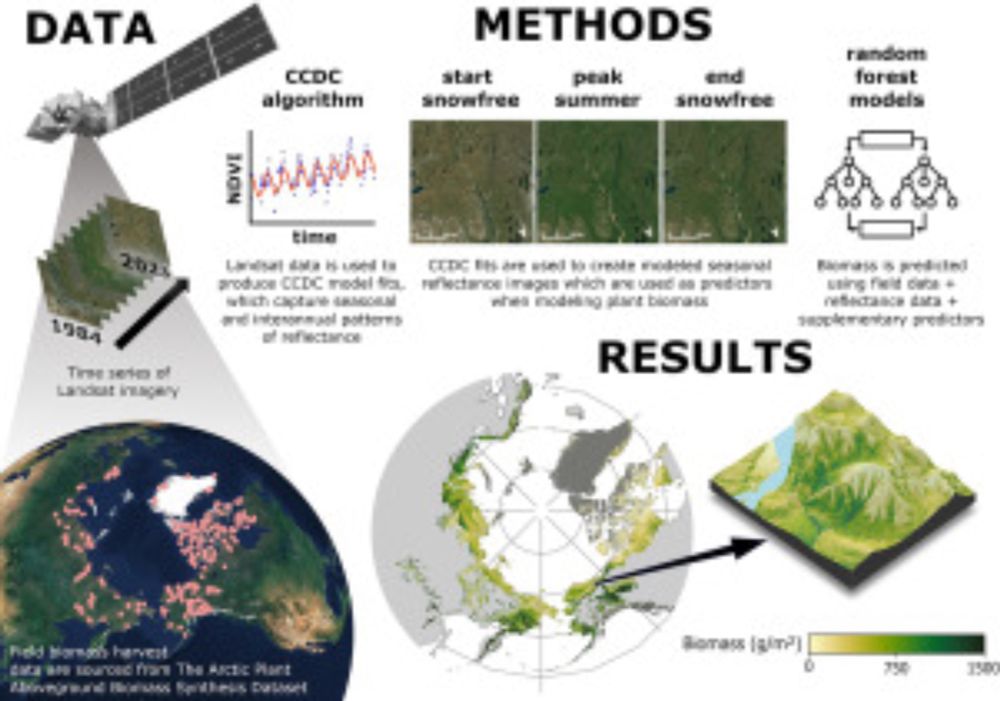
Our maps capture fine-scale spatial patterns that previous coarse-resolution maps missed—like shrub thickets in riparian zones, biomass loss from permafrost thaw slumps, or long-term fire recovery.
April 2, 2025 at 6:57 PM
Our maps capture fine-scale spatial patterns that previous coarse-resolution maps missed—like shrub thickets in riparian zones, biomass loss from permafrost thaw slumps, or long-term fire recovery.
Key findings:
• Arctic tundra holds ~3.7 Pg of aboveground plant biomass
• ~72% of that is woody
• Biomass and woody dominance both increase with growing season warmth (thawing degree days)
• Oro Arctic zones hold the most biomass per area
• Arctic tundra holds ~3.7 Pg of aboveground plant biomass
• ~72% of that is woody
• Biomass and woody dominance both increase with growing season warmth (thawing degree days)
• Oro Arctic zones hold the most biomass per area
April 2, 2025 at 6:57 PM
Key findings:
• Arctic tundra holds ~3.7 Pg of aboveground plant biomass
• ~72% of that is woody
• Biomass and woody dominance both increase with growing season warmth (thawing degree days)
• Oro Arctic zones hold the most biomass per area
• Arctic tundra holds ~3.7 Pg of aboveground plant biomass
• ~72% of that is woody
• Biomass and woody dominance both increase with growing season warmth (thawing degree days)
• Oro Arctic zones hold the most biomass per area
We modeled both total plant biomass (g/m²) and woody dominance (what % of biomass is shrubs or trees). These are crucial variables for ecosystem monitoring, carbon modeling, and climate feedbacks.
April 2, 2025 at 6:57 PM
We modeled both total plant biomass (g/m²) and woody dominance (what % of biomass is shrubs or trees). These are crucial variables for ecosystem monitoring, carbon modeling, and climate feedbacks.
So in this paper, we used:
✅ 636 field sites of plant biomass data
✅ Landsat satellite imagery (1984–2023)
✅ A new post-hoc topographic correction
✅ Machine learning (random forest + uncertainty modeling)
…to produce high-resolution biomass maps for 2020.
✅ 636 field sites of plant biomass data
✅ Landsat satellite imagery (1984–2023)
✅ A new post-hoc topographic correction
✅ Machine learning (random forest + uncertainty modeling)
…to produce high-resolution biomass maps for 2020.
April 2, 2025 at 6:57 PM
So in this paper, we used:
✅ 636 field sites of plant biomass data
✅ Landsat satellite imagery (1984–2023)
✅ A new post-hoc topographic correction
✅ Machine learning (random forest + uncertainty modeling)
…to produce high-resolution biomass maps for 2020.
✅ 636 field sites of plant biomass data
✅ Landsat satellite imagery (1984–2023)
✅ A new post-hoc topographic correction
✅ Machine learning (random forest + uncertainty modeling)
…to produce high-resolution biomass maps for 2020.
But we haven’t had a detailed, Arctic-wide map of how much plant biomass is out there—or how much of it is woody. Coarser maps (8 km, 300 m) missed key local variation.
April 2, 2025 at 6:57 PM
But we haven’t had a detailed, Arctic-wide map of how much plant biomass is out there—or how much of it is woody. Coarser maps (8 km, 300 m) missed key local variation.
The Arctic is warming faster than anywhere else on Earth, and tundra ecosystems are changing fast in response. Shrubs are expanding. Soils are thawing. Permafrost is vulnerable. Wildlife and human land use are shifting.
April 2, 2025 at 6:57 PM
The Arctic is warming faster than anywhere else on Earth, and tundra ecosystems are changing fast in response. Shrubs are expanding. Soils are thawing. Permafrost is vulnerable. Wildlife and human land use are shifting.
And TBH, I'm mostly just one of the data contributors. Katie and Logan did the heavy lifting here and this is a cool paper. So replace "we" with "they."
April 2, 2025 at 6:57 PM
And TBH, I'm mostly just one of the data contributors. Katie and Logan did the heavy lifting here and this is a cool paper. So replace "we" with "they."
🧵New paper out in Remote Sensing of Environment led by Katie Orndahl and Logan Berner! In this study, we (really they) mapped aboveground plant biomass and woody plant dominance across the entire Arctic tundra biome—at 30 m resolution. A thread 👇
www.sciencedirect.com/science/arti...
www.sciencedirect.com/science/arti...
Next generation Arctic vegetation maps: Aboveground plant biomass and woody dominance mapped at 30 m resolution across the tundra biome
The Arctic is warming faster than anywhere else on Earth, placing tundra ecosystems at the forefront of global climate change. Plant biomass is a fund…
www.sciencedirect.com
April 2, 2025 at 6:57 PM
🧵New paper out in Remote Sensing of Environment led by Katie Orndahl and Logan Berner! In this study, we (really they) mapped aboveground plant biomass and woody plant dominance across the entire Arctic tundra biome—at 30 m resolution. A thread 👇
www.sciencedirect.com/science/arti...
www.sciencedirect.com/science/arti...
We are hiring a visiting assistant prof next year for freshwater sci and climate. Great dept! Spread the word.
hr.wwu.edu/careers-facu...
hr.wwu.edu/careers-facu...
Careers - Faculty | Human Resources | Western Washington University
hr.wwu.edu
April 1, 2025 at 8:03 PM
We are hiring a visiting assistant prof next year for freshwater sci and climate. Great dept! Spread the word.
hr.wwu.edu/careers-facu...
hr.wwu.edu/careers-facu...
Reposted by Andy Bunn

We have a new paper now online in the Annual Review of Earth and Planetary Sciences with a group of amazing ECR coauthors reviewing methods and applications of (offline) paleoclimate data assimilation and looking toward the future www.annualreviews.org/content/jour...
Advances in Paleoclimate Data Assimilation | Annual Reviews
Reconstructions of past climates in both time and space provide important insight into the range and rate of change within the climate system. However, producing a coherent global picture of past clim...
www.annualreviews.org
March 18, 2025 at 3:03 PM
We have a new paper now online in the Annual Review of Earth and Planetary Sciences with a group of amazing ECR coauthors reviewing methods and applications of (offline) paleoclimate data assimilation and looking toward the future www.annualreviews.org/content/jour...
Paleo poster session in lieu of class final. Here the beringia productivity paradox. So proud.

March 17, 2025 at 8:32 PM
Paleo poster session in lieu of class final. Here the beringia productivity paradox. So proud.
Interesting paper. Neat blend of chironomid data with a variety of dendro proxies. journals.sagepub.com/doi/full/10....

Low-frequency patterns in Late-Holocene tree-ring records from northern Fennoscandia - Samuli Helama, 2025
Northern Fennoscandia is a cradle of tree-ring based climate reconstructions. These Late-Holocene data come from several types of tree-ring proxies and are typi...
journals.sagepub.com
March 5, 2025 at 6:52 PM
Interesting paper. Neat blend of chironomid data with a variety of dendro proxies. journals.sagepub.com/doi/full/10....
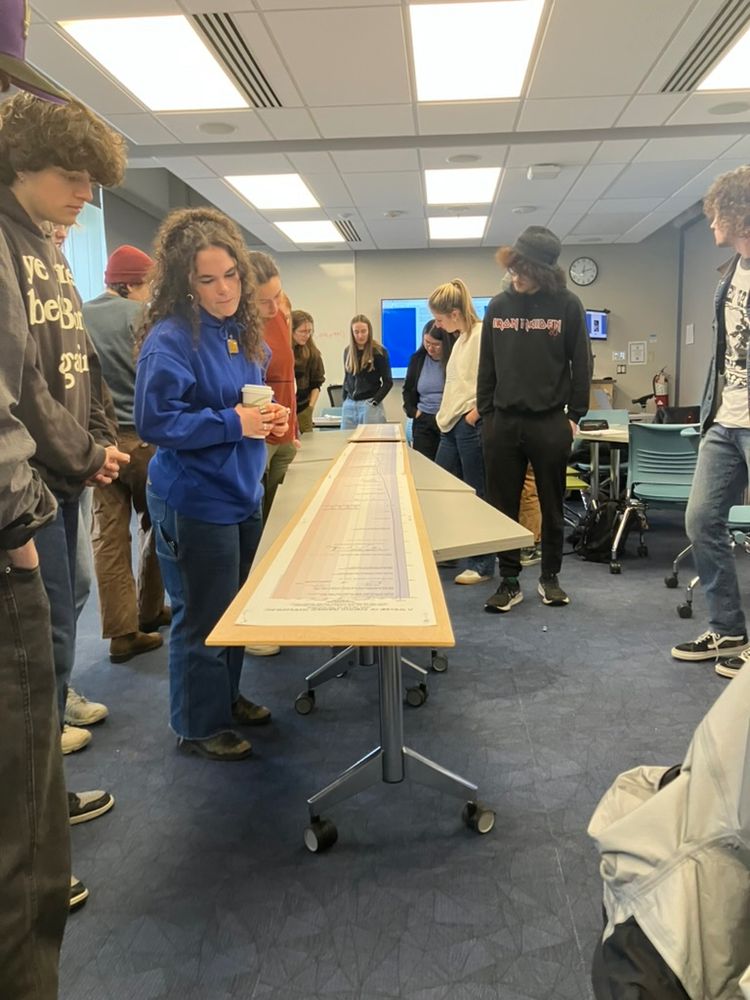
Paleo folks know @xkcd.com temperature timeline, yeah?
xkcd.com/1732/
I have a 12' version printed and once per year the students are always amazed (me too).
xkcd.com/1732/
I have a 12' version printed and once per year the students are always amazed (me too).
February 19, 2025 at 12:07 AM
Paleo folks know @xkcd.com temperature timeline, yeah?
xkcd.com/1732/
I have a 12' version printed and once per year the students are always amazed (me too).
xkcd.com/1732/
I have a 12' version printed and once per year the students are always amazed (me too).
To the student whose class eval read in it’s entirety, “🔥 🔥 Fr fr on god no cap,” I salute you.
February 13, 2025 at 3:24 PM
To the student whose class eval read in it’s entirety, “🔥 🔥 Fr fr on god no cap,” I salute you.
Reposted by Andy Bunn

1/n
Please see our new paper in Nature Communications!
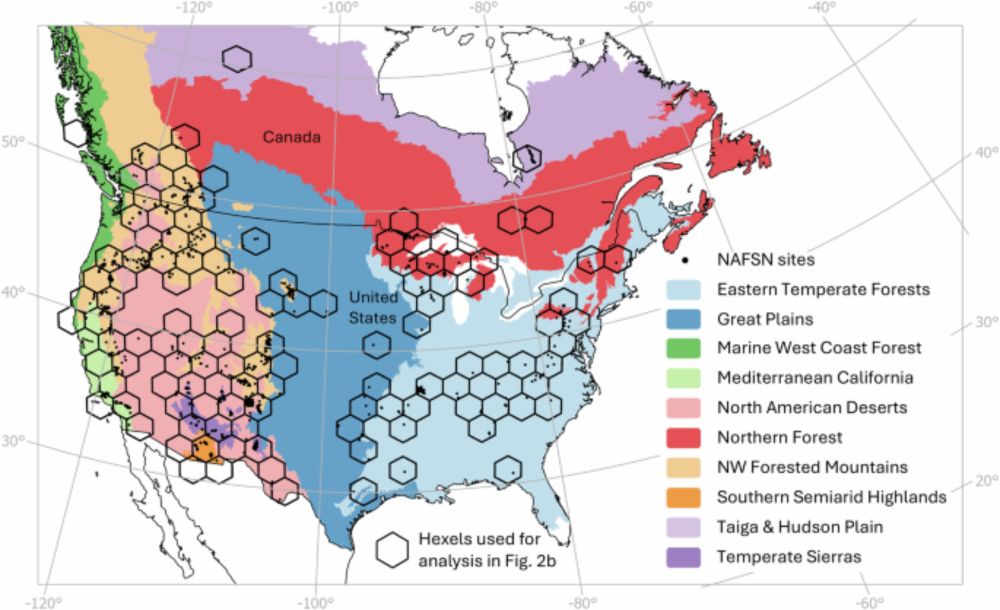
We used 1,851 tree-ring fire-scar sites and contemporary fire perimeters to quantify the prevalence of wildfire from 1600-1880 compared to 1984-2022. 🧪🌍🔥
Our key findings are as follows ...
Please see our new paper in Nature Communications!
We used 1,851 tree-ring fire-scar sites and contemporary fire perimeters to quantify the prevalence of wildfire from 1600-1880 compared to 1984-2022. 🧪🌍🔥
Our key findings are as follows ...
A fire deficit persists across diverse North American forests despite recent increases in area burned - Nature Communications
Across many North American forests, recent years with exceptional area burned are not unprecedented when considering the multi-century perspective offered by fire-scarred trees. Nevertheless, abundant...
www.nature.com
February 10, 2025 at 3:12 PM
1/n
Please see our new paper in Nature Communications!
We used 1,851 tree-ring fire-scar sites and contemporary fire perimeters to quantify the prevalence of wildfire from 1600-1880 compared to 1984-2022. 🧪🌍🔥
Our key findings are as follows ...
Please see our new paper in Nature Communications!
We used 1,851 tree-ring fire-scar sites and contemporary fire perimeters to quantify the prevalence of wildfire from 1600-1880 compared to 1984-2022. 🧪🌍🔥
Our key findings are as follows ...
And src here: github.com/AndyBunn/LEm...

GitHub - AndyBunn/LEmodels: Some unrefined models that I use in landscape ecology class
Some unrefined models that I use in landscape ecology class - AndyBunn/LEmodels
github.com
February 9, 2025 at 9:23 PM
And src here: github.com/AndyBunn/LEm...
This model runs fast locally and slowly on the free hosting service. Deployed here: andybunn.shinyapps.io/simpleCA/
Simple Species Sorting is an interactive Shiny application designed to show show how how species arrange themselves on a environmental gradient given simple niches and dispersal rules.
andybunn.shinyapps.io
February 9, 2025 at 9:23 PM
This model runs fast locally and slowly on the free hosting service. Deployed here: andybunn.shinyapps.io/simpleCA/
And sometimes spend way too much time turning them into apps. The students like them fine, but probably not enough to justify my life choices. Did I have to add in an animation button? No. No I did not.
February 9, 2025 at 9:23 PM
And sometimes spend way too much time turning them into apps. The students like them fine, but probably not enough to justify my life choices. Did I have to add in an animation button? No. No I did not.
In landscape ecology, I emphasize how simple models can illustrate complex patterns—like how dispersal on an environmental gradient can look like species sorting and niche partitioning. So, I make toy models for class.

February 9, 2025 at 9:23 PM
In landscape ecology, I emphasize how simple models can illustrate complex patterns—like how dispersal on an environmental gradient can look like species sorting and niche partitioning. So, I make toy models for class.
Classic reading from Wally can be a balm for hard times.

February 7, 2025 at 9:57 PM
Classic reading from Wally can be a balm for hard times.