



Madeleine Fabušová
@fabusovam.bsky.social
PhD researcher at Newcastle University to try and understand how we can mitigate the impacts of light pollution! 💡🦋 keen moth-er, naturalist and trainee bird ringer:)
📍North East, UK (mostly)
🐜Editor-In-Chief of @entobitescomms.bsky.social
📍North East, UK (mostly)
🐜Editor-In-Chief of @entobitescomms.bsky.social
Pinned
Madeleine Fabušová
@fabusovam.bsky.social
· Nov 24


To introduce myself, I'm a keen naturalist, fond of moths, but excited by everything! When not frolicking outside, I'm working towards my PhD w/ @nlcneg.bsky.social and other fantastic supervisors, studying how we can mitigate the impacts of light pollution. Here is to sharing science and nature!
Tardigrades are small but mighty- and tell us a lot about the environment! Read more in our newest EntoBite article by Dr. Alfonsina Grabosky. ⬇️
What can tardigrades tell us about pollution in cities? Turns out, a lot! If you want to learn more about these tiny giants and the role they play as bioindicators, read more in our newest EntoBites article by Dr. Alfonsina Grabosky!
entobites.blog/2026/02/10/t...
entobites.blog/2026/02/10/t...

Tiny giants of the city: Can tardigrades tell us about pollution?
Figure 1: Tardigrade illustration (with thanks to!) © David Krenz If you walk down a busy city street, surrounded by cars, buses, and the urban smog of traffic, it might be hard to imagine that ano…
entobites.blog
February 10, 2026 at 8:47 AM
Tardigrades are small but mighty- and tell us a lot about the environment! Read more in our newest EntoBite article by Dr. Alfonsina Grabosky. ⬇️
Reposted by Madeleine Fabušová

🌙💡 Does light pollution go deeper than we think?
Our new study shows that LED light at night alters thyroid gland histology in Triturus newts, a key endocrine organ. Suggesting ALAN as a subtle endocrine disruptor, beyond known effects on melatonin and corticosterone
📄 www.mdpi.com/2076-2615/16...
Our new study shows that LED light at night alters thyroid gland histology in Triturus newts, a key endocrine organ. Suggesting ALAN as a subtle endocrine disruptor, beyond known effects on melatonin and corticosterone
📄 www.mdpi.com/2076-2615/16...

February 9, 2026 at 11:41 PM
🌙💡 Does light pollution go deeper than we think?
Our new study shows that LED light at night alters thyroid gland histology in Triturus newts, a key endocrine organ. Suggesting ALAN as a subtle endocrine disruptor, beyond known effects on melatonin and corticosterone
📄 www.mdpi.com/2076-2615/16...
Our new study shows that LED light at night alters thyroid gland histology in Triturus newts, a key endocrine organ. Suggesting ALAN as a subtle endocrine disruptor, beyond known effects on melatonin and corticosterone
📄 www.mdpi.com/2076-2615/16...
Reposted by Madeleine Fabušová
Artificial light at night is an unlit conservation blind spot for amphibians.
Our review highlights that even small changes to natural night lighting can disrupt amphibian behavior, physiology, reproduction, and species interactions. #lightpollution #amphibians
www.sciencedirect.com/science/arti...
Our review highlights that even small changes to natural night lighting can disrupt amphibian behavior, physiology, reproduction, and species interactions. #lightpollution #amphibians
www.sciencedirect.com/science/arti...

Amphibians under artificial light at night: Current knowledge, conservation challenges and future directions
Amphibians have evolved under predictable light-dark cycles, with most species relying on darkness for foraging, reproduction, and predator avoidance.…
www.sciencedirect.com
February 5, 2026 at 9:06 AM
Artificial light at night is an unlit conservation blind spot for amphibians.
Our review highlights that even small changes to natural night lighting can disrupt amphibian behavior, physiology, reproduction, and species interactions. #lightpollution #amphibians
www.sciencedirect.com/science/arti...
Our review highlights that even small changes to natural night lighting can disrupt amphibian behavior, physiology, reproduction, and species interactions. #lightpollution #amphibians
www.sciencedirect.com/science/arti...
Did you want to see the behind the scenes of London's Natural History Museum? Baxter and Lucas wrote a fabulous blog for EntoBites about their current placement 🐝🐜
entobites.blog/2026/02/02/b...
entobites.blog/2026/02/02/b...
Ever wondered what it's like to do a placement in the Natural History Museum in London? We did too, and so we spoke to two current placement students, Baxter and Lucas. Learn more: entobites.blog/2026/02/02/b... (click to see some great pictures!)

Blog: Placement at The Natural History Museum in London
Figure 1. The Eastern View of the museum on our first day, after walking in from the South Kensington Tube Station Hi! We are Baxter and Lucas, Undergraduate Students at Swansea University on place…
entobites.blog
February 2, 2026 at 8:59 AM
Did you want to see the behind the scenes of London's Natural History Museum? Baxter and Lucas wrote a fabulous blog for EntoBites about their current placement 🐝🐜
entobites.blog/2026/02/02/b...
entobites.blog/2026/02/02/b...
Reposted by Madeleine Fabušová

Moths move significantly less when exposed to artificial nighttime light, new research from the Centre for Ecology and Conservation at the University of Exeter, Cornwall shows.
Read More: news.exeter.ac.uk/faculty-of-e...
@uniexecec.bsky.social #ExeterEcology
Read More: news.exeter.ac.uk/faculty-of-e...
@uniexecec.bsky.social #ExeterEcology

Artificial nighttime lighting is suppressing moth activity
Moths move significantly less when exposed to artificial nighttime light, new research shows. Moths’ attraction to artificial light, such as streetlights, is common knowledge and has been much studied...
news.exeter.ac.uk
January 28, 2026 at 11:25 AM
Moths move significantly less when exposed to artificial nighttime light, new research from the Centre for Ecology and Conservation at the University of Exeter, Cornwall shows.
Read More: news.exeter.ac.uk/faculty-of-e...
@uniexecec.bsky.social #ExeterEcology
Read More: news.exeter.ac.uk/faculty-of-e...
@uniexecec.bsky.social #ExeterEcology
Reposted by Madeleine Fabušová
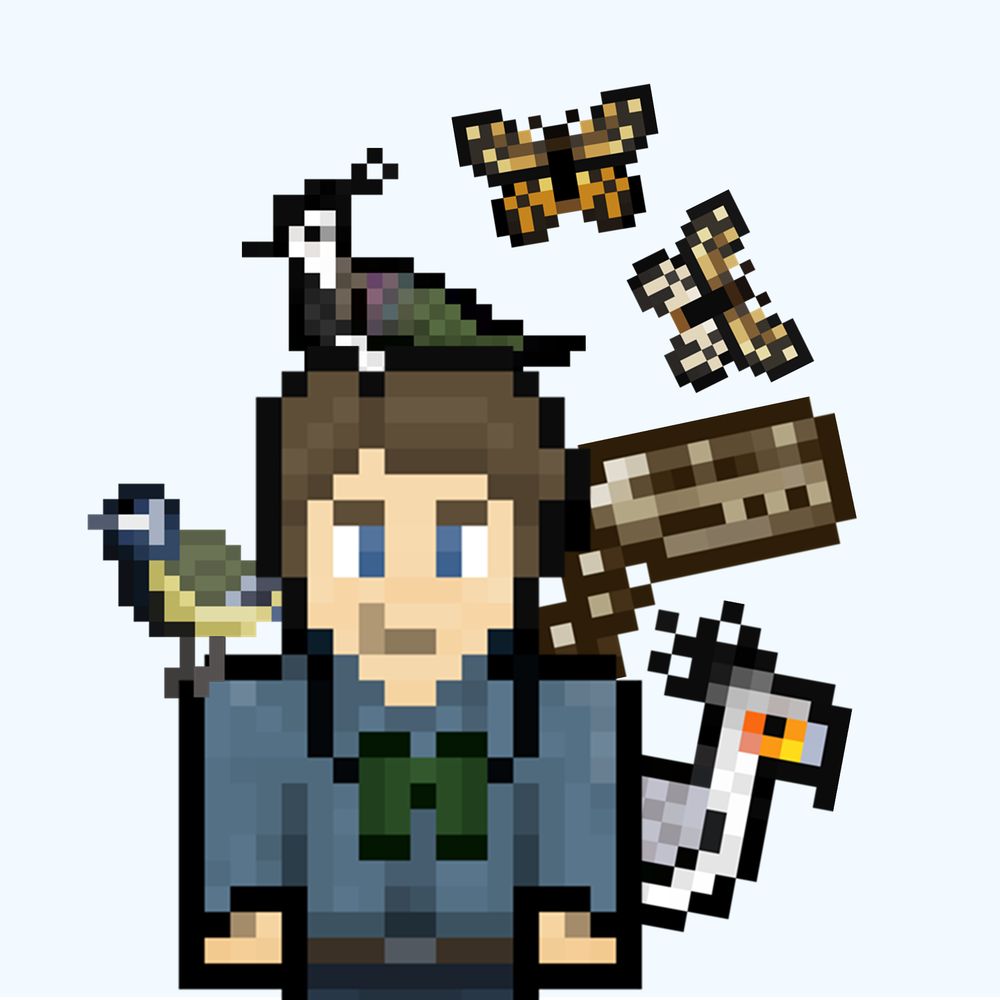
I’ve recently decided to get back into digital art starting with my most ambitious project. Depicting some key life history and anatomical elements of one of my favourite animals. The secretary bird.

January 24, 2026 at 6:27 PM
I’ve recently decided to get back into digital art starting with my most ambitious project. Depicting some key life history and anatomical elements of one of my favourite animals. The secretary bird.
#BigGardenBirdwatch 🐦🔭
Spending an hour watching the birds in our little sub-urban garden? Yes please! Equipped with binoculars and notebook, 16 birds of 9 species, including Collared Doves, Wood Pigeon, Blue and Great tits, Blackbird, Starlings, Magpies, House Sparrow and Robin @rspb.bsky.social
Spending an hour watching the birds in our little sub-urban garden? Yes please! Equipped with binoculars and notebook, 16 birds of 9 species, including Collared Doves, Wood Pigeon, Blue and Great tits, Blackbird, Starlings, Magpies, House Sparrow and Robin @rspb.bsky.social


January 24, 2026 at 11:41 AM
#BigGardenBirdwatch 🐦🔭
Spending an hour watching the birds in our little sub-urban garden? Yes please! Equipped with binoculars and notebook, 16 birds of 9 species, including Collared Doves, Wood Pigeon, Blue and Great tits, Blackbird, Starlings, Magpies, House Sparrow and Robin @rspb.bsky.social
Spending an hour watching the birds in our little sub-urban garden? Yes please! Equipped with binoculars and notebook, 16 birds of 9 species, including Collared Doves, Wood Pigeon, Blue and Great tits, Blackbird, Starlings, Magpies, House Sparrow and Robin @rspb.bsky.social
Great new research shows that light pollution prevents activity in the critical twilight period (just after sunset) in a moth and spider species. 🕷️🦋💡- this calls for mitigations targeting this critical time period. Read more in our dispatch:
www.cell.com/current-biol...
www.cell.com/current-biol...
January 23, 2026 at 8:54 AM
Great new research shows that light pollution prevents activity in the critical twilight period (just after sunset) in a moth and spider species. 🕷️🦋💡- this calls for mitigations targeting this critical time period. Read more in our dispatch:
www.cell.com/current-biol...
www.cell.com/current-biol...
Reposted by Madeleine Fabušová
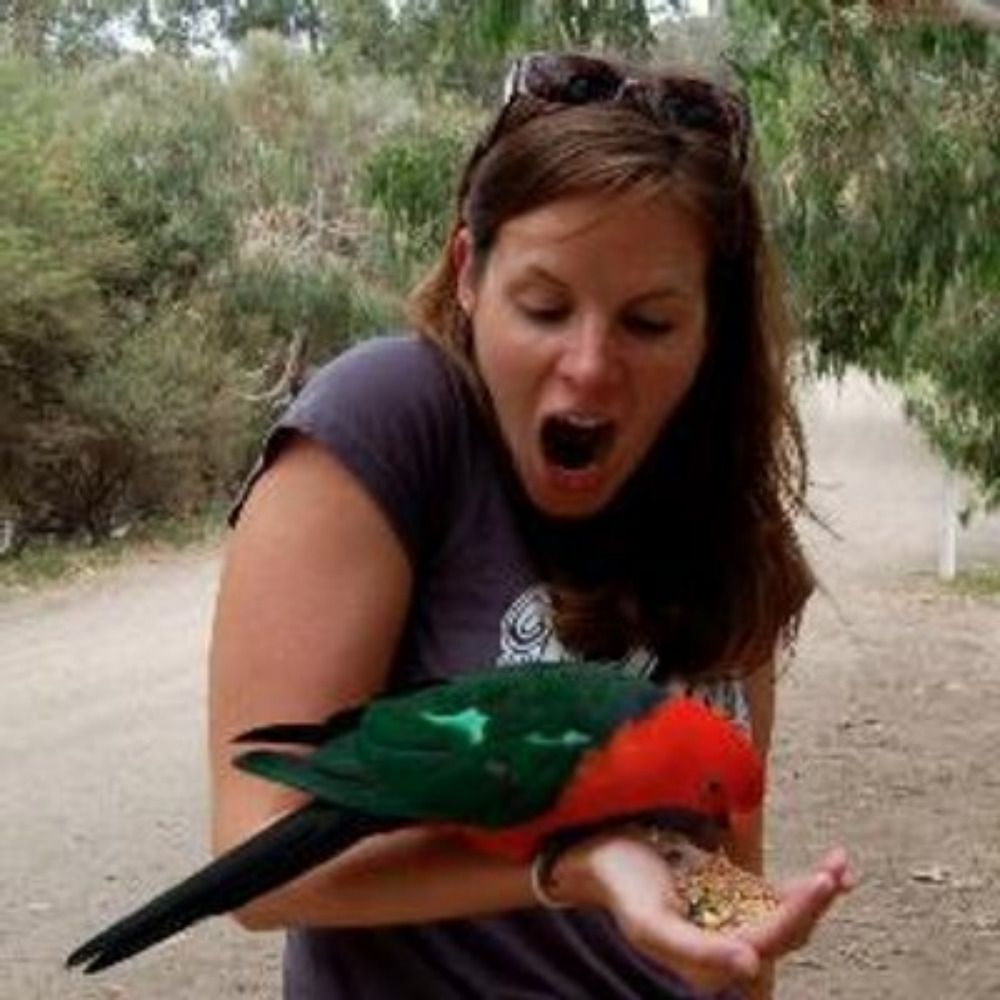
New bowerbird paper out, we asked whether male great bowerbirds care about the light environment around the bower where they display to females. Short answer: not really. What they do care about is having a display arena with strong visual contrast on the ground. 🐦 tinyurl.com/2v7rycdz

January 15, 2026 at 3:13 PM
New bowerbird paper out, we asked whether male great bowerbirds care about the light environment around the bower where they display to females. Short answer: not really. What they do care about is having a display arena with strong visual contrast on the ground. 🐦 tinyurl.com/2v7rycdz
Reposted by Madeleine Fabušová
🦋🧬 A milestone for biodiversity genomics.
Project Psyche is building chromosome-level genomes for ~11,000 European butterflies & moths — 1,000 sequenced, 3,000+ collected, across 34 countries.
🔗 Read the publication: bit.ly/ProjectPsyche
@projectpsyche.bsky.social
#BiodiversityGenomics 🧬🌍
Project Psyche is building chromosome-level genomes for ~11,000 European butterflies & moths — 1,000 sequenced, 3,000+ collected, across 34 countries.
🔗 Read the publication: bit.ly/ProjectPsyche
@projectpsyche.bsky.social
#BiodiversityGenomics 🧬🌍


January 13, 2026 at 6:28 PM
🦋🧬 A milestone for biodiversity genomics.
Project Psyche is building chromosome-level genomes for ~11,000 European butterflies & moths — 1,000 sequenced, 3,000+ collected, across 34 countries.
🔗 Read the publication: bit.ly/ProjectPsyche
@projectpsyche.bsky.social
#BiodiversityGenomics 🧬🌍
Project Psyche is building chromosome-level genomes for ~11,000 European butterflies & moths — 1,000 sequenced, 3,000+ collected, across 34 countries.
🔗 Read the publication: bit.ly/ProjectPsyche
@projectpsyche.bsky.social
#BiodiversityGenomics 🧬🌍
Reposted by Madeleine Fabušová
1/🧵 Two bird species bred in the UK in 2023 for the first time since the 1990s!
The latest report by @ukrbbp.bsky.social published in @britishbirds.bsky.social confirmed a pair of Hoopoes raised three young from a nest in Leicestershire and Rutland. #Ornithology
The latest report by @ukrbbp.bsky.social published in @britishbirds.bsky.social confirmed a pair of Hoopoes raised three young from a nest in Leicestershire and Rutland. #Ornithology

December 13, 2025 at 6:00 PM
1/🧵 Two bird species bred in the UK in 2023 for the first time since the 1990s!
The latest report by @ukrbbp.bsky.social published in @britishbirds.bsky.social confirmed a pair of Hoopoes raised three young from a nest in Leicestershire and Rutland. #Ornithology
The latest report by @ukrbbp.bsky.social published in @britishbirds.bsky.social confirmed a pair of Hoopoes raised three young from a nest in Leicestershire and Rutland. #Ornithology
Reposted by Madeleine Fabušová

Multiple anthropogenic stressors can negatively impact species but can a single stressor also have multiple, concurrent impacts? Here we show that light pollution creates several simultaneous impacts to the nocturnal movement ecology of a moth and a spider: tinyurl.com/5eku5bff (1/5)

December 17, 2025 at 8:15 PM
Multiple anthropogenic stressors can negatively impact species but can a single stressor also have multiple, concurrent impacts? Here we show that light pollution creates several simultaneous impacts to the nocturnal movement ecology of a moth and a spider: tinyurl.com/5eku5bff (1/5)
Reposted by Madeleine Fabušová
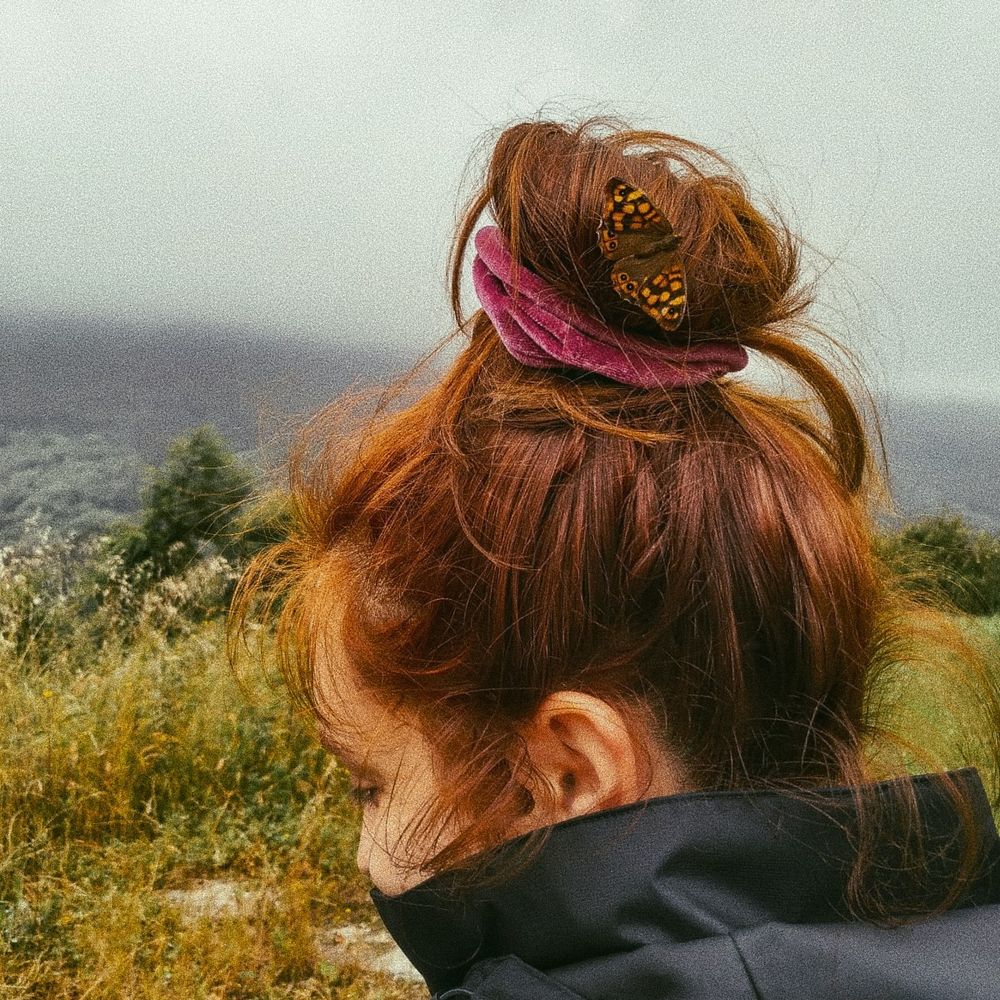
Se me está quedando pequeña la pared 😱

December 17, 2025 at 5:46 PM
Se me está quedando pequeña la pared 😱
Reposted by Madeleine Fabušová
Ever wondered if molecular biology be used to control aphid and whitefly pests?
You can learn more in our new EntoBites post by Maddie Park below:
entobites.blog/2025/12/05/c...
You can learn more in our new EntoBites post by Maddie Park below:
entobites.blog/2025/12/05/c...

Can Molecular Biology be used to Control Aphid and Whitefly Pests?
Aphids and Whiteflies are serious crop pests The Green Peach aphid Myzus persicae along with the sweet potato whitefly Bemisia tabaci are hemipteran sap feeding crop pests. Infestations of both ins…
entobites.blog
December 5, 2025 at 5:02 PM
Ever wondered if molecular biology be used to control aphid and whitefly pests?
You can learn more in our new EntoBites post by Maddie Park below:
entobites.blog/2025/12/05/c...
You can learn more in our new EntoBites post by Maddie Park below:
entobites.blog/2025/12/05/c...
Reposted by Madeleine Fabušová

I am absolutely delighted to see the post by National Geographic Society covering our recent publication on new bush #frogs 🐸 🐸 from northeast #India just in time for #frogfriday 😃


December 12, 2025 at 6:55 AM
I am absolutely delighted to see the post by National Geographic Society covering our recent publication on new bush #frogs 🐸 🐸 from northeast #India just in time for #frogfriday 😃
Reposted by Madeleine Fabušová

Want to work on biodiversity in the Alps? ⛰️
We are offering several internship positions for the upcoming spring and summer in collaboration with the Biodiversity Monitoring South Tyrol 🕷️🦋🦇🐜🌼🦗🪱
biodiversity.eurac.edu/interns-want...
We are offering several internship positions for the upcoming spring and summer in collaboration with the Biodiversity Monitoring South Tyrol 🕷️🦋🦇🐜🌼🦗🪱
biodiversity.eurac.edu/interns-want...

Interns wanted! - Biodiversity Monitoring South Tyrol
biodiversity.eurac.edu
December 9, 2025 at 8:30 AM
Want to work on biodiversity in the Alps? ⛰️
We are offering several internship positions for the upcoming spring and summer in collaboration with the Biodiversity Monitoring South Tyrol 🕷️🦋🦇🐜🌼🦗🪱
biodiversity.eurac.edu/interns-want...
We are offering several internship positions for the upcoming spring and summer in collaboration with the Biodiversity Monitoring South Tyrol 🕷️🦋🦇🐜🌼🦗🪱
biodiversity.eurac.edu/interns-want...
Reposted by Madeleine Fabušová

As we approach the end of a tumultuous academic year I’m thankful more than ever to lead an amazing and talented group of researchers who are committed to the best of science @nclneg.bsky.social

November 27, 2025 at 4:16 PM
As we approach the end of a tumultuous academic year I’m thankful more than ever to lead an amazing and talented group of researchers who are committed to the best of science @nclneg.bsky.social
Reposted by Madeleine Fabušová
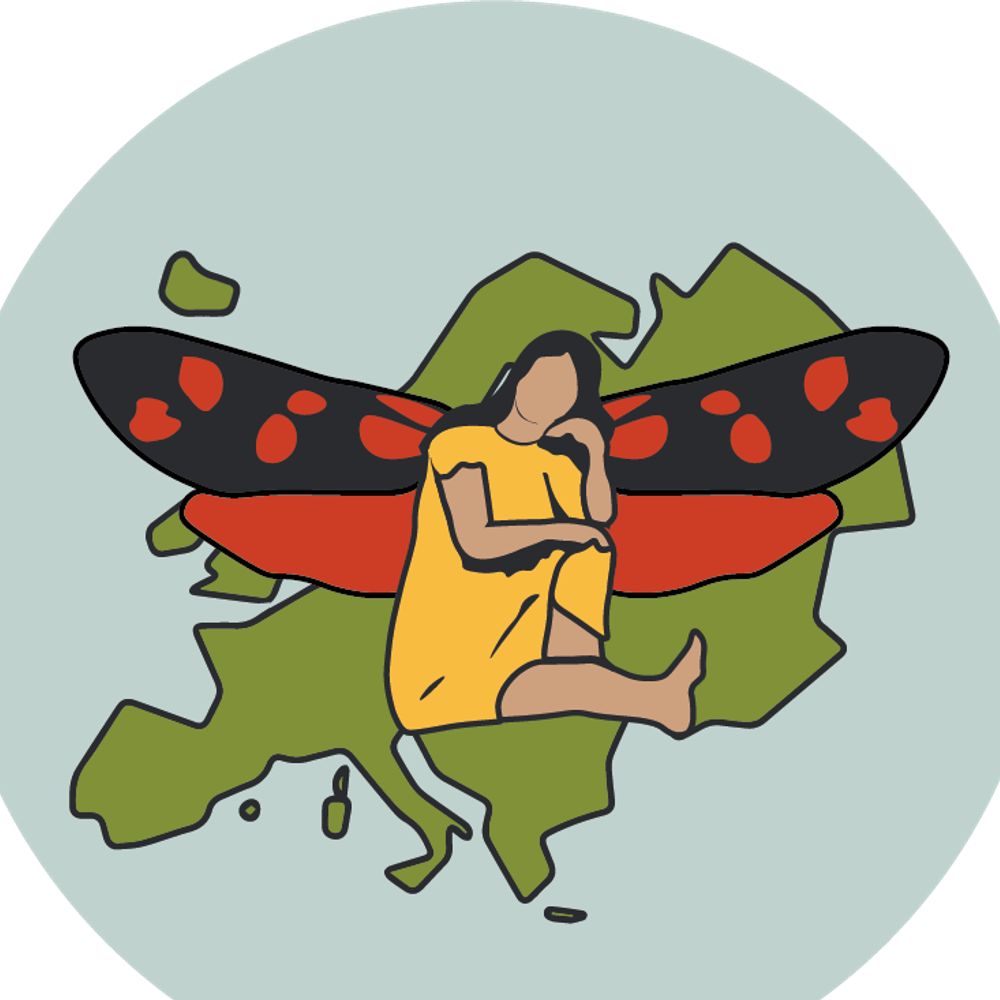
(1/6) 🦋 We are thrilled to announce the release of the 1,000th reference genome of Lepidoptera species found in Europe!
This goal was reached with the release of Stenoptilia islandicus, also known as the mountain plume moth.
Read the story below!👇🏽
This goal was reached with the release of Stenoptilia islandicus, also known as the mountain plume moth.
Read the story below!👇🏽

September 13, 2025 at 5:35 PM
(1/6) 🦋 We are thrilled to announce the release of the 1,000th reference genome of Lepidoptera species found in Europe!
This goal was reached with the release of Stenoptilia islandicus, also known as the mountain plume moth.
Read the story below!👇🏽
This goal was reached with the release of Stenoptilia islandicus, also known as the mountain plume moth.
Read the story below!👇🏽
A day out for our office- a bunch of ecologists looking for wild goats, fungi and birds. Doesn't get much better than that!
First flocks of fieldfares too. Attempt at fungi ID in alt- happy to hear any suggestions!
First flocks of fieldfares too. Attempt at fungi ID in alt- happy to hear any suggestions!


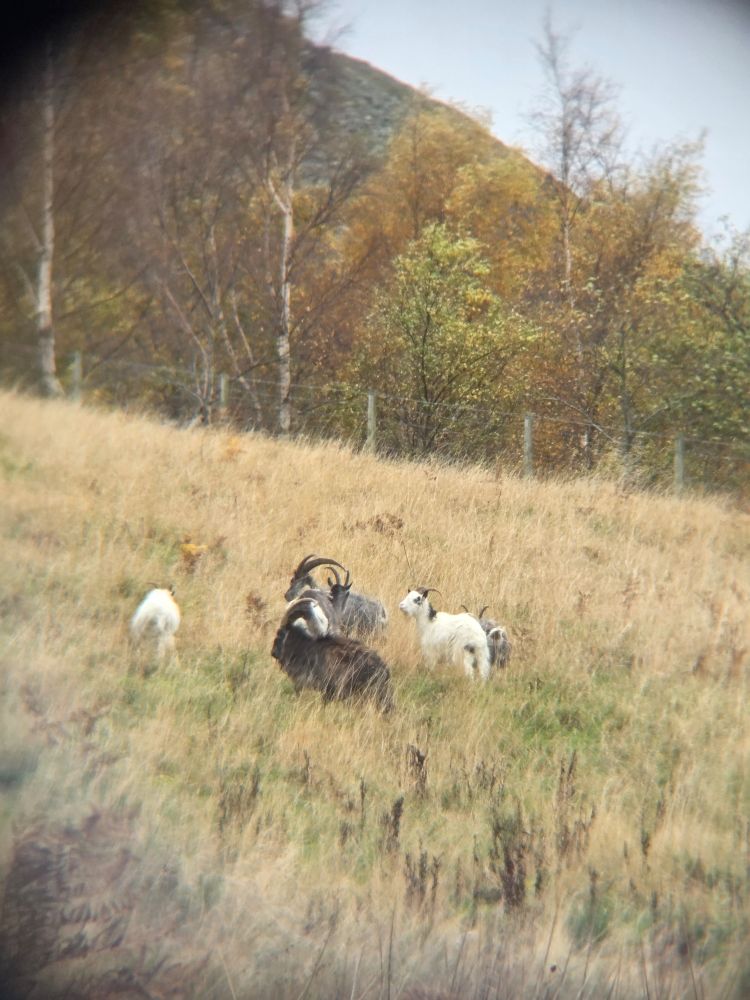
November 16, 2025 at 10:39 AM
A day out for our office- a bunch of ecologists looking for wild goats, fungi and birds. Doesn't get much better than that!
First flocks of fieldfares too. Attempt at fungi ID in alt- happy to hear any suggestions!
First flocks of fieldfares too. Attempt at fungi ID in alt- happy to hear any suggestions!
Reposted by Madeleine Fabušová

📢🦋 Our paper ‘Global selection on insect antipredator coloration’ is out and featured on the cover of @science.org
We ran a huge experiment to find out how ecological context favours camouflage and warning colouration as antipredator strategies. 1/6
www.science.org/doi/10.1126/...
We ran a huge experiment to find out how ecological context favours camouflage and warning colouration as antipredator strategies. 1/6
www.science.org/doi/10.1126/...

September 25, 2025 at 6:26 PM
📢🦋 Our paper ‘Global selection on insect antipredator coloration’ is out and featured on the cover of @science.org
We ran a huge experiment to find out how ecological context favours camouflage and warning colouration as antipredator strategies. 1/6
www.science.org/doi/10.1126/...
We ran a huge experiment to find out how ecological context favours camouflage and warning colouration as antipredator strategies. 1/6
www.science.org/doi/10.1126/...
Interested in mitigating the impacts of light pollution? Join the Knowledge Network! #ALAN
We're leading work on evidence synthesis across biodiversity, road safety and energy impacts and we need your help!
Read more below and join us: www.ncl.ac.uk/nes/our-rese... 💡
We're leading work on evidence synthesis across biodiversity, road safety and energy impacts and we need your help!
Read more below and join us: www.ncl.ac.uk/nes/our-rese... 💡
November 14, 2025 at 9:10 PM
Interested in mitigating the impacts of light pollution? Join the Knowledge Network! #ALAN
We're leading work on evidence synthesis across biodiversity, road safety and energy impacts and we need your help!
Read more below and join us: www.ncl.ac.uk/nes/our-rese... 💡
We're leading work on evidence synthesis across biodiversity, road safety and energy impacts and we need your help!
Read more below and join us: www.ncl.ac.uk/nes/our-rese... 💡
Reposted by Madeleine Fabušová
Recently visited the Glass Flowers at Harvard, a collection of 4,300 extraordinarily realistic glass models of plants crafted by the Blaschkas, a father and son team of sculptors
That’s right, these are all made primarily of GLASS — a fact difficult to accept given how accurate & lifelike they are
That’s right, these are all made primarily of GLASS — a fact difficult to accept given how accurate & lifelike they are


November 14, 2025 at 7:17 PM
Recently visited the Glass Flowers at Harvard, a collection of 4,300 extraordinarily realistic glass models of plants crafted by the Blaschkas, a father and son team of sculptors
That’s right, these are all made primarily of GLASS — a fact difficult to accept given how accurate & lifelike they are
That’s right, these are all made primarily of GLASS — a fact difficult to accept given how accurate & lifelike they are
Reposted by Madeleine Fabušová

BehaveAI is live!
Our biologically inspired video analysis tool sees motion as colour. Track animals or objects, classify their behaviour, and handle complex natural scenes with ease.
Semi-supervised annotation, no GPUs required, user-friendly, free & open source.
Pre-print tinyurl.com/BehaveAI
Our biologically inspired video analysis tool sees motion as colour. Track animals or objects, classify their behaviour, and handle complex natural scenes with ease.
Semi-supervised annotation, no GPUs required, user-friendly, free & open source.
Pre-print tinyurl.com/BehaveAI
November 6, 2025 at 10:09 AM
BehaveAI is live!
Our biologically inspired video analysis tool sees motion as colour. Track animals or objects, classify their behaviour, and handle complex natural scenes with ease.
Semi-supervised annotation, no GPUs required, user-friendly, free & open source.
Pre-print tinyurl.com/BehaveAI
Our biologically inspired video analysis tool sees motion as colour. Track animals or objects, classify their behaviour, and handle complex natural scenes with ease.
Semi-supervised annotation, no GPUs required, user-friendly, free & open source.
Pre-print tinyurl.com/BehaveAI
Reposted by Madeleine Fabušová

New #PhD ad alert!
Interested in wild #bee #cognition and #brains in different #bumblebees? Want to live in #Newcastle and the beautiful north-east of England?
Check out this project with me, @lenariab.bsky.social and Sarah Scott. Contact me for further information.
iapetus.ac.uk/studentships...
Interested in wild #bee #cognition and #brains in different #bumblebees? Want to live in #Newcastle and the beautiful north-east of England?
Check out this project with me, @lenariab.bsky.social and Sarah Scott. Contact me for further information.
iapetus.ac.uk/studentships...

The cognitive ecology of wild bumblebees
iapetus.ac.uk
October 28, 2025 at 11:22 AM
New #PhD ad alert!
Interested in wild #bee #cognition and #brains in different #bumblebees? Want to live in #Newcastle and the beautiful north-east of England?
Check out this project with me, @lenariab.bsky.social and Sarah Scott. Contact me for further information.
iapetus.ac.uk/studentships...
Interested in wild #bee #cognition and #brains in different #bumblebees? Want to live in #Newcastle and the beautiful north-east of England?
Check out this project with me, @lenariab.bsky.social and Sarah Scott. Contact me for further information.
iapetus.ac.uk/studentships...
Come join our lab and explore the fascinating bird ecoacoustics 🐦🔊
PhD advert below!
PhD advert below!
PhD opportunity - Listening to Food Webs: Ecoacoustic insights into Bird Predator–Prey Networks in Changing Landscapes, with @btobirds.bsky.social @hutton.ac.uk and @sciencesncl.bsky.social
iapetus.ac.uk/studentships...
iapetus.ac.uk/studentships...
iapetus.ac.uk
October 28, 2025 at 7:28 AM
Come join our lab and explore the fascinating bird ecoacoustics 🐦🔊
PhD advert below!
PhD advert below!