




Erica Dinatale
@ericadinatale.bsky.social
Doctoral researcher @mpi-bio-fml.bsky.social and curious human being
De-coding brown algae 🍙
De-coding brown algae 🍙
Pinned
Characterization of the transposable element landscape shaping the Ectocarpus genome | Genome Biology
rdcu.be
So happy to see my first first-author paper published! 🎈
A short thread on how Ectocarpus and its TE secrets have kept me busy lately:
rdcu.be/eITQH
A short thread on how Ectocarpus and its TE secrets have kept me busy lately:
rdcu.be/eITQH
Reposted by Erica Dinatale

📣 Meet the new ERC Synergy Grant awardees!
Sixty-six research teams have been selected for funding, bringing together 239 scientists. Congratulations to all!
➡️ buff.ly/PSn3bi9
#EUfunded #HorizonEurope #ERCSyG
Sixty-six research teams have been selected for funding, bringing together 239 scientists. Congratulations to all!
➡️ buff.ly/PSn3bi9
#EUfunded #HorizonEurope #ERCSyG
November 6, 2025 at 11:12 AM
📣 Meet the new ERC Synergy Grant awardees!
Sixty-six research teams have been selected for funding, bringing together 239 scientists. Congratulations to all!
➡️ buff.ly/PSn3bi9
#EUfunded #HorizonEurope #ERCSyG
Sixty-six research teams have been selected for funding, bringing together 239 scientists. Congratulations to all!
➡️ buff.ly/PSn3bi9
#EUfunded #HorizonEurope #ERCSyG
Reposted by Erica Dinatale

This Halloween, we have a spooky evolutionary story for you.
The brainchild of @delaconcepcionjc.bsky.social, Nick Irwin and our fantastic collaborators is now out in @natplants.nature.com www.nature.com/articles/s41...
Here’s why I love this work — and why I think you’ll enjoy it too. 👇
The brainchild of @delaconcepcionjc.bsky.social, Nick Irwin and our fantastic collaborators is now out in @natplants.nature.com www.nature.com/articles/s41...
Here’s why I love this work — and why I think you’ll enjoy it too. 👇

October 31, 2025 at 10:19 AM
This Halloween, we have a spooky evolutionary story for you.
The brainchild of @delaconcepcionjc.bsky.social, Nick Irwin and our fantastic collaborators is now out in @natplants.nature.com www.nature.com/articles/s41...
Here’s why I love this work — and why I think you’ll enjoy it too. 👇
The brainchild of @delaconcepcionjc.bsky.social, Nick Irwin and our fantastic collaborators is now out in @natplants.nature.com www.nature.com/articles/s41...
Here’s why I love this work — and why I think you’ll enjoy it too. 👇
Reposted by Erica Dinatale

#TEsky A comparative analysis of transposable element diversity and evolution across 75 bee genomes doi.org/10.1186/s128...

A comparative analysis of transposable element diversity and evolution across 75 bee genomes - BMC Genomics
Transposable elements (TEs) are repetitive DNA sequences that can alter their position and abundance within genomes. While TEs are known to have various impacts on genome structure and function, our u...
doi.org
November 6, 2025 at 1:29 PM
#TEsky A comparative analysis of transposable element diversity and evolution across 75 bee genomes doi.org/10.1186/s128...
Reposted by Erica Dinatale
1/ Ever needed to annotate TEs in a fungal genome, but didn't know where to start?
We have released #MycoMobilome, a community-focused non-redundant database of transposable element consensus sequences for the fungal kingdom, constructed from >4,000 fungal genomes!
www.biorxiv.org/content/10.1...
We have released #MycoMobilome, a community-focused non-redundant database of transposable element consensus sequences for the fungal kingdom, constructed from >4,000 fungal genomes!
www.biorxiv.org/content/10.1...

October 29, 2025 at 9:02 AM
1/ Ever needed to annotate TEs in a fungal genome, but didn't know where to start?
We have released #MycoMobilome, a community-focused non-redundant database of transposable element consensus sequences for the fungal kingdom, constructed from >4,000 fungal genomes!
www.biorxiv.org/content/10.1...
We have released #MycoMobilome, a community-focused non-redundant database of transposable element consensus sequences for the fungal kingdom, constructed from >4,000 fungal genomes!
www.biorxiv.org/content/10.1...
Reposted by Erica Dinatale

Very happy to see our paper published online natcomms.nature.com. Thank you to @wellcometrust.bsky.social for funding this work during my time with @robklose.bsky.social and David Booth! Thanks also to collaborators @garcialabms.bsky.social @alexdemendoza.bsky.social and the other authors!

Chromatin profiling identifies putative dual roles for H3K27me3 in regulating cell type-specific genes and transposable elements in choanoflagellates
Nature Communications - Here, the authors investigate chromatin-based gene regulation in the closest relative of animal, choanoflagellates. They uncover a putative dual role for the histone...
rdcu.be
October 29, 2025 at 1:40 PM
Very happy to see our paper published online natcomms.nature.com. Thank you to @wellcometrust.bsky.social for funding this work during my time with @robklose.bsky.social and David Booth! Thanks also to collaborators @garcialabms.bsky.social @alexdemendoza.bsky.social and the other authors!
Reposted by Erica Dinatale

Excited to introduce Auxenochlorella as a new algal reference organism for fundamental plant science and bioengineering. A paper in two parts: a genetic toolkit for site-specific genomic manipulation, paired with the most unusual genome I’ve ever worked on
academic.oup.com/plcell/artic...
academic.oup.com/plcell/artic...

Targeted genetic manipulation and yeast-like evolutionary genomics in the green alga Auxenochlorella
Auxenochlorella, green algae shaped by evolutionary forces acting on vegetative diploids, are amenable to discovery research and bioengineering via efficie
academic.oup.com
October 29, 2025 at 6:59 AM
Excited to introduce Auxenochlorella as a new algal reference organism for fundamental plant science and bioengineering. A paper in two parts: a genetic toolkit for site-specific genomic manipulation, paired with the most unusual genome I’ve ever worked on
academic.oup.com/plcell/artic...
academic.oup.com/plcell/artic...
Reposted by Erica Dinatale
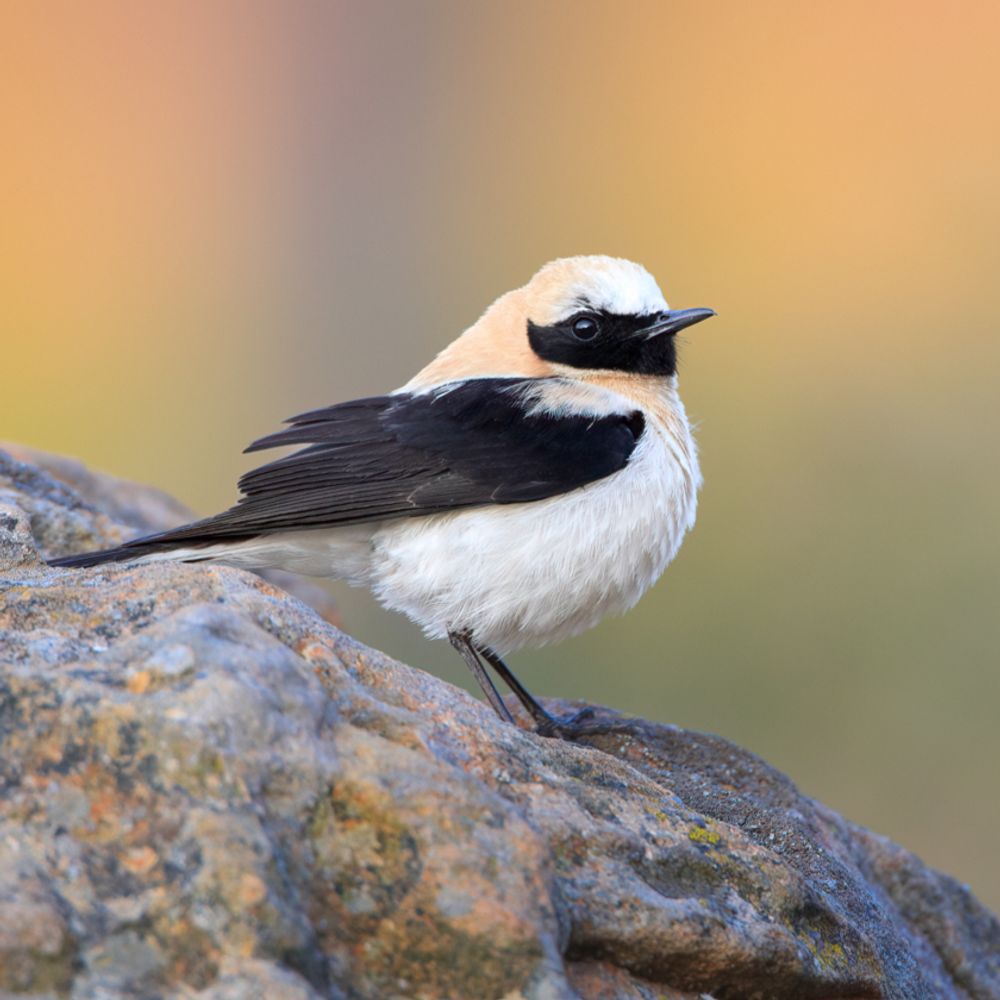
1/9 New in @science.org www.science.org/doi/10.1126/science.ado8005
How does genetic architecture constrain evolutionary trajectories? To address this question, we inferred the genetic architecture of convergent plumage coloration and its evolutionary history in wheatears.
How does genetic architecture constrain evolutionary trajectories? To address this question, we inferred the genetic architecture of convergent plumage coloration and its evolutionary history in wheatears.

A mosaic of modular variation at a single gene underpins convergent plumage coloration
The reshuffling of genomic variation from multiple origins is an important contributor to phenotypic diversification, yet insights into the evolutionary trajectories of this combinatorial process and ...
www.science.org
October 17, 2025 at 5:50 AM
1/9 New in @science.org www.science.org/doi/10.1126/science.ado8005
How does genetic architecture constrain evolutionary trajectories? To address this question, we inferred the genetic architecture of convergent plumage coloration and its evolutionary history in wheatears.
How does genetic architecture constrain evolutionary trajectories? To address this question, we inferred the genetic architecture of convergent plumage coloration and its evolutionary history in wheatears.
Reposted by Erica Dinatale
3/9 The black-or-white throat polymorphism is explained by the interaction of a transposable element (an LTR retrotransposon) upstream ASIP with ASIP coding variation. Mantle and neck side coloration is encoded by additive effects of regulatory variants upstream ASIP.

October 17, 2025 at 5:51 AM
3/9 The black-or-white throat polymorphism is explained by the interaction of a transposable element (an LTR retrotransposon) upstream ASIP with ASIP coding variation. Mantle and neck side coloration is encoded by additive effects of regulatory variants upstream ASIP.
Reposted by Erica Dinatale

We discovered an endogenous retrovirus that's still spreading in natural D. melanogaster populations! It was horizontally transferred from D. erecta in Central Africa, so we named it "Kuruka", which means "jump" in Swahili. Read its cool story here: www.biorxiv.org/content/10.1...

October 4, 2025 at 5:50 AM
We discovered an endogenous retrovirus that's still spreading in natural D. melanogaster populations! It was horizontally transferred from D. erecta in Central Africa, so we named it "Kuruka", which means "jump" in Swahili. Read its cool story here: www.biorxiv.org/content/10.1...
Reposted by Erica Dinatale

Thrilled to share what we learned from re-annotating the mobilome of the brown algae model [Ectocarpus] 🌊🌿🏖️
genomebiology.biomedcentral.com/articles/10....
A wonderful collaboration with @ericadinatale.bsky.social, @cssmartinho.bsky.social, @rorycraig.bsky.social, and Susana Coelho! 🎉
genomebiology.biomedcentral.com/articles/10....
A wonderful collaboration with @ericadinatale.bsky.social, @cssmartinho.bsky.social, @rorycraig.bsky.social, and Susana Coelho! 🎉

October 2, 2025 at 9:06 AM
Thrilled to share what we learned from re-annotating the mobilome of the brown algae model [Ectocarpus] 🌊🌿🏖️
genomebiology.biomedcentral.com/articles/10....
A wonderful collaboration with @ericadinatale.bsky.social, @cssmartinho.bsky.social, @rorycraig.bsky.social, and Susana Coelho! 🎉
genomebiology.biomedcentral.com/articles/10....
A wonderful collaboration with @ericadinatale.bsky.social, @cssmartinho.bsky.social, @rorycraig.bsky.social, and Susana Coelho! 🎉
Reposted by Erica Dinatale
It would be exciting to study whether there are clear "causal" links between TE regulation and body plan formation in brown algae, where 'artificial' mobilisation of young TEs can drive innovation (and overcome constraints) in the formation of multicellular phenotypes.
October 2, 2025 at 9:06 AM
It would be exciting to study whether there are clear "causal" links between TE regulation and body plan formation in brown algae, where 'artificial' mobilisation of young TEs can drive innovation (and overcome constraints) in the formation of multicellular phenotypes.
Thank you Vangeli!
October 1, 2025 at 8:56 AM
Thank you Vangeli!
Huge thanks to Susana Coelho, @hajkdrost.bsky.social, @cssmartinho.bsky.social and @rorycraig.bsky.social for their guidance and support throughout this massive work!
October 1, 2025 at 8:49 AM
Huge thanks to Susana Coelho, @hajkdrost.bsky.social, @cssmartinho.bsky.social and @rorycraig.bsky.social for their guidance and support throughout this massive work!
5/5 🔮 Brown algae are a unique lineage in the tree of life, and working on them gave me a new perspective on the diversity of TE landscapes and regulation mechanisms across eukaryotes!
October 1, 2025 at 8:47 AM
5/5 🔮 Brown algae are a unique lineage in the tree of life, and working on them gave me a new perspective on the diversity of TE landscapes and regulation mechanisms across eukaryotes!
4/5 ✨ And my favourite part: intact TEs are preferentially associated with small RNAs and with the histone modification H3K79me2. Their interplay offers a curious insight into alternative regulatory strategies.
October 1, 2025 at 8:30 AM
4/5 ✨ And my favourite part: intact TEs are preferentially associated with small RNAs and with the histone modification H3K79me2. Their interplay offers a curious insight into alternative regulatory strategies.
3/5 🧬 Over 80% of genes contain at least one intronic TE insertion. These intronic elements are shorter and more degraded than intergenic TEs, and overall they show minimal impact on gene expression.
October 1, 2025 at 8:20 AM
3/5 🧬 Over 80% of genes contain at least one intronic TE insertion. These intronic elements are shorter and more degraded than intergenic TEs, and overall they show minimal impact on gene expression.
2/5 🧜 TEs form discrete, repeat-rich islands that don’t correspond to centromeres. We also found an interesting enrichment in the pseudo-autosomal region of the sex chromosome, likely fueled by local hopping of DNA transposons from the sex-determining region.
October 1, 2025 at 8:18 AM
2/5 🧜 TEs form discrete, repeat-rich islands that don’t correspond to centromeres. We also found an interesting enrichment in the pseudo-autosomal region of the sex chromosome, likely fueled by local hopping of DNA transposons from the sex-determining region.
1/5 🌊 The Ectocarpus genome harbors a high diversity of evolutionarily young TEs. DNA transposons dominate, but Gypsy elements carrying a Tudor domain caught our eye!
October 1, 2025 at 8:14 AM
1/5 🌊 The Ectocarpus genome harbors a high diversity of evolutionarily young TEs. DNA transposons dominate, but Gypsy elements carrying a Tudor domain caught our eye!
So happy to see my first first-author paper published! 🎈
A short thread on how Ectocarpus and its TE secrets have kept me busy lately:
rdcu.be/eITQH
A short thread on how Ectocarpus and its TE secrets have kept me busy lately:
rdcu.be/eITQH
Characterization of the transposable element landscape shaping the Ectocarpus genome | Genome Biology
rdcu.be
October 1, 2025 at 8:12 AM
So happy to see my first first-author paper published! 🎈
A short thread on how Ectocarpus and its TE secrets have kept me busy lately:
rdcu.be/eITQH
A short thread on how Ectocarpus and its TE secrets have kept me busy lately:
rdcu.be/eITQH
Reposted by Erica Dinatale

New research: With ancient origins & surprising flexibility, #BrownAlgae reveal a compelling story of sex chromosome evolution. This could rewrite how we view sex determination. Learn more: s.gwdg.de/YDoZ3L
Congrats to @agalip.bsky.social & Josue Barrera for their work in @natecoevo.nature.com
Congrats to @agalip.bsky.social & Josue Barrera for their work in @natecoevo.nature.com

August 27, 2025 at 12:25 PM
New research: With ancient origins & surprising flexibility, #BrownAlgae reveal a compelling story of sex chromosome evolution. This could rewrite how we view sex determination. Learn more: s.gwdg.de/YDoZ3L
Congrats to @agalip.bsky.social & Josue Barrera for their work in @natecoevo.nature.com
Congrats to @agalip.bsky.social & Josue Barrera for their work in @natecoevo.nature.com
Reposted by Erica Dinatale

Genomes of brown algae with different sex determination systems show that U/V sex chromosomes evolved 450–224 million years ago and show remarkable conservation of genes within the sex-determining region, despite independent expansions of the sex locus in each lineage
www.nature.com/articles/s41...
www.nature.com/articles/s41...

Origin and evolutionary trajectories of brown algal sex chromosomes - Nature Ecology & Evolution
Genomes of nine brown algal species with different sex determination systems show that U/V sex chromosomes evolved 450–224 Ma and show remarkable conservation of genes within the sex-determining regio...
www.nature.com
August 25, 2025 at 12:20 PM
Genomes of brown algae with different sex determination systems show that U/V sex chromosomes evolved 450–224 million years ago and show remarkable conservation of genes within the sex-determining region, despite independent expansions of the sex locus in each lineage
www.nature.com/articles/s41...
www.nature.com/articles/s41...
Reposted by Erica Dinatale

Free online ebook: R and python comparisons side by side
www.anotherbookondatascience.com/chapter1.html
www.anotherbookondatascience.com/chapter1.html

August 22, 2025 at 1:45 PM
Free online ebook: R and python comparisons side by side
www.anotherbookondatascience.com/chapter1.html
www.anotherbookondatascience.com/chapter1.html
Thank you Toby! Brown algae and TEs make a cool combo 🌊🦘🪅
August 21, 2025 at 2:04 PM
Thank you Toby! Brown algae and TEs make a cool combo 🌊🦘🪅
Reposted by Erica Dinatale

Delighted to share the peer-reviewed version of our study led by @tomlewin.bsky.social now out in Genome Biology @bmc.springernature.com! We analyzed 64 chromosome-level genomes across 15 animal phyla and found that extensive genome rearrangements are the norm in bilaterians.
doi.org/10.1186/s130...
doi.org/10.1186/s130...

Conservation of bilaterian genome structure is the exception, not the rule - Genome Biology
Species from diverse animal lineages have conserved groups of orthologous genes together on the same chromosome for over half a billion years since the last common ancestor of bilaterians. Although no...
doi.org
August 18, 2025 at 9:39 AM
Delighted to share the peer-reviewed version of our study led by @tomlewin.bsky.social now out in Genome Biology @bmc.springernature.com! We analyzed 64 chromosome-level genomes across 15 animal phyla and found that extensive genome rearrangements are the norm in bilaterians.
doi.org/10.1186/s130...
doi.org/10.1186/s130...