



Early American Studies
@easmisc.bsky.social
EAS Miscellany is the digital companion to Early American Studies: An Interdisciplinary Journal.
Kacy Dowd Tillman explores how archival petitions by Black loyalists during the Revolution challenge objectification & assert authorship. Her article reinterprets bureaucratic records as a form of early life writing.
Now open access: doi.org/10.1353/eam....
@projectmuse.bsky.social
#EAS
Now open access: doi.org/10.1353/eam....
@projectmuse.bsky.social
#EAS

December 17, 2025 at 7:46 PM
Kacy Dowd Tillman explores how archival petitions by Black loyalists during the Revolution challenge objectification & assert authorship. Her article reinterprets bureaucratic records as a form of early life writing.
Now open access: doi.org/10.1353/eam....
@projectmuse.bsky.social
#EAS
Now open access: doi.org/10.1353/eam....
@projectmuse.bsky.social
#EAS
Teaching in the Age of AI: EAS Miscellany invites blog submissions on how generative tools like ChatGPT are shaping pedagogy. Share how you design assignments, assess work, or reimagine learning in this new landscape. Details here: bit.ly/485mfyh
#EAS #EASMisc #Teaching #CallForPapers
#EAS #EASMisc #Teaching #CallForPapers

December 10, 2025 at 6:00 PM
Teaching in the Age of AI: EAS Miscellany invites blog submissions on how generative tools like ChatGPT are shaping pedagogy. Share how you design assignments, assess work, or reimagine learning in this new landscape. Details here: bit.ly/485mfyh
#EAS #EASMisc #Teaching #CallForPapers
#EAS #EASMisc #Teaching #CallForPapers
The discovery of counterfeit coins in Veracruz ignited tensions between Mexico and the United States. This article, by Andrew Konove, examines how currency became a focal point for diplomacy, nationalism, and sovereignty in the nineteenth century. doi.org/10.1353/eam....
@pennpress.bsky.social
@pennpress.bsky.social

December 5, 2025 at 7:31 PM
The discovery of counterfeit coins in Veracruz ignited tensions between Mexico and the United States. This article, by Andrew Konove, examines how currency became a focal point for diplomacy, nationalism, and sovereignty in the nineteenth century. doi.org/10.1353/eam....
@pennpress.bsky.social
@pennpress.bsky.social
EAS Miscellany interviews John Ryan Fischer about his #Fall2025 article on Sauk & Meskwaki survival strategies after the Fox Wars. Dive into the conversation here: https://bit.ly/3Y5zetr
@mcneilcenter.bsky.social @pennpress.bsky.social
#EAS #EarlyAmericanMisc
@mcneilcenter.bsky.social @pennpress.bsky.social
#EAS #EarlyAmericanMisc

December 3, 2025 at 6:42 PM
EAS Miscellany interviews John Ryan Fischer about his #Fall2025 article on Sauk & Meskwaki survival strategies after the Fox Wars. Dive into the conversation here: https://bit.ly/3Y5zetr
@mcneilcenter.bsky.social @pennpress.bsky.social
#EAS #EarlyAmericanMisc
@mcneilcenter.bsky.social @pennpress.bsky.social
#EAS #EarlyAmericanMisc
According to John Ryan Fischer, Sauk and Meskwaki turned survival into strategy. Along the Mississippi, they blended adaptation and resistance, using trade, land, & selective adoption of colonial goods to sustain sovereignty after the Fox Wars. Link: doi.org/10.1353/eam....
@projectmuse.bsky.social
@projectmuse.bsky.social

December 2, 2025 at 6:23 PM
According to John Ryan Fischer, Sauk and Meskwaki turned survival into strategy. Along the Mississippi, they blended adaptation and resistance, using trade, land, & selective adoption of colonial goods to sustain sovereignty after the Fox Wars. Link: doi.org/10.1353/eam....
@projectmuse.bsky.social
@projectmuse.bsky.social
Freedom was not the only motivation for free Black soldiers in Revolutionary North Carolina. In this study, Andrea N. Miles reveals how class, taxation, and local politics shaped their decisions to enlist and fight for the Patriot cause.
doi.org/10.1353/eam....
@projectmuse.bsky.social
doi.org/10.1353/eam....
@projectmuse.bsky.social

November 26, 2025 at 5:00 PM
Freedom was not the only motivation for free Black soldiers in Revolutionary North Carolina. In this study, Andrea N. Miles reveals how class, taxation, and local politics shaped their decisions to enlist and fight for the Patriot cause.
doi.org/10.1353/eam....
@projectmuse.bsky.social
doi.org/10.1353/eam....
@projectmuse.bsky.social
In early New England homes, indenture contracts shaped everyday power. In "Fraught Forms," Caylin Carbonell explores how servants and masters alike learned to wield these documents to negotiate labor, obligation, and authority in both formal and personal ways.
muse.jhu.edu/pub/56/...
#EAS #EASMisc
muse.jhu.edu/pub/56/...
#EAS #EASMisc

November 24, 2025 at 7:19 PM
In early New England homes, indenture contracts shaped everyday power. In "Fraught Forms," Caylin Carbonell explores how servants and masters alike learned to wield these documents to negotiate labor, obligation, and authority in both formal and personal ways.
muse.jhu.edu/pub/56/...
#EAS #EASMisc
muse.jhu.edu/pub/56/...
#EAS #EASMisc
The #Summer2025 #EAS issue is now openly accessible on
@projectmuse.bsky.social!
Link: muse.jhu.edu/issue/5...
@mcneilcenter.bsky.social @pennpress.bsky.social
@projectmuse.bsky.social!
Link: muse.jhu.edu/issue/5...
@mcneilcenter.bsky.social @pennpress.bsky.social

November 20, 2025 at 6:00 PM
The #Summer2025 #EAS issue is now openly accessible on
@projectmuse.bsky.social!
Link: muse.jhu.edu/issue/5...
@mcneilcenter.bsky.social @pennpress.bsky.social
@projectmuse.bsky.social!
Link: muse.jhu.edu/issue/5...
@mcneilcenter.bsky.social @pennpress.bsky.social
Read our #Fall2025 #EAS journal issue on
@projectmuse.bsky.social
Link: muse.jhu.edu/issue/5...
@mcneilcenter.bsky.social
@pennpress.bsky.social
@projectmuse.bsky.social
Link: muse.jhu.edu/issue/5...
@mcneilcenter.bsky.social
@pennpress.bsky.social

November 20, 2025 at 2:00 PM
Read our #Fall2025 #EAS journal issue on
@projectmuse.bsky.social
Link: muse.jhu.edu/issue/5...
@mcneilcenter.bsky.social
@pennpress.bsky.social
@projectmuse.bsky.social
Link: muse.jhu.edu/issue/5...
@mcneilcenter.bsky.social
@pennpress.bsky.social
Katherine Grandjean examines how tensions in the southern backcountry endured long after the Revolution. Through stories, letters, & local memory, she reveals how loyalist stigma & wartime violence continued to shape everyday life.
Now open access: muse.jhu.edu/article...
@projectmuse.bsky.social
Now open access: muse.jhu.edu/article...
@projectmuse.bsky.social

November 19, 2025 at 6:31 PM
Katherine Grandjean examines how tensions in the southern backcountry endured long after the Revolution. Through stories, letters, & local memory, she reveals how loyalist stigma & wartime violence continued to shape everyday life.
Now open access: muse.jhu.edu/article...
@projectmuse.bsky.social
Now open access: muse.jhu.edu/article...
@projectmuse.bsky.social
Anthony Dean Rizzuto reexamines Thomas Paine’s legacy as an antislavery advocate, arguing that his writings reveal a consistent pattern of racial exclusion. Paine helped define the new Republic as a white settler project.
Now open access: muse.jhu.edu/article...
@projectmuse.bsky.social
Now open access: muse.jhu.edu/article...
@projectmuse.bsky.social

November 11, 2025 at 4:41 PM
Anthony Dean Rizzuto reexamines Thomas Paine’s legacy as an antislavery advocate, arguing that his writings reveal a consistent pattern of racial exclusion. Paine helped define the new Republic as a white settler project.
Now open access: muse.jhu.edu/article...
@projectmuse.bsky.social
Now open access: muse.jhu.edu/article...
@projectmuse.bsky.social
T. Cole Jones uncovers the coercive labor system Connecticut developed for British prisoners after the 1775 capture of Ticonderoga, revealing how revolutionary ideals clashed with the pragmatic exploitation of prisoner labor.
Now open access: muse.jhu.edu/article...
#EAS
@projectmuse.bsky.social
Now open access: muse.jhu.edu/article...
#EAS
@projectmuse.bsky.social
November 3, 2025 at 5:00 PM
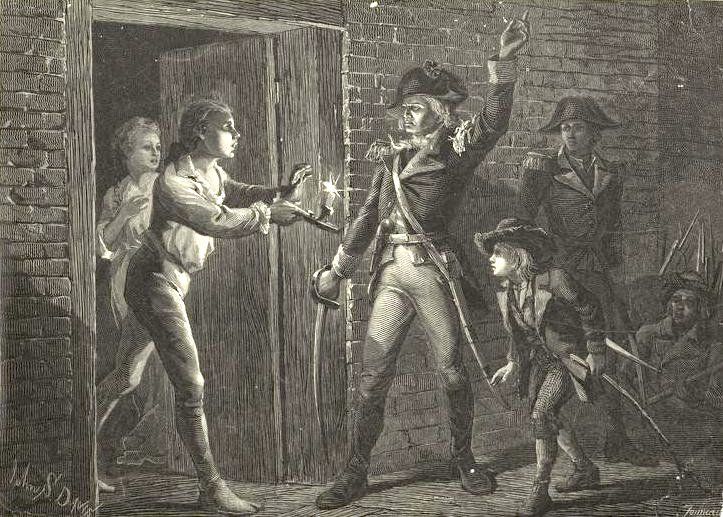
T. Cole Jones uncovers the coercive labor system Connecticut developed for British prisoners after the 1775 capture of Ticonderoga, revealing how revolutionary ideals clashed with the pragmatic exploitation of prisoner labor.
Now open access: muse.jhu.edu/article...
#EAS
@projectmuse.bsky.social
Now open access: muse.jhu.edu/article...
#EAS
@projectmuse.bsky.social
Richard S. Newman explores how early Black writers used print to challenge racial oppression. He demonstrates how their poetry, petitions, & pamphlets forged a foundation for abolitionist thought & redefined authorship in the 18th century.
Now open access until 12/31/25: muse.jhu.edu/article...
Now open access until 12/31/25: muse.jhu.edu/article...

October 28, 2025 at 2:55 PM
Richard S. Newman explores how early Black writers used print to challenge racial oppression. He demonstrates how their poetry, petitions, & pamphlets forged a foundation for abolitionist thought & redefined authorship in the 18th century.
Now open access until 12/31/25: muse.jhu.edu/article...
Now open access until 12/31/25: muse.jhu.edu/article...
Teaching in the Age of AI: EAS Miscellany invites blog submissions on how generative tools like ChatGPT are shaping pedagogy. Share how you design assignments, assess work, or reimagine learning in this new landscape. Details here: https://bit.ly/485mfyh

October 7, 2025 at 4:01 PM
Teaching in the Age of AI: EAS Miscellany invites blog submissions on how generative tools like ChatGPT are shaping pedagogy. Share how you design assignments, assess work, or reimagine learning in this new landscape. Details here: https://bit.ly/485mfyh
Blake McGready examines how accusations of ravaging in the Revolutionary Hudson Valley reflected environmental destruction, disrupted gender roles, & helped define Patriot identity through the language of violation & protection.
Now open access: muse.jhu.edu/article...
@projectmuse.bsky.social
Now open access: muse.jhu.edu/article...
@projectmuse.bsky.social

September 29, 2025 at 5:04 PM
Blake McGready examines how accusations of ravaging in the Revolutionary Hudson Valley reflected environmental destruction, disrupted gender roles, & helped define Patriot identity through the language of violation & protection.
Now open access: muse.jhu.edu/article...
@projectmuse.bsky.social
Now open access: muse.jhu.edu/article...
@projectmuse.bsky.social
We welcome Tracy L. Barnett, who recently joined our staff as the Digital & Social Media Editor for EAS Miscellany. Learn more about Tracy's scholarship & her approach to academic communications in her interview: web.sas.upenn.edu/ea...
@mcneilcenter.bsky.social @pennpress.bsky.social
#EAS #EASMisc
@mcneilcenter.bsky.social @pennpress.bsky.social
#EAS #EASMisc

September 24, 2025 at 1:00 PM
We welcome Tracy L. Barnett, who recently joined our staff as the Digital & Social Media Editor for EAS Miscellany. Learn more about Tracy's scholarship & her approach to academic communications in her interview: web.sas.upenn.edu/ea...
@mcneilcenter.bsky.social @pennpress.bsky.social
#EAS #EASMisc
@mcneilcenter.bsky.social @pennpress.bsky.social
#EAS #EASMisc
Justin Iverson examines how colonial authorities reshaped Jamaica’s interior during the First Maroon War, using roads, forts, & barracks to contain Black resistance & militarize the landscape in service of a slave society.
Now open access until 12/31/25: muse.jhu.edu/article...
Now open access until 12/31/25: muse.jhu.edu/article...

September 19, 2025 at 4:00 PM
Justin Iverson examines how colonial authorities reshaped Jamaica’s interior during the First Maroon War, using roads, forts, & barracks to contain Black resistance & militarize the landscape in service of a slave society.
Now open access until 12/31/25: muse.jhu.edu/article...
Now open access until 12/31/25: muse.jhu.edu/article...
Eric Slauter reconsiders how reading shaped revolution. His article follows the circulation of Locke’s Second Treatise to show how cheap reprints, marketing, & reader reception played a formative role in radicalization.
Now open access until 12/31/25: muse.jhu.edu/article...
@projectmuse.bsky.social
Now open access until 12/31/25: muse.jhu.edu/article...
@projectmuse.bsky.social

September 17, 2025 at 5:46 PM
Eric Slauter reconsiders how reading shaped revolution. His article follows the circulation of Locke’s Second Treatise to show how cheap reprints, marketing, & reader reception played a formative role in radicalization.
Now open access until 12/31/25: muse.jhu.edu/article...
@projectmuse.bsky.social
Now open access until 12/31/25: muse.jhu.edu/article...
@projectmuse.bsky.social
Monica Najar examines how 18th-century anti-Catholic writers used salacious stories of predatory priests to attack Catholicism, shape gender norms, & promote Protestant ideals of modesty in a bawdy, widely read print culture.
Now open access until 12/31/25: muse.jhu.edu/article...
Now open access until 12/31/25: muse.jhu.edu/article...
September 15, 2025 at 4:20 PM
Monica Najar examines how 18th-century anti-Catholic writers used salacious stories of predatory priests to attack Catholicism, shape gender norms, & promote Protestant ideals of modesty in a bawdy, widely read print culture.
Now open access until 12/31/25: muse.jhu.edu/article...
Now open access until 12/31/25: muse.jhu.edu/article...
Discover hidden gems from the archives. Our Source Highlights spotlight fascinating sources with context and ideas for teaching or research. Read more: http://bit.ly/4lKE6OA
#EAS #EarlyAmericaMisc
@mcneilcenter.bsky.social @pennpress.bsky.social
#EAS #EarlyAmericaMisc
@mcneilcenter.bsky.social @pennpress.bsky.social

September 2, 2025 at 4:00 PM
Discover hidden gems from the archives. Our Source Highlights spotlight fascinating sources with context and ideas for teaching or research. Read more: http://bit.ly/4lKE6OA
#EAS #EarlyAmericaMisc
@mcneilcenter.bsky.social @pennpress.bsky.social
#EAS #EarlyAmericaMisc
@mcneilcenter.bsky.social @pennpress.bsky.social
Have thoughts on how early American studies connect with the present? Pitch a Contemporary Connections piece for EAS Miscellany. We welcome short reflections linking past and present. Details here: http://bit.ly/406MijR
#EAS #EarlyAmericaMisc
@mcneilcenter.bsky.social @pennpress.bsky.social
#EAS #EarlyAmericaMisc
@mcneilcenter.bsky.social @pennpress.bsky.social
August 31, 2025 at 6:00 PM
Have thoughts on how early American studies connect with the present? Pitch a Contemporary Connections piece for EAS Miscellany. We welcome short reflections linking past and present. Details here: http://bit.ly/406MijR
#EAS #EarlyAmericaMisc
@mcneilcenter.bsky.social @pennpress.bsky.social
#EAS #EarlyAmericaMisc
@mcneilcenter.bsky.social @pennpress.bsky.social
As a supplement to his #Summer2025 #EAS article, Benjamin Pietrenka shares the sources behind his research into the many translations of the Bible read by early Americans. Check them out on #EASMiscellany here: http://bit.ly/3Hx8wWh
@mcneilcenter.bsky.social @pennpress.bsky.social
@mcneilcenter.bsky.social @pennpress.bsky.social

August 29, 2025 at 9:14 PM
As a supplement to his #Summer2025 #EAS article, Benjamin Pietrenka shares the sources behind his research into the many translations of the Bible read by early Americans. Check them out on #EASMiscellany here: http://bit.ly/3Hx8wWh
@mcneilcenter.bsky.social @pennpress.bsky.social
@mcneilcenter.bsky.social @pennpress.bsky.social
Have you used a unique archival or primary source in your research? Our Source Highlights posts showcase these documents and objects. Read more: http://bit.ly/406MijR
#EAS #EarlyAmericaMisc
@mcneilcenter.bsky.social @pennpress.bsky.social
#EAS #EarlyAmericaMisc
@mcneilcenter.bsky.social @pennpress.bsky.social
August 27, 2025 at 4:01 PM
Have you used a unique archival or primary source in your research? Our Source Highlights posts showcase these documents and objects. Read more: http://bit.ly/406MijR
#EAS #EarlyAmericaMisc
@mcneilcenter.bsky.social @pennpress.bsky.social
#EAS #EarlyAmericaMisc
@mcneilcenter.bsky.social @pennpress.bsky.social
Looking to share your research, teaching ideas, or archival finds with the early American studies community? EAS Miscellany welcomes pitches year-round. Visit our “Write for Us” page to learn more: http://bit.ly/406MijR
#EAS #EarlyAmericanMisc
@mcneilcenter.bsky.social @pennpress.bsky.social
#EAS #EarlyAmericanMisc
@mcneilcenter.bsky.social @pennpress.bsky.social
August 24, 2025 at 4:00 PM
Looking to share your research, teaching ideas, or archival finds with the early American studies community? EAS Miscellany welcomes pitches year-round. Visit our “Write for Us” page to learn more: http://bit.ly/406MijR
#EAS #EarlyAmericanMisc
@mcneilcenter.bsky.social @pennpress.bsky.social
#EAS #EarlyAmericanMisc
@mcneilcenter.bsky.social @pennpress.bsky.social
For Teaching #EAS, Ann Ostendorf uses microhistory in her post on Romani American history. She follows the case of 1 man in colonial Louisiana to trace a compelling story that opens our understanding of race, archival silences, & historical memory. http://bit.ly/45uVxO0
@mcneilcenter.bsky.social
@mcneilcenter.bsky.social

August 21, 2025 at 4:01 PM
For Teaching #EAS, Ann Ostendorf uses microhistory in her post on Romani American history. She follows the case of 1 man in colonial Louisiana to trace a compelling story that opens our understanding of race, archival silences, & historical memory. http://bit.ly/45uVxO0
@mcneilcenter.bsky.social
@mcneilcenter.bsky.social