



David_Pascucci
@davidpascucci.bsky.social
Assistant Professor SNSF
UNIL, CHUV/FBM
UNIL, CHUV/FBM
Reposted by David_Pascucci

This article by @aozkirli.bsky.social @achetverikov.bsky.social and @davidpascucci.bsky.social shows that, rather than improving performance, serial dependence makes perceptual decisions more uncertain.
Large-scale mega-analysis indicates that serial dependence deteriorates perceptual decision-making
Abstract
For over a century, research has shown that human perceptual decisions are systematically influenced by prior perceptual experiences, a phenomenon known as serial dependence. It has recently been suggested that serial dependence can improve perceptual decision-making by mitigating uncertainty and reducing variability in perceptual estimates—leading to a superiority effect. However, this claim remains largely untested. Here we present a large-scale analysis, compiling the most extensive dataset of serial dependence studies from the past decade. Contrary to the proposed superiority effect, our findings indicate that serial dependence deteriorates rather than improves perceptual decision-making. These results challenge prevailing models and emphasize the need to rethink serial dependence and its role in human perception, cognition and behaviour.
Access options
Get Nature+, our best-value online-access subscription
Prices may be subject to local taxes which are calculated during checkout
The datasets containing standardized raw data for the mega-analysis are available at https://github.com/aozkirli/Large-scale-mega-analysis-on-serial-dependence/tree/main. The use of any part of this compiled dataset in future studies requires citation of both this publication and the original source studies from which the data were obtained.
The analysis code can be found at https://github.com/aozkirli/Large-scale-mega-analysis-on-serial-dependence/tree/main.
References
Fischer, J. & Whitney, D. Serial dependence in visual perception. Nat. Neurosci. 17, 738–743 (2014).
Manassi, M., Murai, Y. & Whitney, D. Serial dependence in visual perception: a meta-analysis and review. J. Vis. 23, 18 (2023).
Article
Pascucci, D. et al. Serial dependence in visual perception: a review. J. Vis. 23, 9 (2023).
Article
Kiyonaga, A., Scimeca, J. M., Bliss, D. P. & Whitney, D. Serial dependence across perception, attention, and memory. Trends Cogn. Sci. 21, 493–497 (2017).
Article
Kondo, A., Murai, Y. & Whitney, D. The test–retest reliability and spatial tuning of serial dependence in orientation perception. J. Vis. 22, 5 (2022).
Article
Alais, D., Leung, J. & Van der Burg, E. Linear summation of repulsive and attractive serial dependencies: orientation and motion dependencies sum in motion perception. J. Neurosci. 37, 4381–4390 (2017).
Barbosa, J. & Compte, A. Build-up of serial dependence in color working memory. Sci. Rep. 10, 10959 (2020).
Ceylan, G., Herzog, M. H. & Pascucci, D. Serial dependence does not originate from low-level visual processing. Cognition 212, 104709 (2021).
Fischer, C., et al. Context information supports serial dependence of multiple visual objects across memory episodes. Nat. Commun. 11, 1932 (2020).
Moon, J. & Kwon, O.-S. Attractive and repulsive effects of sensory history concurrently shape visual perception. BMC Biol. 20, 247 (2022).
Article PubMed Central
Pascucci, D. et al. Laws of concatenated perception: vision goes for novelty, decisions for perseverance. PLoS Biol. 17, e3000144 (2019).
Pascucci, D. & Plomp, G. Serial dependence and representational momentum in single-trial perceptual decisions. Sci. Rep. 11, 9910 (2021).
Tanrikulu, Ö. D., Pascucci, D. & Kristjánsson, Á. Stronger serial dependence in the depth plane than the fronto-parallel plane between realistic objects: evidence from virtual reality. J. Vis. 23, 20 (2023).
Article PubMed Central
Liberman, A., Manassi, M. & Whitney, D. Serial dependence promotes the stability of perceived emotional expression depending on face similarity. Atten. Percept. Psychophys. 80, 1461–1473 (2018).
Google Scholar
Liberman, A. & Whitney, D. The serial dependence of perceived emotional expression. J. Vis. 15, 929 (2015).
Kim, S., Burr, D. & Alais, D. Attraction to the recent past in aesthetic judgments: a positive serial dependence for rating artwork. J. Vis. 19, 19 (2019).
Google Scholar
Stern, Y., Ben-Yehuda, I., Koren, D., Zaidel, A. & Salomon, R. The dynamic boundaries of the self: serial dependence in the sense of agency. Cortex 152, 109–121 (2022).
Google Scholar
Taubert, J., Van der Burg, E. & Alais, D. Love at second sight: sequential dependence of facial attractiveness in an on-line dating paradigm. Sci. Rep. 6, 22740 (2016).
Lõoke, M., Guérineau, C., Broseghini, A., Mongillo, P. & Marinelli, L. Visual continuum in non-human animals: serial dependence revealed in dogs. Proc. R. Soc. B 291, 20240051 (2024).
Article
Papadimitriou, C., Ferdoash, A. & Snyder, L. H. Ghosts in the machine: memory interference from the previous trial. J. Neurophysiol. 113, 567–577 (2014).
Article Google Scholar
Kalm, K. & Norris, D. Visual recency bias is explained by a mixture model of internal representations. J. Vis. 18, 1 (2018).
Article Google Scholar
Cicchini, G. M., Mikellidou, K. & Burr, D. The functional role of serial dependence. Proc. R. Soc. B 285, 20181722 (2018).
Article PubMed Central Google Scholar
van Bergen, R. S. & Jehee, J. F. Probabilistic representation in human visual cortex reflects uncertainty in serial decisions. J. Neurosci. 39, 8164–8176 (2019).
Article PubMed Central Google Scholar
Chetverikov, A. Demixing model: a normative explanation for inter-item biases in memory and perception. Preprint at bioRxiv https://doi.org/10.1101/2023.03.26.534226 (2023).
Bansal, S. et al. Qualitatively different delay-dependent working memory distortions in people with schizophrenia and healthy control participants. Biol. Psychiatry Cogn. Neurosci. Neuroimaging https://doi.org/10.1016/j.bpsc.2023.07.004 (2023).
Article PubMed PubMed Central Google Scholar
Pascucci, D. et al. Intact serial dependence in schizophrenia: evidence from an orientation adjustment task. Schizophr. Bull. 51, 754–764 (2024).
Article PubMed Central Google Scholar
Stein, H. et al. Reduced serial dependence suggests deficits in synaptic potentiation in anti-NMDAR encephalitis and schizophrenia. Nat. Commun. 11, 4250 (2020).
Fritsche, M., Spaak, E. & de Lange, F. P. A Bayesian and efficient observer model explains concurrent attractive and repulsive history biases in visual perception. Elife 9, e55389 (2020).
Article PubMed PubMed Central Google Scholar
Ozkirli, A., Pascucci, D. & Herzog, M. H. Failure to replicate a superiority effect in crowding. Nat. Commun. 16, 1637 (2025).
Sheehan, T. C. & Serences, J. T. Attractive serial dependence overcomes repulsive neuronal adaptation. PLoS Biol. 20, e3001711 (2022).
Abreo, S., Gergen, A., Gupta, N. & Samaha, J. Effects of satisfying and violating expectations on serial dependence. J. Vis. 23, 6 (2023).
Article PubMed PubMed Central Google Scholar
Samaha, J. Data for ‘Effects of satisfying and violating expectations on serial dependence’. OSF https://osf.io/kpjtb/ (2022).
Blondé, P., Kristjánsson, Á. & Pascucci, D. Tuning perception and decisions to temporal context. iScience https://doi.org/10.1016/j.isci.2023.108008 (2023).
Blondé, P. Tuning perception and decisions to temporal context. Mendeley https://doi.org/10.17632/TMWD9ZKMCX.1 (2023).
Ceylan, G. & Pascucci, D. Attractive and repulsive serial dependence: the role of task relevance, the passage of time, and the number of stimuli. J. Vis. 23, 8 (2023).
Article PubMed PubMed Central Google Scholar
Pascucci, D. Datasets for ‘Serial dependence does not originate from low-level visual processing’ Gizayet al., (2021): cognition. Zenodo https://doi.org/10.5281/zenodo.4632854 (2021).
Chetverikov, A. & Jehee, J. F. M. Motion direction is represented as a bimodal probability distribution in the human visual cortex. Nat. Commun. 14, 7634 (2023).
Chetverikov, A. & Jehee, J. Data Accompanying the Paper ‘Motion Direction Is Represented as a Bimodal Probability Distribution in the Human Visual Cortex’ (Radboud Univ., 2023); https://doi.org/10.34973/YK4K-TP41
Cicchini, G. M., Mikellidou, K. & Burr, D. C. Data from: The functional role of serial dependence. Dryad https://doi.org/10.5061/DRYAD.8PH33S0 (2018).
Fischer, C. et al. Data. OSF https://osf.io/b7msj (2020).
Fritsche, M. & de Lange, F. P. The role of feature-based attention in visual serial dependence. J. Vis. 19, 21 (2019).
Article PubMed Google Scholar
Gallagher, G. K. & Benton, C. P. Stimulus uncertainty predicts serial dependence in orientation judgements. J. Vis. 22, 6 (2022).
Article PubMed PubMed Central Google Scholar
Geurts, L. S., Cooke, J. R., van Bergen, R. S. & Jehee, J. F. Subjective confidence reflects representation of Bayesian probability in cortex. Nat. Hum. Behav. 6, 294–305 (2022).
Article PubMed Central Google Scholar
Houborg, C., Kristjánsson, Á, Tanrıkulu, Ö. D. & Pascucci, D. The role of secondary features in serial dependence. J. Vis. 23, 21 (2023).
Article Google Scholar
Houborg, C., Pascucci, D., Tanrıkulu, Ö. D. & Kristjánsson, Á The effects of visual distractors on serial dependence. J. Vis. 23, 1 (2023).
Article
Lau, W. K. & Maus, G. W. Visual serial dependence in an audiovisual stimulus. J. Vis. 19, 20 (2019).
Article Google Scholar
Lau, W. K. & Maus, G. Related data for: Visual serial dependence in an audiovisual stimulus. DR-NTU (Data) https://doi.org/10.21979/N9/CBUORH (2020).
Moon, J. & Kwon, O.-S. Data for ‘Attractive and repulsive effects of sensory history concurrently shape visual perception’. OSF https://osf.io/s3cx2 (2022).
Moon, J., Tadin, D. & Kwon, O.-S. A key role of orientation in the coding of visual motion direction. Psychon. Bull. Rev. 30, 564–574 (2023).
Article Google Scholar
Kwon, O.-S. Data for ‘A key role of orientation in the coding of visual motion direction’. OSF https://osf.io/m6d4z (2022).
Ozkirli, A. & Pascucci, D. It’s not the spoon that bends: internal states of the observer determine serial dependence. Preprint at bioRxiv https://doi.org/10.1101/2023.10.19.563128 (2023).
Ozkirli, A. & Pascucci, D. Dataset for ‘It’s not the spoon that bends: internal states of the observer determine serial dependence’. Zenodo https://doi.org/10.5281/zenodo.11187228 (2024).
Pascucci, D. Intact serial dependence in schizophrenia: evidence from an orientation adjustment task (version 1). Zenodo https://doi.org/10.1093/schbul/sbae106 (2024).
Sadil, P., Cowell, R. A. & Huber, D. E. The push-pull of serial dependence effects: attraction to the prior response and repulsion from the prior stimulus. Psychon. Bull. Rev. 31, 259–273 (2024).
Samaha, J., Switzky, M. & Postle, B. R. Confidence boosts serial dependence in orientation estimation. J. Vis. 19, 25 (2019).
Samaha, J., Switzky, M. & Postle, B. R. Data for ‘Confidence boosts serial dependence in orientation estimation’. OSF https://osf.io/6uczk/ (2019).
Houborg, C., Pascucci, D., Tanrikulu, Ö. D. & Kristjánsson, Á. The effects of visual distractors on serial dependence. Zenodo https://doi.org/10.5281/zenodo.7940512 (2023).
Moscoso, P. A. M., Burr, D. C. & Cicchini, G. M. Serial dependence improves performance and biases confidence-based decisions. J. Vis. 23, 5 (2023).
Stewart, N., Brown, G. D. A. & Chater, N. Absolute identification by relative judgment. Psychol. Rev. 112, 881–911 (2005).
Fritsche, M., Mostert, P. & de Lange, F. P. Opposite effects of recent history on perception and decision. Curr. Biol. 27, 590–595 (2017).
Dragoi, V., Sharma, J., Miller, E. K. & Sur, M. Dynamics of neuronal sensitivity in visual cortex and local feature discrimination. Nat. Neurosci. 5, 883–891 (2002).
Tiurina, N. A., Markov, Y., Choung, O.-H., Herzog, M. H. & Pascucci, D. Unlocking crowding by ensemble statistics. Curr. Biol. 32, 4975–4981.e3 (2022).
Whitney, D. & Levi, D. M. Visual crowding: a fundamental limit on conscious perception and object recognition. Trends Cogn. Sci. 15, 160–168 (2011).
Google Scholar
Jonides, J. & Nee, D. E. Brain mechanisms of proactive interference in working memory. Neuroscience 139, 181–193 (2006).
Makovski, T. & Jiang, Y. V. Proactive interference from items previously stored in visual working memory. Mem. Cogn. 36, 43–52 (2008).
Cicchini, G. M., Mikellidou, K. & Burr, D. C. Serial dependence in perception. Annu. Rev. Psychol. 75, 129–154 (2024).
Cicchini, G. M., D’Errico, G. & Burr, D. C. Crowding results from optimal integration of visual targets with contextual information. Nat. Commun. 13, 5741 (2022).
Glen, J. C. & Dakin, S. C. Orientation-crowding within contours. J. Vis. 13, 14 (2013).
Livne, T. & Sagi, D. Multiple levels of orientation anisotropy in crowding with Gabor flankers. J. Vis. 11, 18 (2011).
Solomon, J. A., Felisberti, F. M. & Morgan, M. J. Crowding and the tilt illusion: toward a unified account. J. Vis. 4, 9 (2004).
Cicchini, G. M., D’Errico, G. & Burr, D. C. Reply to: Failure to replicate a superiority effect in crowding. Nat. Commun. 16, 1638 (2025).
Barbosa, J. et al. Interplay between persistent activity and activity-silent dynamics in the prefrontal cortex underlies serial biases in working memory. Nat. Neurosci. 23, 1016–1024 (2020).
Ernst, M. O. & Banks, M. S. Humans integrate visual and haptic information in a statistically optimal fashion. Nature 415, 429–433 (2002).
Ufer, C. & Blank, H. Opposing serial effects of stimulus and choice in speech perception scale with context variability. iScience 27, 110611 (2024).
Schwetlick, L. & Herzog, M. H. Visual crowding. Annu. Rev. Vis. Sci. https://doi.org/10.1146/annurev-vision-110423-024409 (2025).
Geisler, W. S. Motion streaks provide a spatial code for motion direction. Nature 400, 65–69 (1999).
Manassi, M., Liberman, A., Kosovicheva, A., Zhang, K. & Whitney, D. Serial dependence in position occurs at the time of perception. Psychon. Bull. Rev. 25, 2245–2253 (2018).
Chetverikov, A. circhelp: circular analyses helper functions. GitHub https://github.com/achetverikov/circhelp/releases/tag/v1.1 (2024).
van Bergen, R. S., Ji Ma, W., Pratte, M. S. & Jehee, J. F. M. Sensory uncertainty decoded from visual cortex predicts behavior. Nat. Neurosci. 18, 1728–1730 (2015).
We thank all the researchers who have shared their data directly or made it publicly available. Data from three studies were provided by the Radboud University, Nijmegen, the Netherlands. This work was supported by the Swiss National Science Foundation (SNSF) through the Ambizione Grant ‘Serial Dependence in Perception and Decision Making’ (D.P.; grant numbers PZ00P1_179988 and PZ00P1_179988/2) and finalized with additional support from the SNSF Starting Grant (D.P.; TMSGI1_218247). The funders had no role in study design, data collection and analysis, decision to publish or preparation of the manuscript.
Authors and Affiliations
A.O.: conceptualization, data collection, investigation, analysis, and writing—original draft, review and editing. A.C.: conceptualization, data collection, analysis, and writing—review and editing. D.P.: conceptualization, data collection, investigation, analysis, writing—review and editing, funding acquisition and supervision.
Peer review
Peer review information
Nature Human Behaviour thanks Matthias Fritsche, Huihui Zhang and the other, anonymous, reviewer(s) for their contribution to the peer review of this work. Peer reviewer reports are available.
Results from the PubMed search. The column ‘Selected study’ identifies the study number in the dataset.
Springer Nature or its licensor (e.g. a society or other partner) holds exclusive rights to this article under a publishing agreement with the author(s) or other rightsholder(s); author self-archiving of the accepted manuscript version of this article is solely governed by the terms of such publishing agreement and applicable law.
Ozkirli, A., Chetverikov, A. & Pascucci, D. Large-scale mega-analysis indicates that serial dependence deteriorates perceptual decision-making. Nat Hum Behav (2025). https://doi.org/10.1038/s41562-025-02362-8
www.nature.com
December 23, 2025 at 10:27 AM
This article by @aozkirli.bsky.social @achetverikov.bsky.social and @davidpascucci.bsky.social shows that, rather than improving performance, serial dependence makes perceptual decisions more uncertain.
Reposted by David_Pascucci

Our paper is finally out in Nature Human Behavior!!
@epfl-brainmind.bsky.social
@epfl-brainmind.bsky.social
Happy to share our new paper in @nathumbehav.nature.com: t.co/Ciq7AKvle5. Using 500k+ behavioral trials, we show that #serialdependence deviates from #Bayesian predictions, pointing to a new narrative about how recent experience shapes perception. @aozkirli.bsky.social @achetverikov.bsky.social

December 22, 2025 at 11:21 AM
Our paper is finally out in Nature Human Behavior!!
@epfl-brainmind.bsky.social
@epfl-brainmind.bsky.social
Happy to share our new paper in @nathumbehav.nature.com: t.co/Ciq7AKvle5. Using 500k+ behavioral trials, we show that #serialdependence deviates from #Bayesian predictions, pointing to a new narrative about how recent experience shapes perception. @aozkirli.bsky.social @achetverikov.bsky.social
December 22, 2025 at 11:09 AM
Happy to share our new paper in @nathumbehav.nature.com: t.co/Ciq7AKvle5. Using 500k+ behavioral trials, we show that #serialdependence deviates from #Bayesian predictions, pointing to a new narrative about how recent experience shapes perception. @aozkirli.bsky.social @achetverikov.bsky.social
Reposted by David_Pascucci

We will address this through an integrated behavioural, computational, and neurophysiological approach, focusing on how endogenous perceptual traits interact with the external factors.
PhD and postdoctoral positions linked to this project will be advertised in the coming months.
Stay tuned!
(2/2)
PhD and postdoctoral positions linked to this project will be advertised in the coming months.
Stay tuned!
(2/2)
December 5, 2025 at 1:50 PM
We will address this through an integrated behavioural, computational, and neurophysiological approach, focusing on how endogenous perceptual traits interact with the external factors.
PhD and postdoctoral positions linked to this project will be advertised in the coming months.
Stay tuned!
(2/2)
PhD and postdoctoral positions linked to this project will be advertised in the coming months.
Stay tuned!
(2/2)
Reposted by David_Pascucci
Pleased to share that a collaboration project between David Pascucci (UNIL/CHUV) and I has been selected for funding.
Our project asks a central question:
Why do individuals differ in how their perceptual judgments are shaped by temporal context?
(1/2)
Our project asks a central question:
Why do individuals differ in how their perceptual judgments are shaped by temporal context?
(1/2)
December 5, 2025 at 1:50 PM
Pleased to share that a collaboration project between David Pascucci (UNIL/CHUV) and I has been selected for funding.
Our project asks a central question:
Why do individuals differ in how their perceptual judgments are shaped by temporal context?
(1/2)
Our project asks a central question:
Why do individuals differ in how their perceptual judgments are shaped by temporal context?
(1/2)
Probabilistic processing: Possible, probable, or preposterous?
In a new dialectical essay written with Leyla Loued-Khenissi, we take opposite sides of the debate, aiming to clarify what’s really at stake
www.sciencedirect.com/science/arti...
In a new dialectical essay written with Leyla Loued-Khenissi, we take opposite sides of the debate, aiming to clarify what’s really at stake
www.sciencedirect.com/science/arti...

Probabilistic processing: Possible, probable, or preposterous? A dialectical essay
Does the brain operate probabilistically, or are probabilistic models merely useful tools for approximating brain function? This dialectical essay add…
www.sciencedirect.com
October 11, 2025 at 7:25 AM
Probabilistic processing: Possible, probable, or preposterous?
In a new dialectical essay written with Leyla Loued-Khenissi, we take opposite sides of the debate, aiming to clarify what’s really at stake
www.sciencedirect.com/science/arti...
In a new dialectical essay written with Leyla Loued-Khenissi, we take opposite sides of the debate, aiming to clarify what’s really at stake
www.sciencedirect.com/science/arti...
Looking forward to the start of ICON 2025 in Porto, here the list of our contributions

September 14, 2025 at 1:47 PM
Looking forward to the start of ICON 2025 in Porto, here the list of our contributions
Looking forward to the start of ICON 2025 in Porto, here the list of our contributions
September 14, 2025 at 1:42 PM
Looking forward to the start of ICON 2025 in Porto, here the list of our contributions
My Research Highlight on an important study assessing large-scale evidence for perceptual entrainment to auditory rhythms is now out,
emphasizing the importance of replications, sample sizes and variability across individuals and labs @natureportfolio.nature.com
rdcu.be/eFODC
emphasizing the importance of replications, sample sizes and variability across individuals and labs @natureportfolio.nature.com
rdcu.be/eFODC

Neuroscience: large-scale evidence for perceptual entrainment to auditory rhythms
Communications Psychology - A large multi-lab replication study confirms that rhythmic sounds can entrain perceptual performance, while revealing substantial inter-individual variability.
rdcu.be
September 12, 2025 at 10:42 AM
My Research Highlight on an important study assessing large-scale evidence for perceptual entrainment to auditory rhythms is now out,
emphasizing the importance of replications, sample sizes and variability across individuals and labs @natureportfolio.nature.com
rdcu.be/eFODC
emphasizing the importance of replications, sample sizes and variability across individuals and labs @natureportfolio.nature.com
rdcu.be/eFODC
Reposted by David_Pascucci

📢 Next week at #ECVP2025, our lab, @davidpascucci.bsky.social, @maelanmenetrey.bsky.social and I will be presenting in several talks and posters! Looking forward to meeting people at our sessions, exchanging ideas, and being inspired by others' amazing work! 💫🧠

August 22, 2025 at 2:17 PM
📢 Next week at #ECVP2025, our lab, @davidpascucci.bsky.social, @maelanmenetrey.bsky.social and I will be presenting in several talks and posters! Looking forward to meeting people at our sessions, exchanging ideas, and being inspired by others' amazing work! 💫🧠
Reposted by David_Pascucci
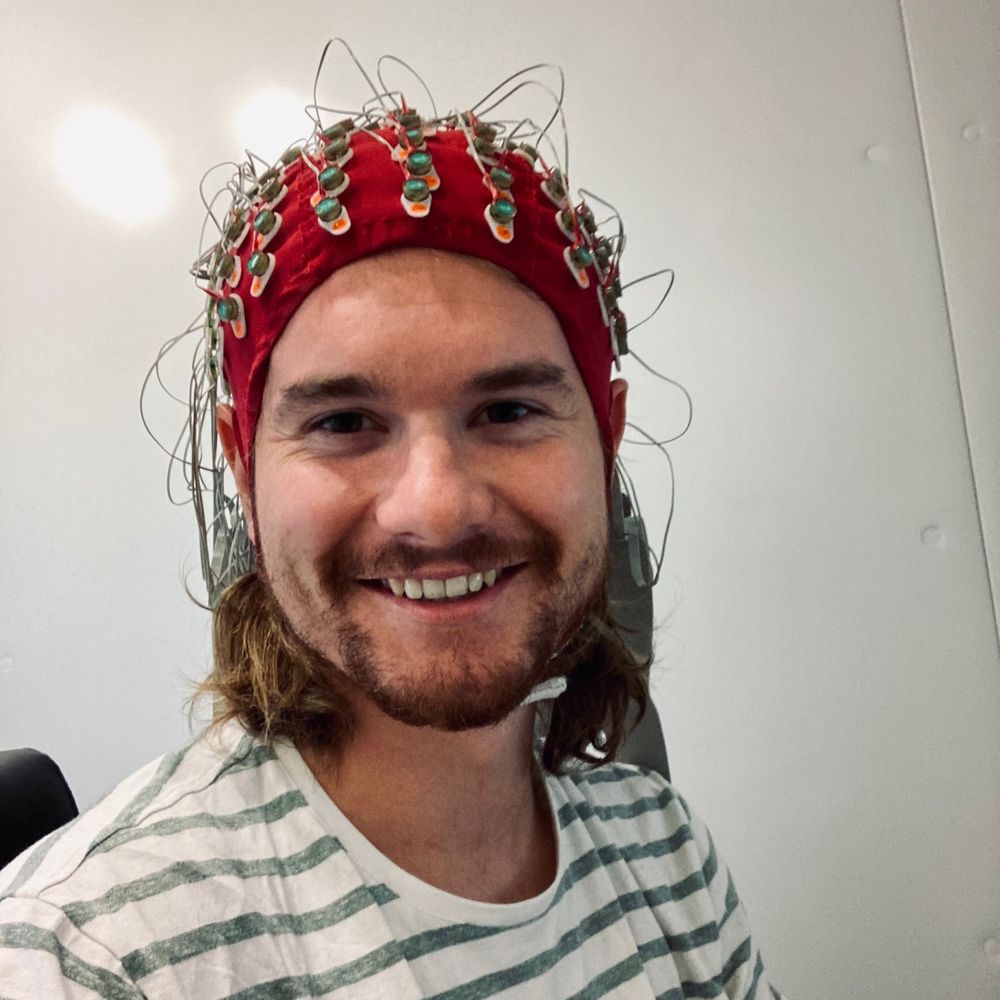
🚨 New 2-in-1 paper: a review on #EEG brain oscillations (www.sciencedirect.com/science/arti...) and a website with recorded talks from a symposium that featured 8 speakers discussing the present and future of the field (brain-waves-workshop.github.io/2024/).
🧠 #neuroimaging #neuroskyence
🧠 #neuroimaging #neuroskyence

EEG brain waves and alpha rhythms: Past, current and future direction
Nearly a century after the first EEG recordings, we assess the progress made in EEG research, focusing on the challenges, novel theories and methods, …
www.sciencedirect.com
July 14, 2025 at 7:00 PM
🚨 New 2-in-1 paper: a review on #EEG brain oscillations (www.sciencedirect.com/science/arti...) and a website with recorded talks from a symposium that featured 8 speakers discussing the present and future of the field (brain-waves-workshop.github.io/2024/).
🧠 #neuroimaging #neuroskyence
🧠 #neuroimaging #neuroskyence
Ever notice how a ticking clock or flashing banner stops bothering you?
In our new @nature.com Scientific Reports paper, we focus on the stages involved in habituation to visual distractors, using #EEG ERP and oscillations.
rdcu.be/euAIE
@snsf.ch @unifr.bsky.social @epfl-brainmind.bsky.social
In our new @nature.com Scientific Reports paper, we focus on the stages involved in habituation to visual distractors, using #EEG ERP and oscillations.
rdcu.be/euAIE
@snsf.ch @unifr.bsky.social @epfl-brainmind.bsky.social
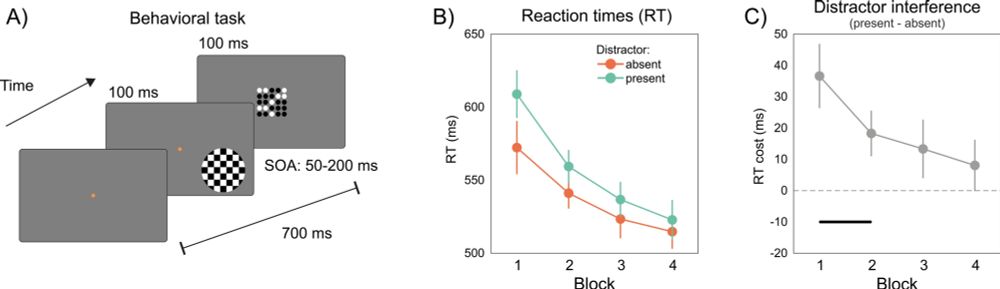
Anticipatory and reactive mechanisms of habituation to visual distractors
Scientific Reports - Anticipatory and reactive mechanisms of habituation to visual distractors
rdcu.be
July 3, 2025 at 6:13 AM
Ever notice how a ticking clock or flashing banner stops bothering you?
In our new @nature.com Scientific Reports paper, we focus on the stages involved in habituation to visual distractors, using #EEG ERP and oscillations.
rdcu.be/euAIE
@snsf.ch @unifr.bsky.social @epfl-brainmind.bsky.social
In our new @nature.com Scientific Reports paper, we focus on the stages involved in habituation to visual distractors, using #EEG ERP and oscillations.
rdcu.be/euAIE
@snsf.ch @unifr.bsky.social @epfl-brainmind.bsky.social
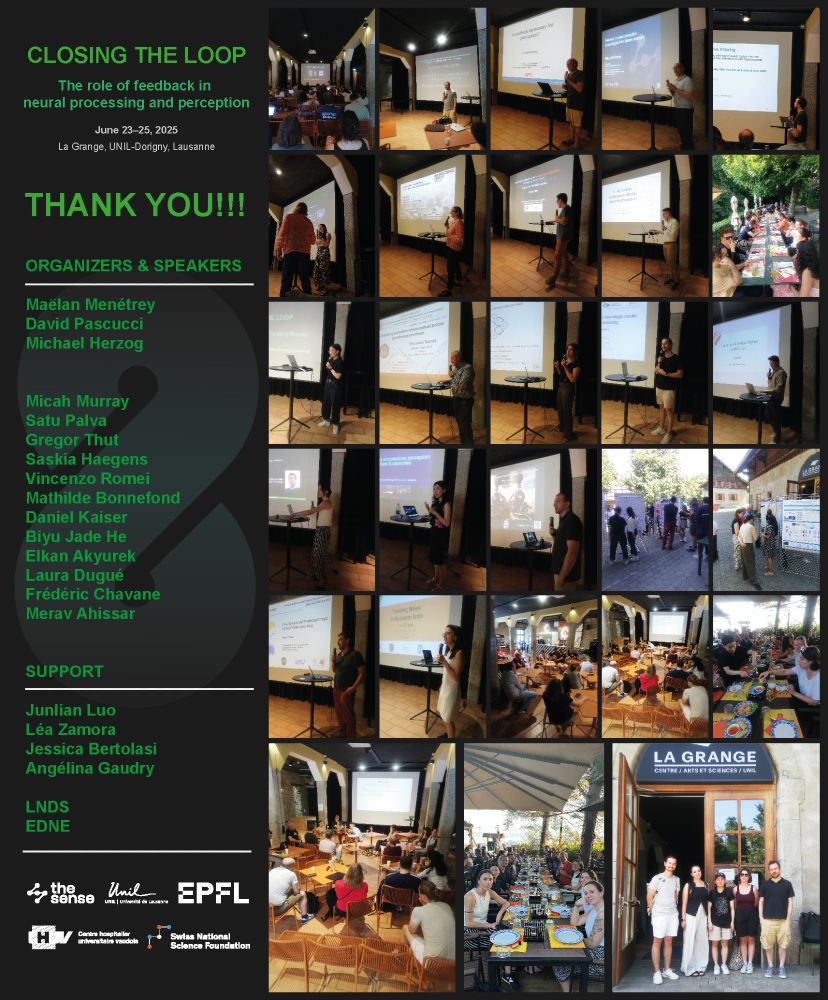
Three great days on neural feedback @unil.bsky.social La Grange—15 top talks, a great panel, and discussions! Huge thanks to @snsf.ch, @fbm-unil.bsky.social, @icepfl.bsky.social & TheSense. Co-organized with @maelanmenetrey.bsky.social & Michael Herzog.
These should happen more often!
These should happen more often!
June 30, 2025 at 11:18 AM
Three great days on neural feedback @unil.bsky.social La Grange—15 top talks, a great panel, and discussions! Huge thanks to @snsf.ch, @fbm-unil.bsky.social, @icepfl.bsky.social & TheSense. Co-organized with @maelanmenetrey.bsky.social & Michael Herzog.
These should happen more often!
These should happen more often!
Reposted by David_Pascucci
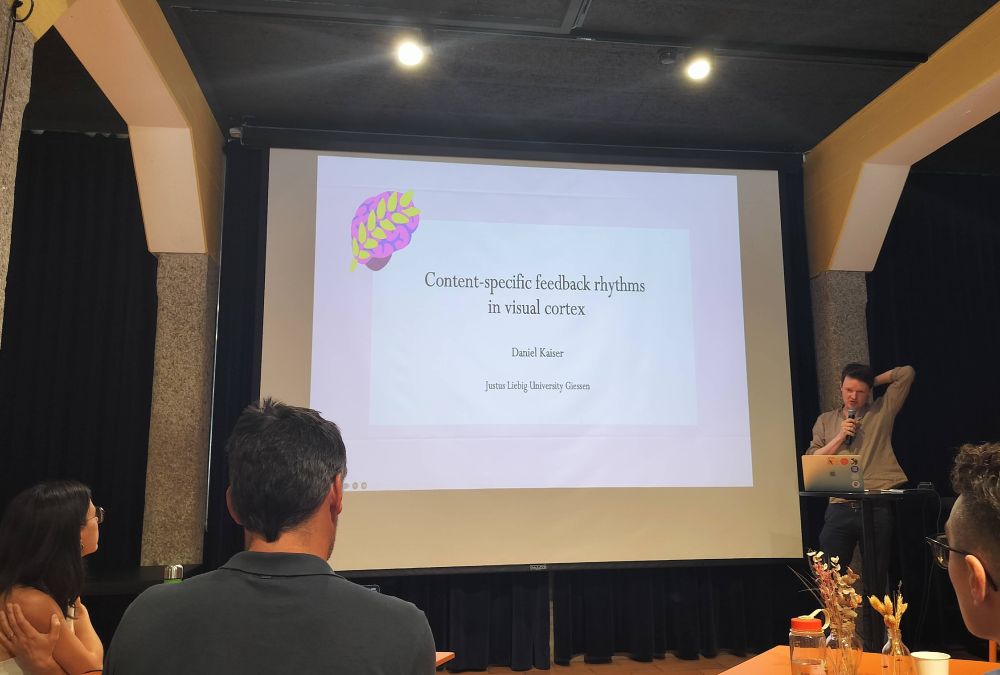
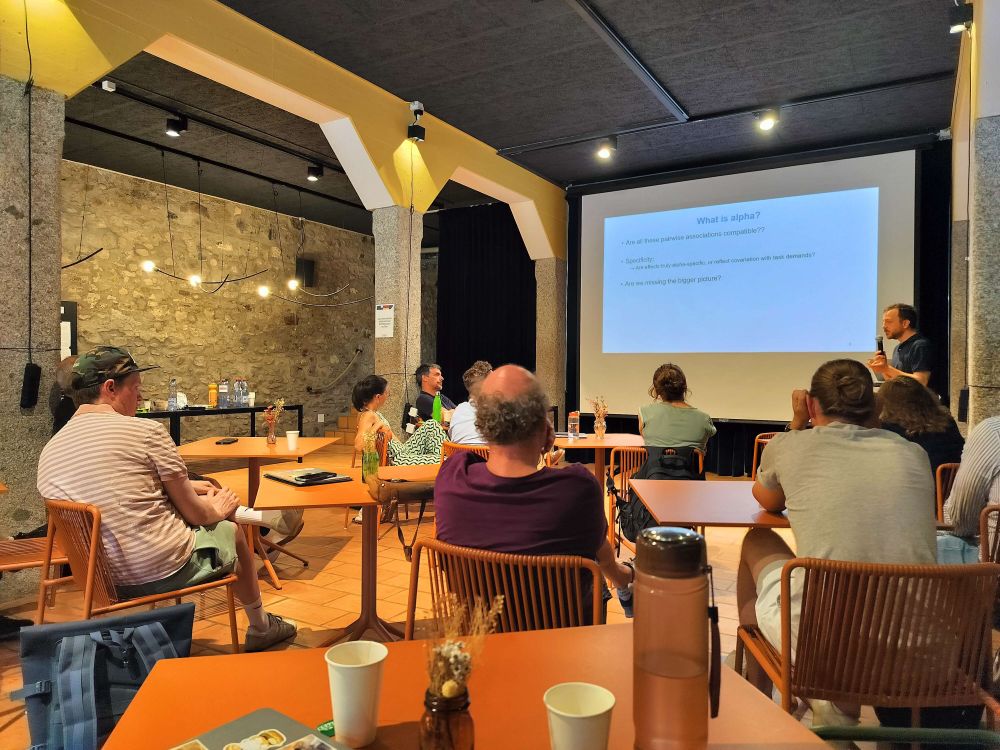
We had an awesome time discussing the role of feedback in perception @unil.bsky.social 🧠 and exploring the beautiful city of Lausanne! 💜🏞️ Thanks to @icepfl.bsky.social @davidpascucci.bsky.social


June 26, 2025 at 6:34 PM
We had an awesome time discussing the role of feedback in perception @unil.bsky.social 🧠 and exploring the beautiful city of Lausanne! 💜🏞️ Thanks to @icepfl.bsky.social @davidpascucci.bsky.social
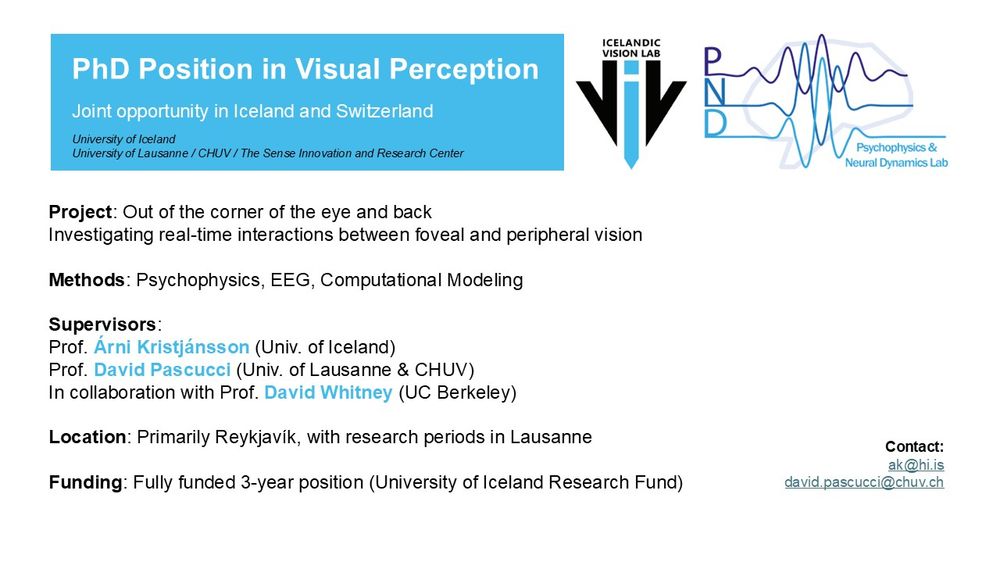
Happy to share a funded PhD opportunity in our collaborative project with Árni Kristjánsson @icevislab.bsky.social & and David Whitney (UC Berkeley).
Applications are now open, feel free to reach out.
@fbm-unil.bsky.social #PhD #perception
Applications are now open, feel free to reach out.
@fbm-unil.bsky.social #PhD #perception
May 27, 2025 at 2:48 PM
Happy to share a funded PhD opportunity in our collaborative project with Árni Kristjánsson @icevislab.bsky.social & and David Whitney (UC Berkeley).
Applications are now open, feel free to reach out.
@fbm-unil.bsky.social #PhD #perception
Applications are now open, feel free to reach out.
@fbm-unil.bsky.social #PhD #perception
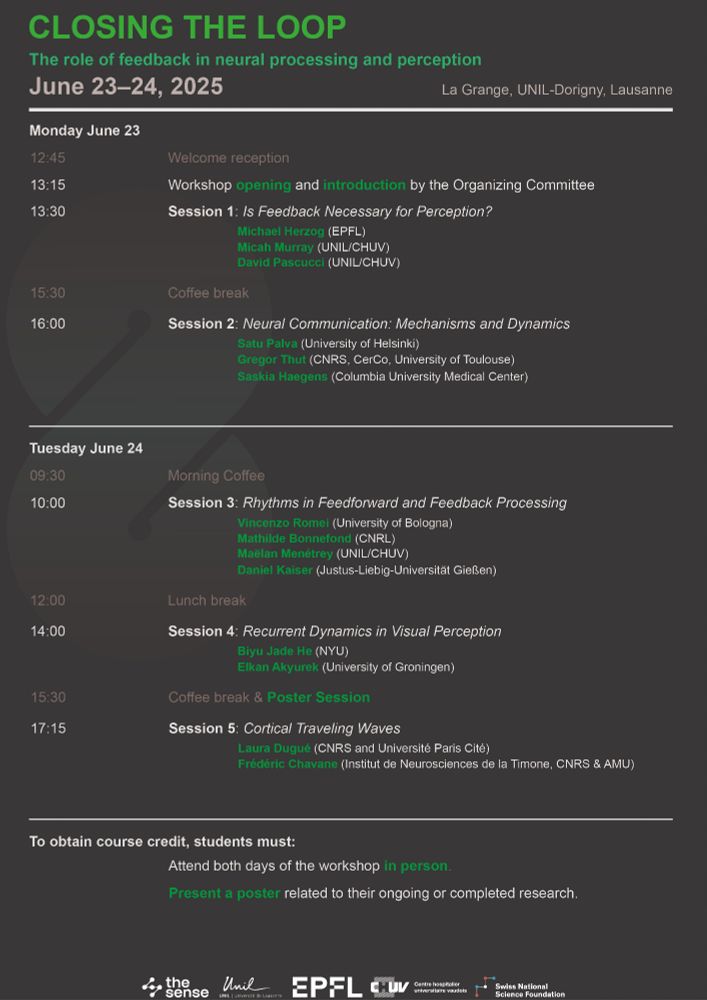
Looking forward to this one...Join us for a workshop on feedback in perception & neural processing — with top international speakers.
Hosted by @fbm-unil.bsky.social & @icepfl.bsky.social
🎓 LNDS & EDNE PhDs: credits via poster
Register: tinyurl.com/3snapbcp
@snf-fns.ch
Hosted by @fbm-unil.bsky.social & @icepfl.bsky.social
🎓 LNDS & EDNE PhDs: credits via poster
Register: tinyurl.com/3snapbcp
@snf-fns.ch
May 27, 2025 at 1:06 PM
Looking forward to this one...Join us for a workshop on feedback in perception & neural processing — with top international speakers.
Hosted by @fbm-unil.bsky.social & @icepfl.bsky.social
🎓 LNDS & EDNE PhDs: credits via poster
Register: tinyurl.com/3snapbcp
@snf-fns.ch
Hosted by @fbm-unil.bsky.social & @icepfl.bsky.social
🎓 LNDS & EDNE PhDs: credits via poster
Register: tinyurl.com/3snapbcp
@snf-fns.ch
🎓 EEG I: Best Practices for Recording EEG
🔗 lnkd.in/eMCrVqbJ
Hands-on #EEG training for PhD students — from setup to preprocessing & analysis.
Spots are limited, so sign up soon!
@maelanmenetrey.bsky.social @fbm-unil.bsky.social @unil.bsky.social
#Neuroscience #PhDlife #NeuroMethods #LERB #CUSO
🔗 lnkd.in/eMCrVqbJ
Hands-on #EEG training for PhD students — from setup to preprocessing & analysis.
Spots are limited, so sign up soon!
@maelanmenetrey.bsky.social @fbm-unil.bsky.social @unil.bsky.social
#Neuroscience #PhDlife #NeuroMethods #LERB #CUSO

May 22, 2025 at 1:06 PM
🎓 EEG I: Best Practices for Recording EEG
🔗 lnkd.in/eMCrVqbJ
Hands-on #EEG training for PhD students — from setup to preprocessing & analysis.
Spots are limited, so sign up soon!
@maelanmenetrey.bsky.social @fbm-unil.bsky.social @unil.bsky.social
#Neuroscience #PhDlife #NeuroMethods #LERB #CUSO
🔗 lnkd.in/eMCrVqbJ
Hands-on #EEG training for PhD students — from setup to preprocessing & analysis.
Spots are limited, so sign up soon!
@maelanmenetrey.bsky.social @fbm-unil.bsky.social @unil.bsky.social
#Neuroscience #PhDlife #NeuroMethods #LERB #CUSO
Reposted by David_Pascucci
Many thanks to the Radio Télévision Suisse @rts.ch for the opportunity to discuss (in French) one of our research lines on neural synchrony with @davidpascucci.bsky.social at @thesensech.bsky.social & @unil.bsky.social.
www.rts.ch/audio-podcas...
#EEG #neuroscience
www.rts.ch/audio-podcas...
#EEG #neuroscience
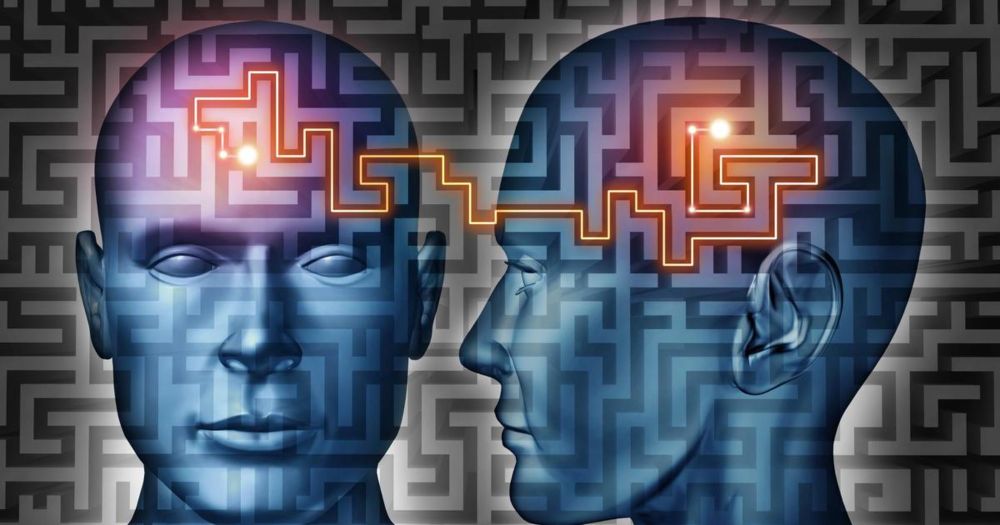
Synchronisation des cerveaux: quand nos esprits sʹaccordent
Comment notre cerveau s’aligne-t-il à un stimulus extérieur? Et que se passe-t-il lorsqu’il s’aligne à un autre cerveau?
Les recherches en neurosciences collectives explorent ces questions grâce à d...
www.rts.ch
May 1, 2025 at 3:48 PM
Many thanks to the Radio Télévision Suisse @rts.ch for the opportunity to discuss (in French) one of our research lines on neural synchrony with @davidpascucci.bsky.social at @thesensech.bsky.social & @unil.bsky.social.
www.rts.ch/audio-podcas...
#EEG #neuroscience
www.rts.ch/audio-podcas...
#EEG #neuroscience
🚨 Call for Papers! @natureportfolio.nature.com
Rhythmic Cognition 🔁🧠 👉 go.nature.com/4joQu5E
Honored to serve as Guest Editor! Spread the word & 📩 DM me if you're interested or have questions. #Neuroscience #EEG #Psychophysics #CognitiveScience
Rhythmic Cognition 🔁🧠 👉 go.nature.com/4joQu5E
Honored to serve as Guest Editor! Spread the word & 📩 DM me if you're interested or have questions. #Neuroscience #EEG #Psychophysics #CognitiveScience
Rhythmic Cognition
The Editors at Communications Psychology, Nature Communications, and Scientific Reports invite submissions on the topic of Rhythmic Cognition.
go.nature.com
April 29, 2025 at 7:31 AM
🚨 Call for Papers! @natureportfolio.nature.com
Rhythmic Cognition 🔁🧠 👉 go.nature.com/4joQu5E
Honored to serve as Guest Editor! Spread the word & 📩 DM me if you're interested or have questions. #Neuroscience #EEG #Psychophysics #CognitiveScience
Rhythmic Cognition 🔁🧠 👉 go.nature.com/4joQu5E
Honored to serve as Guest Editor! Spread the word & 📩 DM me if you're interested or have questions. #Neuroscience #EEG #Psychophysics #CognitiveScience
🚨Call for Papers! 📷@BMCBiology is welcoming submissions for a new collection on “Integrative and translational #serialdependence” Spread the word and dm/reach out for more details!...a few months left!!

April 2, 2025 at 2:35 PM
🚨Call for Papers! 📷@BMCBiology is welcoming submissions for a new collection on “Integrative and translational #serialdependence” Spread the word and dm/reach out for more details!...a few months left!!
Reposted by David_Pascucci
🎓 Very happy to start as a PhD student in the Psychophysics and Neural Dynamics lab under the supervision of @davidpascucci.bsky.social !
April 2, 2025 at 9:22 AM
🎓 Very happy to start as a PhD student in the Psychophysics and Neural Dynamics lab under the supervision of @davidpascucci.bsky.social !
Great work with Philippe Blondé, @shansmann-roth.bsky.social and Árni Kristjánsson: 👉 ttps://rdcu.be/ecbOk
March 4, 2025 at 6:40 PM
Great work with Philippe Blondé, @shansmann-roth.bsky.social and Árni Kristjánsson: 👉 ttps://rdcu.be/ecbOk
Reposted by David_Pascucci
Excited to share that our latest research with @davidpascucci.bsky.social and Michael H. Herzog has just been published in @naturecomms.bsky.social!
Huge thanks to @epfl-brainmind.bsky.social, @thesensech.bsky.social and @snsf-ch.bsky.social for making our research possible!
Huge thanks to @epfl-brainmind.bsky.social, @thesensech.bsky.social and @snsf-ch.bsky.social for making our research possible!
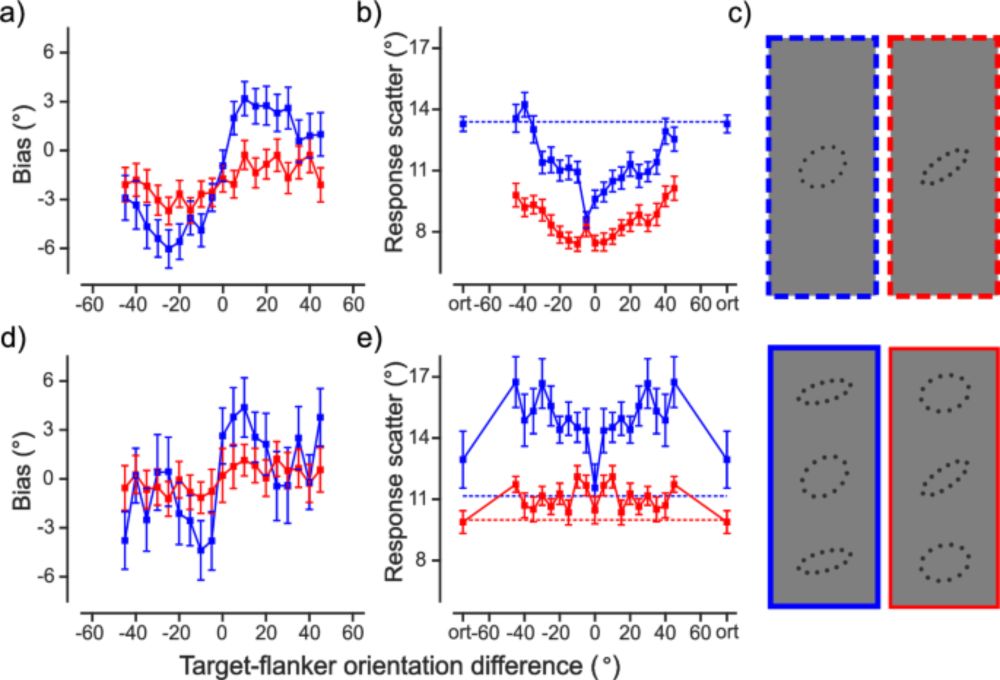
Failure to replicate a superiority effect in crowding - Nature Communications
Nature Communications - Failure to replicate a superiority effect in crowding
doi.org
February 15, 2025 at 4:03 PM
Excited to share that our latest research with @davidpascucci.bsky.social and Michael H. Herzog has just been published in @naturecomms.bsky.social!
Huge thanks to @epfl-brainmind.bsky.social, @thesensech.bsky.social and @snsf-ch.bsky.social for making our research possible!
Huge thanks to @epfl-brainmind.bsky.social, @thesensech.bsky.social and @snsf-ch.bsky.social for making our research possible!
📢 Upcoming Talk at CHUV!
@snsf-ch.bsky.social @fbm-unil.bsky.social @thesensech.bsky.social
On Feb 27, 16:00-17:00, we will host Prof. Adrien Doerig for his talk: 🧠"High-level visual representations in the human brain are aligned with large language models"
unil.ch/events/fr/17...
Join us! #AI #LLM
@snsf-ch.bsky.social @fbm-unil.bsky.social @thesensech.bsky.social
On Feb 27, 16:00-17:00, we will host Prof. Adrien Doerig for his talk: 🧠"High-level visual representations in the human brain are aligned with large language models"
unil.ch/events/fr/17...
Join us! #AI #LLM
High-level visual representations in the human brain are aligned with large language models (LLM)
It is our great pleasure to invite Prof. Adrien Doerig to give a talk at CHUV. After completing PhD in EPFL with Prof. Michael Herzog, Dr. Adrien Doerig continued for a postdoc with Prof. Tim Kietzma...
unil.ch
February 14, 2025 at 1:49 PM
📢 Upcoming Talk at CHUV!
@snsf-ch.bsky.social @fbm-unil.bsky.social @thesensech.bsky.social
On Feb 27, 16:00-17:00, we will host Prof. Adrien Doerig for his talk: 🧠"High-level visual representations in the human brain are aligned with large language models"
unil.ch/events/fr/17...
Join us! #AI #LLM
@snsf-ch.bsky.social @fbm-unil.bsky.social @thesensech.bsky.social
On Feb 27, 16:00-17:00, we will host Prof. Adrien Doerig for his talk: 🧠"High-level visual representations in the human brain are aligned with large language models"
unil.ch/events/fr/17...
Join us! #AI #LLM
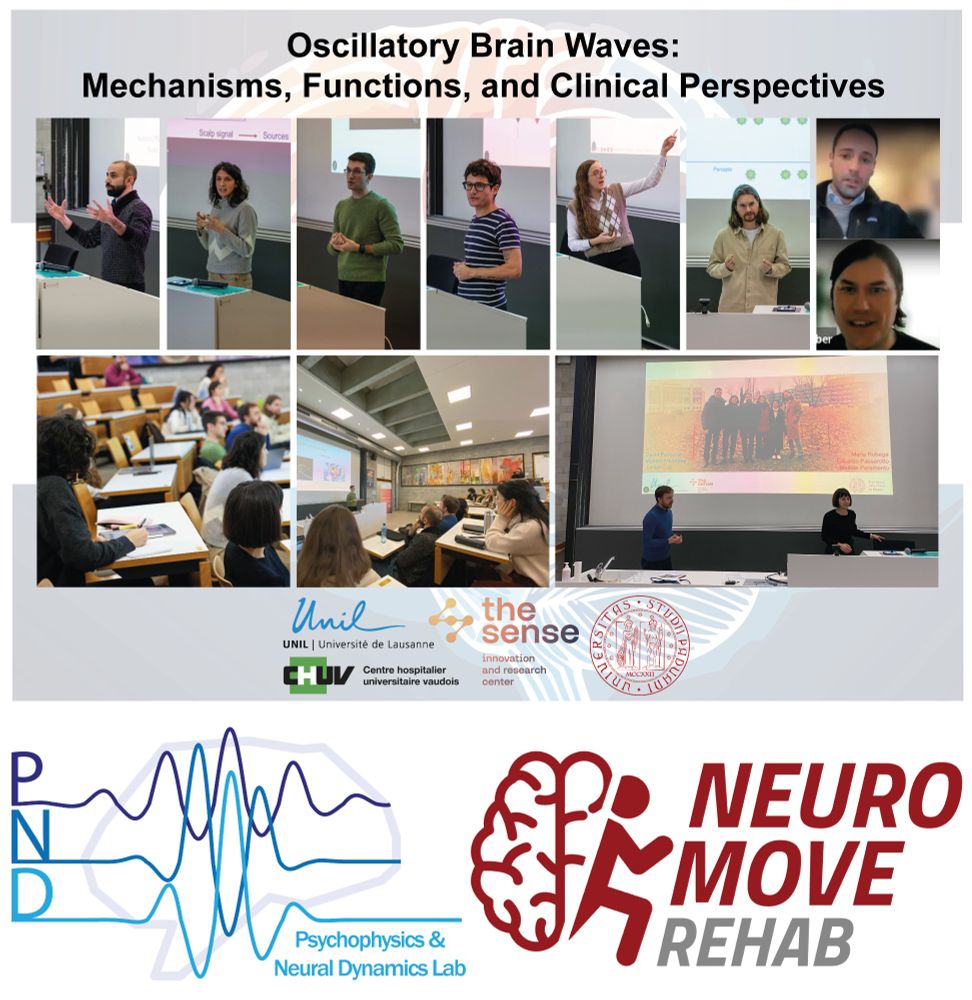
On Dec 11, we hosted a symposium on #EEG brain waves featuring 8 speakers discussing the present and future of the field👉https://brain-waves-workshop.github.io/2024/ (+slides!).
December 20, 2024 at 4:09 PM
On Dec 11, we hosted a symposium on #EEG brain waves featuring 8 speakers discussing the present and future of the field👉https://brain-waves-workshop.github.io/2024/ (+slides!).