


ChemtrailPilot007🇺🇸🇩🇪
@cpilot007.bsky.social
X_refugee*German_American*king_of_typos*hates_nationalism*atheist*biker*sailor*skier*sky-_and_scuba_diver*guitar-_and_piano_player*loves cooking*Go49ers
when you want a tacky and useless ballroom instead of a decent respected historic building


October 21, 2025 at 9:30 AM
when you want a tacky and useless ballroom instead of a decent respected historic building
telle me you're deeply insecure without telling me

May 17, 2025 at 8:02 AM
telle me you're deeply insecure without telling me
ladies and gentlemen, the United States secretary of health and human services:

May 17, 2025 at 7:52 AM
ladies and gentlemen, the United States secretary of health and human services:

just a coincidence, of course

April 16, 2025 at 2:12 PM
just a coincidence, of course
and the next step towards dictatorship by the tiny whiny schoolyard bully who cant stand criticizm
www.aclu-tn.org/en/news/dona...
www.aclu-tn.org/en/news/dona...
Donald Trump Thinks the Freedom of the Press Is ‘Disgusting’
A running list of Trump’s many attacks on the press. Donald Trump has pledged to defend the Constitution — even an article that doesn’t exist — but he can’t seem to lay off that pesky First
www.aclu-tn.org
April 15, 2025 at 9:58 AM
and the next step towards dictatorship by the tiny whiny schoolyard bully who cant stand criticizm
www.aclu-tn.org/en/news/dona...
www.aclu-tn.org/en/news/dona...
Trumpanzee "logic" born from their amazing education

April 14, 2025 at 9:20 AM
Trumpanzee "logic" born from their amazing education
even Elon's AI knows... yet he himself, the orange freak and their cultists, as usual, ignore the facts
x.com/i/grok/share...
x.com/i/grok/share...

how do trump's tariffs affect the us economy?
Donald Trump’s tariffs, implemented during his first term and potentially expanded in a second, have a complex impact on the U.S. economy, with both benefits and drawbacks depending on the perspective. Let’s break it down. On one hand, tariffs—taxes on imported goods—aim to protect domestic industries by making foreign products more expensive, encouraging consumers and businesses to buy American-made goods. During Trump’s first term, he imposed tariffs on steel (25%) and aluminum (10%) in 2018, as well as significant levies on Chinese goods, peaking at around 19% on average for $250 billion worth of imports. Proponents argue this bolstered U.S. manufacturing jobs. For example, the steel industry saw some job growth—about 7,000 jobs by 2019, according to some estimates—and companies like Nucor reported increased production. The idea is that shielding industries from cheap foreign competition, especially from countries like China with state-subsidized production, levels the playing field and reduces reliance on imports, potentially strengthening national security and economic independence. However, the economic costs are substantial. Tariffs raise prices for imported goods, which hits consumers and businesses that rely on those inputs. A 2019 study by the Federal Reserve Bank of New York estimated that Trump’s tariffs cost U.S. consumers and businesses $3 billion per month in added tax costs and another $1.4 billion in efficiency losses from distorted markets. Manufacturers using steel and aluminum, like automakers or appliance makers, faced higher costs—Ford reported a $1 billion hit to profits in 2018. Retaliation also stings: China slapped tariffs on U.S. agricultural exports like soybeans, costing farmers billions; the U.S. government paid out $23 billion in subsidies to offset losses by 2020. Net job gains are murky—while steel jobs rose slightly, a Moody’s Analytics report suggested tariffs eliminated more jobs (in downstream industries) than they created, with a net loss of about 300,000 jobs when factoring in retaliation and higher costs. Trade balances? Trump often claimed tariffs would shrink the U.S. trade deficit. They didn’t. The deficit grew from $552 billion in 2016 to $679 billion in 2020, per U.S. Census Bureau data, partly because tariffs don’t address underlying issues like consumer demand for cheap imports or currency dynamics. Looking forward, Trump’s 2024 campaign floated even bolder ideas: a 60% tariff on Chinese goods and a 10-20% universal tariff on all imports. Economists like those at the Peterson Institute warn this could spike inflation—potentially adding 1-2% to consumer prices—and disrupt supply chains still healing from post-COVID chaos. Goldman Sachs estimated a 0.1% GDP drop per 1% tariff increase, though some argue short-term pain could yield long-term gains if it forces reshoring of industries. Critics, including 16 Nobel laureate economists in a June 2024 letter, called it a “tax on the middle class” that could tank economic growth. In short: Trump’s tariffs boost some domestic sectors like steel and appeal to voters prioritizing “America First,” but they raise costs, spark retaliation, and haven’t historically delivered promised trade wins. The net effect depends on how much you value protectionism versus global efficiency—and how long you’re willing to wait for the payoff.
x.com
April 5, 2025 at 11:23 AM
even Elon's AI knows... yet he himself, the orange freak and their cultists, as usual, ignore the facts
x.com/i/grok/share...
x.com/i/grok/share...
stay calm, no corruption here
"Trump official urging Fox viewers to buy Tesla stock"
www.alternet.org/fox-news-tes...
"Trump official urging Fox viewers to buy Tesla stock"
www.alternet.org/fox-news-tes...

Trump official urging Fox viewers to buy Tesla stock decried as 'abuse of power'
"Buy Tesla. It's unbelievable that this guy's stock is this cheap. It'll never be this cheap again... Who wouldn't invest in Elon Musk?" That's what U.S. President Donald Trump's billionaire commerce ...
www.alternet.org
March 21, 2025 at 10:34 AM
stay calm, no corruption here
"Trump official urging Fox viewers to buy Tesla stock"
www.alternet.org/fox-news-tes...
"Trump official urging Fox viewers to buy Tesla stock"
www.alternet.org/fox-news-tes...
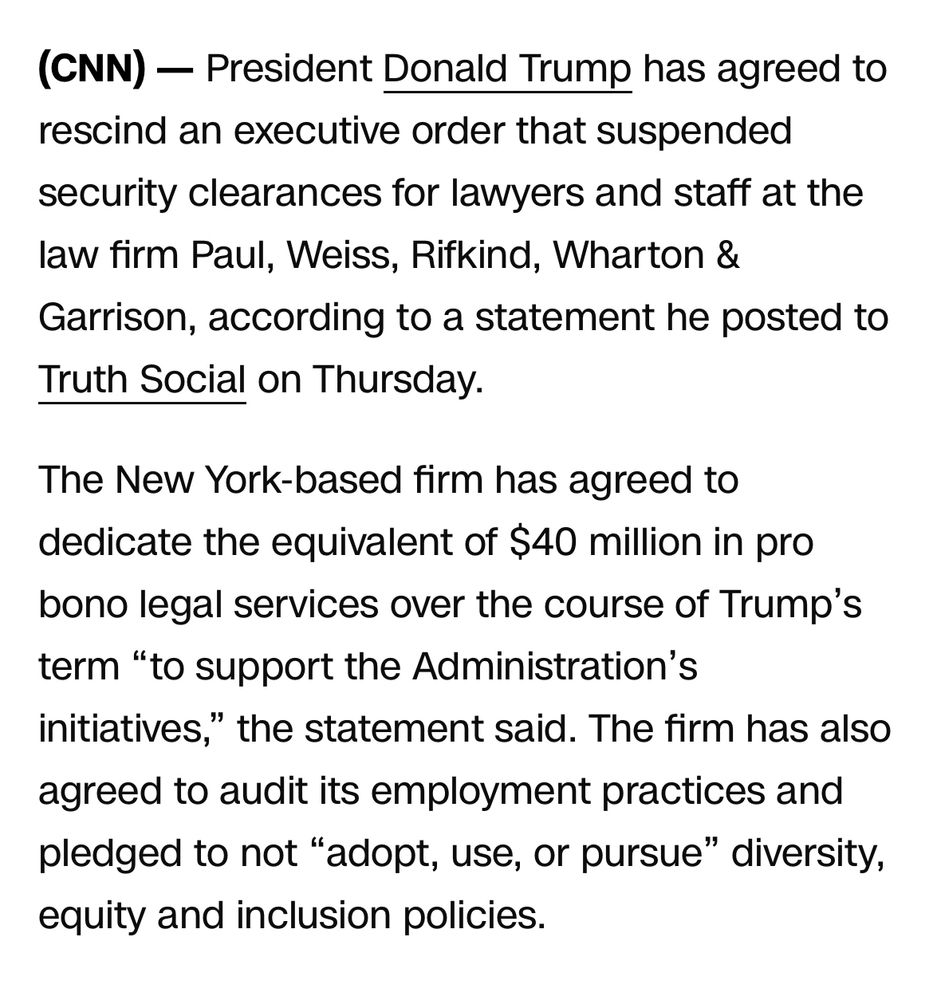
stay calm, no corruption here
March 21, 2025 at 10:32 AM
stay calm, no corruption here

Reposted by ChemtrailPilot007🇺🇸🇩🇪

List of our 23 Democratic governors plus an interesting fact about each.
1. Arizona – Katie Hobbs : As Secretary of State, she certified Arizona’s 2020 election results despite significant pressure and scrutiny.
📌 🧵 #TeamDemocracy
1. Arizona – Katie Hobbs : As Secretary of State, she certified Arizona’s 2020 election results despite significant pressure and scrutiny.
📌 🧵 #TeamDemocracy

February 20, 2025 at 5:30 AM
List of our 23 Democratic governors plus an interesting fact about each.
1. Arizona – Katie Hobbs : As Secretary of State, she certified Arizona’s 2020 election results despite significant pressure and scrutiny.
📌 🧵 #TeamDemocracy
1. Arizona – Katie Hobbs : As Secretary of State, she certified Arizona’s 2020 election results despite significant pressure and scrutiny.
📌 🧵 #TeamDemocracy


now THIS would be a great way for Elon and DOGE to save money... i'm just afrtaid he isnt too motivated

February 18, 2025 at 1:11 PM
now THIS would be a great way for Elon and DOGE to save money... i'm just afrtaid he isnt too motivated
how can accounts like this follow 22.1k accounts and gain 1.7k followers with only 13 posts and the oldest ome only 6 hrs ago? @nudebliss.bsky.social


February 15, 2025 at 9:31 AM
how can accounts like this follow 22.1k accounts and gain 1.7k followers with only 13 posts and the oldest ome only 6 hrs ago? @nudebliss.bsky.social
"AfD Wähler vor allem Menschen mit mittlerem Einkommen und Arbeitslose. Nur wenige haben hohes Bildungsniveau"
thats why Elon loves them: more easy to manipulate frustrated losers
t.co/440iZTyQzk
thats why Elon loves them: more easy to manipulate frustrated losers
t.co/440iZTyQzk
https://www.t-online.de/nachrichten/deutschland/bundestagswahl/id_100599210/neue-studie-diese-gruppen-waehlen-am-haeufigsten-afd-und-gruene.html
t.co
February 13, 2025 at 7:49 AM
"AfD Wähler vor allem Menschen mit mittlerem Einkommen und Arbeitslose. Nur wenige haben hohes Bildungsniveau"
thats why Elon loves them: more easy to manipulate frustrated losers
t.co/440iZTyQzk
thats why Elon loves them: more easy to manipulate frustrated losers
t.co/440iZTyQzk
THIS 👇


February 12, 2025 at 8:14 PM
THIS 👇
a villionaire who sells swasticars
February 6, 2025 at 8:54 AM
a villionaire who sells swasticars
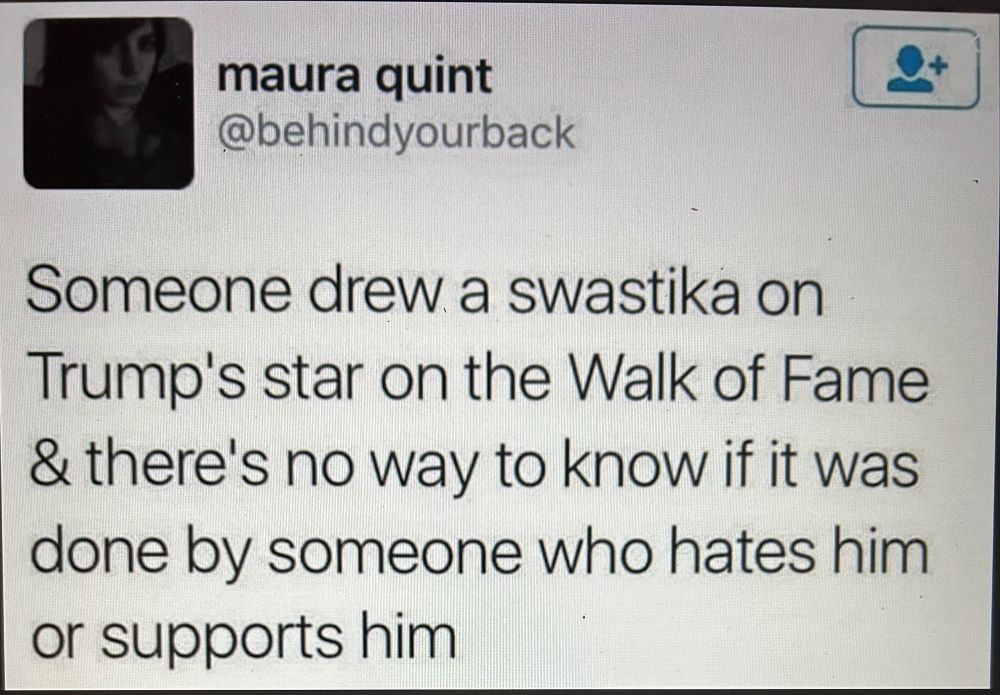

so "raising questions" NOW about something WE GAVE to Panama and which isnt even on American soil is OK?"?
guess it's also OK then for indegenious Americans to "raise questions" NOW because WE TOOK their land, right?
guess it's also OK then for indegenious Americans to "raise questions" NOW because WE TOOK their land, right?

January 30, 2025 at 1:47 PM
so "raising questions" NOW about something WE GAVE to Panama and which isnt even on American soil is OK?"?
guess it's also OK then for indegenious Americans to "raise questions" NOW because WE TOOK their land, right?
guess it's also OK then for indegenious Americans to "raise questions" NOW because WE TOOK their land, right?
tel lme again how Elon is NOT a fascist

January 30, 2025 at 1:45 PM
tel lme again how Elon is NOT a fascist
Hitler sided with Stalin, too, at the beginnin... just saying...

January 28, 2025 at 1:26 PM
Hitler sided with Stalin, too, at the beginnin... just saying...