




Trends in Chemistry
@cp-trendschem.bsky.social
A reviews journal from Cell Press. We publish thoughtfully designed Review, Opinion, and short articles covering the breadth of chemistry in an accessible, educational manner.
https://www.cell.com/trends/chemistry/home
https://www.cell.com/trends/chemistry/home
Artists choice - it was clearly a very cool cover!
January 15, 2026 at 7:47 PM
Artists choice - it was clearly a very cool cover!
📆The January 2026 issue of Trends in Chemistry is online now!
www.cell.com/trends/chemi...
The cover highlights the Opinion article from Bruce Lipshutz, looking at Pd vs Ni cross-coupling reactions in terms of synthetic efficiency and sustainability.
Cover art credit: Peter Allen, Second Bay Studios
www.cell.com/trends/chemi...
The cover highlights the Opinion article from Bruce Lipshutz, looking at Pd vs Ni cross-coupling reactions in terms of synthetic efficiency and sustainability.
Cover art credit: Peter Allen, Second Bay Studios

January 14, 2026 at 5:35 PM
📆The January 2026 issue of Trends in Chemistry is online now!
www.cell.com/trends/chemi...
The cover highlights the Opinion article from Bruce Lipshutz, looking at Pd vs Ni cross-coupling reactions in terms of synthetic efficiency and sustainability.
Cover art credit: Peter Allen, Second Bay Studios
www.cell.com/trends/chemi...
The cover highlights the Opinion article from Bruce Lipshutz, looking at Pd vs Ni cross-coupling reactions in terms of synthetic efficiency and sustainability.
Cover art credit: Peter Allen, Second Bay Studios
Online now: Lighting the future: 3D printing of smart and sustainable materials

Lighting the future: 3D printing of smart and sustainable materials
Light-based 3D printing has revolutionized the way manufacturing is performed, by enabling the fabrication of highly precise and customizable 3D architectures with unprecedented levels of accuracy and design freedom. Beyond significant technological progress, recent years have seen considerable advances in the design of innovative materials that feature smart characteristics and address sustainable aspects such as biobased content and circularity. However, smart and sustainable material development are typically pursued separately, slowing progress in achieving systems that simultaneously fulfill both criteria. This review summarizes recent highlights and developments in both material design fields, laying the foundation for a holistic design strategy for next-generation materials.
dlvr.it
January 12, 2026 at 8:47 PM
Online now: Lighting the future: 3D printing of smart and sustainable materials
Online now: Divergent heterocycle synthesis enabled by switchable reaction of azobenzenes with alkynes
Divergent heterocycle synthesis enabled by switchable reaction of azobenzenes with alkynes
Azobenzenes are iconic photochromic molecules whose reversible light-induced E–Z isomerization underpins decades of applications in dyes, polymers, molecular switches, and therapeutic agents. Beyond this hallmark, their potential as synthetic building blocks has only recently emerged. In particular, the reactivity of azobenzenes with alkynes is unveiling a new frontier in heterocycle synthesis. Under metal-catalyzed, photocatalytic, or thermal conditions, these transformations provide streamlined access to indazoles, cinnolines, carbazoles, and related nitrogen heterocycles relevant to pharmaceuticals and materials science. This review discusses how distinct activation modes, transition-metal catalysis, photoredox processes, and thermal pathways enable divergent outcomes from common precursors, repositioning azobenzenes from passive chromophores to active scaffolds for functional molecular architectures.
dlvr.it
January 6, 2026 at 1:42 PM
Online now: Divergent heterocycle synthesis enabled by switchable reaction of azobenzenes with alkynes
Online now: Cooperative boron-copper catalysis unlocks alkyl radicals from amines
Cooperative boron-copper catalysis unlocks alkyl radicals from amines
Amines are popular nucleophiles in two-electron cross-coupling reactions, but their direct use as alkyl radical precursors is rare. Recently, Leonori and colleagues reported a direct strategy for triggering radical reactivity from amines via a thermodynamically favorable β-scission that promotes a stable N=B π-bond. This report assesses the significance of these findings to aid in the activation of other valuable feedstock chemicals.
dlvr.it
December 20, 2025 at 1:42 PM
Online now: Cooperative boron-copper catalysis unlocks alkyl radicals from amines
Online now: Catalytic enantioselective activation of unreactive C–N/C–O bonds
Catalytic enantioselective activation of unreactive C–N/C–O bonds
The emergence of nitrogen- and oxygen-based electrophiles as cross-coupling partners represents a significant advance in organic synthesis, driven by their abundance and potential to avoid toxic waste. Tremendous progress has been achieved in the area of transition-metal catalyzed C−N/C−O bond cleavage. However, asymmetric activation of C−N/C−O bonds remains a challenge. Herein, we describe the recent advances on transition-metal catalyzed enantioselective C−N/C−O bond activation, with a focus on their potential to simplify synthetic challenges in industrial and academic laboratories. Enantioselective cleavage of inert C−N/C−O bonds represents a highly challenging yet important frontier in synthetic chemistry.
dlvr.it
December 18, 2025 at 8:48 PM
Online now: Catalytic enantioselective activation of unreactive C–N/C–O bonds
Online now: Main-group mimics of transition-metal carbonyl redox chemistry

Main-group mimics of transition-metal carbonyl redox chemistry
Chu, Munz, and coworkers reported that a sterically encumbered ketene derived from a cyclic (alkyl)(amino)carbene and CO can access three oxidation states. These single-electron redox events mimic transition-metal carbonyl behavior. Notably, the ketene radical anion reacts with CO to form an oxalyl radical, demonstrating transition metal-free C–C coupling of CO.
dlvr.it
December 18, 2025 at 1:42 PM
Online now: Main-group mimics of transition-metal carbonyl redox chemistry
Online now: Chiral reticular frameworks as emerging spin filters

Chiral reticular frameworks as emerging spin filters
Chiral induced spin selectivity (CISS) is a phenomenon wherein chiral materials preferentially transmit electrons of one spin over the other. Although interest in CISS is high and growing, its implementation in reticular frameworks, such as metal–organic frameworks (MOFs) and covalent organic frameworks (COFs), remains nascent. This review highlights advances in chiral reticular frameworks exhibiting CISS, emphasizing their intrinsic advantages rooted in modularity, tunability, and crystallinity. We examine reported examples across MOFs, COFs, and related crystalline systems, identify features correlated with high spin selectivity, and propose tentative design principles. By surveying this emerging intersection of reticular chemistry and chirality-induced spin selectivity, we aim to stimulate further exploration of chiral frameworks as next-generation spin filters.
dlvr.it
December 16, 2025 at 1:42 PM
Online now: Chiral reticular frameworks as emerging spin filters
🕊️🧬A Special Issue of Trends in Chemistry in online now!
www.cell.com/trends/chemi...
Our Dec 2025 issue is joint with @cp-cellrepphyssci.bsky.social on The Chemistry of Nucleic Acids, highlighting the innovations and thought leadership on nucleic acid research in the physical/chemical sciences.
www.cell.com/trends/chemi...
Our Dec 2025 issue is joint with @cp-cellrepphyssci.bsky.social on The Chemistry of Nucleic Acids, highlighting the innovations and thought leadership on nucleic acid research in the physical/chemical sciences.

December 15, 2025 at 6:24 PM
🕊️🧬A Special Issue of Trends in Chemistry in online now!
www.cell.com/trends/chemi...
Our Dec 2025 issue is joint with @cp-cellrepphyssci.bsky.social on The Chemistry of Nucleic Acids, highlighting the innovations and thought leadership on nucleic acid research in the physical/chemical sciences.
www.cell.com/trends/chemi...
Our Dec 2025 issue is joint with @cp-cellrepphyssci.bsky.social on The Chemistry of Nucleic Acids, highlighting the innovations and thought leadership on nucleic acid research in the physical/chemical sciences.
Reposted by Trends in Chemistry

Happy to share our review article @cp-trendschem.bsky.social on modified aptamers. Congrats to all authors!
@pasteur.fr @ipdbsc.bsky.social @cnrs.fr
doi.org/10.1016/j.tr...
@pasteur.fr @ipdbsc.bsky.social @cnrs.fr
doi.org/10.1016/j.tr...
Redirecting
doi.org
December 6, 2025 at 11:17 AM
Happy to share our review article @cp-trendschem.bsky.social on modified aptamers. Congrats to all authors!
@pasteur.fr @ipdbsc.bsky.social @cnrs.fr
doi.org/10.1016/j.tr...
@pasteur.fr @ipdbsc.bsky.social @cnrs.fr
doi.org/10.1016/j.tr...
Online now: [3+n]-Syntheses of carbocycles and heterocycles

[3+n]-Syntheses of carbocycles and heterocycles
During the past decade, metallovinyl carbenes derived from vinyldiazo compounds have emerged as facile dipolar sources of three-carbon synthons for cycloaddition reactions. Unlike traditional dipolar species that are limited to [3+2]-cycloaddition, metallovinyl carbenes are capable of [3+n]-cycloaddition, where transformations with n = 1, 2, and 3 are now abundantly demonstrated. The vinyldiazo compounds, the reacting n-dipoles, and the catalysts all play a role in determining the effectiveness of the cycloaddition process, with siloxyvinyldiazo compounds being optimum, the n-dipoles being highly variable, and dirhodium(II) and copper(I) catalysts providing the highest yields and selectivities among those surveyed. This brief opinion article provides basic strategies for [3+n]-cycloaddition transformations of vinyldiazo compounds and outlooks for their future developments involving carbene chemistry with versatile precursors.
dlvr.it
December 8, 2025 at 8:48 PM
Online now: [3+n]-Syntheses of carbocycles and heterocycles
Online now: Expanding the chemical repertoire of aptamers

Expanding the chemical repertoire of aptamers
Aptamers offer distinct advantages over conventional small molecules or antibodies due to their high affinity and specificity. Additional benefits, including small size and ease of modification, further enhance their biomedical potential. Nonetheless, their interaction capabilities remain constrained by the limited chemical diversity of natural nucleobases, restricting the repertoire of targets accessible in vitro and in vivo. This review highlights strategies to overcome these limitations by expanding the chemical diversity of aptamers, including sugar, backbone, and nucleobase modifications, as well as selection approaches for their identification. We discuss structural insights into modified aptamers and explain their potential in practical applications. Finally, key challenges are identified that must be addressed to fully achieve the therapeutic and diagnostic utility of chemically modified aptamers.
dlvr.it
December 5, 2025 at 8:48 PM
Online now: Expanding the chemical repertoire of aptamers
Online now: Palladium versus Earth-abundant metals: comparisons from the synthetic and environmental perspectives for Suzuki–Miyaura cross-couplings and aminations
Palladium versus Earth-abundant metals: comparisons from the synthetic and environmental perspectives for Suzuki–Miyaura cross-couplings and aminations
Direct comparisons are made using factual, published experimental results for two of the most commonly used cross-couplings that rely on either Pd or Ni (and in some cases, Cu, Co, and Fe) catalysis. Which metal in ligated form is best from both the synthetic and environmental perspectives for the intended bond formation is assessed comparing representative recent results for both Suzuki–Miyaura (SM) couplings and aminations. Several factors are considered, including: catalyst loadings, overall reaction efficiency, ligand availability, cost, residual metal expected in the products, energy invested, etc., and how these relate to the presumed benefits noted as the basis for shifting towards catalysis away from Pd using Earth-abundant metals (EAMs). For each type of coupling, a chart summarizing comparison data is provided, with the overall outcome leading to the same conclusion.
dlvr.it
December 4, 2025 at 1:42 PM
Online now: Palladium versus Earth-abundant metals: comparisons from the synthetic and environmental perspectives for Suzuki–Miyaura cross-couplings and aminations
Online now: Harnessing single atom sites in plasmonic catalysis
Harnessing single atom sites in plasmonic catalysis
Dilute and single-atom coinage-metal alloys unite plasmonic light harvesting with the precision of isolated active sites. Confining dopants to few- and single-atom scales enables photo-driven chemical transformations, offering new levers for sustainable, and selective catalysis beyond purely thermal routes. We outline emerging design principles and key questions for advancing the field.
dlvr.it
December 3, 2025 at 1:42 PM
Online now: Harnessing single atom sites in plasmonic catalysis
Online now: Monophasic Pd-catalysed O-arylation of phenols
Monophasic Pd-catalysed O-arylation of phenols
Diaryl ethers represent a common motif in drugs, agrochemicals, and natural products. Their synthesis via C–O cross-coupling typically employs an inorganic base, resulting in reaction heterogeneity that leads to irreproducibility between laboratories and scales. Our group recently developed a Pd-catalysed C–O coupling of phenols and aryl triflates that uses a weak, soluble organic base. This fully homogeneous system is compatible with automated synthesis, microwave heating, and scale-up in continuous flow.
dlvr.it
December 2, 2025 at 8:48 PM
Online now: Monophasic Pd-catalysed O-arylation of phenols
Online now: Recent innovations and assessment of ammonia synthesis at an industrial scale

Recent innovations and assessment of ammonia synthesis at an industrial scale
The industrial synthesis of ammonia has traditionally relied on the energy-intensive Haber–Bosch process, which accounts for a significant share of global CO2 emissions. Recent innovations are reshaping this landscape by integrating low-carbon hydrogen sources, next-generation catalysts, plasma-assisted techniques, and electrified modular reactors capable of operating under milder conditions. This article provides a comprehensive overview of these technological breakthroughs and offers a quantitative assessment of their technology readiness levels to enable fair benchmarking and informed decision-making by stakeholders. We also discuss key techno-economic considerations, scale-up challenges, and opportunities to align ammonia synthesis with renewable energy and carbon management strategies. Collectively, these developments mark a pivotal shift toward a cleaner and more resilient ammonia production ecosystem.
dlvr.it
November 24, 2025 at 8:47 PM
Online now: Recent innovations and assessment of ammonia synthesis at an industrial scale
Jess is heading to Boston next week for MRS Fall 2025 🧪
Get in touch if you want to share your ideas about the latest trends in materials chemistry; it's also a great opportunity to find out more about the chemistry/materials publishing opportunities at Cell Press! #F25MRS
Get in touch if you want to share your ideas about the latest trends in materials chemistry; it's also a great opportunity to find out more about the chemistry/materials publishing opportunities at Cell Press! #F25MRS

November 24, 2025 at 4:15 PM
Jess is heading to Boston next week for MRS Fall 2025 🧪
Get in touch if you want to share your ideas about the latest trends in materials chemistry; it's also a great opportunity to find out more about the chemistry/materials publishing opportunities at Cell Press! #F25MRS
Get in touch if you want to share your ideas about the latest trends in materials chemistry; it's also a great opportunity to find out more about the chemistry/materials publishing opportunities at Cell Press! #F25MRS
Online now: Triple-stranded porphyrin nanobelts: ideal quantum rings

Triple-stranded porphyrin nanobelts: ideal quantum rings
Synthesis of multilayered carbon nanobelts constitutes a long-standing challenge. A recent breakthrough by Anderson et al. reports the precise synthesis of a family of triple-stranded porphyrin nanobelts with highly delocalized nonalternant topologies that embody an ideal quantum ring. This work represents a pivotal achievement in molecular nanocarbon science.
dlvr.it
November 20, 2025 at 1:42 PM
Online now: Triple-stranded porphyrin nanobelts: ideal quantum rings
Online now: Switchable allyl-propargyl cross-couplings
Switchable allyl-propargyl cross-couplings
Switchable transformations, which enable the selective formation of two or more structurally distinct products from identical starting materials, represent an attractive synthetic tool by varying the catalyst or reaction conditions. Recently, a palladium/phosphine-catalyzed system was developed for the chemo- and regiodivergent cross-couplings of propargyl carbonates with allyl boronates. The phosphine ligand precisely controls the reductive elimination pathway to afford either 1,4-enallenes or 1,5-enynes, depending on the ligand choice.
dlvr.it
November 18, 2025 at 1:42 PM
Online now: Switchable allyl-propargyl cross-couplings
Online now: Machine learning for probing polymer and polyelectrolyte brushes
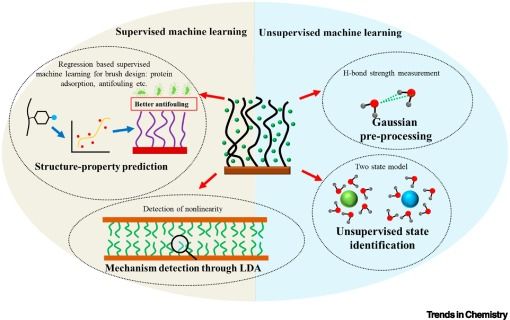
Machine learning for probing polymer and polyelectrolyte brushes
Polymer and polyelectrolyte (PE) chains adopt brush-like conformations when densely grafted on solid surfaces or backbones of other polymer chains. In this forum article, we highlight recent advancements and explore emerging directions in applying machine learning (ML) techniques to uncover new applications and fundamental insights in polymer and PE brush-grafted systems.
dlvr.it
November 17, 2025 at 8:48 PM
Online now: Machine learning for probing polymer and polyelectrolyte brushes
Online now: They’re better, connected: linking up polymer nanoparticles

They’re better, connected: linking up polymer nanoparticles
Nanoparticles constructed from polymers already find widespread use in catalysis, drug delivery, and sensing contexts. However, almost all current applications do not consider how nanoparticles could behave when connected together. Herein I explore emerging approaches to use polymer nanoparticles as building blocks for developing both physically connected and chemically communicating systems.
dlvr.it
November 17, 2025 at 1:42 PM
Online now: They’re better, connected: linking up polymer nanoparticles
Online now: Design, synthesis, and control of transient supramolecular assemblies

Design, synthesis, and control of transient supramolecular assemblies
Nature has inspired the development of synthetic chemical systems, in which transient supramolecular species emerge with unique properties that can be spatiotemporally controlled at the expense of external energy sources. Herein, we highlight recent advances organized in three sections according to the (de)activation modes that trigger transient assemblies.
dlvr.it
November 13, 2025 at 8:47 PM
Online now: Design, synthesis, and control of transient supramolecular assemblies
Reposted by Trends in Chemistry

Our mini-review on DNA-scaffolded catalysis is out today in @cp-trendschem.bsky.social! It's an interesting look at this unique intersection of catalysis, DNA nanotechnology and supramolecular chemistry. Give it a read! #chemsky doi.org/10.1016/j.tr...
Redirecting
doi.org
November 9, 2025 at 5:26 AM
Our mini-review on DNA-scaffolded catalysis is out today in @cp-trendschem.bsky.social! It's an interesting look at this unique intersection of catalysis, DNA nanotechnology and supramolecular chemistry. Give it a read! #chemsky doi.org/10.1016/j.tr...
⚡The latest issue of Trends in Chemistry is online now!
The cover shines a spotlight on two articles in this month's issue covering electrochemistry for complex molecule synthesis.
Read the full issue: www.cell.com/trends/chemi...
The cover shines a spotlight on two articles in this month's issue covering electrochemistry for complex molecule synthesis.
Read the full issue: www.cell.com/trends/chemi...

November 13, 2025 at 2:19 PM
⚡The latest issue of Trends in Chemistry is online now!
The cover shines a spotlight on two articles in this month's issue covering electrochemistry for complex molecule synthesis.
Read the full issue: www.cell.com/trends/chemi...
The cover shines a spotlight on two articles in this month's issue covering electrochemistry for complex molecule synthesis.
Read the full issue: www.cell.com/trends/chemi...
Online now: AI-accelerated screening of mechanophores

AI-accelerated screening of mechanophores
The design and synthesis of mechanophores remain a central pursuit in modern polymer mechanochemistry. Nevertheless, the discovery of novel mechanophores frequently relies on empirical trial-and-error approaches. In a recent advance, Kulik and colleagues leveraged machine learning (ML) to establish a universal framework for the high-throughput identification of mechanophores with superior reactivity.
dlvr.it
November 13, 2025 at 1:43 PM
Online now: AI-accelerated screening of mechanophores