




Center for Microbial Dynamics and Infection
@cmdi.bsky.social
Our team of researchers at GeorgiaTech investigate mechanisms and consequences of microbial community dynamics both in the environment and during infection. https://sites.gatech.edu/cmdi/
Insects in hospitals are potential disease vectors! 🪳🪰
A new systematic review shows that cockroaches, flies, and ants often carry drug-resistant bacteria and can transmit pathogens to patients. 🏥
pubmed.ncbi.nlm.nih.gov/41562025/
#InfectionPrevention #PublicHealth #Microbiology
A new systematic review shows that cockroaches, flies, and ants often carry drug-resistant bacteria and can transmit pathogens to patients. 🏥
pubmed.ncbi.nlm.nih.gov/41562025/
#InfectionPrevention #PublicHealth #Microbiology

From infestation to infection: a systematic review of arthropod-mediated microbial transmission in hospitals - PubMed
Arthropods in healthcare environments commonly harbor clinically relevant and antimicrobial-resistant microbes, and limited but compelling evidence supports their potential role in patient transmission. Strengthened pest management and environmental hygiene are essential components of infection prev …
pubmed.ncbi.nlm.nih.gov
January 21, 2026 at 8:43 PM
Insects in hospitals are potential disease vectors! 🪳🪰
A new systematic review shows that cockroaches, flies, and ants often carry drug-resistant bacteria and can transmit pathogens to patients. 🏥
pubmed.ncbi.nlm.nih.gov/41562025/
#InfectionPrevention #PublicHealth #Microbiology
A new systematic review shows that cockroaches, flies, and ants often carry drug-resistant bacteria and can transmit pathogens to patients. 🏥
pubmed.ncbi.nlm.nih.gov/41562025/
#InfectionPrevention #PublicHealth #Microbiology
Studies of clinical isolates show that P. aeruginosa and S. aureus interact in strain-specific ways. Surprisingly, competition doesn't always rely on usual chemical signals (AQs), highlighting the complexity of infections.
pubmed.ncbi.nlm.nih.gov/41533460/
#Microbiology #Biofilms #HealthScience
pubmed.ncbi.nlm.nih.gov/41533460/
#Microbiology #Biofilms #HealthScience
Clinical isolates from chronic wounds reveal strain-specific, alkyl-quinolone-independent competition in Pseudomonas aeruginosa- Staphylococcus aureus biofilms - PubMed
<span><b>Introduction.</b> Chronic wounds are notoriously difficult to treat and are associated with decreased limb function, reduced quality of life and significant morbidity. Their recurrent nature, despite aggressive antibiotic therapy, is due in part to the presence of polymicrobial biofilms. <i>Pseud</i></span> …
pubmed.ncbi.nlm.nih.gov
January 21, 2026 at 8:41 PM
Studies of clinical isolates show that P. aeruginosa and S. aureus interact in strain-specific ways. Surprisingly, competition doesn't always rely on usual chemical signals (AQs), highlighting the complexity of infections.
pubmed.ncbi.nlm.nih.gov/41533460/
#Microbiology #Biofilms #HealthScience
pubmed.ncbi.nlm.nih.gov/41533460/
#Microbiology #Biofilms #HealthScience
Researchers have sequenced the draft genomes of two Halobacteriovorax strains (GFR7 & GFR8) from Florida's Apalachicola Bay, advancing our look at these unique marine predators.
pubmed.ncbi.nlm.nih.gov/41427715/
#microbiology #genomics #science
pubmed.ncbi.nlm.nih.gov/41427715/
#microbiology #genomics #science
Draft genome sequences of two Halobacteriovorax strains isolated from Apalachicola Bay, Florida - PubMed
Predatory bacteria are common in aquatic environments and associated with eukaryotic hosts. Here, we report draft genome sequences for two marine isolates, <i>Halobacteriovorax</i> sp. strains GFR7 and GFR8, that were isolated from Dickerson Bay in Apalachicola Bay, Florida, USA.
pubmed.ncbi.nlm.nih.gov
January 21, 2026 at 8:39 PM
Researchers have sequenced the draft genomes of two Halobacteriovorax strains (GFR7 & GFR8) from Florida's Apalachicola Bay, advancing our look at these unique marine predators.
pubmed.ncbi.nlm.nih.gov/41427715/
#microbiology #genomics #science
pubmed.ncbi.nlm.nih.gov/41427715/
#microbiology #genomics #science
R-pyocins, phage tail-like complexes, act as highly specific weapons against susceptible strains. Their non-replicative and potent nature makes them a prime candidate for next-generation antimicrobials against drug-resistant infections! #Microbiology www.microbiologyresearch.org/content/jour...

Microbial Primer: The R-pyocins of Pseudomonas aeruginosa
R-pyocins are phage tail-like protein complexes produced by Pseudomonas aeruginosa that deliver a single, lethal hit by depolarizing the target cell membrane. Unlike phages, R-pyocins lack capsids and...
www.microbiologyresearch.org
December 16, 2025 at 4:45 PM
R-pyocins, phage tail-like complexes, act as highly specific weapons against susceptible strains. Their non-replicative and potent nature makes them a prime candidate for next-generation antimicrobials against drug-resistant infections! #Microbiology www.microbiologyresearch.org/content/jour...
A bacterial predator, Halobacteriovorax, acts as a living "probiotic" that halts Vibrio-induced disease progression in endangered Caribbean corals. This shows microbial predators are promising new tools for coral disease therapy! #CoralReefs #MicrobialEcology #ISMEJ academic.oup.com/ismej/advanc...

Halobacteriovorax halts disease progression in endangered Caribbean corals
Abstract. Predation is a top-down regulator of ecosystem integrity and a key driver of community structure and evolution in plants and animals. Despite our
academic.oup.com
December 16, 2025 at 4:42 PM
A bacterial predator, Halobacteriovorax, acts as a living "probiotic" that halts Vibrio-induced disease progression in endangered Caribbean corals. This shows microbial predators are promising new tools for coral disease therapy! #CoralReefs #MicrobialEcology #ISMEJ academic.oup.com/ismej/advanc...
Vibrio cholerae builds its protective biofilm using GluP. This glutamate-binding protein is key to maintaining biofilm architecture and coordinating growth/nutrient acquisition. Blocking GluP could disrupt transmission! #Microbiology #PNAS www.pnas.org/doi/10.1073/...
PNAS
Proceedings of the National Academy of Sciences (PNAS), a peer reviewed journal of the National Academy of Sciences (NAS) - an authoritative source of high-impact, original research that broadly spans...
www.pnas.org
December 16, 2025 at 4:40 PM
Vibrio cholerae builds its protective biofilm using GluP. This glutamate-binding protein is key to maintaining biofilm architecture and coordinating growth/nutrient acquisition. Blocking GluP could disrupt transmission! #Microbiology #PNAS www.pnas.org/doi/10.1073/...
The constant battle between bacterial immune systems (CRISPR) and MGEs is a critical, yet understudied, driver of microbiome structure & function. The paper calls for moving beyond simple models to understand these complex community-level interactions. #Microbiology journals.plos.org/plosbiology/...

Bacterial immune systems as causes and consequences of microbiome structure
Bacterial immune systems have evolved in response to diverse molecular "parasites", yet their ecological roles remain poorly understood. This Essay explores how interactions between mobile genetic ele...
journals.plos.org
December 16, 2025 at 4:38 PM
The constant battle between bacterial immune systems (CRISPR) and MGEs is a critical, yet understudied, driver of microbiome structure & function. The paper calls for moving beyond simple models to understand these complex community-level interactions. #Microbiology journals.plos.org/plosbiology/...
A novel dual-fluorescence reporter to reveal how the sRNA Teg41 regulates virulence toxin production in Staphylococcus aureus strains. 🦠🔬 #AntibioticResistance #Pathogen #sRNA pubmed.ncbi.nlm.nih.gov/41170992/
Analysis of Teg41 and PSMα promoter activity using a divergent fluorescent reporter plasmid - PubMed
<span><i>Staphylococcus aureus</i> is a common commensal of human skin and anterior nares but also a notable pathogen, causing a range of diseases from minor skin infections to serious, often fatal conditions. The global health community considers <i>S. aureus</i> a serious threat due to the rise of multi</span> …
pubmed.ncbi.nlm.nih.gov
November 25, 2025 at 7:19 PM
A novel dual-fluorescence reporter to reveal how the sRNA Teg41 regulates virulence toxin production in Staphylococcus aureus strains. 🦠🔬 #AntibioticResistance #Pathogen #sRNA pubmed.ncbi.nlm.nih.gov/41170992/
Metabolomics ID's targets against the Burkholderia biothreat by finding metabolic shifts during infection. 🦠💊
pubmed.ncbi.nlm.nih.gov/41170848/
pubmed.ncbi.nlm.nih.gov/41170848/
Metabolomic profiling of Burkholderia thailandensis infection of airway epithelial cells provides insights into potential therapeutic targets - PubMed
<span><i>Burkholderia pseudomallei,</i> a gram-negative saprophyte that causes melioidosis, has been classified as a potential bioweapon, posing a serious global threat. Metabolic re-wiring, production of virulence effectors, evasion/suppression of host defenses, and modification of host cell functions co</span> …
pubmed.ncbi.nlm.nih.gov
November 25, 2025 at 7:18 PM
Metabolomics ID's targets against the Burkholderia biothreat by finding metabolic shifts during infection. 🦠💊
pubmed.ncbi.nlm.nih.gov/41170848/
pubmed.ncbi.nlm.nih.gov/41170848/
Extreme drought makes peatlands lose carbon much faster, and this loss is worsened by both warming and elevated CO₂. Climate change will significantly amplify carbon emissions from peatlands in the future. 🌡️🔥 #ClimateChange #Peatlands #CarbonCycle
pubmed.ncbi.nlm.nih.gov/41129626/
pubmed.ncbi.nlm.nih.gov/41129626/
Drought-induced peatland carbon loss exacerbated by elevated CO2 and warming - PubMed
Extreme drought events are predicted to increase with climate change, yet their impacts on ecosystem carbon dynamics under warming and elevated carbon dioxide (eCO<sub>2</sub>) remain unclear. In a peatland experiment with five warming treatments each under ambient carbon dioxide (aCO<sub>2</sub>) a …
pubmed.ncbi.nlm.nih.gov
November 25, 2025 at 7:16 PM
Extreme drought makes peatlands lose carbon much faster, and this loss is worsened by both warming and elevated CO₂. Climate change will significantly amplify carbon emissions from peatlands in the future. 🌡️🔥 #ClimateChange #Peatlands #CarbonCycle
pubmed.ncbi.nlm.nih.gov/41129626/
pubmed.ncbi.nlm.nih.gov/41129626/
Screened marine natural product extracts reveals two glycoglycerolipids that act as inhibitors of the Naᵥ1.7 ion channel. These findings from red algae, sponges, and corals offer exciting new leads for drug discovery! 🌊💊#DrugDiscovery #MarineBiology pubmed.ncbi.nlm.nih.gov/41124213/
Discovery of Nav1.7 Inhibitors through the Screening of Marine Natural Product Extracts - PubMed
Automated high-throughput screening of a prefractionated extract library of marine macroorganisms identified 239 hits (hit rate 2.5%), including a marine algal extract that blocked the Na<sub>v</sub>1.7 channel in a fluorescent-based flux assay. Bioactivity-guided chemical investigation led to the i …
pubmed.ncbi.nlm.nih.gov
November 25, 2025 at 7:15 PM
Screened marine natural product extracts reveals two glycoglycerolipids that act as inhibitors of the Naᵥ1.7 ion channel. These findings from red algae, sponges, and corals offer exciting new leads for drug discovery! 🌊💊#DrugDiscovery #MarineBiology pubmed.ncbi.nlm.nih.gov/41124213/
Spatial organization of bacteria in thin films, like soil, is largely determined by a purely physical mechanism: capillary interactions (water tension). 🦠💧 #Microbiology #Biophysics #CurrentBiology pubmed.ncbi.nlm.nih.gov/41118734/
Microbial population structure: Forced proximity is shaped by capillary interactions - PubMed
A recent study shows that the spatial organization of bacteria in thin films or near air-water interfaces is strongly impacted by a purely physical mechanism - capillary interactions. This mechanism likely plays an important role in bacterial assortment in environments like soil, which undergo wet a …
pubmed.ncbi.nlm.nih.gov
November 25, 2025 at 7:12 PM
Spatial organization of bacteria in thin films, like soil, is largely determined by a purely physical mechanism: capillary interactions (water tension). 🦠💧 #Microbiology #Biophysics #CurrentBiology pubmed.ncbi.nlm.nih.gov/41118734/
In intubated children, longitudinal analysis of the respiratory microbiome reveals dynamic shifts in microbial communities under empiric antibiotic therapy, with implications for pathogen emergence and treatment strategies.

Mapping the respiratory microbiome in intubated children over time | Microbiology Spectrum
Clinicians often prescribe empirical antibiotics for critically ill, intubated children with suspected respiratory infections, contributing to antibiotic overuse and challenging antimicrobial stewardship. Our longitudinal tracheal aspirate analysis of cultures and 16S rDNA sequencing revealed significant inter-patient variability, regardless of the primary reason for intubation. We observed both concordance and discrepancies between clinical microbiology and sequencing results—gram-negative organisms aligned well between methods, whereas Streptococcus was detected in 34 of 39 samples by 16S rDNA but only once by culture. Our findings emphasize the value of longitudinal airway microbiome analysis in pediatric patients. Given the heterogeneous pathologies and diverse age groups in pediatric intensive care, future large-scale studies should account for antibiotic exposure, commensal bacterial interactions, and clinical conditions that influence microbiome dynamics. Expanding research in this area could improve our understanding of microbial shifts in critically ill children and inform more targeted treatment strategies.
journals.asm.org
November 17, 2025 at 3:54 PM
In intubated children, longitudinal analysis of the respiratory microbiome reveals dynamic shifts in microbial communities under empiric antibiotic therapy, with implications for pathogen emergence and treatment strategies.
A step-by-step guide to using CNC micro-milling to fabricate microfluidic master molds and PDMS devices (e.g., organ-on-a-chip), including design (SolidWorks/Fusion), machining, mould casting and bonding.

A Protocol Guide to Micro Milling for Bio-Microfluidics
Micro milling is a subtractive manufacturing method for fabricating micro-scale three-dimensional features from hard substrates like acrylic, wood, or metal. It enables rapid prototyping of biomicrofl...
bio-protocol.org
November 17, 2025 at 3:52 PM
A step-by-step guide to using CNC micro-milling to fabricate microfluidic master molds and PDMS devices (e.g., organ-on-a-chip), including design (SolidWorks/Fusion), machining, mould casting and bonding.
This study on the rhizosphere of the salt-marsh plant Spartina alterniflora reveals a highly diverse viral community—metagenomic analysis of root-zone samples showed that viruses of microorganisms influence microbial population dynamics, community structure, nutrient cycling and gene-transfer.

Viral community diversity in the rhizosphere of the foundation salt marsh plant Spartina alterniflora | mSphere
Salt marshes are vital coastal ecosystems. Microbes in these environments drive nutrient cycling and support plant health, with Spartina alterniflora serving as a foundation species. This study explores viral communities associated with S. alterniflora, revealing how plant compartments and phenotypes shape viral composition. The discovery of numerous novel viruses, some potentially influencing microbes involved in key biogeochemical processes, highlights their ecological significance. Given the increasing pressures on coastal ecosystems, understanding virus-microbe-plant interactions is essential for predicting and managing ecosystem responses to environmental change.
journals.asm.org
November 17, 2025 at 3:50 PM
This study on the rhizosphere of the salt-marsh plant Spartina alterniflora reveals a highly diverse viral community—metagenomic analysis of root-zone samples showed that viruses of microorganisms influence microbial population dynamics, community structure, nutrient cycling and gene-transfer.
The morphotype switch from smooth to rough in M. abscessus alters gene-essentiality patterns both in vitro and in mouse infection; rough and smooth forms require different genes, affecting therapeutic target selection.
The role of colony morphotype in shaping gene essentiality in Mycobacteroides abscessus - PubMed
Changes in bacterial colony morphology are common during chronic human infections and are thought to provide a survival advantage. In the human pathogen <i>Mycobacteroides abscessus</i> (MAB), a unidirectional transition from a smooth (MAB<sup>S</sup>) to rough (MAB<sup>R</sup>) morphotype frequentl …
pubmed.ncbi.nlm.nih.gov
November 17, 2025 at 3:48 PM
The morphotype switch from smooth to rough in M. abscessus alters gene-essentiality patterns both in vitro and in mouse infection; rough and smooth forms require different genes, affecting therapeutic target selection.
Quantitative modelling of multi-signal quorum sensing in Pseudomonas aeruginosa reveals that its las and rhl signalling systems engage in reciprocal, non-linear and synergistic interactions rather than a simple hierarchy.

Quantitative modeling of multi-signal quorum-sensing maps environment to bacterial regulatory responses
Bacterial quorum sensing is often assumed to follow a strict hierarchy, limiting understanding of how multiple signals interact. This study finds that Pseudomonas aeruginosa uses a reciprocal, coopera...
journals.plos.org
November 17, 2025 at 3:46 PM
Quantitative modelling of multi-signal quorum sensing in Pseudomonas aeruginosa reveals that its las and rhl signalling systems engage in reciprocal, non-linear and synergistic interactions rather than a simple hierarchy.
The study evolved Escherichia coli under constant glucose limitation for ≥300 generations and identified 39 genes repeatedly mutated, many regulatory factors, revealing structural protein constraints. bmcbiol.biomedcentral.com/articles/10....
November 17, 2025 at 3:45 PM
The study evolved Escherichia coli under constant glucose limitation for ≥300 generations and identified 39 genes repeatedly mutated, many regulatory factors, revealing structural protein constraints. bmcbiol.biomedcentral.com/articles/10....
Come and be our new Chair of Biological Sciences at Georgia Tech! www.biosciences.gatech.edu/chair-search
Chair Search
Chair, School of Biological Sciences Georgia Institute of Technology, Atlanta The School of Biological Sciences of the Georgia Institute of Technology (“Georgia Tech”) invites applications for the pos...
www.biosciences.gatech.edu
August 13, 2025 at 12:58 PM
Come and be our new Chair of Biological Sciences at Georgia Tech! www.biosciences.gatech.edu/chair-search
Peatland microbes resist warming, with stable communities and diverse carbon pathways; methanogens show metabolic flexibility but are not dominant. #MicroSky www.nature.com/articles/s41...

Northern peatland microbial communities exhibit resistance to warming and acquire electron acceptors from soil organic matter - Nature Communications
Climate change is expected to impact microbes degrading organic matter in northern peatlands. Here, using a warming experiment, the authors show that communities remain stable after three years of war...
www.nature.com
July 28, 2025 at 2:51 PM
Peatland microbes resist warming, with stable communities and diverse carbon pathways; methanogens show metabolic flexibility but are not dominant. #MicroSky www.nature.com/articles/s41...
Gene-specific RNA-to-protein conversion factors improve protein predictions from mRNA, enabling functional insights across diverse microbial species. #MicroSky journals.asm.org/doi/10.1128/...

Conserved cross-domain protein-to-mRNA ratios enable proteome prediction in microbes | mBio
Deciphering the biology of natural microbial communities is limited by the lack of functional data. While transcriptomics enables gene expression profiling, mRNA levels often fail to predict protein abundance, the primary indicator of microbial function. ...
journals.asm.org
July 28, 2025 at 2:49 PM
Gene-specific RNA-to-protein conversion factors improve protein predictions from mRNA, enabling functional insights across diverse microbial species. #MicroSky journals.asm.org/doi/10.1128/...
Alveolar macrophages limit phage therapy by clearing phages; their depletion boosts phage efficacy against P. aeruginosa in murine lung infection. #MicroSky www.nature.com/articles/s41...
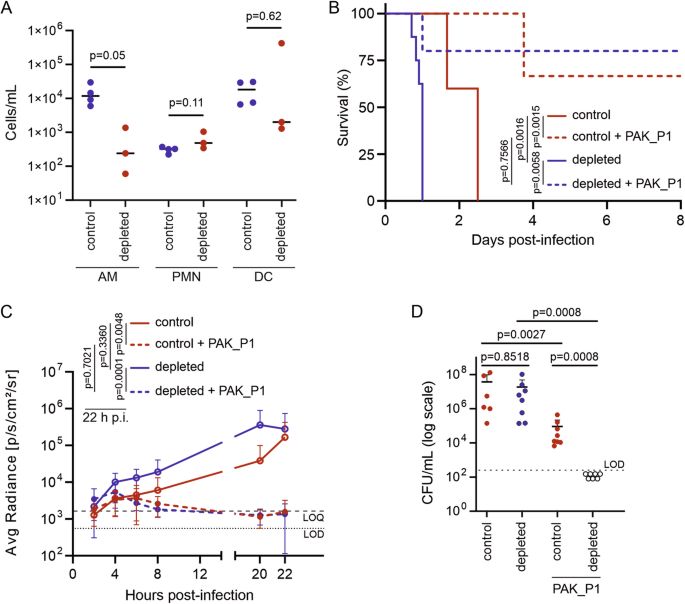
Macrophage-induced reduction of bacteriophage density limits the efficacy of in vivo pulmonary phage therapy - Nature Communications
In vivo experiments and mathematical modelling in this work, show that alveolar macrophages lower phage densities and phage-bacteria contact rates, limiting the effectiveness of synergistic treatment ...
www.nature.com
July 28, 2025 at 2:48 PM
Alveolar macrophages limit phage therapy by clearing phages; their depletion boosts phage efficacy against P. aeruginosa in murine lung infection. #MicroSky www.nature.com/articles/s41...
A simple model of vertical biofilm growth arises from active fluid dynamics, linking cell decay to growth limits and unifying early and late stages. #MicroSky pubmed.ncbi.nlm.nih.gov/40578390/
Biofilm vertical growth dynamics are captured by an active fluid framework - PubMed
Bacterial biofilms, surface-attached microbial communities, grow horizontally across surfaces and vertically above them. Although a simple heuristic model for vertical growth was experimentally shown ...
pubmed.ncbi.nlm.nih.gov
July 28, 2025 at 2:47 PM
A simple model of vertical biofilm growth arises from active fluid dynamics, linking cell decay to growth limits and unifying early and late stages. #MicroSky pubmed.ncbi.nlm.nih.gov/40578390/
Spontaneous fluid flows in yeast clusters enable nutrient transport and exponential growth, aiding multicellularity before genetic adaptations evolve. #MicroSky www.science.org/doi/10.1126/...
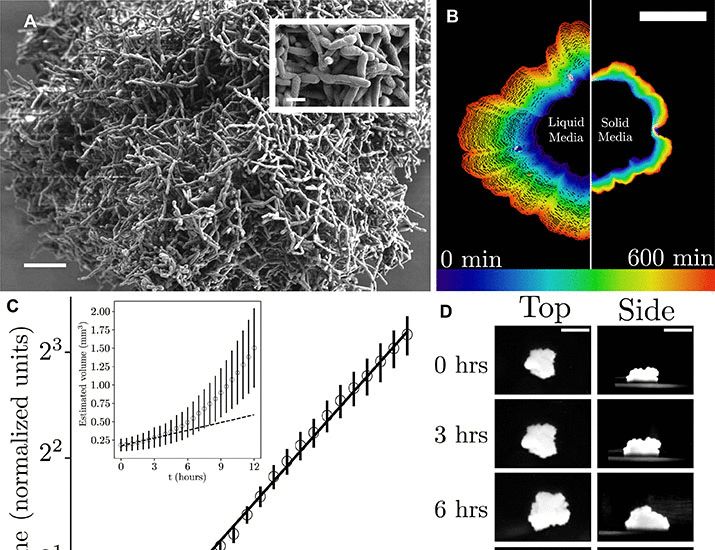
Metabolically driven flows enable exponential growth in macroscopic multicellular yeast
Metabolically generated flow is an emergent mechanism that alleviates diffusion limits in macroscopic multicellular yeast.
www.science.org
July 28, 2025 at 2:44 PM
Spontaneous fluid flows in yeast clusters enable nutrient transport and exponential growth, aiding multicellularity before genetic adaptations evolve. #MicroSky www.science.org/doi/10.1126/...
This primer reviews differences between acute, chronic, mono- and polymicrobial infections, highlighting ecological and evolutionary challenges and opportunities for treatment and infection management. www.microbiologyresearch.org/content/jour...

Microbial Primer: Challenges and opportunities in the treatment of chronic polymicrobial infections ‒ an eco-evolutionary perspective
In this primer, we will review the key distinctions between acute and chronic infections, between mono- and polymicrobial infections and how these distinctions work together to generate the growing cr...
www.microbiologyresearch.org
June 20, 2025 at 5:59 PM
This primer reviews differences between acute, chronic, mono- and polymicrobial infections, highlighting ecological and evolutionary challenges and opportunities for treatment and infection management. www.microbiologyresearch.org/content/jour...