


Christian Möstl
@chrisoutofspace.bsky.social
Heliophysicist | Head, Austrian Space Weather Office @aswogeosphere.bsky.social | GeoSphere Austria https://geosphere.at/en/topics/disaster-protection/space-weather |☀️💥💨🌍 | erc.europa.eu HELIO4CAST | http://helioforecast.space | he / him
Reposted by Christian Möstl
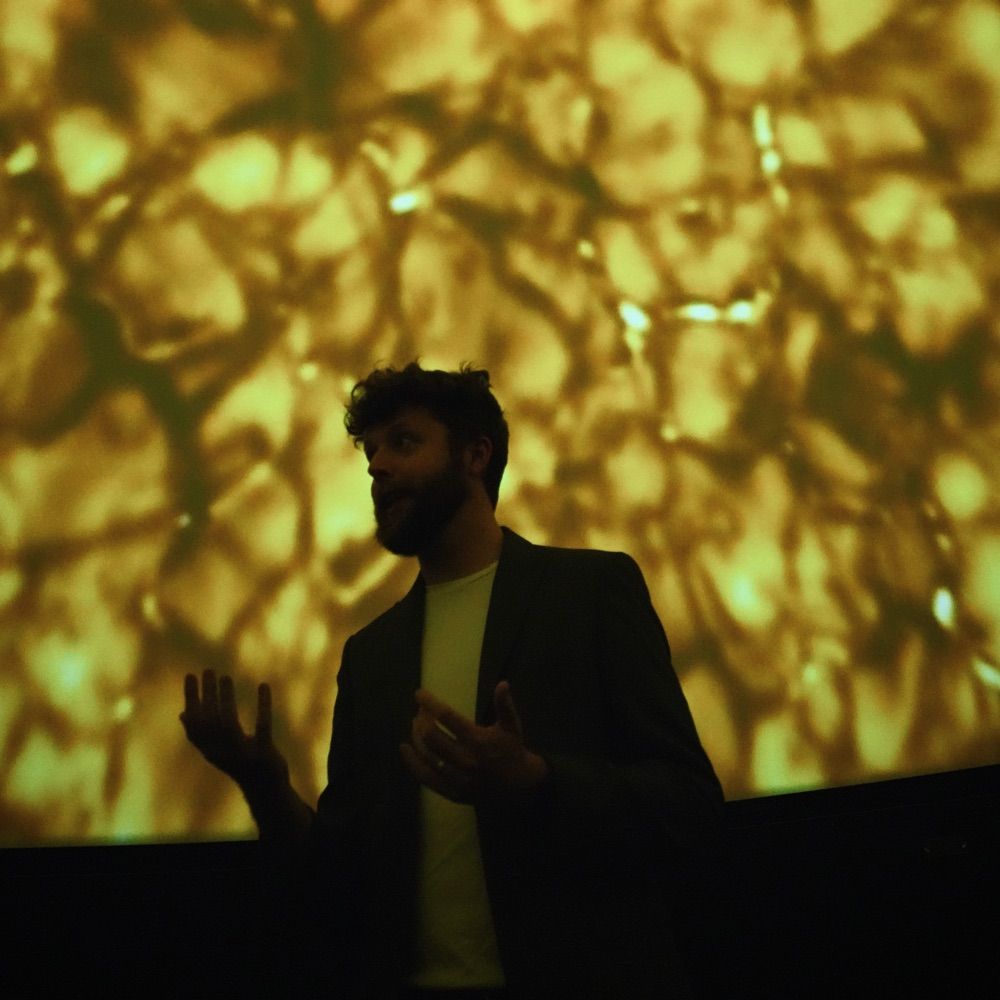
BREAKING: This is Richard Carrington, the first person to document solar flares on the Sun & suggest their influence on aurora at Earth. The largest solar storm on record, the Carrington Event, bares his name. But, there has been no photograph available of Carrington – until now!

January 31, 2026 at 10:20 PM
BREAKING: This is Richard Carrington, the first person to document solar flares on the Sun & suggest their influence on aurora at Earth. The largest solar storm on record, the Carrington Event, bares his name. But, there has been no photograph available of Carrington – until now!
Reposted by Christian Möstl
Crazy
21:36 UTC
Jan 19, 2026
Location Koralpe Austria 46N
#Aurora #spaceweather
@vincentledvina.bsky.social
21:36 UTC
Jan 19, 2026
Location Koralpe Austria 46N
#Aurora #spaceweather
@vincentledvina.bsky.social

January 19, 2026 at 10:54 PM
Crazy
21:36 UTC
Jan 19, 2026
Location Koralpe Austria 46N
#Aurora #spaceweather
@vincentledvina.bsky.social
21:36 UTC
Jan 19, 2026
Location Koralpe Austria 46N
#Aurora #spaceweather
@vincentledvina.bsky.social
This solar cycle is so funny because whenever you think you don't know exactly what to do for the next paper or project these things happen.
January 19, 2026 at 10:59 PM
This solar cycle is so funny because whenever you think you don't know exactly what to do for the next paper or project these things happen.
Reposted by Christian Möstl
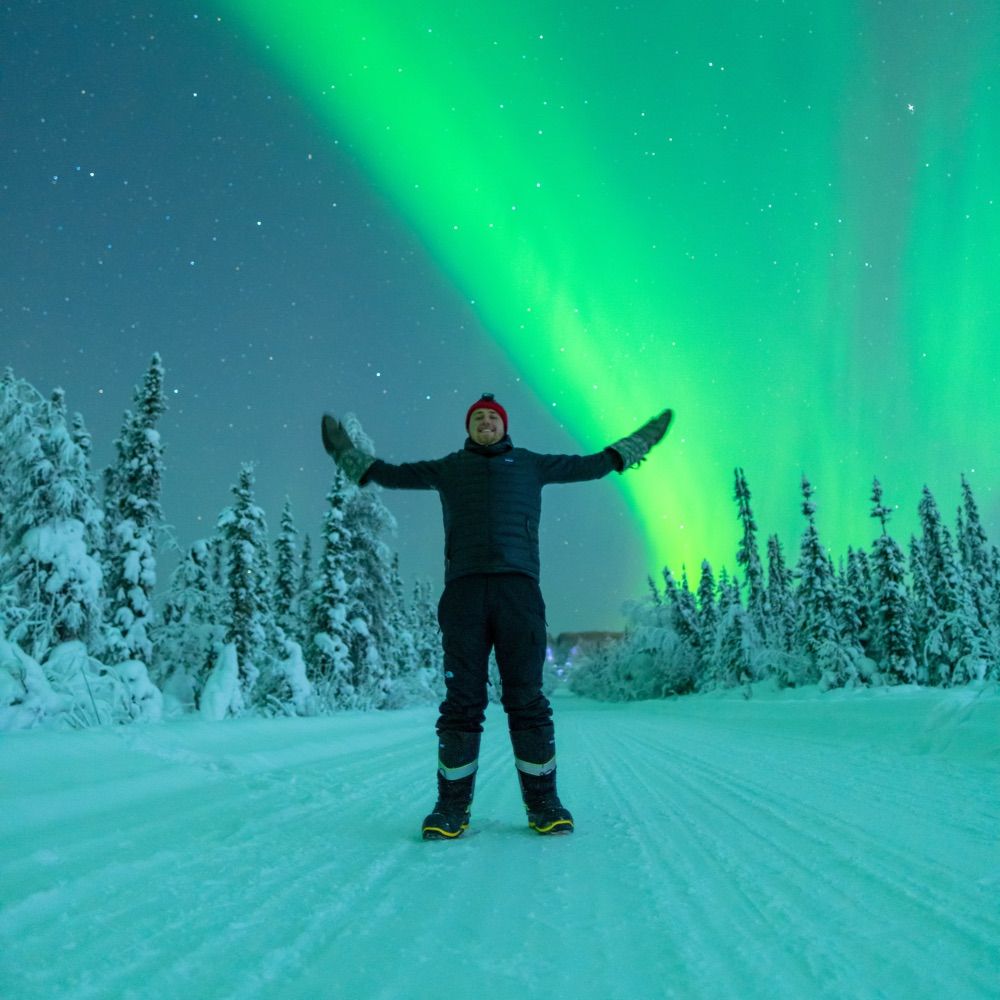
Wow! Here is the current view over Falkenberg, Germany! Quite amazing red aurora from this mid-latitude location. Europe get outside!
go.theauroraguy.com/webcams
go.theauroraguy.com/webcams

January 19, 2026 at 9:25 PM
Wow! Here is the current view over Falkenberg, Germany! Quite amazing red aurora from this mid-latitude location. Europe get outside!
go.theauroraguy.com/webcams
go.theauroraguy.com/webcams
This is likely the strongest near-Earth #solarwind magnetic field I have ever seen in my career - 90.6 nT total field, and perfectly northward 61.7 nT Bz component. If this is the main flux rope, the north and west pointing field is consistent with the right handed source region - Bz would stay > 0!

January 19, 2026 at 9:39 PM
This is likely the strongest near-Earth #solarwind magnetic field I have ever seen in my career - 90.6 nT total field, and perfectly northward 61.7 nT Bz component. If this is the main flux rope, the north and west pointing field is consistent with the right handed source region - Bz would stay > 0!
Reposted by Christian Möstl
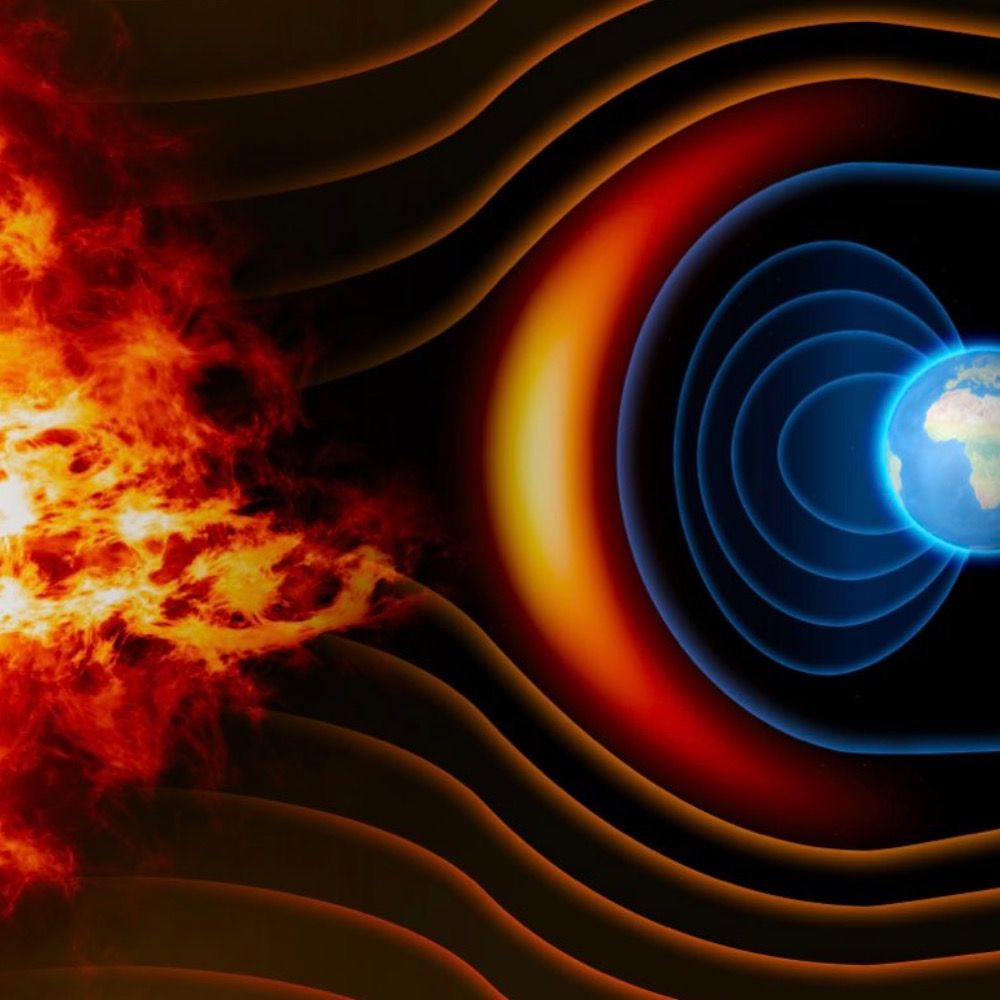
A press story is out today (german) on our forecast for the chances for #aurora nights at mid-latitudes in 2026.
We predict another 1-2 possible nights in 2026, as we expect 20-30 #solarstorm impacts at Earth 🌍 in 2026.
☀️ Solar cycle 25 is not done yet! ☀️
science.apa.at/power-search...
We predict another 1-2 possible nights in 2026, as we expect 20-30 #solarstorm impacts at Earth 🌍 in 2026.
☀️ Solar cycle 25 is not done yet! ☀️
science.apa.at/power-search...


December 23, 2025 at 11:52 AM
A press story is out today (german) on our forecast for the chances for #aurora nights at mid-latitudes in 2026.
We predict another 1-2 possible nights in 2026, as we expect 20-30 #solarstorm impacts at Earth 🌍 in 2026.
☀️ Solar cycle 25 is not done yet! ☀️
science.apa.at/power-search...
We predict another 1-2 possible nights in 2026, as we expect 20-30 #solarstorm impacts at Earth 🌍 in 2026.
☀️ Solar cycle 25 is not done yet! ☀️
science.apa.at/power-search...
🤯 Very interesting study featured on spaceweather.com today about #solarstorms lowering satellite orbits and thus collision avoidance maneuvers are needed, in particular for satellite megaconstellations ➡️ #spaceweather may form a tipping point towards Kessler Syndrome.
arxiv.org/abs/2512.09643
arxiv.org/abs/2512.09643

An Orbital House of Cards: Frequent Megaconstellation Close Conjunctions
The number of objects in orbit is rapidly increasing, primarily driven by the launch of megaconstellations, an approach to satellite constellation design that involves large numbers of satellites pair...
arxiv.org
December 19, 2025 at 7:20 AM
🤯 Very interesting study featured on spaceweather.com today about #solarstorms lowering satellite orbits and thus collision avoidance maneuvers are needed, in particular for satellite megaconstellations ➡️ #spaceweather may form a tipping point towards Kessler Syndrome.
arxiv.org/abs/2512.09643
arxiv.org/abs/2512.09643
Reposted by Christian Möstl
Check out the first poster in our new series: "Space Safety - in action!"
Mission: Vigil
Objective: Advanced warning of solar storms
Unique feature: Location in deep space offers 'side-on' view of solar material heading towards Earth
Launch: 2031
Download the poster at:
www.esa.int/Space_Safety...
Mission: Vigil
Objective: Advanced warning of solar storms
Unique feature: Location in deep space offers 'side-on' view of solar material heading towards Earth
Launch: 2031
Download the poster at:
www.esa.int/Space_Safety...

December 8, 2025 at 2:05 PM
Check out the first poster in our new series: "Space Safety - in action!"
Mission: Vigil
Objective: Advanced warning of solar storms
Unique feature: Location in deep space offers 'side-on' view of solar material heading towards Earth
Launch: 2031
Download the poster at:
www.esa.int/Space_Safety...
Mission: Vigil
Objective: Advanced warning of solar storms
Unique feature: Location in deep space offers 'side-on' view of solar material heading towards Earth
Launch: 2031
Download the poster at:
www.esa.int/Space_Safety...
(In German): A really nice story in Austrian newspaper @derstandard.at today on our duties as #spaceweather forecasters and researchers and myths surrounding our work. www.derstandard.at/story/300000...

Astrophysiker: "Oft kommt die Frage nach Außerirdischen"
Christian Möstl leitet das Austrian Space Weather Office der Geosphere Austria. Er erklärt, wie Sonnenstürme entstehen und ob die Suche nach Aliens zum Job gehört
www.derstandard.at
December 1, 2025 at 5:27 PM
(In German): A really nice story in Austrian newspaper @derstandard.at today on our duties as #spaceweather forecasters and researchers and myths surrounding our work. www.derstandard.at/story/300000...
My take away so far from discussions on the #Airbus software updates due to potential #spaceweather induced electronics upsets: the Sun ☀️ seems not responsible for the incident on October 30 (no significant eruptions on that day), but solar energetic particles could lead to similar failures.
December 1, 2025 at 5:24 PM
My take away so far from discussions on the #Airbus software updates due to potential #spaceweather induced electronics upsets: the Sun ☀️ seems not responsible for the incident on October 30 (no significant eruptions on that day), but solar energetic particles could lead to similar failures.
Reposted by Christian Möstl
An interesting #spaceweather story developing. Airbus has made a statement saying that “Analysis of a recent event involving an A320 Family aircraft has revealed that intense solar radiation may corrupt data critical to the functioning of flight controls”
www.bbc.co.uk/news/article...
www.bbc.co.uk/news/article...

Flights disrupted as Airbus requests modifications to thousands of planes
About 6,000 plans are thought to be affected, about half the European aerospace giant's global fleet.
www.bbc.co.uk
November 28, 2025 at 8:12 PM
An interesting #spaceweather story developing. Airbus has made a statement saying that “Analysis of a recent event involving an A320 Family aircraft has revealed that intense solar radiation may corrupt data critical to the functioning of flight controls”
www.bbc.co.uk/news/article...
www.bbc.co.uk/news/article...
Amazing outcome of the ESA ministerial for space safety: especially ESA Vigil and the the mission concepts for distributed #spaceweather sensors like SHIELD and Aurora missions are all on track!
www.esa.int/Space_Safety...
www.esa.int/Space_Safety...

Boost in funding expands Space Safety programme
The 2025 Ministerial Council (CM25) turned into an overwhelming success for ESA’s Space Safety programme. Member States committed to a budget of €955 million for the next three years – even more ...
www.esa.int
November 28, 2025 at 4:19 PM
Amazing outcome of the ESA ministerial for space safety: especially ESA Vigil and the the mission concepts for distributed #spaceweather sensors like SHIELD and Aurora missions are all on track!
www.esa.int/Space_Safety...
www.esa.int/Space_Safety...
We will hear more details in the coming days but it also looks like ESA Space Safety - with a highly ambitious program - was very well funded, and besides the Asteroid mission to Apophis in 2029 (once in a lifetime chance), eager to hear more about the #spacewather missions to be designed and built!
Today marks a milestone for European space exploration. The largest contributions in the history of the European Space Agency, €22.1 billion, were just approved at our Ministerial Council meeting in Bremen, Germany. #CM25
More details 👇 www.esa.int/About_Us/Cor...
More details 👇 www.esa.int/About_Us/Cor...

ESA Member States commit to largest contributions at Ministerial
The largest contributions in the history of the European Space Agency, €22.1 bn, have been approved at its Council meeting at Ministerial level in Bremen, ...
www.esa.int
November 27, 2025 at 6:53 PM
We will hear more details in the coming days but it also looks like ESA Space Safety - with a highly ambitious program - was very well funded, and besides the Asteroid mission to Apophis in 2029 (once in a lifetime chance), eager to hear more about the #spacewather missions to be designed and built!
Reposted by Christian Möstl
📺 Our Ministerial Council takes place this week, 26-27 November, in Bremen, Germany. Vital decisions will be made on Europe's future in space. You can follow events live on the days here! 👇
www.esa.int/About_Us/Min...
Also check out our dedicated #CM25 website 👇 🔗 esa.int/CM25
www.esa.int/About_Us/Min...
Also check out our dedicated #CM25 website 👇 🔗 esa.int/CM25

Follow CM25 online
The European Space Agency's Ministerial Council – more formally Council at Ministerial level – takes place in Bremen, Germany on 26 and 27 November 2025.
www.esa.int
November 24, 2025 at 9:01 AM
📺 Our Ministerial Council takes place this week, 26-27 November, in Bremen, Germany. Vital decisions will be made on Europe's future in space. You can follow events live on the days here! 👇
www.esa.int/About_Us/Min...
Also check out our dedicated #CM25 website 👇 🔗 esa.int/CM25
www.esa.int/About_Us/Min...
Also check out our dedicated #CM25 website 👇 🔗 esa.int/CM25
I am part of a new paper has been published today in @frontiersmedia.bsky.social (Zhao et al. 2025) that gives an overview on the drag-based-models that have been developed to describe the #solarstorm evolution in the heliosphere
www.frontiersin.org/articles/10.... #openaccess
www.frontiersin.org/articles/10.... #openaccess

Frontiers | Mathematical expressions of the drag-based models for predicting the arrival time of coronal mass ejection and their development and evolutionary processes
As one of the most violent solar activities, coronal mass ejections (CMEs) are eruptions of the large-scale magnetized plasma from the Sun’s upper atmosphere...
www.frontiersin.org
November 24, 2025 at 1:30 PM
I am part of a new paper has been published today in @frontiersmedia.bsky.social (Zhao et al. 2025) that gives an overview on the drag-based-models that have been developed to describe the #solarstorm evolution in the heliosphere
www.frontiersin.org/articles/10.... #openaccess
www.frontiersin.org/articles/10.... #openaccess
A new podcast (in german) is available on all platforms with Hannah Rüdisser @hannahruedisser.bsky.social and me talking about many aspects of space weather, like future @esaspaceweather.esa.int missions, Miyake Events and solar storm impacts on technology.
👇
geosphere.at/de/aktuelles...
👇
geosphere.at/de/aktuelles...

Folge 10: Die stürmische Seite der Sonne
Achtung! Achtung! Das ist eine Sturmwarnung aus dem Weltall! Ganz so wild geht es im Arbeitsalltag der beiden Astrophysiker:innen Christian Möstl und Hannah Rüdisser zwar nicht (immer) zu, aber sie ha...
geosphere.at
November 5, 2025 at 12:36 PM
A new podcast (in german) is available on all platforms with Hannah Rüdisser @hannahruedisser.bsky.social and me talking about many aspects of space weather, like future @esaspaceweather.esa.int missions, Miyake Events and solar storm impacts on technology.
👇
geosphere.at/de/aktuelles...
👇
geosphere.at/de/aktuelles...
Day 4 of #ESWW2025! @maikebauer.bsky.social + @lelouedecj.bsky.social presented posters on #solarstorm automatic detection and modeling to make life easier for forecasters. @hannahruedisser.bsky.social took part in a panel on the best practices and future use of AI in #spaceweather! 1/3


October 31, 2025 at 7:58 AM
Day 4 of #ESWW2025! @maikebauer.bsky.social + @lelouedecj.bsky.social presented posters on #solarstorm automatic detection and modeling to make life easier for forecasters. @hannahruedisser.bsky.social took part in a panel on the best practices and future use of AI in #spaceweather! 1/3
Day 3 at #ESWW2025! @hannahruedisser.bsky.social presented our automatic solar storm detection method ARCANE, combined with our models for the storm magnetic field (3DCORE) and arrival time (ELEvo), showcasing their power for real time application. (1/2)👇


October 29, 2025 at 1:10 PM
Day 3 at #ESWW2025! @hannahruedisser.bsky.social presented our automatic solar storm detection method ARCANE, combined with our models for the storm magnetic field (3DCORE) and arrival time (ELEvo), showcasing their power for real time application. (1/2)👇
Day 2 at #ESWW2025! @spacedavies.bsky.social rocked the stage with a talk on solar storm forecasts with sub-L1 monitors with @esa.int #SolarOrbiter. I participated in 2 panel discussion, on the role of validation, and the future of space weather modeling at ESA in the next 10-15 years. ☀️💥🤖


October 29, 2025 at 8:02 AM
Day 2 at #ESWW2025! @spacedavies.bsky.social rocked the stage with a talk on solar storm forecasts with sub-L1 monitors with @esa.int #SolarOrbiter. I participated in 2 panel discussion, on the role of validation, and the future of space weather modeling at ESA in the next 10-15 years. ☀️💥🤖
Some impressions from day one at #ESWW2025 including first poster presentations and big congrats to long-time collaborator Erika Palmerio @erikapal.bsky.social for receiving the Alexander Chizhevsky Medal for early career scientists!


October 27, 2025 at 4:56 PM
Some impressions from day one at #ESWW2025 including first poster presentations and big congrats to long-time collaborator Erika Palmerio @erikapal.bsky.social for receiving the Alexander Chizhevsky Medal for early career scientists!
🇬🇧UK Space Weather meeting in Sheffield, day 3 starts with a session on new 🛰️ missions, including @craig.deforest.org on @punch-mission.bsky.social, Jorge Amaya on a new fleet of @esa.int spacecraft and a possible later far-side ☀️ mission (near L3), and Jonathan Eastwood on ESA HENON for sub-L1 data.


September 10, 2025 at 8:25 AM
🇬🇧UK Space Weather meeting in Sheffield, day 3 starts with a session on new 🛰️ missions, including @craig.deforest.org on @punch-mission.bsky.social, Jorge Amaya on a new fleet of @esa.int spacecraft and a possible later far-side ☀️ mission (near L3), and Jonathan Eastwood on ESA HENON for sub-L1 data.
Some impressions from the UK 🇬🇧💂♂️ Space Weather and
Space Environment Meeting III in Sheffield this week - I talked about research to operations to research at @aswogeosphere.bsky.social and the usage for spacecraft measuring solar storm magnetic fields closer to the Sun ☀️ (so called sub-L1 monitors).
Space Environment Meeting III in Sheffield this week - I talked about research to operations to research at @aswogeosphere.bsky.social and the usage for spacecraft measuring solar storm magnetic fields closer to the Sun ☀️ (so called sub-L1 monitors).


September 9, 2025 at 8:55 AM
Some impressions from the UK 🇬🇧💂♂️ Space Weather and
Space Environment Meeting III in Sheffield this week - I talked about research to operations to research at @aswogeosphere.bsky.social and the usage for spacecraft measuring solar storm magnetic fields closer to the Sun ☀️ (so called sub-L1 monitors).
Space Environment Meeting III in Sheffield this week - I talked about research to operations to research at @aswogeosphere.bsky.social and the usage for spacecraft measuring solar storm magnetic fields closer to the Sun ☀️ (so called sub-L1 monitors).
This #solarstorm from late Aug 30 2025 will arrive at 🌍 noon to late Monday Sep 1.
Depending on its internal magnetic field, it has the potential for #aurora in central Europe and maybe #GNSS errors.
Parker Solar Probe will tell us in hindsight if its field was predictable from 0.5 au.
Depending on its internal magnetic field, it has the potential for #aurora in central Europe and maybe #GNSS errors.
Parker Solar Probe will tell us in hindsight if its field was predictable from 0.5 au.

August 31, 2025 at 3:40 PM
This #solarstorm from late Aug 30 2025 will arrive at 🌍 noon to late Monday Sep 1.
Depending on its internal magnetic field, it has the potential for #aurora in central Europe and maybe #GNSS errors.
Parker Solar Probe will tell us in hindsight if its field was predictable from 0.5 au.
Depending on its internal magnetic field, it has the potential for #aurora in central Europe and maybe #GNSS errors.
Parker Solar Probe will tell us in hindsight if its field was predictable from 0.5 au.
The new AI foundation-type model, based on Solar Dynamics Observatory data, arxiv.org/abs/2508.141...
is also featured @wired.com
www.wired.com/story/ibm-an...
is also featured @wired.com
www.wired.com/story/ibm-an...

IBM and NASA Develop a Digital Twin of the Sun to Predict Future Solar Storms
The tool models the sun using AI, and its developers say it can anticipate solar flares 16 percent more accurately and in half the time of current prediction systems.
www.wired.com
August 25, 2025 at 1:49 PM
The new AI foundation-type model, based on Solar Dynamics Observatory data, arxiv.org/abs/2508.141...
is also featured @wired.com
www.wired.com/story/ibm-an...
is also featured @wired.com
www.wired.com/story/ibm-an...
This is a really great summary of the current state of #AI.
For my scientific work 🧑💻 its useful to (1) quickly summarize fields that I am not familiar with and (2) to give me templates for coding.
Both are great tools ⚒️ but a far cry from AGI/ASI.
www.theatlantic.com/technology/a...
For my scientific work 🧑💻 its useful to (1) quickly summarize fields that I am not familiar with and (2) to give me templates for coding.
Both are great tools ⚒️ but a far cry from AGI/ASI.
www.theatlantic.com/technology/a...

AI Is a Mass-Delusion Event
Three years in, one of AI’s enduring impacts is to make people feel like they’re losing it.
www.theatlantic.com
August 19, 2025 at 11:28 AM
This is a really great summary of the current state of #AI.
For my scientific work 🧑💻 its useful to (1) quickly summarize fields that I am not familiar with and (2) to give me templates for coding.
Both are great tools ⚒️ but a far cry from AGI/ASI.
www.theatlantic.com/technology/a...
For my scientific work 🧑💻 its useful to (1) quickly summarize fields that I am not familiar with and (2) to give me templates for coding.
Both are great tools ⚒️ but a far cry from AGI/ASI.
www.theatlantic.com/technology/a...