Peter Krause
banner
peterkrause.bsky.social
Peter Krause
@peterkrause.bsky.social

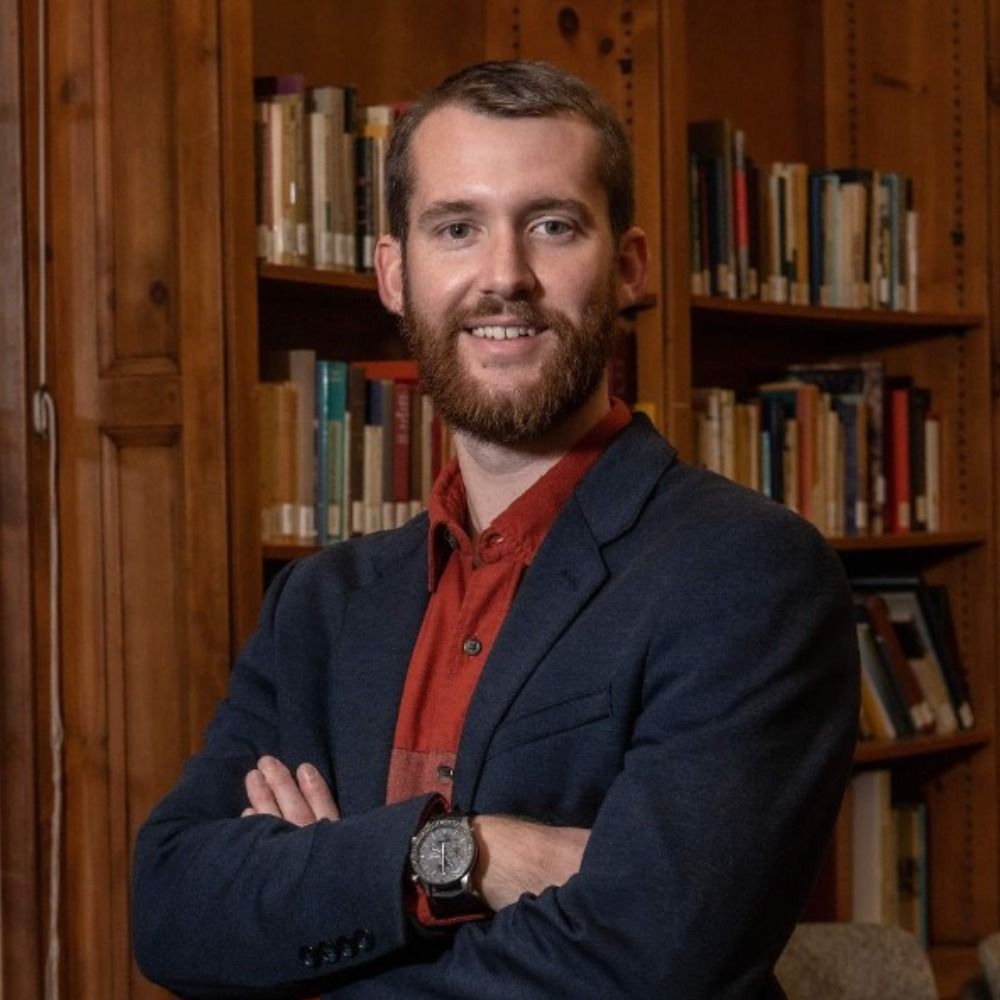
Associate Professor at Boston College, Research Affiliate at MIT Security Studies Program, Middle East politics, civil war and political violence, nationalism, rebels and regime change, peace-building, and Boston www.peterjpkrause.com .. more

Political science 40%
Sociology 19%
Pinned
I was on NPR yesterday in a chat w @sachapfeiffer.bsky.social on the evolving nature of international politics, U.S. foreign policy, and coercive diplomacy. Sacha is a fantastic journalist and I really enjoyed the conversation.

www.npr.org/2026/01/11/n...
After Venezuela, is the world order shifting from diplomacy towards aggression?
NPR's Sacha Pfeiffer talks with Peter Krause of Boston College about the Trump Administration's willingness to act unilaterally against other countries and what this means for international relations.
www.npr.org

The special issue includes 11 articles from 21 researchers who explore issues of participant trauma, how IRBs should be used effectively, and the importance of reflexivity in research on armed actors. Please listen and spread the word! #polisky #conflictsky podcasts.apple.com/us/podcast/s...
Research Ethics and the Study of Civil War
Podcast Episode · Stories from the Field · 02/04/2026 · 58m
podcasts.apple.com

Episode 3 "Research Ethics and the Study of Civil War" is now out from the Stories from the Field podcast. @oraszekely.bsky.social and I welcome @christinecheng.bsky.social + Christopher Day to discuss their recent co-edited special issue in the journal Conflict, Security, & Development. /1

Please check out these and other episodes on Apple, Spotify, or wherever else you listen. New episodes will drop each Wednesday in February and March. @columbiaup.bsky.social #polisky #conflictsky

Apple: podcasts.apple.com/us/podcast/s...

Spotify: open.spotify.com/show/3Nky9sI...
Doing Research as a Native
open.spotify.com

Today, we release Ep1, which previews the season, and Ep2, in which we interview Kira Jumet + Merouan Mekouar re their fantastic edited volume "Doing Research as a Native: A Guide for Fieldwork in Illiberal and Repressive States" and discuss the issues it raises /2 podcasts.apple.com/us/podcast/d...
Doing Research as a Native
Podcast Episode · Stories from the Field · 01/28/2026 · 47m
podcasts.apple.com

Please check out these and other episodes on Apple, Spotify, or wherever else you listen. New episodes will drop each Wednesday in February and March @columbiaup.bsky.social

Apple: podcasts.apple.com/us/podcast/s...

Spotify: open.spotify.com/show/3Nky9sI...
Doing Research as a Native
open.spotify.com

So excited to publish Season 2 of the "Stories from the Field" podcast w @oraszekely.bsky.social. This season, we focus on research on civil war, from doing research in one’s home country to the special importance of research ethics in scholarship on armed conflict /1
With continuing challenges to stability in #Syria, are there any opportunities for optimism? Listen to our recent seminar on the future of #Israel, Syria, & the Levant with Crown scholars Shai Feldman, Daniel Neep, @jillianschwedler.bsky.social, & @peterkrause.bsky.social:

youtu.be/YUBhGr2P1XM
The Future of Israel, Syria, and the Levant | Crown at 20: The Future of the Middle East
YouTube video by Crown Center for Middle East Studies
youtu.be

And now how education impacts how people define terrorism. 50 free copies of the new article available here: tandfonline.com/eprint/G4TDB... /9
How Students and the Public Define Terrorism, and How Education Affects Those Definitions
How do students and the public define terrorism, and what impact does education have on those definitions? We gathered evidence from an extensive series of experimental and observational surveys in...
tandfonline.com

This is the final article in a trilogy in which 1) we examined how education impacts how people think about the perpetrators of political violence (JEPG 2017): www.peterjpkrause.com/_files/ugd/7...
www.peterjpkrause.com

Our findings reveal how the uninformed public’s lack of specificity on perpetrators and victims enables the idea that “one person’s terrorist is another person’s freedom fighter,” but also how education can change those definitions and, perhaps, their application /6

The more that students and the public learn about terrorism, the more they define it as a rational act (though not a moral one). /5

Although other studies identify the religion of the perpetrator (especially Islam) as perhaps the most significant element in implicit, revealed definitions of terrorism, almost no students or members of the public mentioned religion/Islam in their explicit, stated definitions /4

We found that students and the public initially define terrorism as being committed by non-state actors and targeting civilians at a far lower rate than do academics and governments. Those percentages increase after students/the public take courses, watch lectures on terrorism /3

We gathered evidence from an extensive series of experimental and observational surveys involving students in 31 terrorism and non-terrorism related courses at 12 universities, as well as online survey experiments of the general public. /2

So happy to publish my article w Betul Ozturan & Liane Young, "How Students and the Public Define Terrorism, and How Education Affects Those Definitions." A 🧵 on our findings, and a link to free copies below. /1

Fair

Reposted by Peter Krause

I am happy to share my article on the US's "Major Non-NATO Ally" status, which signals friendship and facilitates cooperation without providing formal security commitments. I compare the cases of Qatar and the UAE to explain why and when some US partners accept MNNA status.
doi.org/10.1093/jogs...
Accepting Appreciation: Partner Perceptions and Major Non-NATO Ally Designations
Abstract. A diverse group of governments have accepted “Major Non-NATO Ally” (MNNA) status since the designation's establishment in the late 1980s. This Un
doi.org

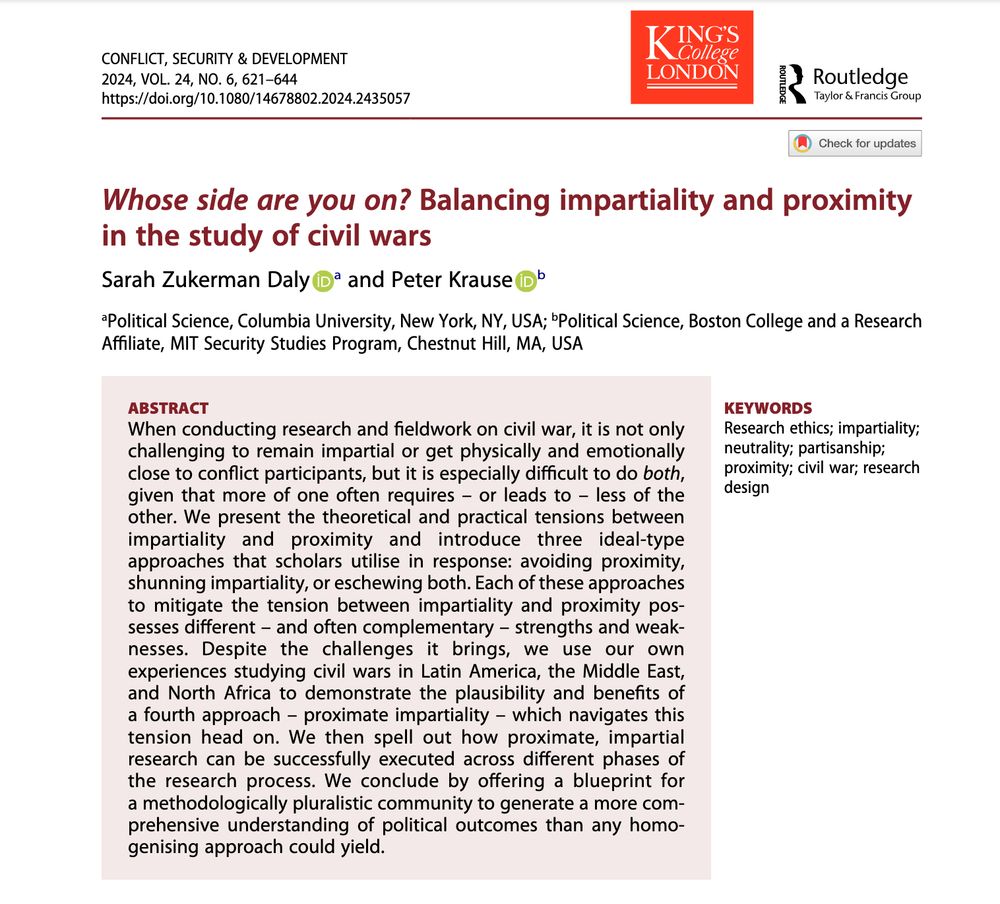
My new article w Sarah Z Daly now physically published. New link for 50 free copies in next post, write me for one if it runs out. See pinned thread for details. "Whose Side Are You On? Balancing Impartiality and Proximity in the Study of Civil Wars" @bostoncollege.bsky.social
#Conflictsky #Polisky

Reposted by Peter Krause

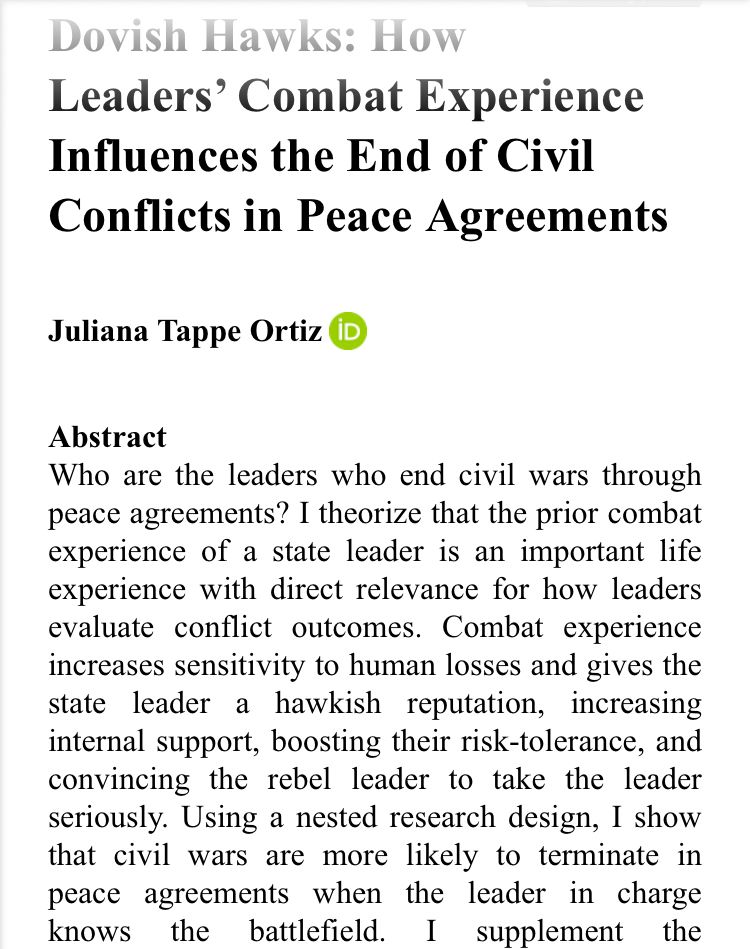
Christmas came early this year 🎉 Check out my first article published in the Journal of Conflict Resolution ! journals.sagepub.com/doi/10.1177/...

Reposted by Peter Krause

This Crown Conversation with Haian Dukhan & Daniel Neep
is genuinely excellent. From misconceptions re: what Assad's fall means for the region to prospects for the future of #Syria, it manages to provide insight through the uncertainties. Great read. www.brandeis.edu/crown/public...
Beyond Assad: The Rise of Hay’at Tahrir al-Sham and Syria’s Uncertain Future
www.brandeis.edu

This is part of an amazing special issue of Conflict, Security, and Development edited by Christine Cheng + Christopher Day with great articles @susannacampbell.bsky.social @meganturnbull.bsky.social @janetilewis.bsky.social
@kaimthaler.bsky.social @joehud.bsky.social others not yet @bsky.app
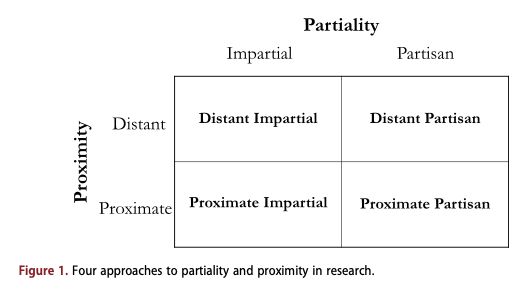
We then spell out how proximate, impartial research can be successfully executed across different phases of the research process. We conclude by offering a blueprint for a methodologically pluralistic community to generate a more comprehensive understanding of political outcomes.

Despite the challenges it brings, we use our own experiences studying civil wars in Latin America, the Middle East, and North Africa to demonstrate the plausibility and benefits of a fourth approach – proximate impartiality – which navigates this tension head on.

Each of these approaches to mitigate the tension between impartiality and proximity possesses different – and often complementary – strengths and weaknesses (which we describe in the article).

We present the theoretical and practical tensions between impartiality and proximity and introduce three ideal-type approaches that scholars utilize in response: avoiding proximity, shunning impartiality, or eschewing both

When conducting research and fieldwork on civil war, it is not only challenging to remain impartial or get physically and emotionally close to conflict participants, but it is especially difficult to do both, given that more of one often requires – or leads to – less of the other
My new article with Sarah Zukerman Daly was just published: "Whose Side Are You On? Balancing Impartiality and Proximity in the Study of Civil Wars" More details below, 50 free copies available here: www.tandfonline.com/eprint/HNVJR...
Whose side are you on? Balancing impartiality and proximity in the study of civil wars
When conducting research and fieldwork on civil war, it is not only challenging to remain impartial or get physically and emotionally close to conflict participants, but it is especially difficult ...
www.tandfonline.com