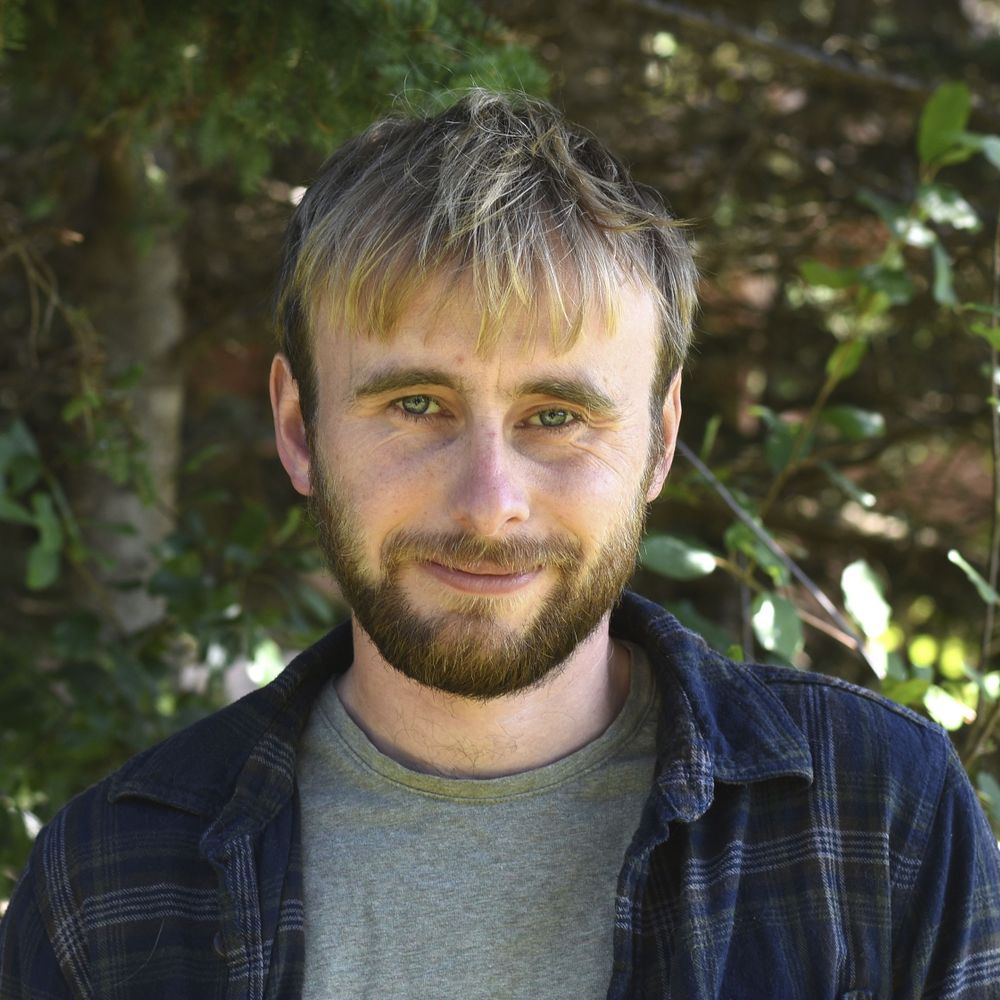
Matthew Silk
banner
mattjsilk.bsky.social
Matthew Silk
@mattjsilk.bsky.social

Research Fellow in the Institute of Ecology and Evolution at University of Edinburgh. Social networks, behaviour, disease, demography and some wildlife photos.

Biology 17%
Psychology 12%

Very happy to chat with anyone who might be interested. The broader ideas we'd like to explore are introduced here:
doi.org/10.1098/rstb...
Not your private tête-à-tête: leveraging the power of higher-order networks to study animal communication
Abstract. Animal communication is frequently studied with conventional network representations that link pairs of individuals who interact, for example, th
doi.org

New (competition funded) PhD opportunity with me,
@iaciac.bsky.social and @dralgernon.bsky.social
www.findaphd.com/phds/project...
Higher-order networks and animal communication. Suited to someone keen on network science theory/computational modeling and keen to adapt this to ecology & evolution.

Huge thanks to Anna, Nina and Nakeya for a truly interdisciplinary team effort. And to the editors and reviewers for helping to make a tricky paper better (a very reassuring #PeerReview experience)!

There are lots of aspects of this paper that I think are very cool (of course!) but a sneaky contribution to the age old debate on how to eat a #CreamTea has to be my favourite! A nod to my time in Cornwall @uniexecec.bsky.social. [photo borrowed from Rodda's dairy who I'm hoping won't mind!]

A new paper in @plos.org Complex Systems from my time at @nimbios.bsky.social with Nina Fefferman.
We set out some ways of classifying rules for social learning and knowledge exchange in higher-order networks.
doi.org/10.1371/jour...
A typology of rules for knowledge exchange in higher-order interactions
Author summary Learning from each other is important to humans and other animals as it provides safe or quick ways to gather information about the world around you. Because of this ‘social learning’, ...
doi.org

Really great to see this paper out. A fun chance to play with some higher-order network approaches for animal spatial data! Great to make the most of @grf.bsky.social dropping by @edinburgh-uni.bsky.social on sabbatical, and very proud of Ross on his first published paper!!
🐒🧠 New paper in npj Complexity: complementary information sharing in fission-fusion dynamics.

Video explainer: youtu.be/PIAhcLWqsO8?...

Full paper (open access): doi.org/10.1038/s442...

Higher-order spatial networks enable distributed foraging knowledge in heterogeneous environments.

👇
Uncovering complementary information sharing in spider monkey collective foraging
YouTube video by Global Research Centre for Diverse Intelligences
youtu.be

Reposted by Matthew J. Silk

🐒🧠 New paper in npj Complexity: complementary information sharing in fission-fusion dynamics.

Video explainer: youtu.be/PIAhcLWqsO8?...

Full paper (open access): doi.org/10.1038/s442...

Higher-order spatial networks enable distributed foraging knowledge in heterogeneous environments.

👇
Uncovering complementary information sharing in spider monkey collective foraging
YouTube video by Global Research Centre for Diverse Intelligences
youtu.be

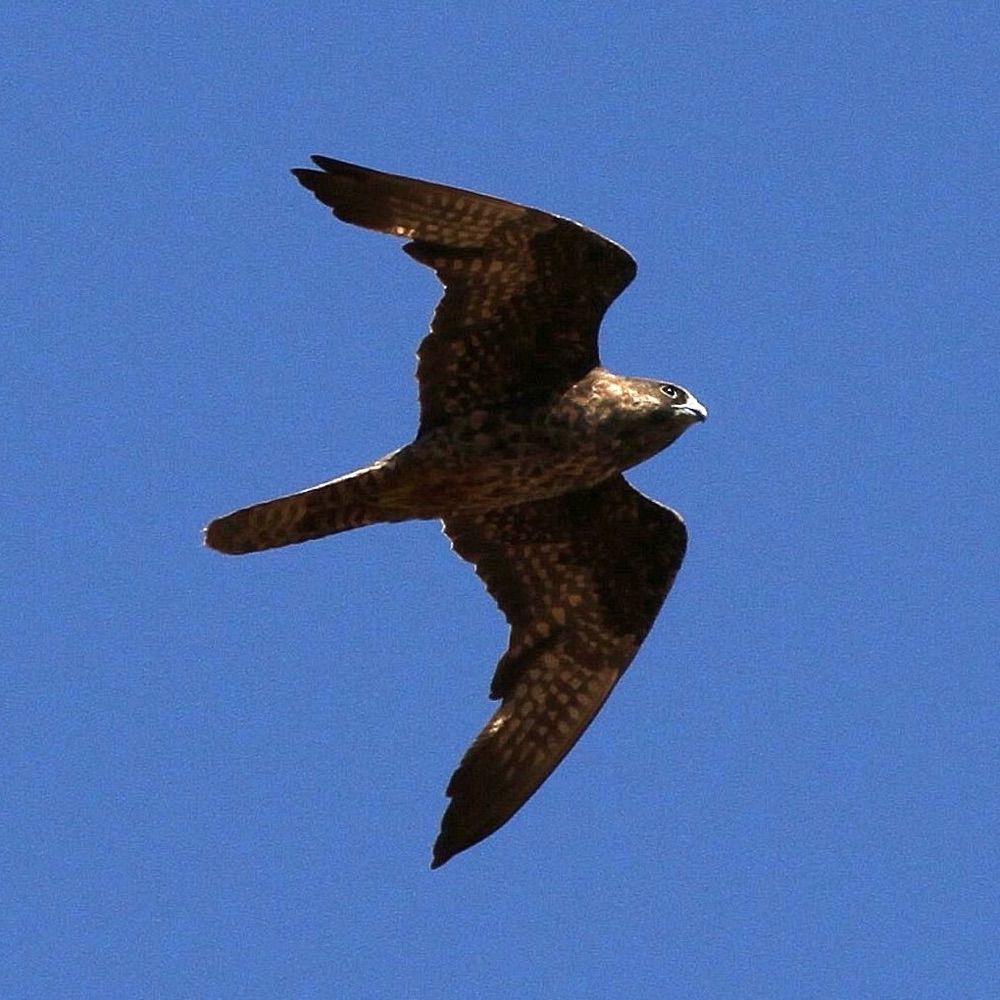
Male Ring Ouzel near Porlock Weir/Marsh early this afternoon was a fun surprise! Showed super well feeding out in the open from the coast path - much better than this terrible photo suggests! @somersetbirds.bsky.social #UKbirding

Reposted by Matthew J. Silk

⭐New paper!⭐

About generative network modelling - a key approach for understanding network structures.

First half:
We give a general introduction to generative network models

Second half:
We consider their use in animal behaviour research

www.sciencedirect.com/science/arti...
Two fully-funded PhD openings in my research group at the University of York.
If you’re excited about viromes, phage biology, Nanopore sequencing, soils and the odd bit of alpine or agricultural field sampling, we’d love to hear from you!
🌱🦠🏔️

tiny.cc/c4pv001
tiny.cc/e4pv001
A Farewell to Arms: The Trade-off Between Growth and Defence in Bacteria (York YBDTP Project) at University of York on FindAPhD.com
PhD Project - A Farewell to Arms: The Trade-off Between Growth and Defence in Bacteria (York YBDTP Project) at University of York, listed on FindAPhD.com
tiny.cc

Another new animal social network paper just out in @asab.org Animal Behaviour: How can we make the most of generative network models in behavioural ecology research?
doi.org/10.1016/j.an...
A lot of fun to help @jbbrask.bsky.social and @drwhale.bsky.social put this together!
doi.org/10.1016/j.an...

And these considerations really do that lie at the heart of making the most huge amount of diverse social network data we now have in wild populations.

Its very exciting to see this paper out in @behavecol.bsky.social. These conversations, expertly led by @delphinedemoor.bsky.social, have really shaped how I now think about working with social network data. Check out Delphine's thread to learn more!
Excited to introduce the Latent Layers Framework – now out in @behavecol.bsky.social – to help think through when and why network differences confound inference in (comparative) social network analysis! 🧵

tinyurl.com/3k3yahwy
🌍📢 Postdoc alert | 3-yr starting early 2026

Please 🔁!

Understand how ecosystem stability is changing across space and through time using niche modelling, pinpoint at-risk species/regions, and build tools that drive conservation action🌿🧭📈

👉 tinyurl.com/2mafwru3

#Ecology #Jobs #Biodiversity

Reposted by Matthew J. Silk

Interested in how life history may shape the gut microbiome of a wild mammal? Keen on getting to work with an iconic long-term study system in Scotland?

Check out this PhD opportunity with me, Josephine Pemberton and @gfalbery.bsky.social

Reach out to chat more!

www.findaphd.com/phds/project...

Reposted by Matthew J. Silk

Excited to introduce the Latent Layers Framework – now out in @behavecol.bsky.social – to help think through when and why network differences confound inference in (comparative) social network analysis! 🧵

tinyurl.com/3k3yahwy
Fully funded NERC GW4+ PhD Opportunity - *Understanding The Spread of Antimicrobial Resistance by Migratory Birds*

Supervised by me, @stubearhop.bsky.social (Exeter) & Patricia Brekke (ZSL). Application deadline 8th January. Please get in touch for more info

www.findaphd.com/phds/project...
My lab at Indiana University is searching for a *postdoc* and *technician* to contribute to our work studying the evolution of social behavior using fruit flies as a model system. Details below, feel free to email me with any questions! More info on our research: saltzlab.com
PhD advert alert!

Come work with me at Edinburgh.

I'm advertising a PhD on: "Predicting responses of birds to climate change", competition funded through the E5 DTP. Would suit those with an interest in predicting responses to climate change, birds, or both.

e5-dtp.ed.ac.uk/project?item...
Social relationships are powerful predictors of fitness across social animals. But *why*?

In our new @cp-trendsecolevo.bsky.social paper, we outline testable predictions for why relationship quality and quantity adaptively vary across socio-ecological contexts.

tinyurl.com/55dnkeh7

I'm v excited to be recruiting a PhD student to work on badger behaviour and ecology! Starting date is March 2026; see the ad here, or message me for more details: www.gregalbery.me/s/March-2026...
Interested in simulating the kind of data that you might commonly find in evolutionary and ecological studies?

Then we have the R package for you - squidSim!!

Check our new preprint:
ecoevorxiv.org/repository/v...
squidSim: a flexible R package for structured and reproducible simulations in Ecology and Evolutionary Biology
ecoevorxiv.org

Torness this morning 06:07-09:21:
1 arctic skua, 29 manxies, 82 sandwich, 8 arctic, 6 common and 7 commic terns, 59 fulmar, 27 common scoter, 1 velvet scoter, barwit and 3 whimbrel.
Then found this beaut of a house martin expertly photographed by @jarrodhadfield.bsky.social later on.
#BirdingLothian
As far as I know, there are no confirmed breeding records of Black Redstart in Lothian, but this one at Torness doesn't look long out the nest. Thanks to @mattjsilk.bsky.social for putting me on to one of the strangest colour/pattern abnormalities I've seen - it's a House Martin! #BirdingLothian

Reposted by Matthew J. Silk
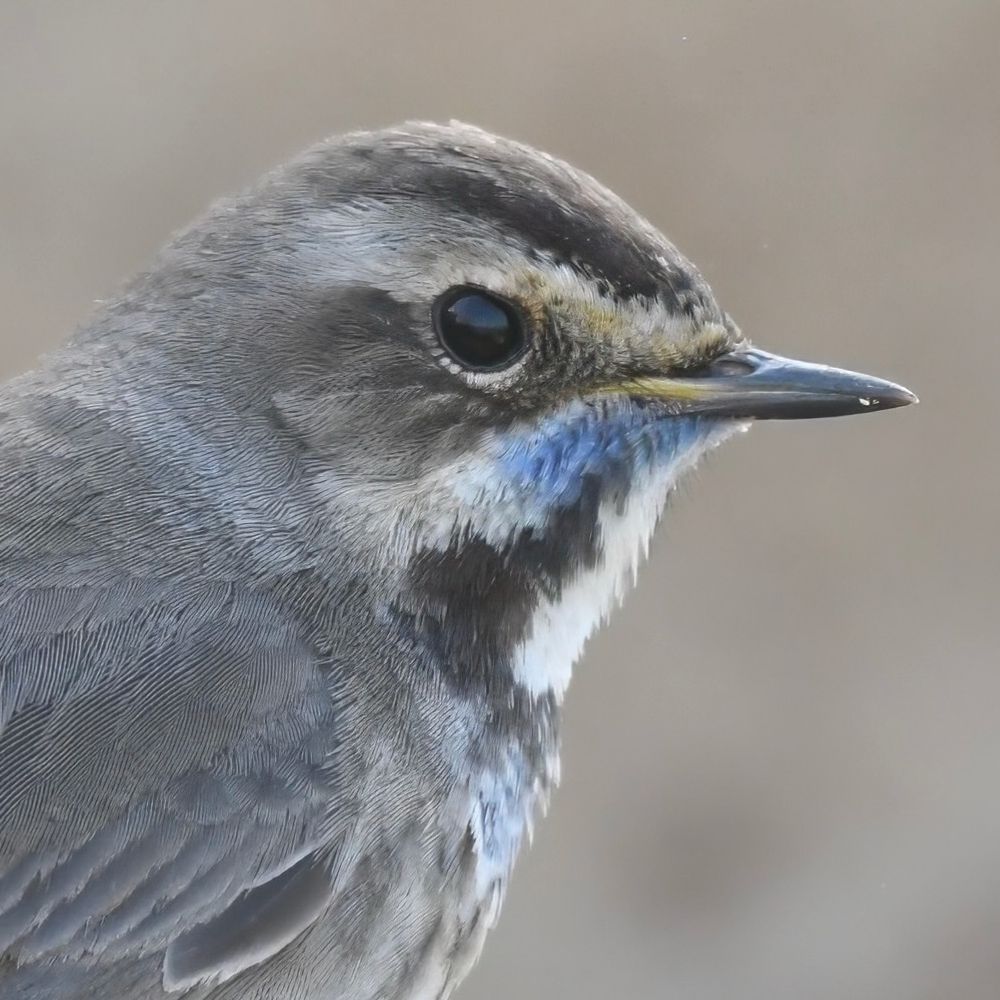
As far as I know, there are no confirmed breeding records of Black Redstart in Lothian, but this one at Torness doesn't look long out the nest. Thanks to @mattjsilk.bsky.social for putting me on to one of the strangest colour/pattern abnormalities I've seen - it's a House Martin! #BirdingLothian

Looks same as bird in Firth of Forth a few days ago
bsky.app/profile/norm...
Thought this was a leucistic bird due to dusky underwing from BOC shots but probable photo artefact and more likely to be an albino Sandwich Tern sw past Gullane Point this morning. (3 albinos ringed at Forvie NNR to date). Thanks to @lothianrecorder.bsky.social for info

Reposted by Matthew J. Silk

Thought this was a leucistic bird due to dusky underwing from BOC shots but probable photo artefact and more likely to be an albino Sandwich Tern sw past Gullane Point this morning. (3 albinos ringed at Forvie NNR to date). Thanks to @lothianrecorder.bsky.social for info

Reposted by Matthew J. Silk

🚨JOB alert🚨 Full-time Managing Editor role for @asab.org journal Animal Behaviour. Applicants must have animal #behaviour background; previous editorial experience would be ideal.
Apply by 31st July 2025.
#publishing #editor #job

More details: www.asab.org/opportunities

PLEASE share widely.
Opportunities — ASAB
www.asab.org
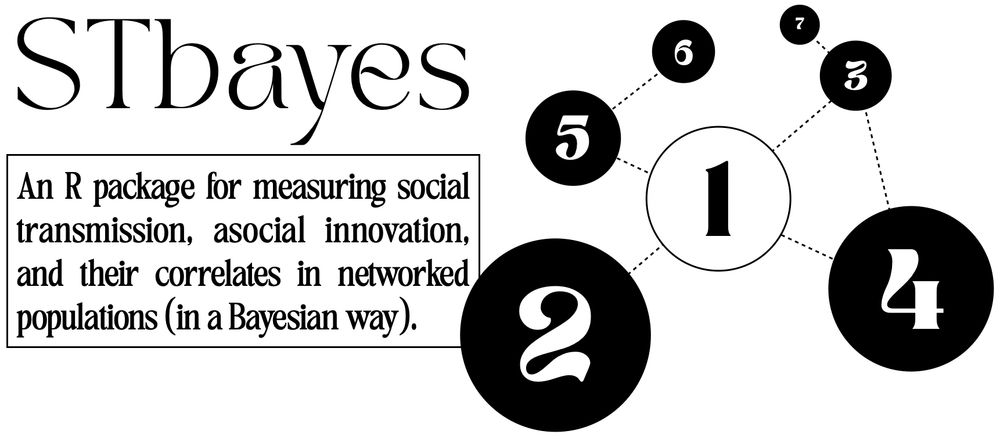
been a long time coming, there's now a preprint along with Will Hoppitt describing our new R package for creating, fitting and interpreting bayesian NBDA models (STBayes). www.biorxiv.org/content/10.1.... Documentation is here michaelchimento.github.io/STbayes/inde...

Reposted by Matthew J. Silk

Our paper on disentangling assortative mating and indirect genetic effects in empirical datasets has just been accepted in @jevbio.bsky.social ! It has been a long process (5 years in the making!) and I am very proud of the result 🥳
academic.oup.com/jeb/advance-...
Disentangling non-random assortment, indirect effects, and joint plasticity as causes of phenotypic (dis)similarity between social partners
Abstract. Social partners frequently resemble each other. These correlations between the phenotypes of interacting individuals (e.g. social partners, group
academic.oup.com

Reposted by Matthew J. Silk

New paper! I introduce mpmsim, an R package for simulating matrix population models (MPMs). Great for exploring life history, sampling error, and teaching population dynamics. Full docs + vignettes to get you started! doi.org/10.1111/2041...
mpmsim: An R package for simulating matrix population models
Matrix population models (MPMs) are widely used in ecology and evolution to explore population dynamics, including assessing management impacts and extinction risk. In comparative studies, MPMs ca...
doi.org