Professor Lisa Scullion
lisa-scullion.bsky.social
Professor Lisa Scullion
@lisa-scullion.bsky.social

Professor of Social Policy and Lead Professor for Social Sciences, University of Salford, UK. FAcSS

Public Health 33%
Political science 24%

Reposted by Lisa Scullion

🚨Major conference🚨

We're publishing a new book – combining analysis and policy work with in-depth conversations to understand the needs of lower income families – and hosting a major conference to discuss, with keynote speeches from Andy Burnham and Ken Murphy.

Register now➡️ buff.ly/2tG8LsY
End of working week but this article from @madeleinepower.bsky.socialn is a must-read. A plethora of names to describe 'food aid' conceals the reality they're all experienced as food banks, with the key fault line not *type* of provision but *demographic* factors www.cambridge.org/core/journal...
Free and equal? The realities of lived experiences of food aid in the UK | Journal of Social Policy | Cambridge Core
Free and equal? The realities of lived experiences of food aid in the UK
www.cambridge.org

Reposted by Lisa Scullion

"We actually have an unemployment problem in the UK now"

@gthwaites.bsky.social breaks down the latest data on the labour market ⤵️

Just spent a day in Whitby. Absolutely full of dogs. Every pub, cafe and tiny street. People carrying dogs up the steps to the Abbey. Just bonkers! Chatted to a lady working in a shop and she complained about the number of dogs (we left our dog at home because it’s just not a place for dogs!)

Avanti West Coast. Keeping the nation working. Said no one ever
I can’t envisage a child poverty strategy which garners any credibility without fully scrapping the two-child limit.

Unconvinced? Check out (even better share) this summary of the peer-reviewed evidence base @kittyjstewart.bsky.social @aaronreeves.bsky.social

largerfamilies.study/publications...
The two child limit and benefit cap are "economically inefficient" because [they] "undermine public health, early years development and educational outcomes.... This in turn increases pressure on local services, including schools, health and housing." www.lbc.co.uk/article/grou...
Group of 40 economists & academics tell Chancellor ending two-child benefit cap will help grow economy | LBC
With less than a month to go before the Budget, the group have written to Rachel Reeves to warn that more than half of larger families could fall into poverty as a direct result of the cap.
www.lbc.co.uk

Reposted by Lisa Scullion

The impact of freezing Local Housing Allowance varies widely across the country.

London has some of the largest gaps between LHA and market rents.

But shortfalls of at least £100 a month appear in every region.

Reposted by Lisa Scullion

🌟New: The Government would like to get more people who are currently on disability #benefits back to work.

But Catherine Hale‬ ‪(@catherinehale.bsky.social‬) argues that the labour market in its current state is not fit to accommodate disabled people wanting to return to #work.

#GetBritainWorking
Unlocking the workplace for disabled people – the case for Flex Plus jobs as a pathway to work - British Politics and Policy at LSE
The Government would like to get more people who are currently on disability benefits back to work. But Catherine Hale argues that the labour market in its current state is not fit to accommodate disa...
blogs.lse.ac.uk

😂🤣😂🤣😂🤣

Reposted by Lisa Scullion

"Building relationships of trust? The experiences of military veterans claiming ‘interface first’ Universal Credit" by @davidhjyoung.bsky.social @lisa-scullion.bsky.social Philip Martin, Celine Hynes, Joe Pardoe www.tandfonline.com/doi/full/10....
Building relationships of trust? The experiences of military veterans claiming ‘interface first’ Universal Credit
Trust is a central consideration when understanding the administration of social security benefits and interactions between the Department for Work and Pensions (DWP) and claimants, which is increa...
www.tandfonline.com

Reposted by Lisa Scullion

Amnesty warns DWP's use of AI and automation in welfare is harming disabled people and digitally excluded claimants.
DWP’s 'unhealthy' AI obsession is trapping people in poverty, Amnesty report finds
www.bigissue.com

Reposted by Lisa Scullion

The English Devolution and Community Empowerment Bill has made its debut in parliament. It promises to deliver a Community Right to Buy
A Community Right to Buy is a vital step to building a better Britain
www.bigissue.com

Reposted by Lisa Scullion

The DWP are advertising for a new intake of academic secondees. This is the role I'm currently doing - happy to talk to anyone about what it's like!
www.civilservicejobs.service.gov.uk/csr/jobs.cgi...
Quick Check Needed
www.civilservicejobs.service.gov.uk

Loved our perimenopause and parenting chat ❤️ thank you 🙏

Reposted by Lisa Scullion

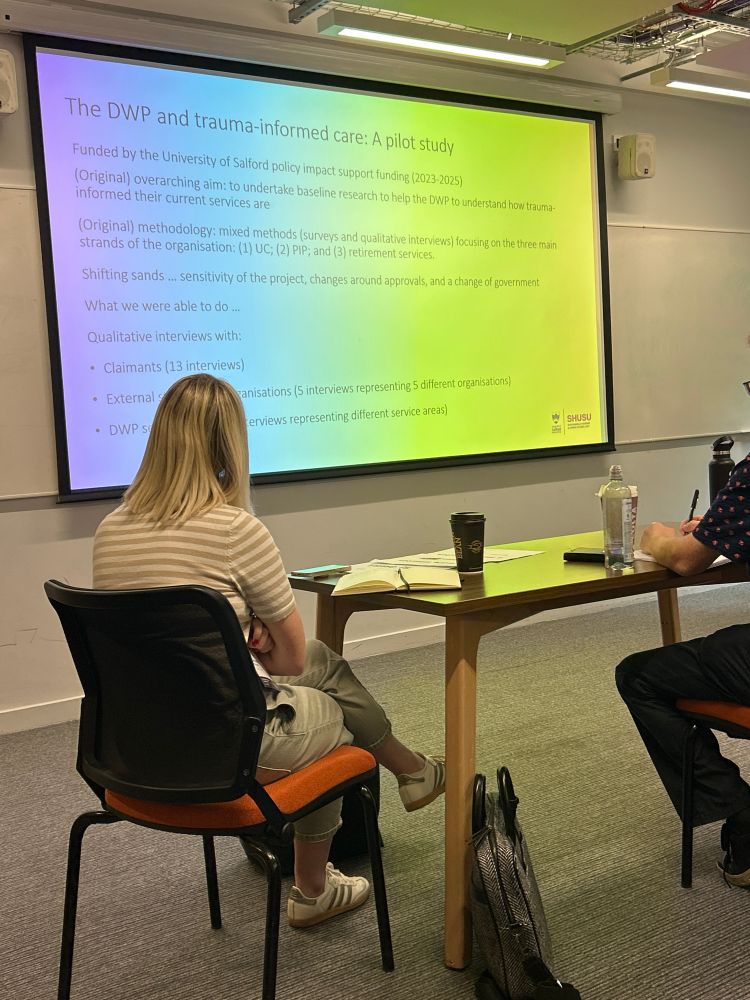
@lisa-scullion.bsky.social and colleagues have been working directly with DWP to try and understand how a trauma informed approach might inform their work. Vital and fascinating work < @easp-spa-2025.bsky.social >

Love this!

Reposted by Lisa Scullion

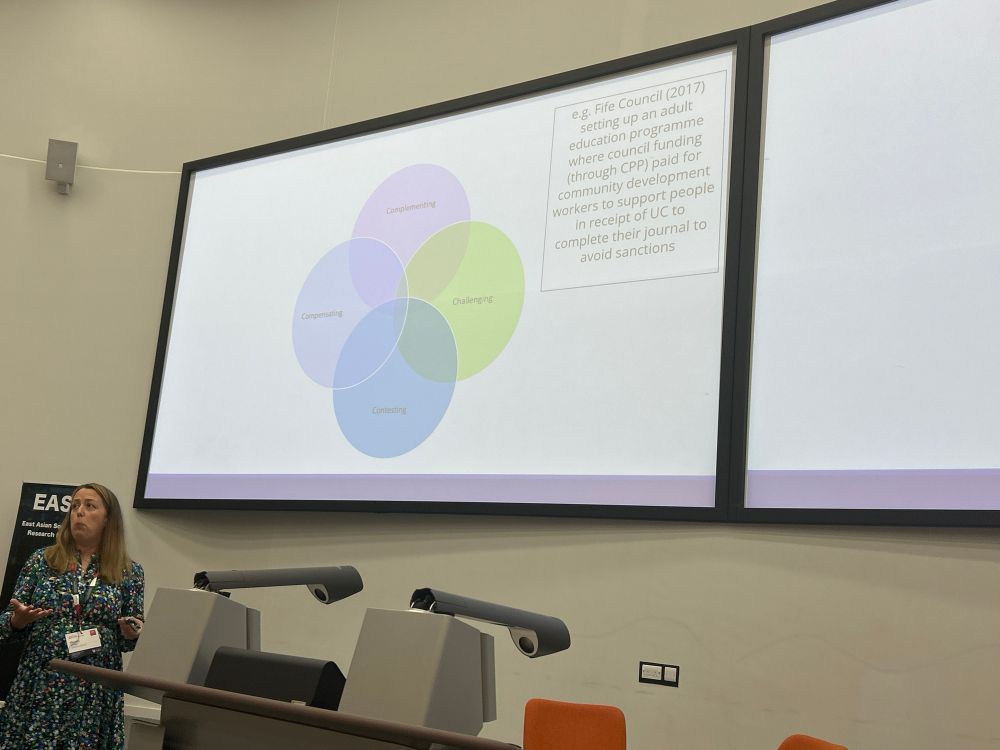
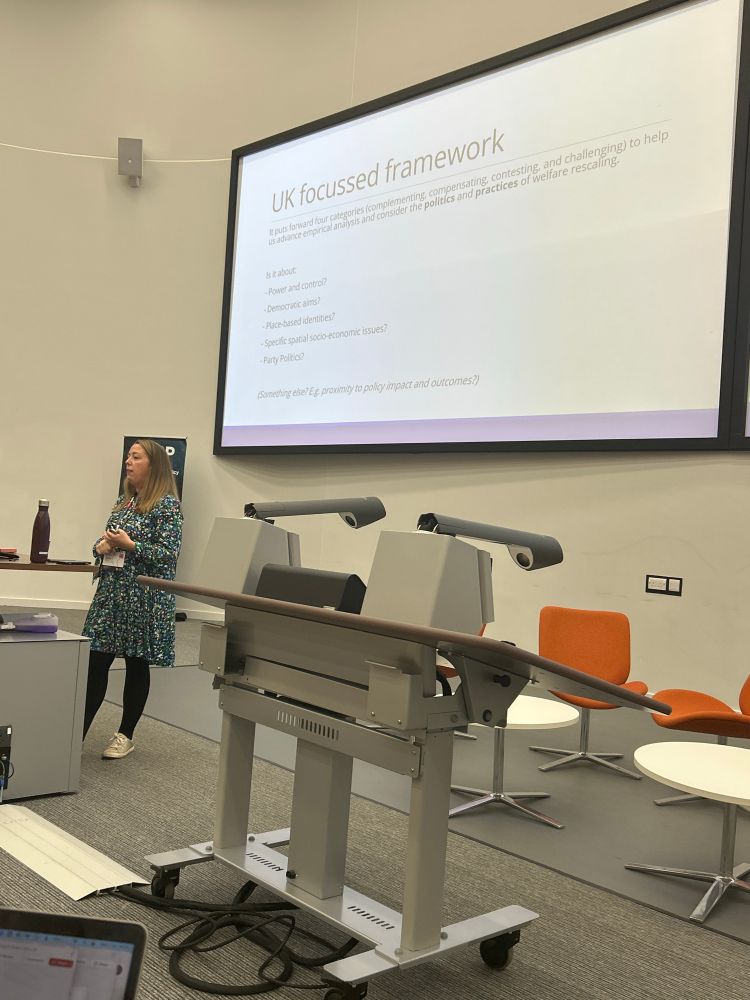
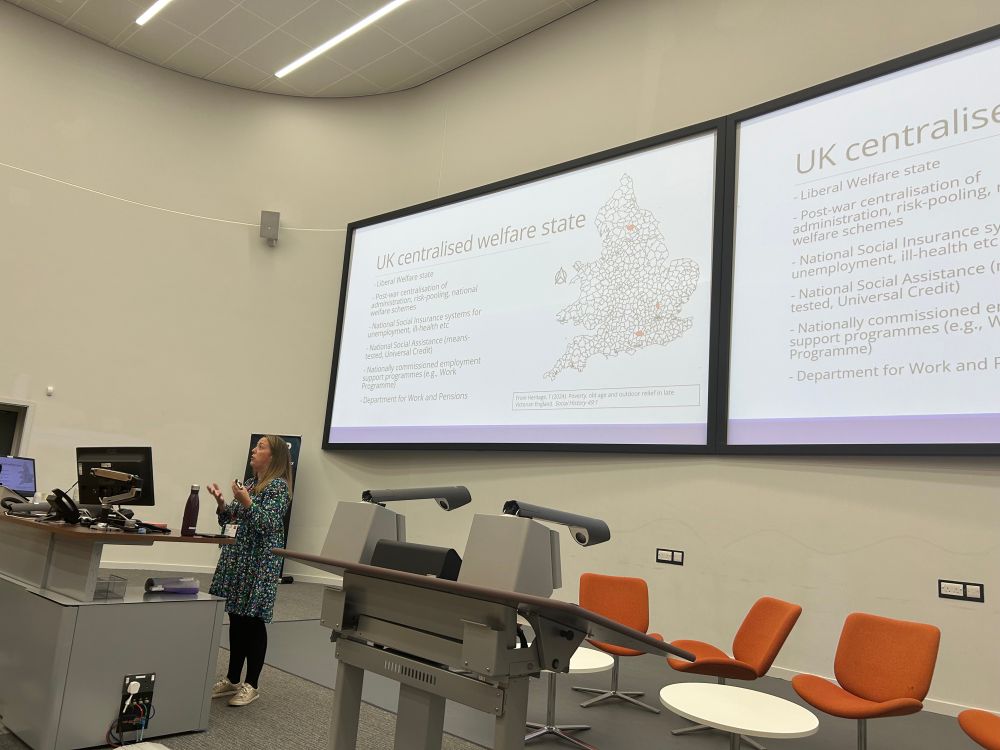
@haylesben.bsky.social identifies four key roles / ways of potentially understanding the roles local and devolved welfare play & notes they are not mutually exclusive - compensating, complementing, contesting, challenging (or inspiring)

Reposted by Lisa Scullion

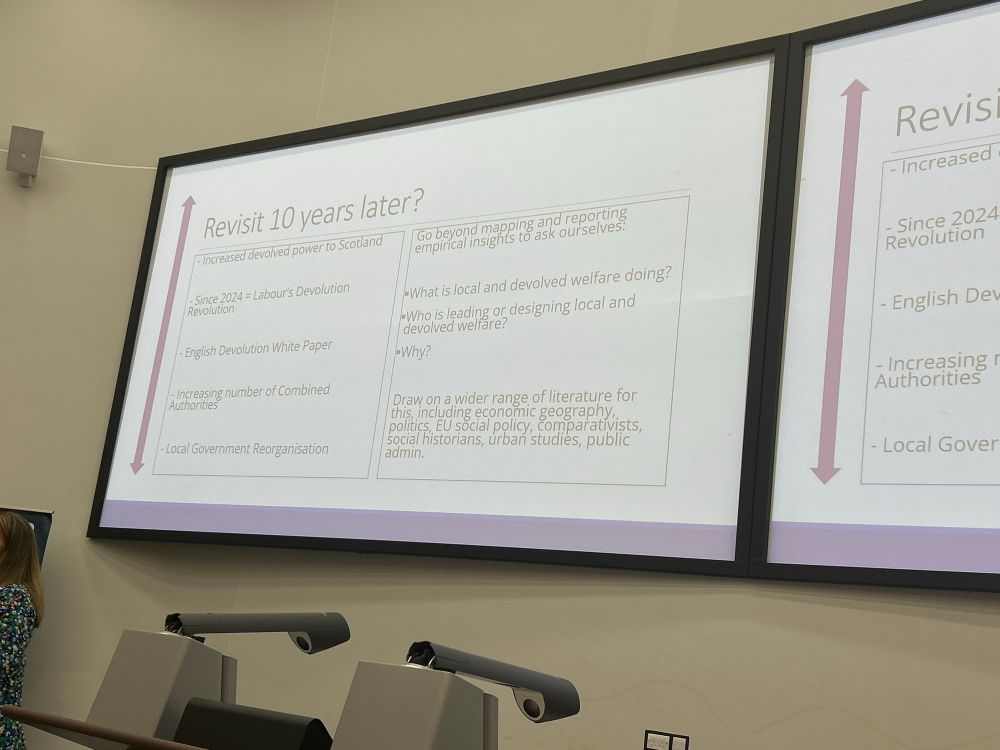
@haylesben.bsky.social is arguing that there is value in trying to develop a new conceptual framework to understand what is happening in the uk around the changing role of local and devolved welfare

Reposted by Lisa Scullion

Great to have @haylesben.bsky.social kicking off our @easp-spa-2025.bsky.social symposium , a chance to reflect on work we’ve been doing together on our @nuffieldfoundation.org @safety-nets.bsky.social project

🧵inciming

Reposted by Lisa Scullion

Been lots of debate about what might turn the dial on child poverty. But we hear far less from families in poverty. Our new briefing sets out a blueprint for a successful child poverty strategy, grounded in experiences of hardship

changingrealities.org/writings/get...

Pls read + share this 🧵
This autumn will see the publication of the first UK child poverty strategy in many years. It is a time-limited and vital opportunity to make real and lasting difference to the lives of the 4.5 million children currently living in poverty. In this new report, co-produced with IPPR, we set out a realistic and targeted agenda for change. Now is the time to take sustainable and effective action on child poverty, working with the everyday experiences of families who know what would make a difference to them and their lives.
changingrealities.org
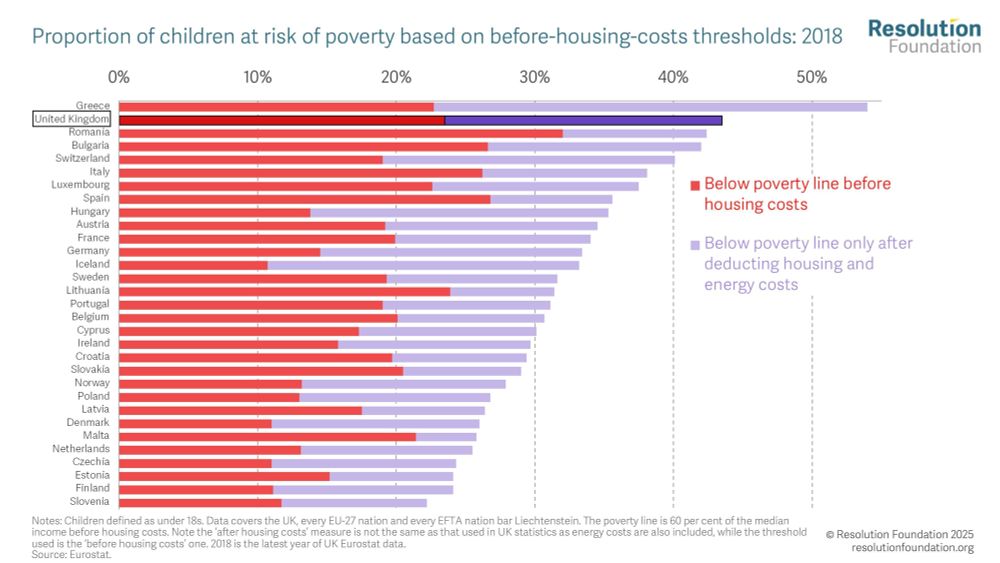
The UK is among the worst nations in Europe for child poverty.

In the UK, 11% of 15-year-olds reported they had skipped a meal in 2022 because there wasn't enough money to buy food.

In the Netherlands and Finland, this number was 3%.

Reposted by Lisa Scullion

I've been thinking for a while that we should be talking more about the "social determinants of work". David Kingsley has got there first; great piece naming "the social determinants of employability" - housing insecurity, digital exclusion, mental health, access to care www.myiep.uk/blogs-and-op...
Detached but Not Disengaged: Reframing Employability Practice Through Community-Rooted Youth Work - The Institute of Employability Professionals
28/05/2025
www.myiep.uk

Reposted by Lisa Scullion

Labour government policies have led to losses of more than £1bn from the HE sector since it came to power in July, new analysis suggests.

It comes as @politicshome.bsky.social understands there is concern in the sector over the direction of HE reforms

www.politicshome.com/news/article...
Universities Face Losing Over £1bn In Funding, The Sector Warns
Labour government policies have led to losses of more than £1bn from the higher education sector since it came to power, new analysis suggests.
www.politicshome.com

Reposted by Lisa Scullion

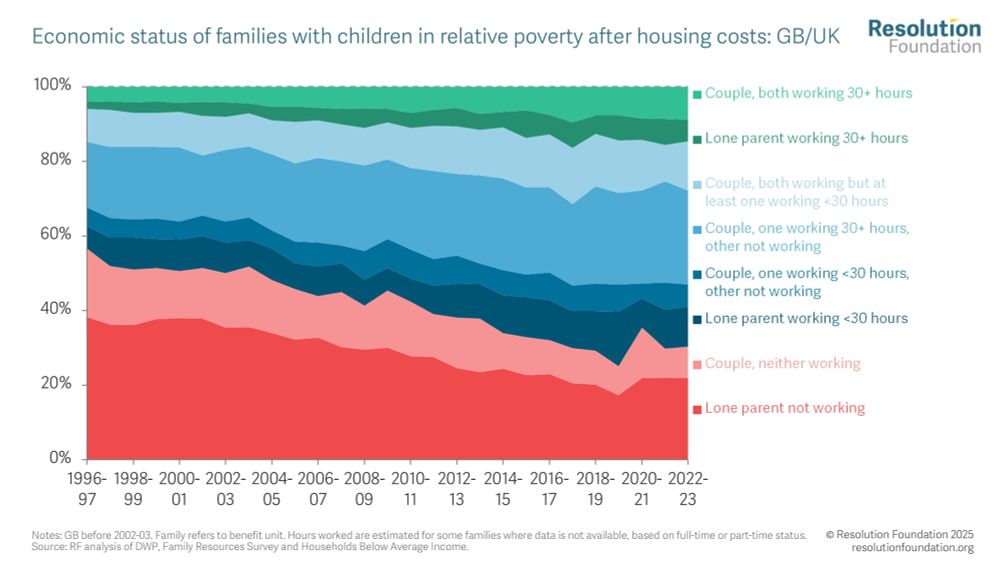
Work is an effective route out of poverty, but the landscape for parental employment has changed a lot since the mid-2000s.

The proportion of families with children in poverty who are in work has increased over recent decades; over seven in ten families in poverty already have someone in work.

Reposted by Lisa Scullion

Our new report on the Household Support Fund, part of the @safety-nets.bsky.social‬ project, is out today. It draws on analysis of HSF admin data and interviews with LAs and @changingrealities.bsky.social‬ participants to identify how the HSF can be improved in a long-term settlement /Thread
Renew and improve • Resolution Foundation
This briefing note, part of the Safety Nets project, assesses how the Household Support Fund could be improved in a longer-term settlement, through analysis of administrative data and interviews with ...
www.resolutionfoundation.org
We've published a new article "Claiming deservingness: The durability of social security claimant discourses during the Covid-19 pandemic"
journals.sagepub.com/doi/10.1177/...
@benbgeiger.bsky.social @lisa-scullion.bsky.social @davidhjyoung.bsky.social @danieledmiston.bsky.social

Reposted by Lisa Scullion

🔥📖 out today, shares firsthand accounts of how the childcare system is failing parents on a low-income and sets out co-produced recommendations for how it could be improved 🔥📖

changingrealities.org/writings/it-...

[Please read & share this short 🧵]
Looking after children is important and vital work; and it’s imperative that parents and carers have access to high quality and affordable childcare, both in order to support their children’s development and also to support them in their other forms of work: be it education, training, caring, or participation in the formal labour market. Recent years have seen a growing focus on the importance of improving the UK’s childcare offer, and we have seen a range of policy changes to try and improve what is provided and on what basis. This briefing sets out the experiences of parents and carers on a low income, and makes clear the distance that still needs to be travelled if we are to move to a situation in which all parents can access affordable and decent childcare provision. We share evidence of parents’ experiences and challenges around finding childcare that fits with working hours; systemic issues with affordability; and the pressing need to improve support for childcare through Universal Credit. There is also a need to improve childcare for children with Special Educational Needs and Disabilities (SEND), and to rethink how childcare support is made available during school holidays.
changingrealities.org

Reposted by Lisa Scullion