



Development of a prognostic RiskScore model using efferocytosis-related signature genes for lung adenocarcinoma @peerj.bsky.social
Development of a prognostic RiskScore model using efferocytosis-related signature genes for lung adenocarcinoma
Background
Lung adenocarcinoma (LUAD) has high incidence and mortality rates. Efferocytosis is involved in the progression of various cancers. The current work set out to develop a prognosis signature using efferocytosis-related genes (ERGs) for LUAD.
Methods
Public databases were accessed to obtain bulk and single-cell data of LUAD. Molecular subtyping of LUAD was performed using ConsensusClusterPlus, and efferocytosis-related candidate genes were screened by weighted gene co-expression network analysis (WGCNA) in combination with differential analysis. Subsequently, Least Absolute Shrinkage and Selection Operator (LASSO) regression was applied to construct a prognostic RiskScore model, followed by evaluating the relationship between the RiskScore, immune infiltration, and drug sensitivity. Single-cell transcriptomic profiling of LUAD was performed with the Seurat package to elucidate the cellular origins of the key genes. The expression and potential function of the representative genes were verified by reverse transcriptional quantitative polymerase chain reaction (qPCR) (RT-qPCR), Cell Counting Kit-8 (CCK-8), wound healing, and Transwell assays.
Results
Two molecular subtypes of LUAD with different outcomes and clinical features were identified. Candidate ERGs were mainly enriched in inflammatory and immune-related pathways. Subsequently, seven key genes (CD200R1, BTN2A2, STAP1, DNASE2B, SAMD9, SEMA7A, BIRC3) associated with efferocytosis in LUAD were identified to establish a RiskScore model, which exhibited high robustness in predicting patient prognosis. Notably, high-risk group had lower immune scores and more unfavorable prognosis than low-risk group. Moreover, eight drugs were closely linked to the RiskScore, and low-risk group was more sensitive to Doramapimod_1042. Single-cell atlas of LUAD showed that the prognostic ERGs were mainly expressed in mast cells. In vitro experiments revealed that most of the seven ERGs were overexpressed in LUAD cells, and that SEMA7A knockdown could suppress LUAD cell proliferation, migration and invasion.
Conclusions
Our results provided novel insights for the prognosis prediction and personalized treatment of LUAD.
dlvr.it
September 5, 2025 at 12:34 PM
Development of a prognostic RiskScore model using efferocytosis-related signature genes for lung adenocarcinoma @peerj.bsky.social

Myriad Genetics’ RiskScore, combining a polygenic risk score for all ancestries with the Tyrer-Cuzick model, was named a top 10 genomic medicine advance by the American Journal of Human Genetics. The study validated RiskScore’s accuracy, doubling breast cancer risk prediction vs Tyrer-Cuzick alone.

Myriad Genetics’ RiskScore Study Named One of the Top 10 Significant Advances in Genomic Medicine in American Journal of Human Genetics
Study Demonstrates RiskScore as a More Accurate Predictor of Breast Cancer Risk, Doubling Accuracy Compared to the Tyrer-Cuzick Model SALT LAKE CITY, Dec. 19, 2024 (GLOBE NEWSWIRE) -- Myriad Genetics,...
investor.myriad.com
December 20, 2024 at 5:59 AM
Myriad Genetics’ RiskScore, combining a polygenic risk score for all ancestries with the Tyrer-Cuzick model, was named a top 10 genomic medicine advance by the American Journal of Human Genetics. The study validated RiskScore’s accuracy, doubling breast cancer risk prediction vs Tyrer-Cuzick alone.

Drowning in vulnerabilities? Not all risks are equal.
A Risk Score helps prioritize what truly matters, based on exploitability, exposure, and impact. Smarter decisions. Faster remediation.
#CTOM #PerceptCTEM #Cybersecurity #RiskScore #ThreatExposure #InfoSec #Sequretek
A Risk Score helps prioritize what truly matters, based on exploitability, exposure, and impact. Smarter decisions. Faster remediation.
#CTOM #PerceptCTEM #Cybersecurity #RiskScore #ThreatExposure #InfoSec #Sequretek

August 7, 2025 at 1:04 PM
Drowning in vulnerabilities? Not all risks are equal.
A Risk Score helps prioritize what truly matters, based on exploitability, exposure, and impact. Smarter decisions. Faster remediation.
#CTOM #PerceptCTEM #Cybersecurity #RiskScore #ThreatExposure #InfoSec #Sequretek
A Risk Score helps prioritize what truly matters, based on exploitability, exposure, and impact. Smarter decisions. Faster remediation.
#CTOM #PerceptCTEM #Cybersecurity #RiskScore #ThreatExposure #InfoSec #Sequretek

#MYGN Myriad Genetics and CancerCARE for Life Announce Agreement to Advance Access to MyRisk with RiskScore Hereditary Cancer Test
https://www.stocktitan.net/news/MYGN/myriad-genetics-and-cancer-care-for-life-announce-agreement-to-l8fy1fnxtp4n.html
https://www.stocktitan.net/news/MYGN/myriad-genetics-and-cancer-care-for-life-announce-agreement-to-l8fy1fnxtp4n.html

Major Healthcare Partnership: Myriad's Advanced Cancer Risk Test Now Available to Million-Plus Patients
Myriad Genetics partners with INTERLINK's CancerCARE, bringing MyRisk hereditary cancer testing to over 1M members. Test screens 48 genes across 11 cancers with personalized risk assessment.
www.stocktitan.net
February 6, 2025 at 1:30 PM
#MYGN Myriad Genetics and CancerCARE for Life Announce Agreement to Advance Access to MyRisk with RiskScore Hereditary Cancer Test
https://www.stocktitan.net/news/MYGN/myriad-genetics-and-cancer-care-for-life-announce-agreement-to-l8fy1fnxtp4n.html
https://www.stocktitan.net/news/MYGN/myriad-genetics-and-cancer-care-for-life-announce-agreement-to-l8fy1fnxtp4n.html
#MYGN Myriad Genetics Announces RiskScore Study Published in JCO Precision Oncology
https://www.stocktitan.net/news/MYGN/myriad-genetics-announces-risk-score-study-published-in-jco-1x6tuq3tk8yk.html
https://www.stocktitan.net/news/MYGN/myriad-genetics-announces-risk-score-study-published-in-jco-1x6tuq3tk8yk.html
Myriad Genetics Announces RiskScore Study Published in JCO Precision Oncology
Myriad Genetics (NASDAQ: MYGN) announced the publication of a real-world study in JCO Precision Oncology demonstrating the effectiveness of their RiskScore® breast cancer risk assessment tool. The study showed that RiskScore predicted different risk levels than the Tyrer-Cuzick model for nearly 20% of patients. Notably, patients with ≥20% lifetime breast cancer risk identified by RiskScore were more likely to receive guidelines-aligned screening, including mammography, breast MRI, and genetic counseling.RiskScore, which is integrated into Myriad's MyRisk® Hereditary Cancer Test, combines a polygenic risk score (PRS) validated for all ancestries with the Tyrer-Cuzick model to predict five-year and remaining lifetime breast cancer risk. The study findings suggest that clinicians are effectively utilizing RiskScore results to make informed decisions about patient risk management and screening recommendations.
www.stocktitan.net
May 7, 2025 at 8:30 PM
#MYGN Myriad Genetics Announces RiskScore Study Published in JCO Precision Oncology
https://www.stocktitan.net/news/MYGN/myriad-genetics-announces-risk-score-study-published-in-jco-1x6tuq3tk8yk.html
https://www.stocktitan.net/news/MYGN/myriad-genetics-announces-risk-score-study-published-in-jco-1x6tuq3tk8yk.html

Happy to share the publication of our work in Lancet. "Developing a ‘proof-of-concept’ risk score to predict multimorbidity healthcare utilisation with poor air quality: a modelling study".
www.sciencedirect.com/science/arti...
#Lancet #AirQuality #AirPollution #RiskScore #health
www.sciencedirect.com/science/arti...
#Lancet #AirQuality #AirPollution #RiskScore #health

Developing a ‘proof-of-concept’ risk score to predict multimorbidity healthcare utilisation with poor air quality: a modelling study
Multimorbid patients are more likely to utilise healthcare when exposed to poor air quality. We aimed to develop and internally validate a proof-of-co…
www.sciencedirect.com
November 29, 2024 at 9:28 AM
Happy to share the publication of our work in Lancet. "Developing a ‘proof-of-concept’ risk score to predict multimorbidity healthcare utilisation with poor air quality: a modelling study".
www.sciencedirect.com/science/arti...
#Lancet #AirQuality #AirPollution #RiskScore #health
www.sciencedirect.com/science/arti...
#Lancet #AirQuality #AirPollution #RiskScore #health
🔐 Your Risk Score is more than a number, it’s your roadmap to stronger cybersecurity.
✔ Identify. ✔ Prioritize. ✔ Act fast.
👉 Check the carousel to see how it works.
#Cybersecurity #RiskScore #CyberResilience
✔ Identify. ✔ Prioritize. ✔ Act fast.
👉 Check the carousel to see how it works.
#Cybersecurity #RiskScore #CyberResilience
October 3, 2025 at 10:58 AM
🔐 Your Risk Score is more than a number, it’s your roadmap to stronger cybersecurity.
✔ Identify. ✔ Prioritize. ✔ Act fast.
👉 Check the carousel to see how it works.
#Cybersecurity #RiskScore #CyberResilience
✔ Identify. ✔ Prioritize. ✔ Act fast.
👉 Check the carousel to see how it works.
#Cybersecurity #RiskScore #CyberResilience

At Yeeld, we help merchants configure Stripe Radar - and the most common issue we see? Blocking legitimate customers with default rules.
Here's how we fix it 🧵http://bit.ly/3WseawE
#striperadar #fraud #fraudprevention #riskscore
Here's how we fix it 🧵http://bit.ly/3WseawE
#striperadar #fraud #fraudprevention #riskscore
October 28, 2025 at 4:29 PM
At Yeeld, we help merchants configure Stripe Radar - and the most common issue we see? Blocking legitimate customers with default rules.
Here's how we fix it 🧵http://bit.ly/3WseawE
#striperadar #fraud #fraudprevention #riskscore
Here's how we fix it 🧵http://bit.ly/3WseawE
#striperadar #fraud #fraudprevention #riskscore
Development of a relapse-related RiskScore model to predict the drug sensitivity and prognosis for patients with ovarian cancer @peerj.bsky.social
Development of a relapse-related RiskScore model to predict the drug sensitivity and prognosis for patients with ovarian cancer
Background
Ovarian cancer (OC) is a highly aggressive malignancy in the reproductive system of women, with a high recurrence rate. The present research was designed to establish a relapse-based RiskScore model to assess the drug sensitivity and prognosis for patients with OC.
Methods
Gene Expression Omnibus (GEO) and The Cancer Genome Atlas (TCGA) databases were accessed to obtain relevant sample data. The single-cell atlas of primary and relapse OC was characterized using the “Seurat” package. Differentially expressed genes (DEGs) between primary and relapse samples were identified by FindMarkers function. Subsequently, univariate Cox, least absolute shrinkage and selection operator (LASSO) and stepwise regression analysis were employed to determine independent prognostic genes related to relapse in OC to establish a RiskScore model. Applying “timeROC” package, the predictive performance of RiskScore model was assessed. Drug sensitivity of different risk groups was evaluated using “pRRophetic” package. The effects of relapse-related prognostic genes on OC cells were detected with in vitro assays.
Results
The single-cell atlas revealed that compared to primary OC, fibroblasts were reduced but epithelial cells were increased in relapse OC. Five prognostic genes (LDHA, NOP58, NMU, KRT19, and RPS23) independently linked to relapse in OC were identified to construct a RiskScore model, which showed high robustness in the prognostic prediction for OC patients. High-risk group tended to have worse outcomes in terms of different clinical features than the low-risk group. Further, six drugs (Vinorelbine, GW-2580, S-Trityl-L-cysteine, BI-2536, CP466722, NSC-87877) were found to be correlated with the RiskScore. While the high-risk group had higher IC50 values to these drugs, the low-risk group was more sensitive to the six drugs. In addition, KRT19 silencing markedly inhibited the invasion and migration of OC cells.
Conclusion
This study established a relapse-related RiskScore model based on five prognostic genes (LDHA, NOP58, NMU, KRT19, and RPS23), offering novel insights into the recurrence mechanisms in OC and contributing to the development of individualized treatment strategies.
dlvr.it
August 11, 2025 at 11:31 PM
Development of a relapse-related RiskScore model to predict the drug sensitivity and prognosis for patients with ovarian cancer @peerj.bsky.social

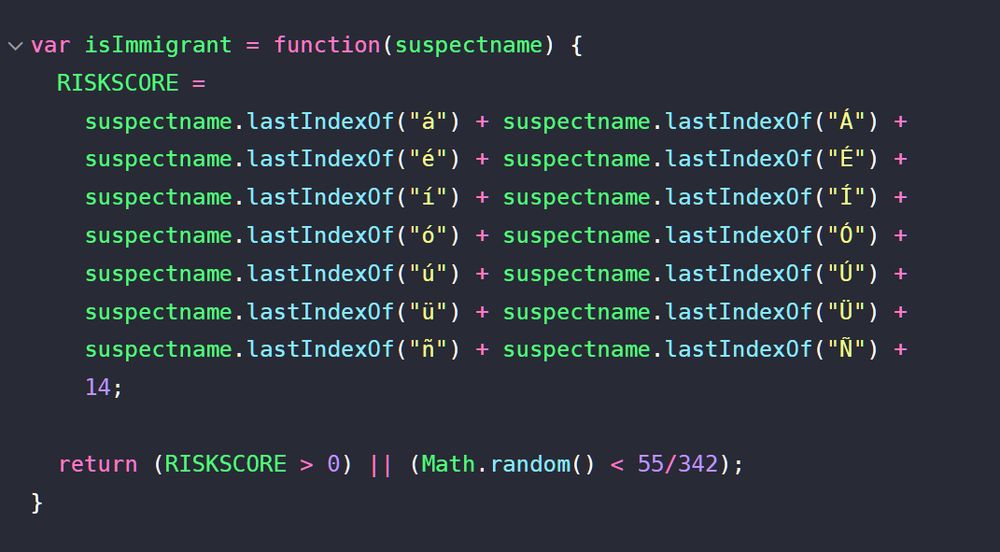
I found the code they're using.
August 27, 2025 at 6:48 PM
I found the code they're using.

👩0.3% 👨6.3%だった。重たすぎて将来の介護できないと伝えたらウォーキングに旅立って行った。食生活も変えないと意味ないよ🙃
www.ncgm.go.jp/riskscore/
www.ncgm.go.jp/riskscore/
糖尿病リスク予測ツール 第3版
健康診断の結果をもとに3年以内の糖尿病発症リスクを予測します。
www.ncgm.go.jp
August 7, 2024 at 1:52 PM
👩0.3% 👨6.3%だった。重たすぎて将来の介護できないと伝えたらウォーキングに旅立って行った。食生活も変えないと意味ないよ🙃
www.ncgm.go.jp/riskscore/
www.ncgm.go.jp/riskscore/

J'ai complété ce calculateur covidvisitrisk.com/fr/riskscore... (canadien) avec les informations disponibles sur le risque d'infection, et ça m'a évidemment donné un risque élevé.
Ca c'est la situation épidémique par la mesure des eaux usées ; en belle exponentielle. z8po.github.io/covid-wasted...
Ca c'est la situation épidémique par la mesure des eaux usées ; en belle exponentielle. z8po.github.io/covid-wasted...


June 24, 2025 at 12:02 PM
J'ai complété ce calculateur covidvisitrisk.com/fr/riskscore... (canadien) avec les informations disponibles sur le risque d'infection, et ça m'a évidemment donné un risque élevé.
Ca c'est la situation épidémique par la mesure des eaux usées ; en belle exponentielle. z8po.github.io/covid-wasted...
Ca c'est la situation épidémique par la mesure des eaux usées ; en belle exponentielle. z8po.github.io/covid-wasted...