



How do we measure #CO2 and #CH4 exchanges from alpine-Arctic #tundra #ecosystems...
... when the weather changes so fast? ⛅
Here is how, in a control plot and a passively warmed plot of a dry heath at #Latnjajaure field station, 100m a.s.l. near Abisko, Northern Sweden, on July 26th, 2025.
... when the weather changes so fast? ⛅
Here is how, in a control plot and a passively warmed plot of a dry heath at #Latnjajaure field station, 100m a.s.l. near Abisko, Northern Sweden, on July 26th, 2025.
October 15, 2025 at 1:07 PM
How do we measure #CO2 and #CH4 exchanges from alpine-Arctic #tundra #ecosystems...
... when the weather changes so fast? ⛅
Here is how, in a control plot and a passively warmed plot of a dry heath at #Latnjajaure field station, 100m a.s.l. near Abisko, Northern Sweden, on July 26th, 2025.
... when the weather changes so fast? ⛅
Here is how, in a control plot and a passively warmed plot of a dry heath at #Latnjajaure field station, 100m a.s.l. near Abisko, Northern Sweden, on July 26th, 2025.
How do we measure #CO2 and #CH4 exchanges from alpine-Arctic #tundra #ecosystems?
Here is how, in a control plot of a mesic meadow at #Latnjajaure field station, 1000m a.s.l. near Abisko, Northern Sweden, on July 25th, 2025.
Here is how, in a control plot of a mesic meadow at #Latnjajaure field station, 1000m a.s.l. near Abisko, Northern Sweden, on July 25th, 2025.
October 14, 2025 at 11:51 AM
How do we measure #CO2 and #CH4 exchanges from alpine-Arctic #tundra #ecosystems?
Here is how, in a control plot of a mesic meadow at #Latnjajaure field station, 1000m a.s.l. near Abisko, Northern Sweden, on July 25th, 2025.
Here is how, in a control plot of a mesic meadow at #Latnjajaure field station, 1000m a.s.l. near Abisko, Northern Sweden, on July 25th, 2025.

I also had the opportunity to give a more local perspective for @svtnyheter.bsky.social Norrbotten, featuring some great footage from our field station in #Latnjajaure.
www.svt.se/nyheter/loka...
www.svt.se/nyheter/loka...

Risken för bränder på kalfjällen ökar när klimatet blir varmare
Kan få konsekvenser för rennäringen
www.svt.se
July 8, 2025 at 6:01 AM
I also had the opportunity to give a more local perspective for @svtnyheter.bsky.social Norrbotten, featuring some great footage from our field station in #Latnjajaure.
www.svt.se/nyheter/loka...
www.svt.se/nyheter/loka...

We started the mark recapture project of florivores in Latnjajaure. Bombus lapponicus is so far the most common and truly beautiful but a species which previously was really rare at this elevation.

June 22, 2025 at 12:04 PM
We started the mark recapture project of florivores in Latnjajaure. Bombus lapponicus is so far the most common and truly beautiful but a species which previously was really rare at this elevation.
At the Vancouver #ITEX meeting we also had world premier for our #Latnjajaure ITEX 30 years anniversary movie. Well done Jonas Stenström at Untamed Science!
youtu.be/yu3-ZZRI58M?...
youtu.be/yu3-ZZRI58M?...
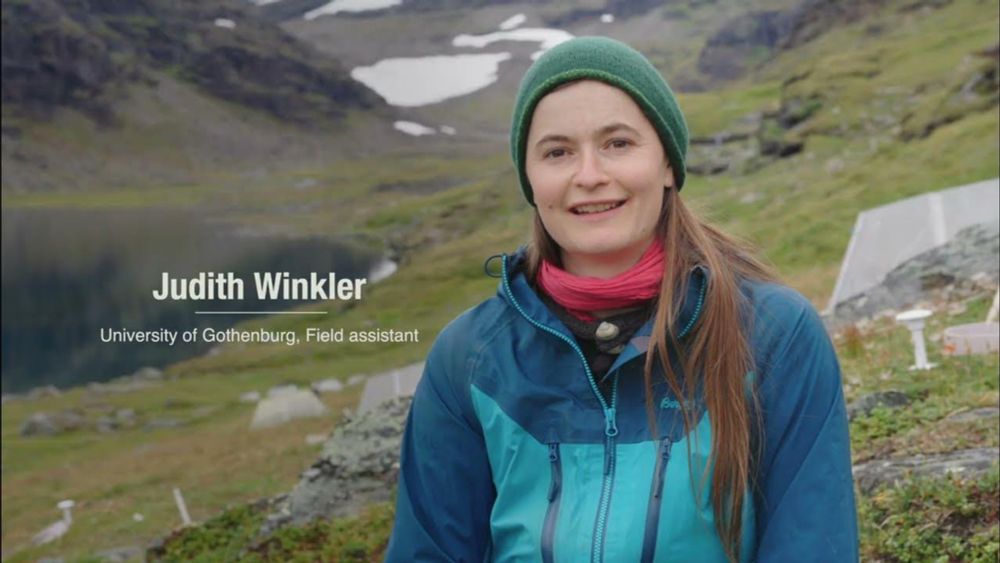
30 years of experimental warming and monitoring at Latnjajaure Field Station
Våra polar och alpina ekosystem förändras snabbt med den pågående klimatförändringen. Alpine and Polar Ecology at the University of Gothenburg (APE@GU) forsk...
youtu.be
April 11, 2024 at 6:06 PM
At the Vancouver #ITEX meeting we also had world premier for our #Latnjajaure ITEX 30 years anniversary movie. Well done Jonas Stenström at Untamed Science!
youtu.be/yu3-ZZRI58M?...
youtu.be/yu3-ZZRI58M?...
🚨Paper alert🚨 Our new paper in FEMS Microbiology Ecology is now is now published in a journal issue. We use soils from our ITEX warming experiment in Latnjajaure to investigate drought responses in microbial communities. Great lead by Ellen Fry, and collaboration with @frantecol.bsky.social
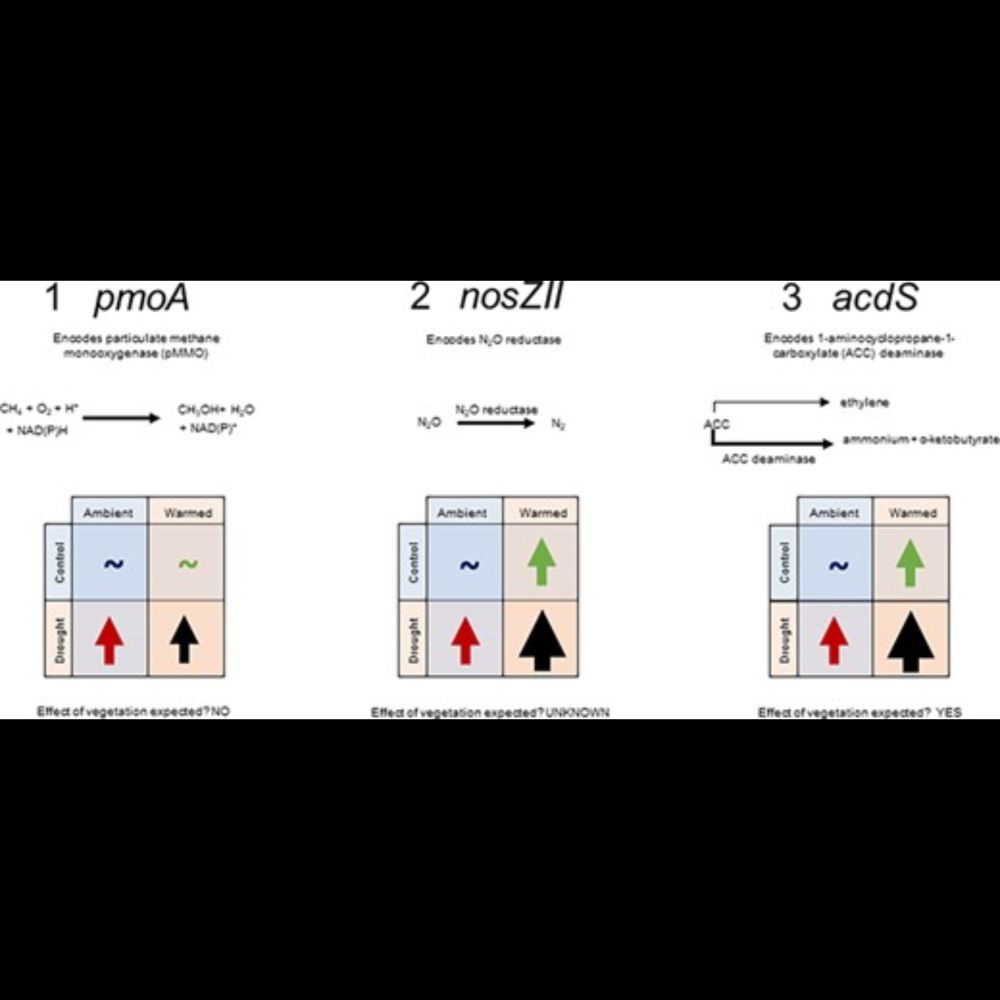
Vegetation type, not the legacy of warming, modifies the response of microbial functional genes and ...
Over Oro-Arctic and alpine regions, the legacy of warming is less important than vegetation type when determining the response of microbial functional genes to
academic.oup.com
December 5, 2023 at 7:22 AM
🚨Paper alert🚨 Our new paper in FEMS Microbiology Ecology is now is now published in a journal issue. We use soils from our ITEX warming experiment in Latnjajaure to investigate drought responses in microbial communities. Great lead by Ellen Fry, and collaboration with @frantecol.bsky.social