



As more data become available (since ERA5 data typically has about a one-week lag), we will be able to confirm more precisely how long this wave-7 resonant event persists.
July 2, 2025 at 12:12 AM
As more data become available (since ERA5 data typically has about a one-week lag), we will be able to confirm more precisely how long this wave-7 resonant event persists.
The meridional wind at 300 hPa—where planetary wave patterns are most clearly expressed—confirms the characteristic signature of a resonant wave-7 pattern, showing roughly seven alternating bands of northward (positive v) and southward (negative v) flow around the hemisphere.
July 2, 2025 at 12:12 AM
The meridional wind at 300 hPa—where planetary wave patterns are most clearly expressed—confirms the characteristic signature of a resonant wave-7 pattern, showing roughly seven alternating bands of northward (positive v) and southward (negative v) flow around the hemisphere.
Great summary! QRA has been detected for the period from June 16 to June 25, 2025, based on the best available data. During this time, there is a consistent increase in wave amplitude, reaching a peak of nearly 2 standard deviations.
July 2, 2025 at 12:12 AM
Great summary! QRA has been detected for the period from June 16 to June 25, 2025, based on the best available data. During this time, there is a consistent increase in wave amplitude, reaching a peak of nearly 2 standard deviations.
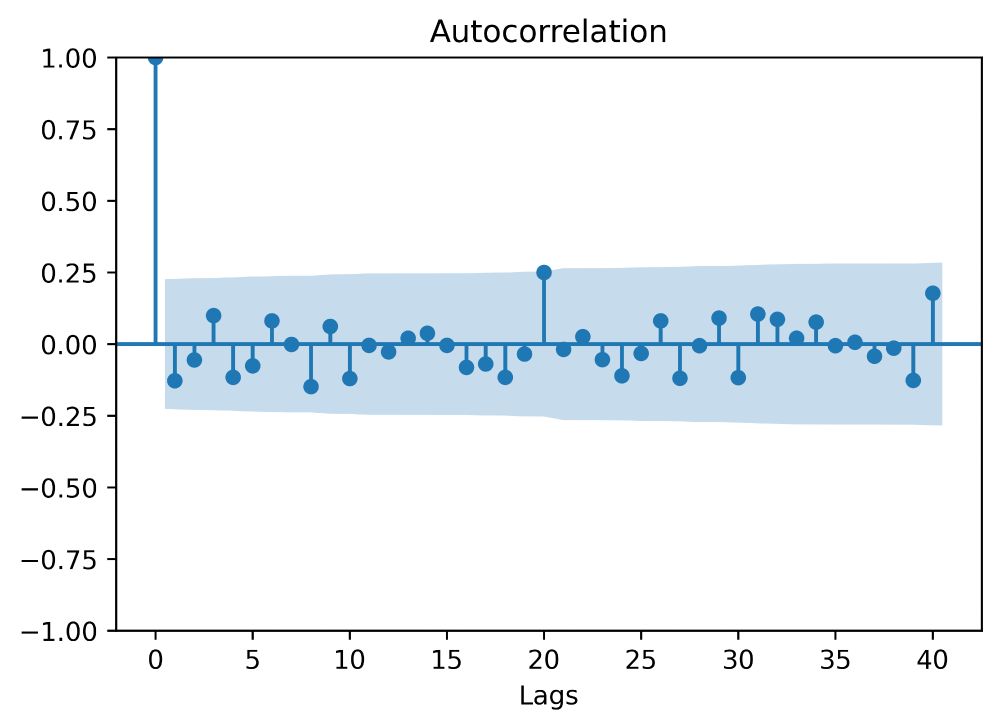
Thanks for pointing this out. The lag-one autocorrelation of the detrended annual series is -0.13 (see image below), well within the 95% confidence interval (shaded area), meaning that it’s not statistically different from zero.
June 22, 2025 at 3:17 AM
Thanks for pointing this out. The lag-one autocorrelation of the detrended annual series is -0.13 (see image below), well within the 95% confidence interval (shaded area), meaning that it’s not statistically different from zero.
Our findings inform our understanding of how a warming planet is reshaping atmospheric circulation—and how that reshaping is increasing the risk of destructive weather patterns around the world.
June 16, 2025 at 9:07 PM
Our findings inform our understanding of how a warming planet is reshaping atmospheric circulation—and how that reshaping is increasing the risk of destructive weather patterns around the world.
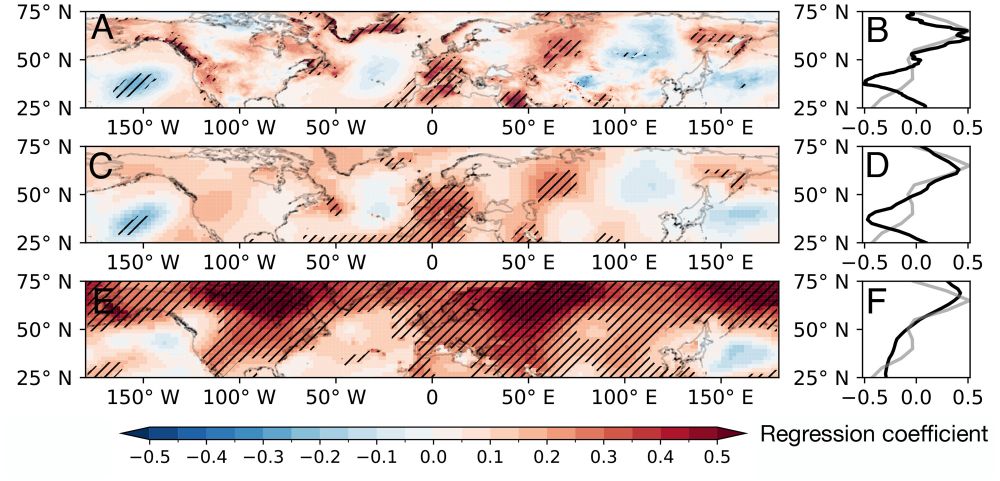
We also show that this is tied to the polar amplification of warming and increased land/ocean thermal contrast, both of which can be tied to human-caused climate change. These mechanisms appear to be enhancing the atmospheric conditions that favor planetary wave resonance.
June 16, 2025 at 9:07 PM
We also show that this is tied to the polar amplification of warming and increased land/ocean thermal contrast, both of which can be tied to human-caused climate change. These mechanisms appear to be enhancing the atmospheric conditions that favor planetary wave resonance.
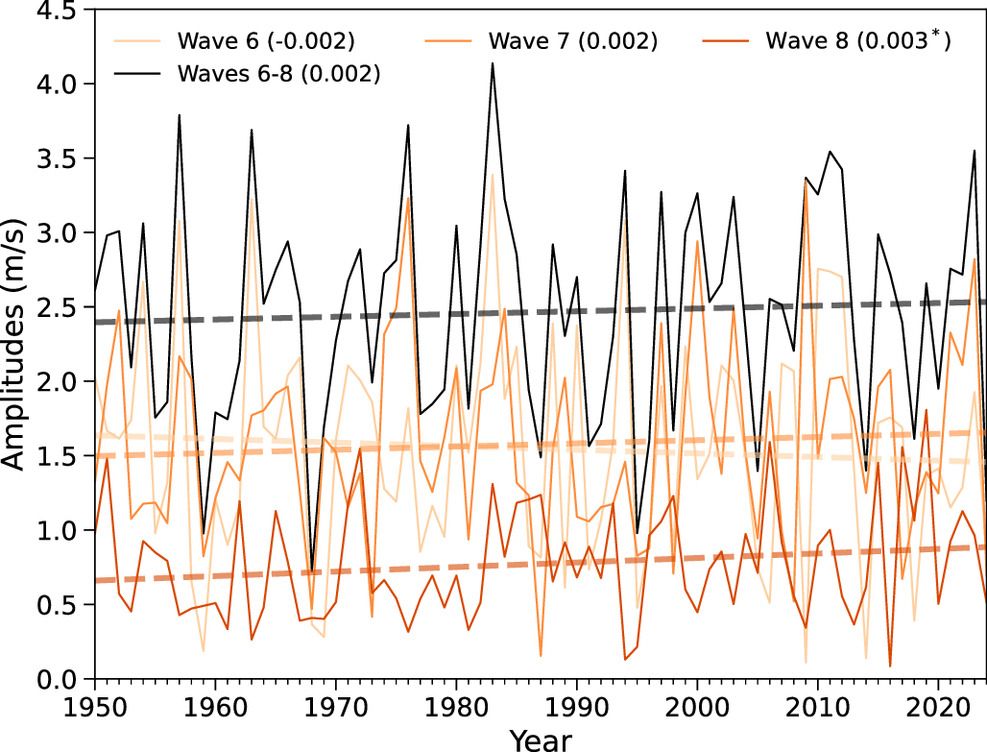
The substantial observed increase in resonance events is driven not by increases in wave activity but, rather, with increases in the joint occurrence of wave amplitude and phase conditions that support planetary wave resonance.
June 16, 2025 at 9:07 PM
The substantial observed increase in resonance events is driven not by increases in wave activity but, rather, with increases in the joint occurrence of wave amplitude and phase conditions that support planetary wave resonance.
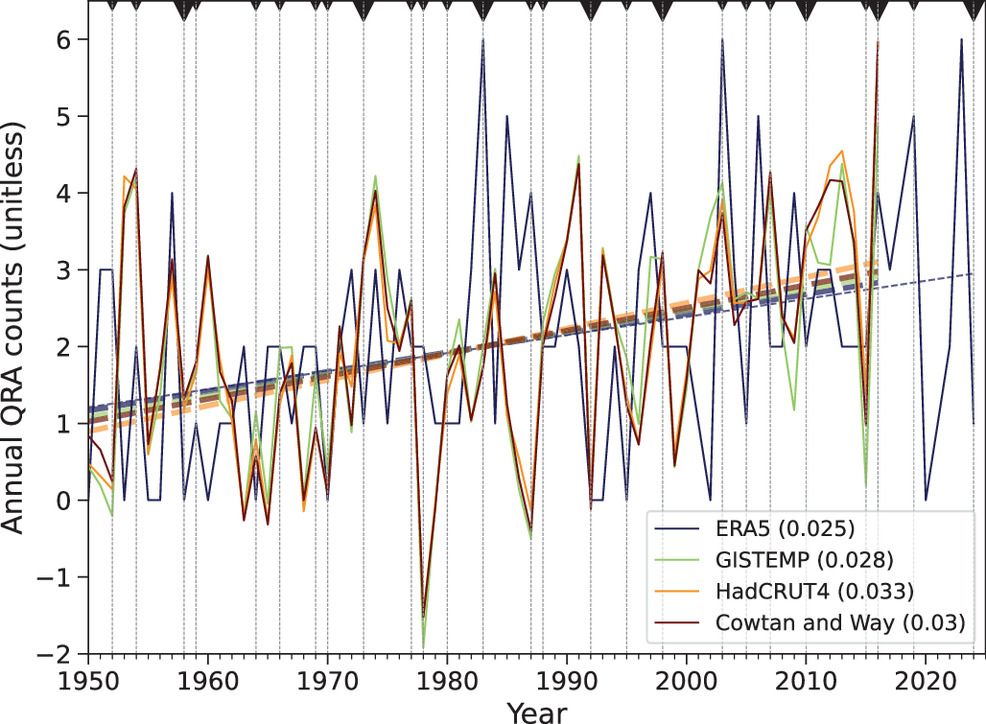
We found that the average number of resonance events per year has tripled since the advent of adequate upper atmospheric measurements in the mid-20th century, rising from about 1 event per year in 1950 to now about 3 per year.
June 16, 2025 at 9:07 PM
We found that the average number of resonance events per year has tripled since the advent of adequate upper atmospheric measurements in the mid-20th century, rising from about 1 event per year in 1950 to now about 3 per year.