



@wong417.bsky.social
Reposted

Happy birthday to our new open access paper 🥳
We argue for an early and strong influence of Javanese on Eastern Indonesian languages (including North Halmahera), which mostly has been overlooked so far in the literature.
evols.library.manoa.hawaii.edu/items/df11f5...
We argue for an early and strong influence of Javanese on Eastern Indonesian languages (including North Halmahera), which mostly has been overlooked so far in the literature.
evols.library.manoa.hawaii.edu/items/df11f5...
Reframing Pre-Modern Language Contact through Trade in Eastern Indonesia: Javanese Linguistic Influence in the Moluccas
In the pre-modern period, Java and Javanese traders were at the center of a complex web of regional and long-distance trade networks extending from India and China to New Guinea. In particular, the Ja...
evols.library.manoa.hawaii.edu
August 31, 2025 at 8:29 AM
Happy birthday to our new open access paper 🥳
We argue for an early and strong influence of Javanese on Eastern Indonesian languages (including North Halmahera), which mostly has been overlooked so far in the literature.
evols.library.manoa.hawaii.edu/items/df11f5...
We argue for an early and strong influence of Javanese on Eastern Indonesian languages (including North Halmahera), which mostly has been overlooked so far in the literature.
evols.library.manoa.hawaii.edu/items/df11f5...
New blog post abt diphthongisation in Cantonese
sinoxenic.wordpress.com/2025/04/26/c...
sinoxenic.wordpress.com/2025/04/26/c...

Cantonese diphthongisation
One of the principal defining sound changes of Cantonese is its conditioned breaking of the open rhymes /i u y/ into /ei ou øy/. This sound change was mainly determined by the preceding initial con…
sinoxenic.wordpress.com
April 25, 2025 at 4:42 PM
New blog post abt diphthongisation in Cantonese
sinoxenic.wordpress.com/2025/04/26/c...
sinoxenic.wordpress.com/2025/04/26/c...
Interesting #BookOfTheDay
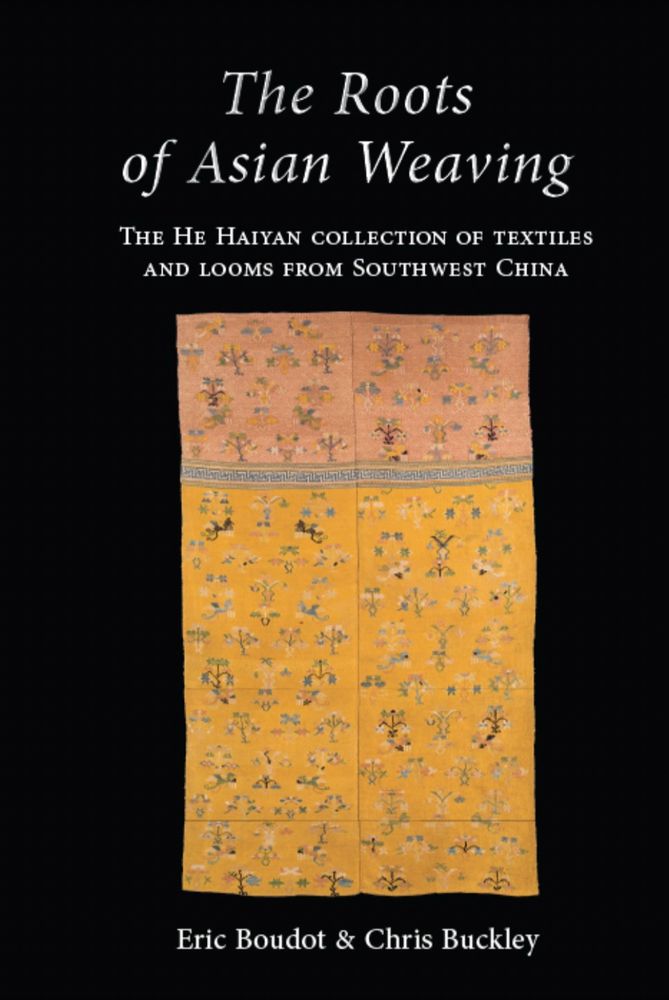
The roots of Asian weaving: the He Haiyan collection of textiles and looms from Southwest China by Eric Boudet & Chris Buckley
The roots of Asian weaving: the He Haiyan collection of textiles and looms from Southwest China by Eric Boudet & Chris Buckley
April 14, 2025 at 7:25 PM
Interesting #BookOfTheDay
The roots of Asian weaving: the He Haiyan collection of textiles and looms from Southwest China by Eric Boudet & Chris Buckley
The roots of Asian weaving: the He Haiyan collection of textiles and looms from Southwest China by Eric Boudet & Chris Buckley

#Irish ☘️🇮🇪☘️ word of the day: nathair /ˈn̪ˠa.həɾʲ/ “snake”, from OIr. nathir /ˈNa.θʲərʲ/ “snake”, ultimately from PIE *nH̥tr-ík-s “adder”
Despite Ireland famously not having any snakes, this lexeme managed to persist all the way from PIE down to the modern day
Despite Ireland famously not having any snakes, this lexeme managed to persist all the way from PIE down to the modern day
March 17, 2025 at 2:21 PM
#Irish ☘️🇮🇪☘️ word of the day: nathair /ˈn̪ˠa.həɾʲ/ “snake”, from OIr. nathir /ˈNa.θʲərʲ/ “snake”, ultimately from PIE *nH̥tr-ík-s “adder”
Despite Ireland famously not having any snakes, this lexeme managed to persist all the way from PIE down to the modern day
Despite Ireland famously not having any snakes, this lexeme managed to persist all the way from PIE down to the modern day
Wonder if there has been a more recent study in Tibetan fortition of /*j/ than Gong (1977)
Hill (2019) has a brief discussion on it but it only includes Li Fang-kuei’s law: *rj- > rgʲ- and not the other proposed sound laws in Gong: *sj- > skʲ- and ɣj- > ɣkʲ-
Hill (2019) has a brief discussion on it but it only includes Li Fang-kuei’s law: *rj- > rgʲ- and not the other proposed sound laws in Gong: *sj- > skʲ- and ɣj- > ɣkʲ-
February 21, 2025 at 1:31 PM
Wonder if there has been a more recent study in Tibetan fortition of /*j/ than Gong (1977)
Hill (2019) has a brief discussion on it but it only includes Li Fang-kuei’s law: *rj- > rgʲ- and not the other proposed sound laws in Gong: *sj- > skʲ- and ɣj- > ɣkʲ-
Hill (2019) has a brief discussion on it but it only includes Li Fang-kuei’s law: *rj- > rgʲ- and not the other proposed sound laws in Gong: *sj- > skʲ- and ɣj- > ɣkʲ-
Are you kidding me…
Hong Kong legco just passed a non-binding motion to “defend the one husband one wife, one man one woman framework of marriage” in the name of “protecting Chinese culture”
Hong Kong legco just passed a non-binding motion to “defend the one husband one wife, one man one woman framework of marriage” in the name of “protecting Chinese culture”

February 13, 2025 at 6:46 PM
Are you kidding me…
Hong Kong legco just passed a non-binding motion to “defend the one husband one wife, one man one woman framework of marriage” in the name of “protecting Chinese culture”
Hong Kong legco just passed a non-binding motion to “defend the one husband one wife, one man one woman framework of marriage” in the name of “protecting Chinese culture”
Wonder has there been a more recent study in Tibetan fortition of /*j/ than Gong (1977)
Hill (2019) has a brief discussion on it but it only includes Li Fang-kuei’s law: *rj- > rgʲ- and not the other proposed sound laws in Gong: *sj- > skʲ- and ɣj- > ɣkʲ-
Hill (2019) has a brief discussion on it but it only includes Li Fang-kuei’s law: *rj- > rgʲ- and not the other proposed sound laws in Gong: *sj- > skʲ- and ɣj- > ɣkʲ-
February 9, 2025 at 9:55 PM
Wonder has there been a more recent study in Tibetan fortition of /*j/ than Gong (1977)
Hill (2019) has a brief discussion on it but it only includes Li Fang-kuei’s law: *rj- > rgʲ- and not the other proposed sound laws in Gong: *sj- > skʲ- and ɣj- > ɣkʲ-
Hill (2019) has a brief discussion on it but it only includes Li Fang-kuei’s law: *rj- > rgʲ- and not the other proposed sound laws in Gong: *sj- > skʲ- and ɣj- > ɣkʲ-
#Tibetan word of the day:
√བྲེ √bri “to write”
This root is apparently related to the lexemes རིས ris and རི་མོ ri-mo, both “painting”
This root was apparently reformed from Old Tibetan √རི √ri based on analogy to the past and future stem
√བྲེ √bri “to write”
This root is apparently related to the lexemes རིས ris and རི་མོ ri-mo, both “painting”
This root was apparently reformed from Old Tibetan √རི √ri based on analogy to the past and future stem
February 6, 2025 at 10:04 PM
#Tibetan word of the day:
√བྲེ √bri “to write”
This root is apparently related to the lexemes རིས ris and རི་མོ ri-mo, both “painting”
This root was apparently reformed from Old Tibetan √རི √ri based on analogy to the past and future stem
√བྲེ √bri “to write”
This root is apparently related to the lexemes རིས ris and རི་མོ ri-mo, both “painting”
This root was apparently reformed from Old Tibetan √རི √ri based on analogy to the past and future stem