



Whitney Wells
@whitneywells.bsky.social
Social Epidemiologist in training | PhD Candidate at UCSF | Examining the impact of family support policies on health and health inequities

As the shutdown ends, the Republican megabill’s #SNAP cuts — the deepest cuts to food assistance in history — are starting to go into effect.
Millions of low-income people who just experienced delays & uncertainty during the shutdown are now at risk of losing SNAP permanently.
Millions of low-income people who just experienced delays & uncertainty during the shutdown are now at risk of losing SNAP permanently.
We've updated our analysis of the Republican megabill's #SNAP cuts based on new info from CBO this week.
Bottom line: About 4 million people, including 1 million kids, are projected to see their SNAP benefits cut substantially or terminated altogether.
Bottom line: About 4 million people, including 1 million kids, are projected to see their SNAP benefits cut substantially or terminated altogether.
November 13, 2025 at 8:51 PM
"More than 62 percent of SNAP participants are in families with children.
This is not a partisan issue. We urge USDA to make the right choice: Act immediately to ensure no child in this country has to go hungry."
This is not a partisan issue. We urge USDA to make the right choice: Act immediately to ensure no child in this country has to go hungry."
Millions of families should be looking forward to the holidays, not worrying about how to afford food. Hunger should never be used as a political playing piece – the Trump administration has the power to keep SNAP benefits intact, and must act now. frac.org/blog/usda-is...

USDA Is Choosing to Take Food Away from Children - Food Research & Action Center
Published October 30, 2025 Parents and teachers know that children can’t learn on an empty stomach. Yet that’s what they’re facing if the U.S. Department of Agriculture doesn’t act immediately to…
frac.org
November 8, 2025 at 6:02 PM
"More than 62 percent of SNAP participants are in families with children.
This is not a partisan issue. We urge USDA to make the right choice: Act immediately to ensure no child in this country has to go hungry."
This is not a partisan issue. We urge USDA to make the right choice: Act immediately to ensure no child in this country has to go hungry."
Reposted by Whitney Wells

The ongoing government shutdown and the major cuts to SNAP are devastating, but community groups and state politicians are stepping up to fill some of the gaps.
@eleanorjbader1.bsky.social 1
#SNAP #EBT #Hunger
progressive.org/latest/the-f...
@eleanorjbader1.bsky.social 1
#SNAP #EBT #Hunger
progressive.org/latest/the-f...

The Far-Reaching Impact of SNAP Cuts
The ongoing government shutdown and the major cuts to SNAP are devastating, but community groups and state politicians are stepping up to fill some of the gaps.
progressive.org
November 6, 2025 at 12:24 PM
The ongoing government shutdown and the major cuts to SNAP are devastating, but community groups and state politicians are stepping up to fill some of the gaps.
@eleanorjbader1.bsky.social 1
#SNAP #EBT #Hunger
progressive.org/latest/the-f...
@eleanorjbader1.bsky.social 1
#SNAP #EBT #Hunger
progressive.org/latest/the-f...
Reposted by Whitney Wells
#PaidLeaveForAll is a mental health solution. New research links access to state paid family leave with critical outcomes: less postpartum depression and more weeks of breastfeeding. Investing in paid leave is investing in the health of whole families. academic.oup.com/aje/advance-...

Effects of US state paid family leave policies on perinatal and postpartum health: a quasi-experimental analysis
Abstract. The United States is the only high-income country without a national paid family leave (PFL) policy, although several states have implemented pol
academic.oup.com
November 4, 2025 at 1:50 PM
#PaidLeaveForAll is a mental health solution. New research links access to state paid family leave with critical outcomes: less postpartum depression and more weeks of breastfeeding. Investing in paid leave is investing in the health of whole families. academic.oup.com/aje/advance-...
I study paid family leave - our research shows it reduces postpartum depression & supports breastfeeding. But looking at data hadn’t really prepared me for the fact that having a baby is TOUGH. When I gave birth I suddenly became one of my own statistics. Read my op-ed here.

Paid Family Leave Can Be a Lifeline
I study how paid family leave impacts the health of parents. When I gave birth, I became one of my own statistics.
progressive.org
October 23, 2025 at 3:21 PM
I study paid family leave - our research shows it reduces postpartum depression & supports breastfeeding. But looking at data hadn’t really prepared me for the fact that having a baby is TOUGH. When I gave birth I suddenly became one of my own statistics. Read my op-ed here.
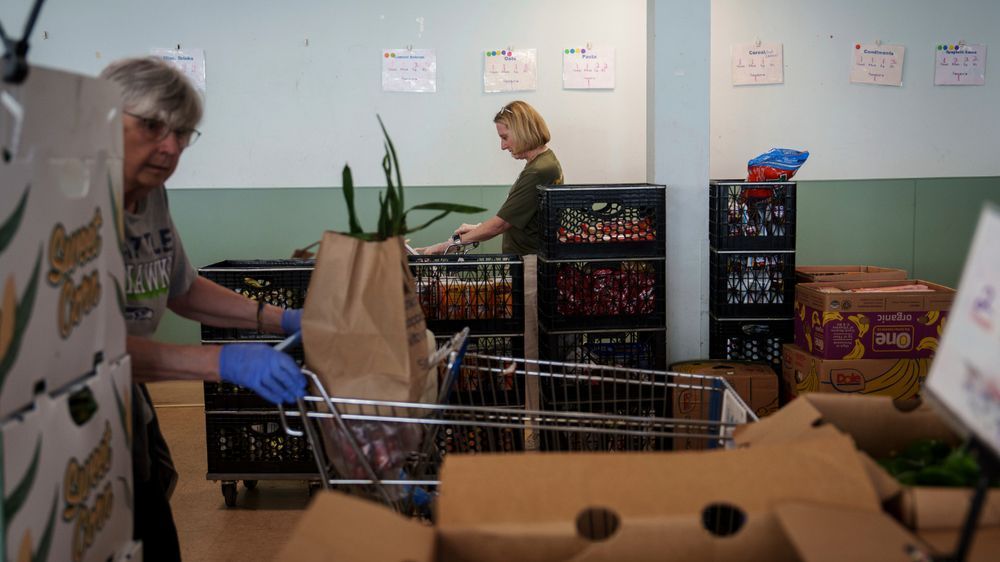
Monitoring is more important than ever amid cuts to SNAP. Research, including our own, shows changes to SNAP impact food insufficiency in the US.
Monitoring impacts lives. The op-ed points out these stats are "used by the major charitable food organizations to improve targeting of services."
Monitoring impacts lives. The op-ed points out these stats are "used by the major charitable food organizations to improve targeting of services."
PAA and Government Affairs Committee member Colleen Heflin, alongside colleagues, authored this op-ed piece in The Hill: Now is not the time to stop measuring food insecurity buff.ly/sFy8n7u
October 21, 2025 at 10:22 PM
Monitoring is more important than ever amid cuts to SNAP. Research, including our own, shows changes to SNAP impact food insufficiency in the US.
Monitoring impacts lives. The op-ed points out these stats are "used by the major charitable food organizations to improve targeting of services."
Monitoring impacts lives. The op-ed points out these stats are "used by the major charitable food organizations to improve targeting of services."
Our research shows Paid Family Leave improves the health of families in the U.S. The ability to take time off after giving birth shouldn't depend on what state you live in.
Congress can celebrate Work & Family Month by extending the ultimate lifeline to families across the country and finally making universal paid family and medical leave a federal right. Tell your reps: pass the FAMILY Act! takeaction.io/abb/tell-you...

October 21, 2025 at 9:57 PM
Our research shows Paid Family Leave improves the health of families in the U.S. The ability to take time off after giving birth shouldn't depend on what state you live in.
Reposted by Whitney Wells
Feel hopeless bc Congress and the President don’t care about families in your community? Send this report to your mayor and city council members!

The Potential of Local Child Tax Credits to Reduce Child Poverty
Local governments have a critical role to play in reducing child poverty. Local Child Tax Credits could provide large tax cuts to families at the bottom of the income scale, lessening the overall regr...
itep.org
October 10, 2025 at 12:33 PM
Feel hopeless bc Congress and the President don’t care about families in your community? Send this report to your mayor and city council members!
Returning from parental leave is the perfect time to present on the relationships between parenthood and health. tl;dr: parents rate worse on several cardiovascular risk factors and seem to face structural challenges maintaining cardiovascular health. @societyforepi.bsky.social

June 23, 2025 at 5:53 PM
Returning from parental leave is the perfect time to present on the relationships between parenthood and health. tl;dr: parents rate worse on several cardiovascular risk factors and seem to face structural challenges maintaining cardiovascular health. @societyforepi.bsky.social
Reposted by Whitney Wells
Our new study examines the long-term impact of exposure to different types of welfare programming in childhood on health in adulthood, based on welfare reform in the 1990s in the US: tinyurl.com/4ayt6vw3 with @ritahamad.bsky.social, Kelli Komro, & @douglivingston.bsky.social

February 26, 2025 at 6:17 PM
Our new study examines the long-term impact of exposure to different types of welfare programming in childhood on health in adulthood, based on welfare reform in the 1990s in the US: tinyurl.com/4ayt6vw3 with @ritahamad.bsky.social, Kelli Komro, & @douglivingston.bsky.social
Reposted by Whitney Wells

#SNAP cuts in the House budget resolution would take food assistance away from millions of low-income people from every state to help pay for tax cuts for the wealthy. Here’s the state-by-state impact: www.cbpp.org/research/foo...

Millions of Low-Income Households Would Lose Food Aid Under Proposed House Republican SNAP Cuts | Center on Budget and Policy Priorities
Substantial cuts to SNAP would mean households with low incomes in every state would lose support they need to put food on the table, worsening food insecurity and hardship.
www.cbpp.org
February 24, 2025 at 9:38 PM
#SNAP cuts in the House budget resolution would take food assistance away from millions of low-income people from every state to help pay for tax cuts for the wealthy. Here’s the state-by-state impact: www.cbpp.org/research/foo...
Reposted by Whitney Wells

Cutting SNAP is bad for American's health. Our recent paper showed how expiration of pandemic-era SNAP expansions increased food insufficiency and material hardship: www.healthaffairs.org/doi/suppl/10... @centeronbudget.bsky.social @epi.org @urbaninstitute.bsky.social @brookings.edu

February 12, 2025 at 4:55 PM
Cutting SNAP is bad for American's health. Our recent paper showed how expiration of pandemic-era SNAP expansions increased food insufficiency and material hardship: www.healthaffairs.org/doi/suppl/10... @centeronbudget.bsky.social @epi.org @urbaninstitute.bsky.social @brookings.edu
My MSc dissertation on differences by ethnicity in the health of unpaid carers in the UK is published! 🎉 @ucliehc.bsky.social
This was my first project in #SocialEpidemiology. I learned a lot about studying health disparities - both what to do and what not to do.
jech.bmj.com/content/79/2...
This was my first project in #SocialEpidemiology. I learned a lot about studying health disparities - both what to do and what not to do.
jech.bmj.com/content/79/2...

Differences by ethnicity in the association between unpaid caring and health trajectories over 10 years in the UK Household Longitudinal Study
Background Unpaid carers deliver critical social care. We aimed to examine differences by ethnicity in (1) profiles of unpaid caring and (2) associations between caring and physical and mental health ...
jech.bmj.com
January 22, 2025 at 12:15 AM
My MSc dissertation on differences by ethnicity in the health of unpaid carers in the UK is published! 🎉 @ucliehc.bsky.social
This was my first project in #SocialEpidemiology. I learned a lot about studying health disparities - both what to do and what not to do.
jech.bmj.com/content/79/2...
This was my first project in #SocialEpidemiology. I learned a lot about studying health disparities - both what to do and what not to do.
jech.bmj.com/content/79/2...
Reposted by Whitney Wells
"As the landscape of young caring evolves in response to global health crises like COVID-19, it becomes imperative for policymakers and support systems to adapt and provide robust assistance to this vulnerable group." New paper/blog from ICLS colleagues bit.ly/3OzGhWM @ukri.org

Covid and young carers – a double whammy?
For some time there has been concern about the mental and physical health effects of being a young carer. Research has shown these young people are more likely to come from lower income households…
childofourtimeblog.org.uk
December 2, 2024 at 10:23 AM
"As the landscape of young caring evolves in response to global health crises like COVID-19, it becomes imperative for policymakers and support systems to adapt and provide robust assistance to this vulnerable group." New paper/blog from ICLS colleagues bit.ly/3OzGhWM @ukri.org
Reposted by Whitney Wells

Delighted to share this publications from Whitney Well's MSc dissertation showing ethnic differences in the health of unpaid carers in the UK with @baowenxue.bsky.social and @rebeccalacey.bsky.social jech.bmj.com/content/79/2...
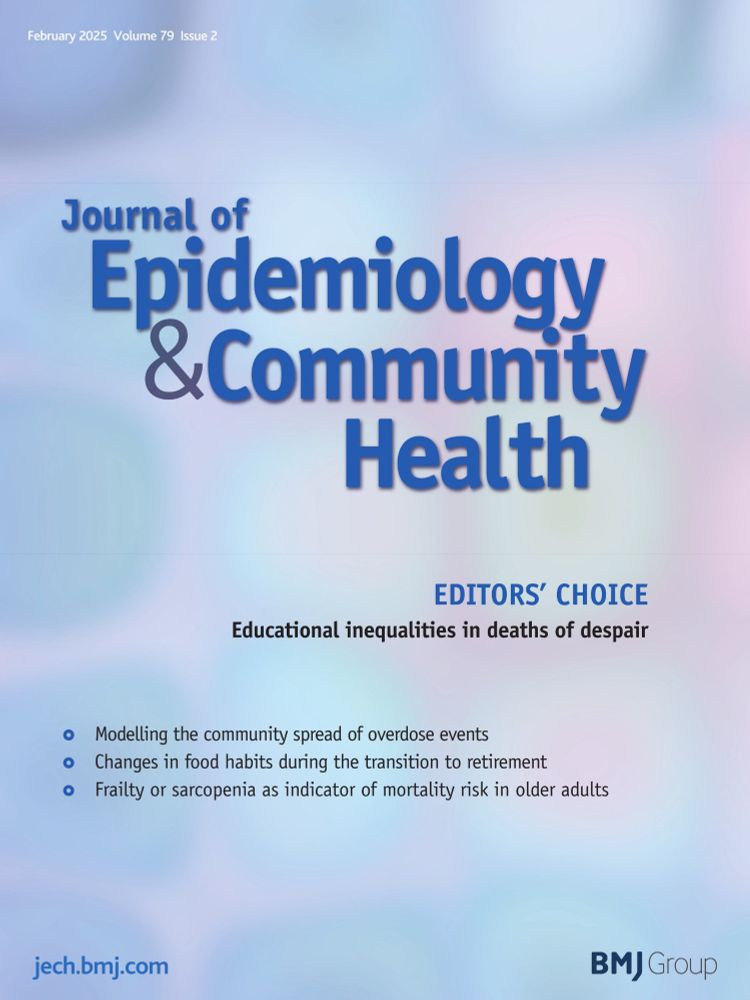
Differences by ethnicity in the association between unpaid caring and health trajectories over 10 years in the UK Household Longitudinal Study
Background Unpaid carers deliver critical social care. We aimed to examine differences by ethnicity in (1) profiles of unpaid caring and (2) associations between caring and physical and mental health ...
jech.bmj.com
January 13, 2025 at 12:14 PM
Delighted to share this publications from Whitney Well's MSc dissertation showing ethnic differences in the health of unpaid carers in the UK with @baowenxue.bsky.social and @rebeccalacey.bsky.social jech.bmj.com/content/79/2...
Reposted by Whitney Wells

“Using the most conservative estimates or the mean estimates from this literature, we estimate that every $1,000 investment in paid parental leave would generate, respectively, $7,275 or $29,406 in present discounted net social benefits.”

The Benefits and Costs of Paid Family Leave
Founded in 1920, the NBER is a private, non-profit, non-partisan organization dedicated to conducting economic research and to disseminating research findings among academics, public policy makers, an...
www.nber.org
December 27, 2024 at 5:48 PM
“Using the most conservative estimates or the mean estimates from this literature, we estimate that every $1,000 investment in paid parental leave would generate, respectively, $7,275 or $29,406 in present discounted net social benefits.”
Reposted by Whitney Wells
Our new paper systematically reviews studies that examined effects of social policies in the health literature. Many still use non-quasi-experimental methods that are not optimal for policy evaluation. rdcu.be/d4UWh
@mariaglymour.bsky.social @societyforepi.bsky.social @iaphs.bsky.social 1/
@mariaglymour.bsky.social @societyforepi.bsky.social @iaphs.bsky.social 1/

January 6, 2025 at 2:23 PM
Our new paper systematically reviews studies that examined effects of social policies in the health literature. Many still use non-quasi-experimental methods that are not optimal for policy evaluation. rdcu.be/d4UWh
@mariaglymour.bsky.social @societyforepi.bsky.social @iaphs.bsky.social 1/
@mariaglymour.bsky.social @societyforepi.bsky.social @iaphs.bsky.social 1/