



U of U's College of Science
@uofu-science.bsky.social
A team of math students ventured into the Arctic to explore how physics, biology, and mathematics shape life on and within sea ice. From braving –20°F wind chills to testing tools like the PlanktoScope, students gained rare hands-on experience connecting mathematical models with the real world.

Equations on ice - College of Science
Equations on Ice October 31, 2025 Above: Nash Ward, an undergraduate student in mathematics, drilling his first sea ice core. Credit: Nash Ward A trip...
science.utah.edu
November 24, 2025 at 4:54 PM
A team of math students ventured into the Arctic to explore how physics, biology, and mathematics shape life on and within sea ice. From braving –20°F wind chills to testing tools like the PlanktoScope, students gained rare hands-on experience connecting mathematical models with the real world.
Frontiers of Science is back! Come explore the mystery of dark matter with us on Dec. 3 with theoretical astrophysicist Katherine Freese in the new L. S. Skaggs Applied Science Building.
RSVP here: science.utah.edu/events/front...
RSVP here: science.utah.edu/events/front...

Frontiers of Science: Katherine Freese | College of Science
Frontiers of Science Lecture Series Presents The Mystery of Dark Matter in the Universe with Dr. Katherine Freese Director, Weinberg Institute for Theoretical Physics, University of Texas at Austin Ev...
science.utah.edu
November 20, 2025 at 5:33 PM
Frontiers of Science is back! Come explore the mystery of dark matter with us on Dec. 3 with theoretical astrophysicist Katherine Freese in the new L. S. Skaggs Applied Science Building.
RSVP here: science.utah.edu/events/front...
RSVP here: science.utah.edu/events/front...
Reposted by U of U's College of Science

🧪✨ Science Cafe is back! Get a taste of inspiring research happening right here in Utah at our informal, cafe-style talks.
🗓️ Nov. 12: Environmental science, geology, biological anthropology, & air quality science
In collaboration with @uofu-science.bsky.social. Learn more: bit.ly/444UItR
🗓️ Nov. 12: Environmental science, geology, biological anthropology, & air quality science
In collaboration with @uofu-science.bsky.social. Learn more: bit.ly/444UItR

November 10, 2025 at 10:46 PM
🧪✨ Science Cafe is back! Get a taste of inspiring research happening right here in Utah at our informal, cafe-style talks.
🗓️ Nov. 12: Environmental science, geology, biological anthropology, & air quality science
In collaboration with @uofu-science.bsky.social. Learn more: bit.ly/444UItR
🗓️ Nov. 12: Environmental science, geology, biological anthropology, & air quality science
In collaboration with @uofu-science.bsky.social. Learn more: bit.ly/444UItR
New NASA-funded research from Issaku Kohl (Department of Geology & Geophysics) shows oxygen in sulfate deposits could identify microbial activity in Earth's rock—and possibly on its planetary neighbor Mars.

Preserving atmospheric oxygen in sulfate | College of Science
Preserving atmospheric oxygen in sulfate October 22, 2025 New research led by U geoscientist shows O₂ in sulfate deposits, coupled with geochemical clues, could help identify microbial activity in Ear...
science.utah.edu
November 3, 2025 at 9:24 PM
New NASA-funded research from Issaku Kohl (Department of Geology & Geophysics) shows oxygen in sulfate deposits could identify microbial activity in Earth's rock—and possibly on its planetary neighbor Mars.
Atmospheric Sciences professor and associate chair Gannet Hallar has been elected as trustee to the UCAR board.
“UCAR allows for the atmospheric science community to speak with one voice, with expertise across the nation,” says Hallar.
Read more ⬇️
“UCAR allows for the atmospheric science community to speak with one voice, with expertise across the nation,” says Hallar.
Read more ⬇️
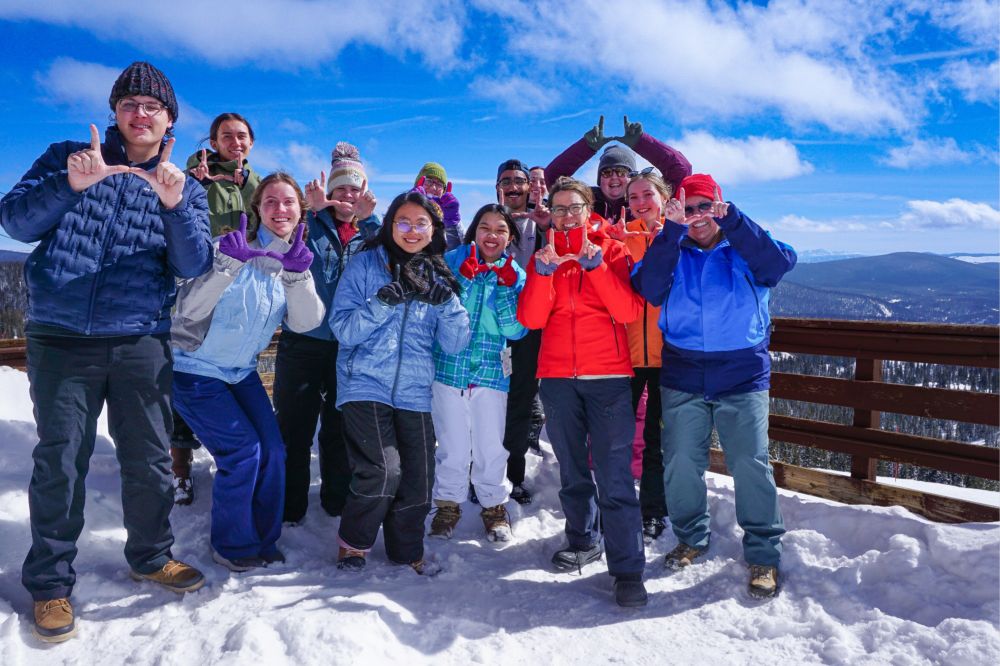
Hub For Earth System Sciences Amplifies Impact | College of Science
Hub For Earth System Sciences Amplifies Impact October 20, 2025 Above: The team at Storm Peak Laboratory, Colorado, which partners with UCAR. Atmospheric scientist Gannet Hallar elected as trustee t...
science.utah.edu
October 22, 2025 at 5:01 PM
Atmospheric Sciences professor and associate chair Gannet Hallar has been elected as trustee to the UCAR board.
“UCAR allows for the atmospheric science community to speak with one voice, with expertise across the nation,” says Hallar.
Read more ⬇️
“UCAR allows for the atmospheric science community to speak with one voice, with expertise across the nation,” says Hallar.
Read more ⬇️
College of Science faculty and researchers won three awards at the annual Innovation Awards. Check them out ⬇️
Startup of the Year: Trace AQ (Derek Mallia, Taylor (Kai) Wilmot)
Founders of the Year: Vahe Bandarian and Karsten Eastman (Sethera Therapeutics)
Lifetime Achievement Award: Bob Palais
Startup of the Year: Trace AQ (Derek Mallia, Taylor (Kai) Wilmot)
Founders of the Year: Vahe Bandarian and Karsten Eastman (Sethera Therapeutics)
Lifetime Achievement Award: Bob Palais

2025 Innovation Awards Recipients | College of Science
2025 Innovation Awards REcipients October 16, 2025 Above: On October 10, 2025 the University of Utah’ Technology Licensing Office announced the recipients of the third annual Innovation Awards. The aw...
science.utah.edu
October 21, 2025 at 9:01 PM
College of Science faculty and researchers won three awards at the annual Innovation Awards. Check them out ⬇️
Startup of the Year: Trace AQ (Derek Mallia, Taylor (Kai) Wilmot)
Founders of the Year: Vahe Bandarian and Karsten Eastman (Sethera Therapeutics)
Lifetime Achievement Award: Bob Palais
Startup of the Year: Trace AQ (Derek Mallia, Taylor (Kai) Wilmot)
Founders of the Year: Vahe Bandarian and Karsten Eastman (Sethera Therapeutics)
Lifetime Achievement Award: Bob Palais
Mathematics professor Fernando Guevara Vasquez teamed up with the John and Marcia Price College of Engineering to develop a new way of taking a high-definition snapshot that encodes spectral data into images, much like a traditional camera encodes color.

A novel high-speed, high-def hyperspectral video camera | College of Science
A novel high-speed, high-def hyperspectral video camera October 2, 2025 Above: Instead of a filter that divides light into three color channels, the University of Utah scientists have developed a diff...
science.utah.edu
October 20, 2025 at 6:42 PM
Mathematics professor Fernando Guevara Vasquez teamed up with the John and Marcia Price College of Engineering to develop a new way of taking a high-definition snapshot that encodes spectral data into images, much like a traditional camera encodes color.
The semi-annual IceCube Neutrino Collaboration took place at the U last week, bringing together an international group of scientists that use the Antarctica-based observatory to detect high-energy neutrinos from cosmic sources and to study dark matter, cosmic rays and neutrino properties.

Detecting the elusive neutrino in Antarctica | College of Science
Detecting the elusive neutrino in Antarctica October 8, 2025 Above: IceCube Lab, 2017 The U hosts the semi-annual IceCube Neutrino Collaboration Vivian O’Dell, Upgrade Project Director at the IceCube ...
science.utah.edu
October 16, 2025 at 6:54 PM
The semi-annual IceCube Neutrino Collaboration took place at the U last week, bringing together an international group of scientists that use the Antarctica-based observatory to detect high-energy neutrinos from cosmic sources and to study dark matter, cosmic rays and neutrino properties.
Distinguished Professor Thure Cerling has been awarded the Penrose Medal by the Geological Society of America. The GSA bestows medals and awards to recognize individuals who have made significant contributions to the geosciences.
Check out his work so far in 2025 ⬇️
Check out his work so far in 2025 ⬇️

Penrose Medalist Thure Cerling: A year of exceptional accomplishments | College of Science
Penrose Medalist Thure Cerling: A year of exceptional accomplishments October 9 2025 Above: Geoscientist Thure Cerling In a year of exceptional accomplishments Thure Cerling has been been awarded the ...
science.utah.edu
October 15, 2025 at 7:40 PM
Distinguished Professor Thure Cerling has been awarded the Penrose Medal by the Geological Society of America. The GSA bestows medals and awards to recognize individuals who have made significant contributions to the geosciences.
Check out his work so far in 2025 ⬇️
Check out his work so far in 2025 ⬇️
New research highlights Marquandomyces marquandii, a common soil fungus, as a promising material for biomedical applications.
Researchers found that this fungus can grow into hydrogels—soft, water-rich materials that mimic human tissues.
Researchers found that this fungus can grow into hydrogels—soft, water-rich materials that mimic human tissues.

Could a fungus provide a blueprint for next-gen hydrogels? | College of Science
Could a fungus provide a blueprint for next-gen hydrogels? October 3, 2025 Above: Steven Naleway, left, and Atul Agrawal examine a fungal culture growing in a liquid medium in Naleway’s lab at the Uni...
science.utah.edu
October 9, 2025 at 4:46 PM
New research highlights Marquandomyces marquandii, a common soil fungus, as a promising material for biomedical applications.
Researchers found that this fungus can grow into hydrogels—soft, water-rich materials that mimic human tissues.
Researchers found that this fungus can grow into hydrogels—soft, water-rich materials that mimic human tissues.
From U biochemists Ming Hammond and Madeline Bodin: the world's first single-dyed ratiometric biosensor for glycine imaging, "Golden Broccoli."

Breakthrough Biosensor Tracks Glycine in Living Cells | College of Science
Breakthrough Biosensor Tracks Glycine in Living Cells September 22, 2025 Above: The pop art-inspired illustration highlights a new light-up RNA aptamer called Golden Broccoli that was developed throug...
science.utah.edu
October 3, 2025 at 8:24 PM
From U biochemists Ming Hammond and Madeline Bodin: the world's first single-dyed ratiometric biosensor for glycine imaging, "Golden Broccoli."
"The second I open my door I hear a loud roar. The team runs back to our car, but the back door is still open. The bear tries its best to infiltrate. Luckily, our car horn scares it away."
Read more about Nathan Murphy's research experience in Turkey ⬇️
Read more about Nathan Murphy's research experience in Turkey ⬇️
September 29, 2025 at 5:50 PM
"The second I open my door I hear a loud roar. The team runs back to our car, but the back door is still open. The bear tries its best to infiltrate. Luckily, our car horn scares it away."
Read more about Nathan Murphy's research experience in Turkey ⬇️
Read more about Nathan Murphy's research experience in Turkey ⬇️
Incredible honor for @utah.edu Professor Emerita Phyllis Coley! The Smithsonian renamed a trail on Panama's Barro Colorado Island as the Phyllis D. Coley Trail, recognizing her 50+ years of groundbreaking research linking rainforest health to human health. science.utah.edu/biology/liss...

‘Greatest honor I could possibly receive’ | College of Science
'Greatest honor I could possibly receive' September 12, 2025 Above: Phyllis "Lissy" Coley at the newly named Phyllis D. Coley Trail on Barro Colorado Island, Panama. Credit: Jorge Aleman "I first went...
science.utah.edu
September 19, 2025 at 11:01 PM
Incredible honor for @utah.edu Professor Emerita Phyllis Coley! The Smithsonian renamed a trail on Panama's Barro Colorado Island as the Phyllis D. Coley Trail, recognizing her 50+ years of groundbreaking research linking rainforest health to human health. science.utah.edu/biology/liss...
Most celestial flashes of gamma rays usually last just milliseconds to minutes. A recent event, unlike anything witnessed before, lasted about a day.

Mysterious gamma-ray explosion unlike any discovered before | College of Science
Mysterious gamma-ray explosion unlike any discovered before September 11, 2025 Above: The orange dot at the center is the powerful explosion that repeated several times over the course of a day. Credi...
science.utah.edu
September 17, 2025 at 8:59 PM
Most celestial flashes of gamma rays usually last just milliseconds to minutes. A recent event, unlike anything witnessed before, lasted about a day.
Reposted by U of U's College of Science

A molecule that enables microbes to eat methane: read the story from attheU highlighting our chemists' discovery of critical steps bacteria take to oxidize potent greenhouse gas and how they interact in larger microbial communities.
attheu.utah.edu/research/a-m...
attheu.utah.edu/research/a-m...

A molecule that enables microbes to eat methane - @theU
U chemists discover critical steps bacteria take to oxidize potent greenhouse gas and how they interact in larger microbial communities.
attheu.utah.edu
September 11, 2025 at 4:10 PM
A molecule that enables microbes to eat methane: read the story from attheU highlighting our chemists' discovery of critical steps bacteria take to oxidize potent greenhouse gas and how they interact in larger microbial communities.
attheu.utah.edu/research/a-m...
attheu.utah.edu/research/a-m...
The explosion of animal life in Earth’s oceans half a billion years ago during and after the Cambrian Period is commonly attributed to a substantial rise of free oxygen (O2) in seawater.
New research reveals that O2 levels rose and fell long after marine animals appeared.
New research reveals that O2 levels rose and fell long after marine animals appeared.

Oxygen came late to ocean depths during Paleozoic | College of Science
Oxygen came late to ocean depths during Paleozoic September 4, 2025 Thallium isotopes show O2 levels rose and fell at the ocean floor long after marine animals appeared and diversified half billion ye...
science.utah.edu
September 11, 2025 at 5:25 PM
The explosion of animal life in Earth’s oceans half a billion years ago during and after the Cambrian Period is commonly attributed to a substantial rise of free oxygen (O2) in seawater.
New research reveals that O2 levels rose and fell long after marine animals appeared.
New research reveals that O2 levels rose and fell long after marine animals appeared.
The National Science Foundation's CAREER program finds talented researchers and gives them funding to expedite their career growth.
Mathematics's Anna Little was among those announced as recipients of the $550,000 prize. Little’s work uses geometric methods for high-dimensional data analysis.
Mathematics's Anna Little was among those announced as recipients of the $550,000 prize. Little’s work uses geometric methods for high-dimensional data analysis.

Anna Little: Above the Noise | College of Science
Anna LIttle: Above the Noise August 13, 2025 Above: Anna Little, awardee of the NSF Career Grant In the constant chaotic communication of the modern day it is vitally important to find promising indiv...
science.utah.edu
September 10, 2025 at 5:19 PM
The National Science Foundation's CAREER program finds talented researchers and gives them funding to expedite their career growth.
Mathematics's Anna Little was among those announced as recipients of the $550,000 prize. Little’s work uses geometric methods for high-dimensional data analysis.
Mathematics's Anna Little was among those announced as recipients of the $550,000 prize. Little’s work uses geometric methods for high-dimensional data analysis.
Reposted by U of U's College of Science
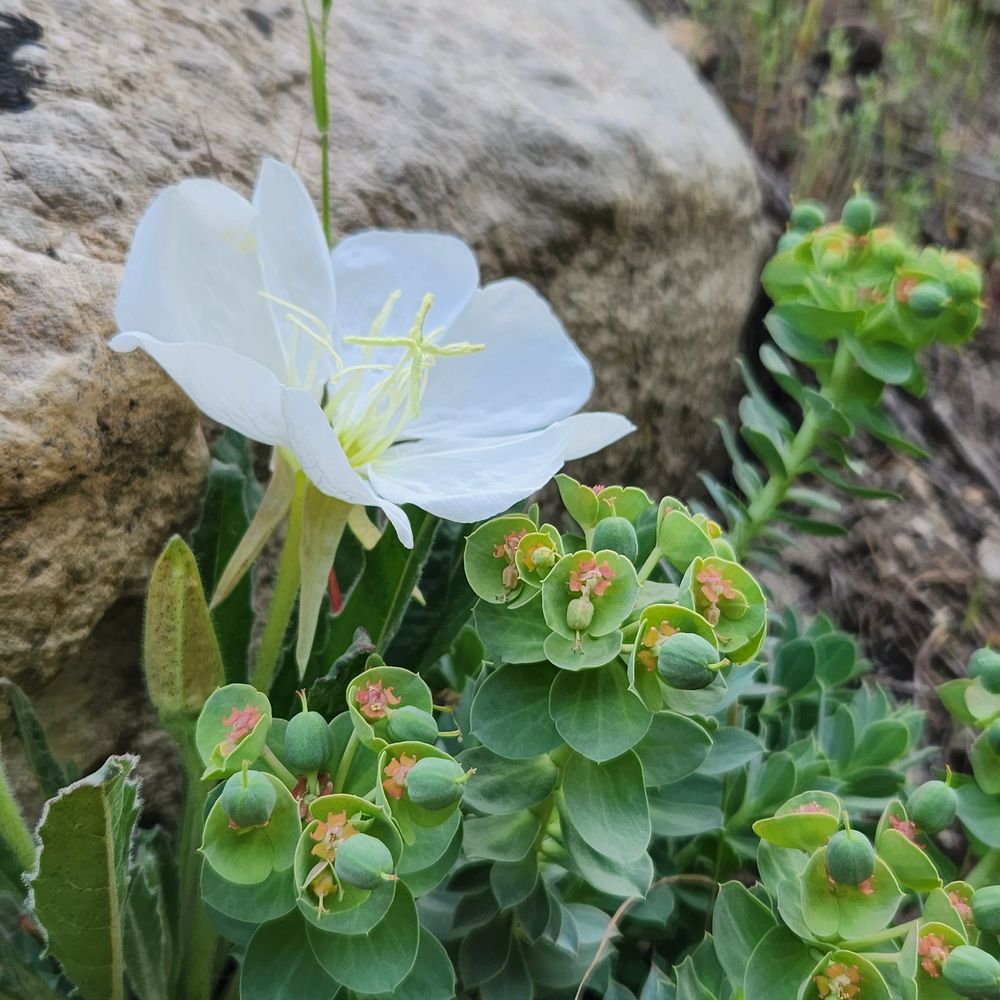
Beautiful science from my colleague Aaron Puri! @utahchemistry.bsky.social
attheu.utah.edu/research/a-m...
attheu.utah.edu/research/a-m...

A molecule that enables microbes to eat methane - @theU
U chemists discover critical step bacteria take to oxidize potent greenhouse gas and how they interact in larger microbial communities
attheu.utah.edu
September 3, 2025 at 10:12 PM
Beautiful science from my colleague Aaron Puri! @utahchemistry.bsky.social
attheu.utah.edu/research/a-m...
attheu.utah.edu/research/a-m...
Safety Day 2025!
Workshops included mental health crisis de-escalation, basic first aid, fire extinguisher training, overview of student resources, and much more.
Thank you to everyone involved! We can't wait for next year 🧯
Workshops included mental health crisis de-escalation, basic first aid, fire extinguisher training, overview of student resources, and much more.
Thank you to everyone involved! We can't wait for next year 🧯


September 8, 2025 at 9:22 PM
Safety Day 2025!
Workshops included mental health crisis de-escalation, basic first aid, fire extinguisher training, overview of student resources, and much more.
Thank you to everyone involved! We can't wait for next year 🧯
Workshops included mental health crisis de-escalation, basic first aid, fire extinguisher training, overview of student resources, and much more.
Thank you to everyone involved! We can't wait for next year 🧯
The @utah.edu's new L. S. Skaggs Applied Science Building features kinetic art installations by Bruce Shapiro, including programmable 15-foot chain sculptures and a robotic sand-drawing piece that demonstrate motion control as an emerging art medium attheu.utah.edu/facultystaff...

Kinetic art adorns L. S. Skaggs Building - @theU
Featured in the atrium and foyer of the L. S. Skaggs Building are the art pieces Three Medusae and Sisyphus, both created by artist Bruce...
attheu.utah.edu
September 2, 2025 at 8:31 PM
The @utah.edu's new L. S. Skaggs Applied Science Building features kinetic art installations by Bruce Shapiro, including programmable 15-foot chain sculptures and a robotic sand-drawing piece that demonstrate motion control as an emerging art medium attheu.utah.edu/facultystaff...
Interim Dean Pearl Sandick was on KPCW Radio sharing her insights on the new Crocker Science Complex! Learn more about her perspective on how it's transforming student experiences & her particle physics research: www.kpcw.org/show/cool-sc...

Building the future of science at the University of Utah
Pearl Sandick, interim dean of the College of Science and professor of physics and astronomy at the University of Utah, discusses the newly completed Crocker Science Complex, a $97 million project tha...
www.kpcw.org
August 29, 2025 at 4:26 PM
Interim Dean Pearl Sandick was on KPCW Radio sharing her insights on the new Crocker Science Complex! Learn more about her perspective on how it's transforming student experiences & her particle physics research: www.kpcw.org/show/cool-sc...
Our new student writer Nathan Murthy spent his summer in Turkey studying bird migration. The team documented 118 species this spring. His advice: "Take that step. Take flight. You will never regret it." science.utah.edu/cos/field-no... @uofubiology.bsky.social

Field Notes: From the Classroom to the Wetlands of Eastern Türkiye | College of Science
Field Notes: From the Classroom to the Wetlands of Eastern Türkiye August 19, 2025 Above: "Rufous-tailed Scrub Robbins in-hand: These Scrub Robbins were caught in the same round. Alva found one and Ma...
science.utah.edu
August 26, 2025 at 6:10 PM
Our new student writer Nathan Murthy spent his summer in Turkey studying bird migration. The team documented 118 species this spring. His advice: "Take that step. Take flight. You will never regret it." science.utah.edu/cos/field-no... @uofubiology.bsky.social
U of U atmospheric scientist Kevin Perry is making waves in The Washington Post! 🌊 His research on toxic dust from the shrinking Great Salt Lake is crucial work - while biking 2,700+ miles across the exposed lakebed studying particles that could impact millions www.washingtonpost.com/climate-envi...

As the Great Salt Lake dries up, clouds of dangerous dust blow into boomtowns
Dozens of dust events probably happen each year across the 120-square-mile playa once covered by the Great Salt Lake. But there are no comprehensive state or federal records of them.
www.washingtonpost.com
August 25, 2025 at 7:26 PM
U of U atmospheric scientist Kevin Perry is making waves in The Washington Post! 🌊 His research on toxic dust from the shrinking Great Salt Lake is crucial work - while biking 2,700+ miles across the exposed lakebed studying particles that could impact millions www.washingtonpost.com/climate-envi...
U researchers recently discovered protected crystalline micro-environments at Great Salt Lake. These support an array of organisms that could hold clues to life on Mars, which contains similar lake beds.
“If there ever was life on Mars it would have been in these bodies of water.”
“If there ever was life on Mars it would have been in these bodies of water.”

Life on Mars? Great Salt Lake May Hold Clues | College of Science
life on Mars? Great Salt Lake may hold some clues August 14, 2025 Above: Great Salt Lake Utah’s Great Salt Lake is a place of extremes, and its ecosystem is evidence that life can thrive under some of...
science.utah.edu
August 14, 2025 at 8:51 PM
U researchers recently discovered protected crystalline micro-environments at Great Salt Lake. These support an array of organisms that could hold clues to life on Mars, which contains similar lake beds.
“If there ever was life on Mars it would have been in these bodies of water.”
“If there ever was life on Mars it would have been in these bodies of water.”
Reposted by U of U's College of Science

New research from @utah.edu finds wildfire smoke significantly increases ozone concentrations. The research concludes wildfire smoke increases ozone concentrations by 21 parts per billion, or by roughly 20 to 30% higher on average. attheu.utah.edu/research/wil...
@uofu-science.bsky.social
@uofu-science.bsky.social
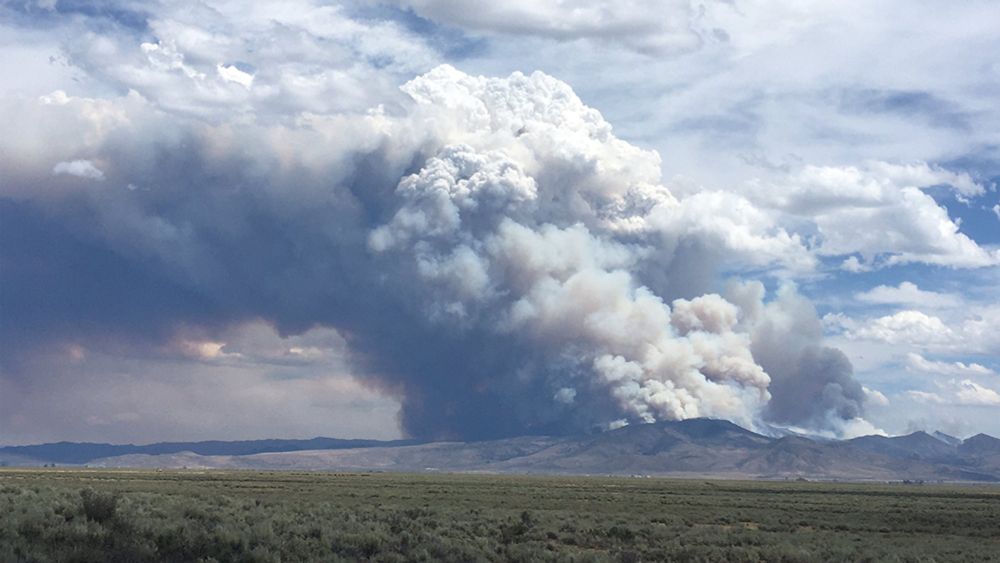
Wildfire smoke exacerbates ozone pollution - @theU
U research modeled smoke produced in epic 2020 wildfire season to demonstrate how it drives ozone formation, further degrading air quality.
attheu.utah.edu
August 8, 2025 at 8:33 PM
New research from @utah.edu finds wildfire smoke significantly increases ozone concentrations. The research concludes wildfire smoke increases ozone concentrations by 21 parts per billion, or by roughly 20 to 30% higher on average. attheu.utah.edu/research/wil...
@uofu-science.bsky.social
@uofu-science.bsky.social