




Jason Smith
@truthinevidence.bsky.social
History sleuth. Writer for HistoricAerals.com. The kids finally left for college. Now I spend my time staring down historic maps until they give me the information I want, and hunting traces of history like it owes me money. Photo is my great grandfather.
Except for a few details, this is not a bad rendering of what that relief scene might've looked like. 🏺

May 7, 2025 at 12:24 PM
Except for a few details, this is not a bad rendering of what that relief scene might've looked like. 🏺
Great to see initiatives like this highlighting the digital side of archaeology. Uncovering the past isn’t just about excavation—it’s about data, collaboration, and connecting ancient lives to modern minds. The conversation continues!
May 6, 2025 at 4:35 PM
Great to see initiatives like this highlighting the digital side of archaeology. Uncovering the past isn’t just about excavation—it’s about data, collaboration, and connecting ancient lives to modern minds. The conversation continues!
Remarkable clarity! Those ghost canals and field systems are like the fingerprints of early human civilization. Amazing how a landscape abandoned 2,500 years ago can still tell such a vivid story from space. Makes you wonder what else is hiding in plain sight. 🗃️ #history #skystorians
May 6, 2025 at 4:31 PM
Remarkable clarity! Those ghost canals and field systems are like the fingerprints of early human civilization. Amazing how a landscape abandoned 2,500 years ago can still tell such a vivid story from space. Makes you wonder what else is hiding in plain sight. 🗃️ #history #skystorians
Balloons may seem old-fashioned, but their impact on military strategy was huge. If you’re fascinated by the origins of aerial surveillance, check out the full article and share your thoughts-let’s discuss how the sky changed warfare! More to come on the Balloons of War! 🗃️ #history #skystorians
May 5, 2025 at 9:08 PM
Balloons may seem old-fashioned, but their impact on military strategy was huge. If you’re fascinated by the origins of aerial surveillance, check out the full article and share your thoughts-let’s discuss how the sky changed warfare! More to come on the Balloons of War! 🗃️ #history #skystorians
Aerial balloons gave armies a new perspective, improving mapmaking and battlefield awareness. Their use in the Civil War laid the groundwork for modern surveillance, even inspiring future airship pioneers like Ferdinand von Zeppelin. 🗃️ #history #skystorians

May 5, 2025 at 9:07 PM
Aerial balloons gave armies a new perspective, improving mapmaking and battlefield awareness. Their use in the Civil War laid the groundwork for modern surveillance, even inspiring future airship pioneers like Ferdinand von Zeppelin. 🗃️ #history #skystorians
Did you know? In 1861, Union aeronaut Thaddeus Lowe used a balloon to telegraph real-time intelligence, allowing artillery to accurately target Confederate troops-marking a first in warfare. 🗃️ #history #skystorians

May 5, 2025 at 9:06 PM
Did you know? In 1861, Union aeronaut Thaddeus Lowe used a balloon to telegraph real-time intelligence, allowing artillery to accurately target Confederate troops-marking a first in warfare. 🗃️ #history #skystorians
"Balloons of War: The Birth and Rebirth of Aerial Reconnaissance"-how hot air balloons changed military history by providing a bird’s-eye view of enemy movements. 🗃️ #history #skystorians blog.historicaerials.com/balloons-of-...
Balloons of War: Part I —The Birth and Re-birth of Aerial Reconnaissance – Historic Aerials Blog
blog.historicaerials.com
May 5, 2025 at 9:05 PM
"Balloons of War: The Birth and Rebirth of Aerial Reconnaissance"-how hot air balloons changed military history by providing a bird’s-eye view of enemy movements. 🗃️ #history #skystorians blog.historicaerials.com/balloons-of-...
Please share a video of your first attempt! 😁
February 13, 2025 at 11:27 PM
Please share a video of your first attempt! 😁
These recreations, I believe, are so important. To the untrained eye - which most people have - it's difficult to visualize this real history in its full grandeur when looking at just the rubble that remains.
February 13, 2025 at 11:26 PM
These recreations, I believe, are so important. To the untrained eye - which most people have - it's difficult to visualize this real history in its full grandeur when looking at just the rubble that remains.
This is amazing.
February 13, 2025 at 11:22 PM
This is amazing.

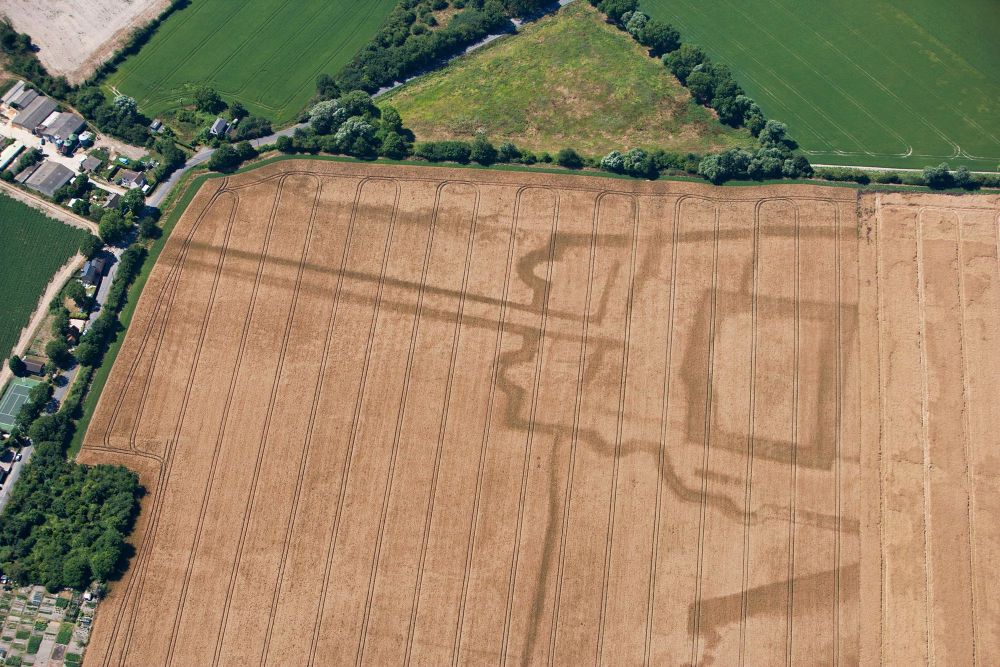
𝗖𝗿𝗼𝗽 𝗺𝗮𝗿𝗸𝘀 or 𝘀𝗼𝗶𝗹 𝗺𝗮𝗿𝗸𝘀 are patterns in vegetation growth caused by what lies beneath the surface. Over richer soil, like filled ditches or trenches, crops are greener and taller. Those growing over poorer soil, like stone walls or foundations, will be shorter and less vibrant. 🏺🗃️🧵

January 25, 2025 at 7:54 PM
𝗖𝗿𝗼𝗽 𝗺𝗮𝗿𝗸𝘀 or 𝘀𝗼𝗶𝗹 𝗺𝗮𝗿𝗸𝘀 are patterns in vegetation growth caused by what lies beneath the surface. Over richer soil, like filled ditches or trenches, crops are greener and taller. Those growing over poorer soil, like stone walls or foundations, will be shorter and less vibrant. 🏺🗃️🧵
One feature often visible in aerial photographs is 𝘀𝗵𝗮𝗱𝗼𝘄 𝗺𝗮𝗿𝗸𝘀. Lynchets, vertical ridges that form on the downslope of a field after many years of plowing, are visible as shadow marks in aerial photographs, especially when the sun is low and casts shadows that highlight the ridges.


January 25, 2025 at 7:54 PM
One feature often visible in aerial photographs is 𝘀𝗵𝗮𝗱𝗼𝘄 𝗺𝗮𝗿𝗸𝘀. Lynchets, vertical ridges that form on the downslope of a field after many years of plowing, are visible as shadow marks in aerial photographs, especially when the sun is low and casts shadows that highlight the ridges.
After WWI, archaeologists like Crawford used the same techniques of interpreting information contained in aerial photographs during the war to look for traces of the past, even developing techniques to maximize visibility by considering lighting, seasonal, and even climatic conditions. 🏺🗃️🧵

January 25, 2025 at 7:54 PM
After WWI, archaeologists like Crawford used the same techniques of interpreting information contained in aerial photographs during the war to look for traces of the past, even developing techniques to maximize visibility by considering lighting, seasonal, and even climatic conditions. 🏺🗃️🧵
Crawford set the standards for aerial archaeology. Through his work in the field—or 𝘪𝘯 𝘵𝘩𝘦 𝘢𝘪𝘳 rather—he learned which lighting, angles, seasons, and climate conditions would best reveal subtle traces of ancient sites. He pioneered the techniques still used by archaeologists today. #archaeology 🏺🗃️🧵

January 14, 2025 at 8:01 PM
Crawford set the standards for aerial archaeology. Through his work in the field—or 𝘪𝘯 𝘵𝘩𝘦 𝘢𝘪𝘳 rather—he learned which lighting, angles, seasons, and climate conditions would best reveal subtle traces of ancient sites. He pioneered the techniques still used by archaeologists today. #archaeology 🏺🗃️🧵
𝗢.𝗚.𝗦. 𝗖𝗿𝗮𝘄𝗳𝗼𝗿𝗱 would have been very interested in this project. Although he would want to scrutinize the qualifications of those who were adding any details to this map!
January 14, 2025 at 7:12 PM
𝗢.𝗚.𝗦. 𝗖𝗿𝗮𝘄𝗳𝗼𝗿𝗱 would have been very interested in this project. Although he would want to scrutinize the qualifications of those who were adding any details to this map!

It was 𝗢.𝗚.𝗦. 𝗖𝗿𝗮𝘄𝗳𝗼𝗿𝗱 - now considered the father of aerial archaeology - who first saw the potential for aerial photography to benefit archaeology when reviewing RAF aerial images from WWI. Patterns on the ground could be seen from a bird's eye view that were indistinguishable from the ground. 🗃️🏺🧵


January 14, 2025 at 4:40 PM
It was 𝗢.𝗚.𝗦. 𝗖𝗿𝗮𝘄𝗳𝗼𝗿𝗱 - now considered the father of aerial archaeology - who first saw the potential for aerial photography to benefit archaeology when reviewing RAF aerial images from WWI. Patterns on the ground could be seen from a bird's eye view that were indistinguishable from the ground. 🗃️🏺🧵

𝗔𝗲𝗿𝗶𝗮𝗹 𝗽𝗵𝗼𝘁𝗼𝗴𝗿𝗮𝗽𝗵𝘆 revolutionized archaeology. Whereas before, archaeological sites were puzzles seen piece by piece, the aerial view could reveal entire landscapes, hidden earthworks, and subtle crop marks that were not visible, or barely discernable, at ground level. 🏺🗃️🧵


January 12, 2025 at 10:10 PM
𝗔𝗲𝗿𝗶𝗮𝗹 𝗽𝗵𝗼𝘁𝗼𝗴𝗿𝗮𝗽𝗵𝘆 revolutionized archaeology. Whereas before, archaeological sites were puzzles seen piece by piece, the aerial view could reveal entire landscapes, hidden earthworks, and subtle crop marks that were not visible, or barely discernable, at ground level. 🏺🗃️🧵
From the rise of settled agriculture to the development of writing, complex social hierarchies, and urban centers, the material record reveals the human narrative, showcasing the gradual, messy, ultimately transformative steps that shaped our journey from small communities to complex societies. 🗃️🏺🧵


January 12, 2025 at 5:11 PM
From the rise of settled agriculture to the development of writing, complex social hierarchies, and urban centers, the material record reveals the human narrative, showcasing the gradual, messy, ultimately transformative steps that shaped our journey from small communities to complex societies. 🗃️🏺🧵