




zoe hackshaw
@theastrozo.bsky.social
space cowgirl (UTAustin Astronomy grad student) & investigator of Galactic origins🔎💫🔭🧘♀️🤠🪩 UF alum🫶🏼 zoehackshaw.github.io
Funding science is very important for a lot of reasons. One of those reasons is that you get papers like this

September 2, 2025 at 6:37 PM
Funding science is very important for a lot of reasons. One of those reasons is that you get papers like this
in appreciation and solidarity of our national parks, some pictures of my January big bend trip🏜️the beauty, knowledge, and community the parks bring truly cannot be stated enough.
and half the park is after dark!🔭
and half the park is after dark!🔭
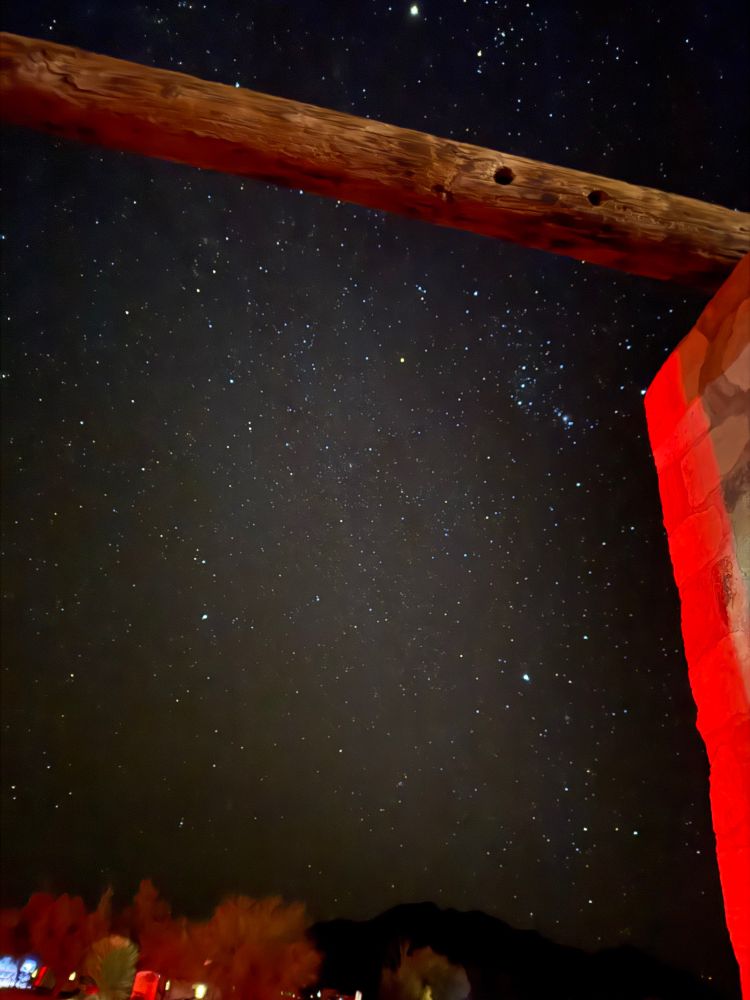
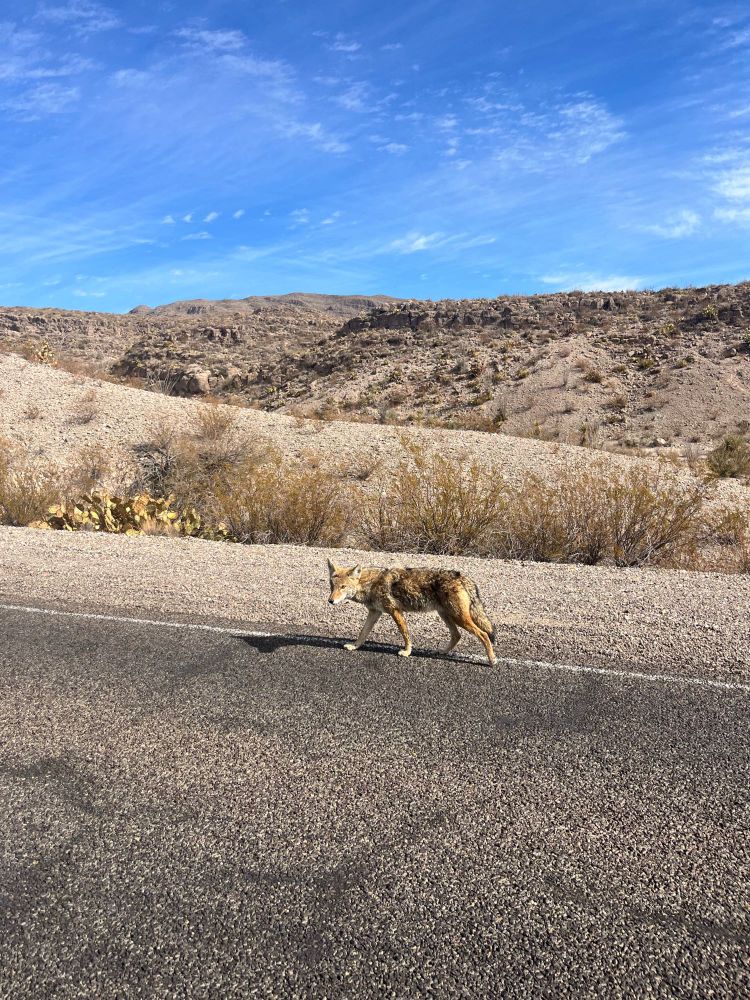


February 26, 2025 at 12:54 AM
in appreciation and solidarity of our national parks, some pictures of my January big bend trip🏜️the beauty, knowledge, and community the parks bring truly cannot be stated enough.
and half the park is after dark!🔭
and half the park is after dark!🔭
Have you ever wondered what it looks like when an astronomer starts up a 2.7m telescope for the night? Wonder no more 🔭
February 5, 2025 at 4:12 PM
Have you ever wondered what it looks like when an astronomer starts up a 2.7m telescope for the night? Wonder no more 🔭
That while this red-blue-red pattern may have some contribution from natal origins, there is a dynamical component!
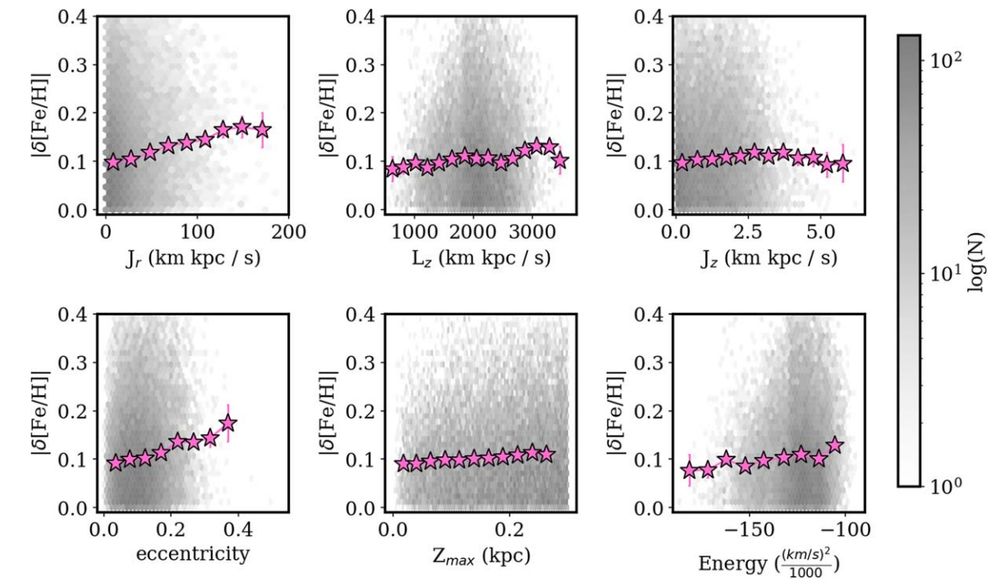
To show that, we plotted the absolute [Fe/H] excess against 6 dynamical parameters. Stars that have a higher metallicity excess tend to have a higher eccentricity and radial action🏃
To show that, we plotted the absolute [Fe/H] excess against 6 dynamical parameters. Stars that have a higher metallicity excess tend to have a higher eccentricity and radial action🏃
December 18, 2024 at 7:19 PM
That while this red-blue-red pattern may have some contribution from natal origins, there is a dynamical component!
To show that, we plotted the absolute [Fe/H] excess against 6 dynamical parameters. Stars that have a higher metallicity excess tend to have a higher eccentricity and radial action🏃
To show that, we plotted the absolute [Fe/H] excess against 6 dynamical parameters. Stars that have a higher metallicity excess tend to have a higher eccentricity and radial action🏃
We did some more investigative work. First, looking into other elements and seeing if these patterns are seen. Secondly, separating our sample by age.
The red-blue pattern is present in both our youngest and intermediate age-bins! Leading us to believe...
The red-blue pattern is present in both our youngest and intermediate age-bins! Leading us to believe...
![6 panels where the stars in each panel is colored by [X/Fe]](https://cdn.bsky.app/img/feed_thumbnail/plain/did:plc:zsvhvmyp7vx3kt27tk56adyy/bafkreidy65pl3wk4bfmhrbzeyi4ubynv6sgd2ovb24zi4d6pmhejhhpu44@jpeg)

December 18, 2024 at 6:52 PM
We did some more investigative work. First, looking into other elements and seeing if these patterns are seen. Secondly, separating our sample by age.
The red-blue pattern is present in both our youngest and intermediate age-bins! Leading us to believe...
The red-blue pattern is present in both our youngest and intermediate age-bins! Leading us to believe...
We see this blue-red-blue pattern throughout the disk. What could be driving this?
Our first guess: spiral arms. After closer inspection, it looks like an explanation beyond the spirals is needed. The pattern doesn't seem to align with either (Poggio et al 2021; Reid et al 2019) spirals 🌀
Our first guess: spiral arms. After closer inspection, it looks like an explanation beyond the spirals is needed. The pattern doesn't seem to align with either (Poggio et al 2021; Reid et al 2019) spirals 🌀

December 18, 2024 at 6:22 PM
We see this blue-red-blue pattern throughout the disk. What could be driving this?
Our first guess: spiral arms. After closer inspection, it looks like an explanation beyond the spirals is needed. The pattern doesn't seem to align with either (Poggio et al 2021; Reid et al 2019) spirals 🌀
Our first guess: spiral arms. After closer inspection, it looks like an explanation beyond the spirals is needed. The pattern doesn't seem to align with either (Poggio et al 2021; Reid et al 2019) spirals 🌀
The negative gradient is a prominent feature of stars in the disk and has been observed for decades. However, is this gradient so strong that it's washing out other patterns that we can observe? 🤔
Spoiler: yes! When we subtract the model [Fe/H] (middle) from the data [Fe/H] (left), we see structure!
Spoiler: yes! When we subtract the model [Fe/H] (middle) from the data [Fe/H] (left), we see structure!
![Left panel: looking down into plane of Galaxy in X and Y and the points are colored by metallicity
Middle panel: The stars now colored by model metallicity -- the [Fe/H] of the stars as predicted by the radial [Fe/H] gradient
Right panel: the residuals of the Data-Model metallicities, stars now colored by delta[Fe/H]. We see an oscillating blue-red-blue pattern!](https://cdn.bsky.app/img/feed_thumbnail/plain/did:plc:zsvhvmyp7vx3kt27tk56adyy/bafkreigsswjq7t5dxlil2zzwn7tuyzsu4utn4dsiqvoplsp5ssat6qc67a@jpeg)
December 18, 2024 at 6:17 PM
The negative gradient is a prominent feature of stars in the disk and has been observed for decades. However, is this gradient so strong that it's washing out other patterns that we can observe? 🤔
Spoiler: yes! When we subtract the model [Fe/H] (middle) from the data [Fe/H] (left), we see structure!
Spoiler: yes! When we subtract the model [Fe/H] (middle) from the data [Fe/H] (left), we see structure!
Mapping how the chemistry of stars changes throughout the disk allows us to peer into the Milky Way's past and give us an idea of how the Milky Way formed and evolved. 🔍
We have a sample of ~25k stars in the thin disk and found a radial metallicity gradient (black line) of -0.0678 dex/kpc
We have a sample of ~25k stars in the thin disk and found a radial metallicity gradient (black line) of -0.0678 dex/kpc

December 18, 2024 at 6:10 PM
Mapping how the chemistry of stars changes throughout the disk allows us to peer into the Milky Way's past and give us an idea of how the Milky Way formed and evolved. 🔍
We have a sample of ~25k stars in the thin disk and found a radial metallicity gradient (black line) of -0.0678 dex/kpc
We have a sample of ~25k stars in the thin disk and found a radial metallicity gradient (black line) of -0.0678 dex/kpc