




Andrew Schein
@the-scheining.bsky.social
EA adjacent 😎🧐. By day at Centre for Net Zero. By night Tyrese Maxey and Vasa Micic superfan.
Reposted by Andrew Schein

🙏 With thanks to our partners on this trial Electroverse, and the Department for Transport for funding the trial - supported by @cpcatapult.bsky.social - and everyone who contributed: @rmetcalfe.bsky.social @the-scheining.bsky.social @lbernard.bsky.social
May 21, 2025 at 11:14 AM
🙏 With thanks to our partners on this trial Electroverse, and the Department for Transport for funding the trial - supported by @cpcatapult.bsky.social - and everyone who contributed: @rmetcalfe.bsky.social @the-scheining.bsky.social @lbernard.bsky.social
And our HeatFlex work with @nestauk.bsky.social centrefornetzero.org/papers/heatf... shows a credible way that many households do so and gets under the hood of that method. A pretty soft, non-invasive automation of the thermostat setpoints is sufficient to deliver big kWh impacts. 🚀
HeatFlex: the potential of automated heat pump flexibility
Automated heat pump flexibility trial shows that meaningful reductions in household consumption are possible.
centrefornetzero.org
November 19, 2024 at 1:20 PM
And our HeatFlex work with @nestauk.bsky.social centrefornetzero.org/papers/heatf... shows a credible way that many households do so and gets under the hood of that method. A pretty soft, non-invasive automation of the thermostat setpoints is sufficient to deliver big kWh impacts. 🚀
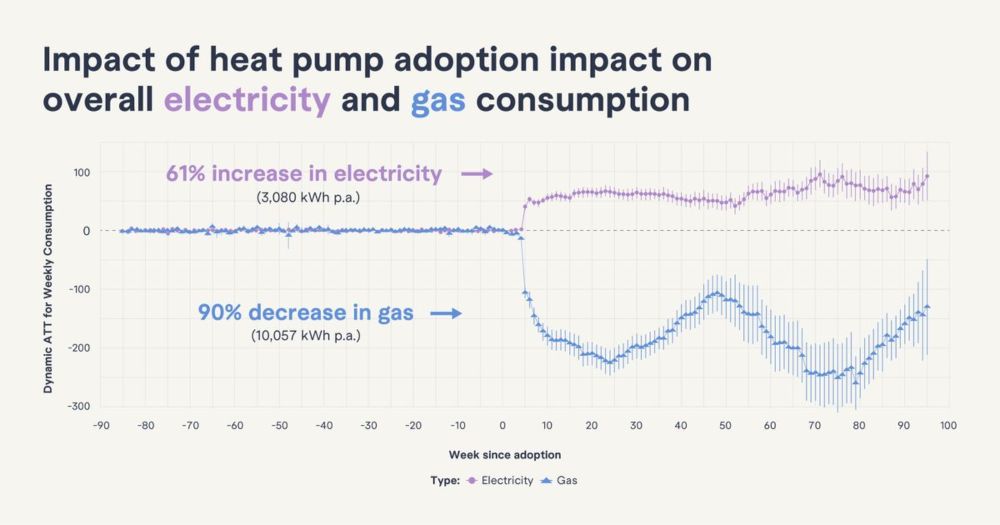
Our analysis of Cosy Octopus centrefornetzero.org/papers/decar... showed that customers are already providing massive demand response *right now* 💪
Impact of Heat Pumps and Time-of-Use Tariff on Energy Demand
Decarbonising Heat: The Impact of Heat Pumps and a Time-of-Use Heat Pump Tariff on Energy Demand
centrefornetzero.org
November 19, 2024 at 1:20 PM
Our analysis of Cosy Octopus centrefornetzero.org/papers/decar... showed that customers are already providing massive demand response *right now* 💪
Overall, we now have two pieces of evidence from Centre for Net Zero in the past couple months making me more bullish that heat pumps can provide really meaningful demand flex. We see big impacts, and those big impacts seem pretty high feasibility to me.
November 19, 2024 at 1:20 PM
Overall, we now have two pieces of evidence from Centre for Net Zero in the past couple months making me more bullish that heat pumps can provide really meaningful demand flex. We see big impacts, and those big impacts seem pretty high feasibility to me.
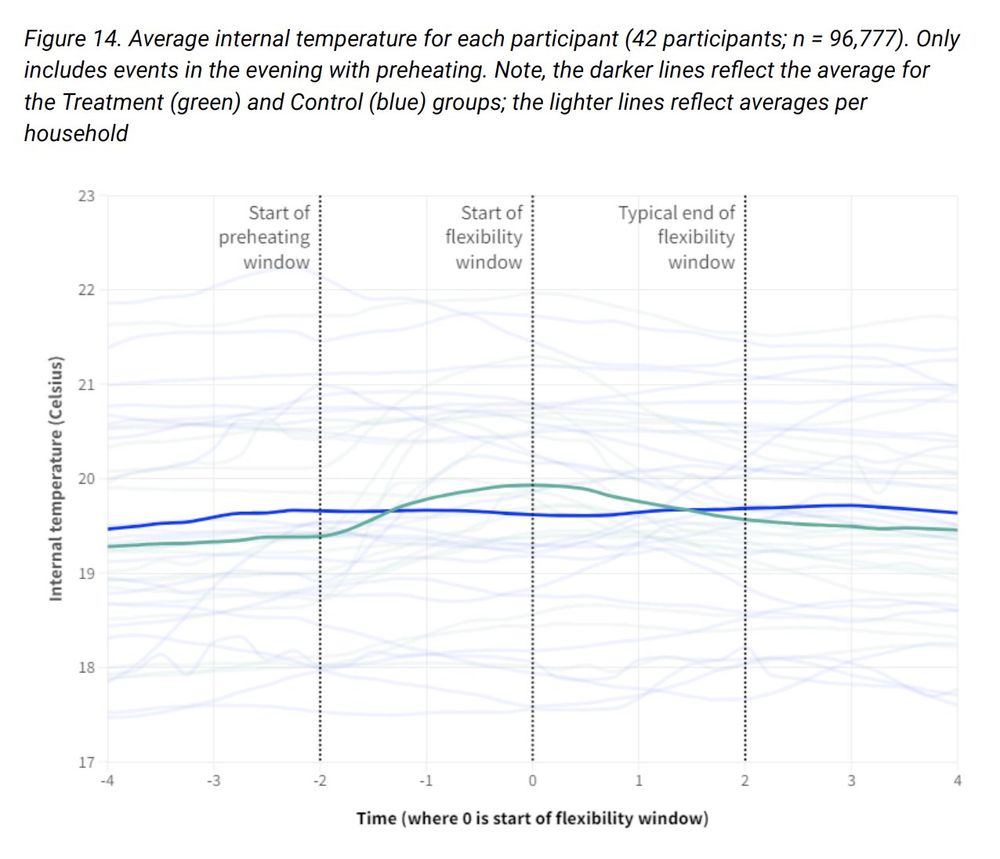
And we even know what their internal temperatures were, via the smart thermostat. We see temperature rise during the preheating period (2 hours before event start til event start) and fall during flex window (the next 2 hours).
November 19, 2024 at 1:20 PM
And we even know what their internal temperatures were, via the smart thermostat. We see temperature rise during the preheating period (2 hours before event start til event start) and fall during flex window (the next 2 hours).
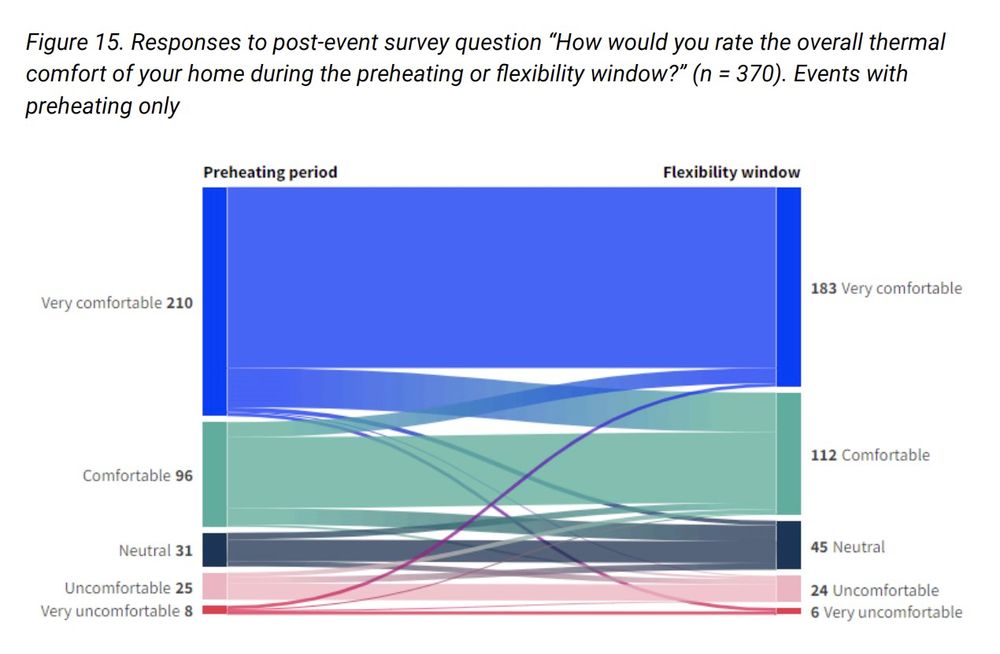
We also asked customers about their comfort and satisfaction. Response rates were ridiculously good: 81% 😍
Customers tended to be very comfortable and satisfied, both at end of preheating period and end of flex window.
Customers tended to be very comfortable and satisfied, both at end of preheating period and end of flex window.
November 19, 2024 at 1:20 PM
We also asked customers about their comfort and satisfaction. Response rates were ridiculously good: 81% 😍
Customers tended to be very comfortable and satisfied, both at end of preheating period and end of flex window.
Customers tended to be very comfortable and satisfied, both at end of preheating period and end of flex window.
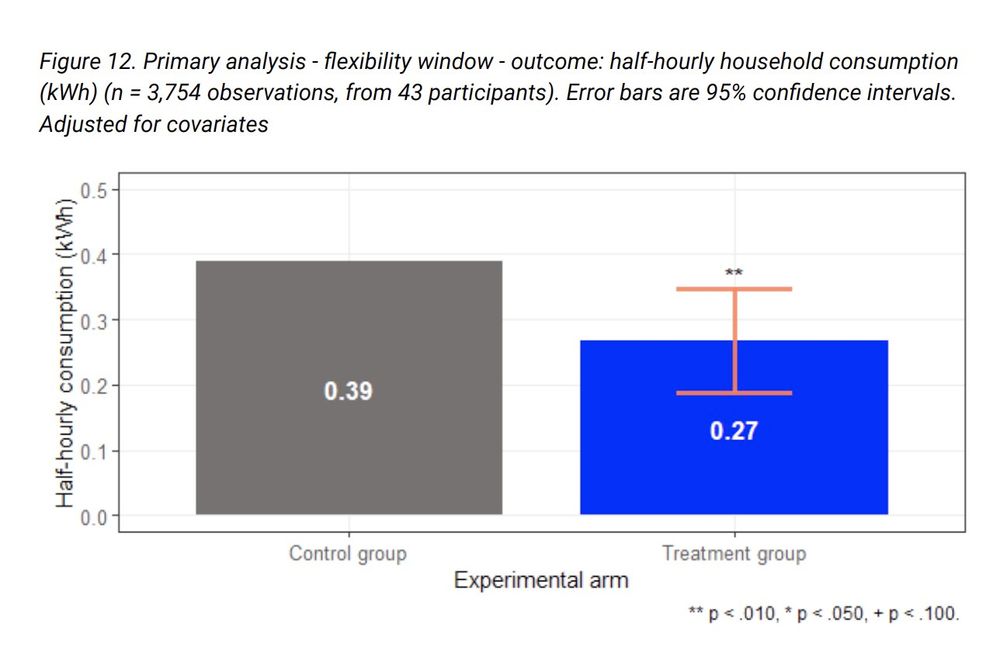
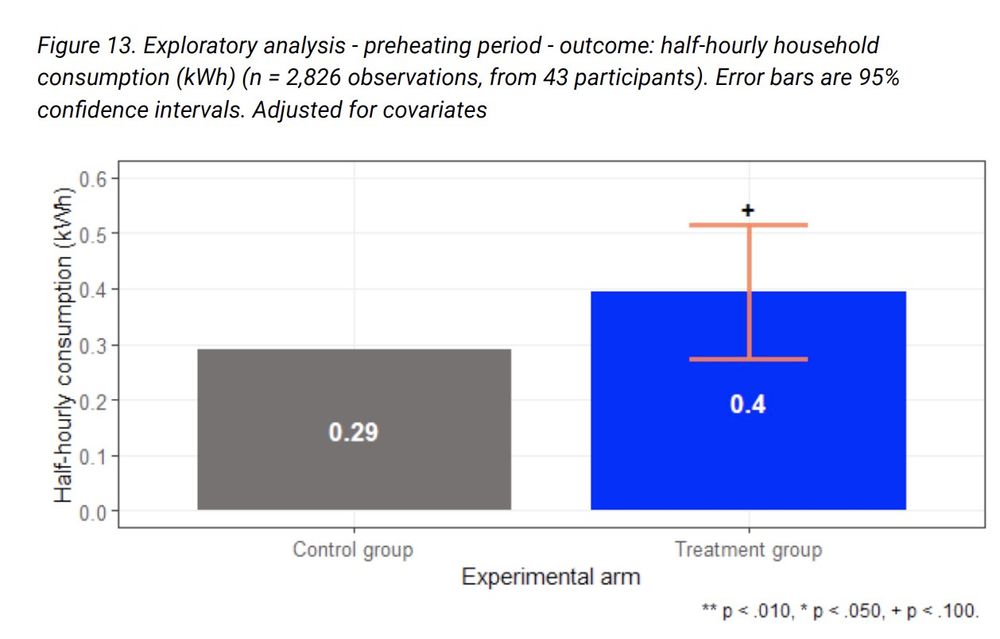
Still, even here, the effects are super duper meaningful –reductions of 1/3 or so. (Again, similar findings in opposite direction for preheating period.)
November 19, 2024 at 1:20 PM
Still, even here, the effects are super duper meaningful –reductions of 1/3 or so. (Again, similar findings in opposite direction for preheating period.)
Effect sizes are smaller when you consider the “whole household” – we think that’s mostly because a lot of these customers have solar and battery, which make “whole household” consumption noisier and lower during the flex window anyway.
November 19, 2024 at 1:20 PM
Effect sizes are smaller when you consider the “whole household” – we think that’s mostly because a lot of these customers have solar and battery, which make “whole household” consumption noisier and lower during the flex window anyway.
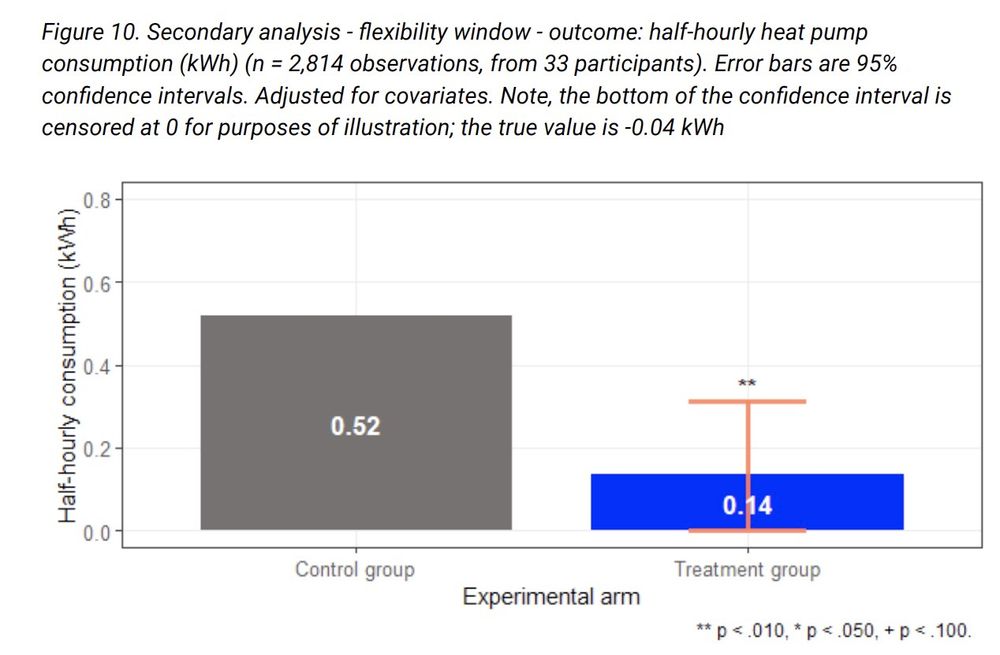
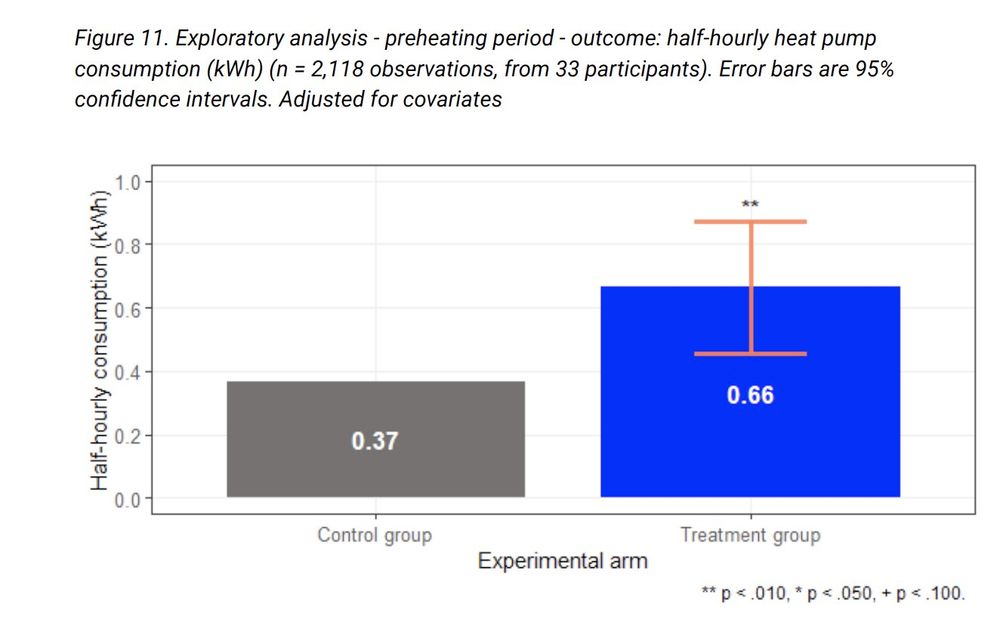
Before we did this trial, our team predicted effect sizes would be 20-30%. Instead, we find effect sizes of ~70% reduction in heat pump consumption during the flex window (and a similar increase in the preheating period).
November 19, 2024 at 1:20 PM
Before we did this trial, our team predicted effect sizes would be 20-30%. Instead, we find effect sizes of ~70% reduction in heat pump consumption during the flex window (and a similar increase in the preheating period).
Controlling a HP by raising and lowering a smart thermostat setpoint is a pretty soft intervention. Maybe the HP will rebel. Maybe customers change their setpoints back. Maybe heat loss is too severe. Maybe thermal inertia or other complexities make the effects slow & noisy.
November 19, 2024 at 1:20 PM
Controlling a HP by raising and lowering a smart thermostat setpoint is a pretty soft intervention. Maybe the HP will rebel. Maybe customers change their setpoints back. Maybe heat loss is too severe. Maybe thermal inertia or other complexities make the effects slow & noisy.
But it'd be nice to get under the hood of people doing that behaviour – to get inside the “black box” of heat pump flexibility. My organization Centre For Net Zero worked with @nestauk.bsky.social on a project called HeatFlex that did just that.
November 19, 2024 at 1:20 PM
But it'd be nice to get under the hood of people doing that behaviour – to get inside the “black box” of heat pump flexibility. My organization Centre For Net Zero worked with @nestauk.bsky.social on a project called HeatFlex that did just that.
We think most of that is from customers using smart thermostats to schedule their HPs to come on or work harder during off-peak and slow down or turn off during peak times. We discuss in the paper a few different pieces of suggestive evidence for that hypothesized mechanism.
November 19, 2024 at 1:20 PM
We think most of that is from customers using smart thermostats to schedule their HPs to come on or work harder during off-peak and slow down or turn off during peak times. We discuss in the paper a few different pieces of suggestive evidence for that hypothesized mechanism.