



Stephen C. Shaffer
@stephencshaffer.bsky.social
Pastor-Theologian at Bethel Reformed Church (Brantford), Author (Our Only Comfort, Rooted, All Things Hold Together, The Sinews of Scripture)
https://pages.penielpress.com/profile
https://pages.penielpress.com/profile
Not only did Ursinus not cite it, but the older English translations assumed it was a Bible quotation and mistranslated it. They had rendered it "For one who has died has been set free from sin" instead of the actual "a dead man does not bite."
July 7, 2025 at 1:19 PM
Not only did Ursinus not cite it, but the older English translations assumed it was a Bible quotation and mistranslated it. They had rendered it "For one who has died has been set free from sin" instead of the actual "a dead man does not bite."
There is only one use of δάκνει in the New Testament and it was in Galatians. νεκρος is used a lot, but none of its 9 occurrences looked anything like this quote.
45 minutes later, the internet was victorious as I learned it is a quote from Plutarch's Life of Pompeii, not the NT at all.
45 minutes later, the internet was victorious as I learned it is a quote from Plutarch's Life of Pompeii, not the NT at all.
July 7, 2025 at 1:19 PM
There is only one use of δάκνει in the New Testament and it was in Galatians. νεκρος is used a lot, but none of its 9 occurrences looked anything like this quote.
45 minutes later, the internet was victorious as I learned it is a quote from Plutarch's Life of Pompeii, not the NT at all.
45 minutes later, the internet was victorious as I learned it is a quote from Plutarch's Life of Pompeii, not the NT at all.
Medieval/Reformation greek is difficult to decipher at the best of times, but this had lots of miniscules in it that I was not as familiar with. After a lot of work and guesswork, I determined it said, "νεκρος γαρ ου δάκνει"
Sometimes Ursinus makes errors in quotes, so I looked for any NT match.
Sometimes Ursinus makes errors in quotes, so I looked for any NT match.
July 7, 2025 at 1:19 PM
Medieval/Reformation greek is difficult to decipher at the best of times, but this had lots of miniscules in it that I was not as familiar with. After a lot of work and guesswork, I determined it said, "νεκρος γαρ ου δάκνει"
Sometimes Ursinus makes errors in quotes, so I looked for any NT match.
Sometimes Ursinus makes errors in quotes, so I looked for any NT match.
We are watching Prison of Azkaban (my youngest finished the book yesterday).
July 4, 2025 at 10:14 PM
We are watching Prison of Azkaban (my youngest finished the book yesterday).
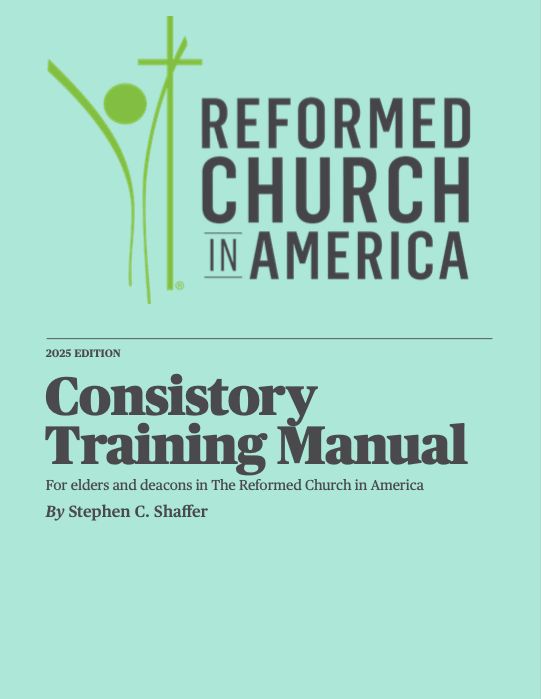
If you are interested, you can get access to the full pdf of this year's version below. It is "pay what you can," so you can have it for free or you can chip in a few bucks if you are able.
pages.penielpress.com/products/con...
pages.penielpress.com/products/con...
Consistory Training Manual 2025
pages.penielpress.com
July 4, 2025 at 12:47 AM
If you are interested, you can get access to the full pdf of this year's version below. It is "pay what you can," so you can have it for free or you can chip in a few bucks if you are able.
pages.penielpress.com/products/con...
pages.penielpress.com/products/con...
I spent some time this spring creating a Consistory Training Manual for my own congregation, but I wanted to make it available to you. It is designed for use within the Reformed Church in America (RCA), but the biblical and theological work on elders and deacons could apply much more broadly.
July 4, 2025 at 12:47 AM
I spent some time this spring creating a Consistory Training Manual for my own congregation, but I wanted to make it available to you. It is designed for use within the Reformed Church in America (RCA), but the biblical and theological work on elders and deacons could apply much more broadly.
I don't know if this tracks with the literature, but it was helpful to me, because it gave me a question to ask when I am trying to deal with something difficult: "Am I trying to avoid pain or work through it by doing this?"
Both have their place, but I want to lean into healing as often as I can.
Both have their place, but I want to lean into healing as often as I can.
June 25, 2025 at 3:02 PM
I don't know if this tracks with the literature, but it was helpful to me, because it gave me a question to ask when I am trying to deal with something difficult: "Am I trying to avoid pain or work through it by doing this?"
Both have their place, but I want to lean into healing as often as I can.
Both have their place, but I want to lean into healing as often as I can.
Thanks. It is fascinating when some churches had 20+ year pastorates at the same time other churches had 6-7 pastors. I came up as a pastor influenced by Eugene Peterson, so I envisioned long pastorates as the norm and short as the exception. Just seeing empirical evidence to the contrary.
May 13, 2025 at 1:43 PM
Thanks. It is fascinating when some churches had 20+ year pastorates at the same time other churches had 6-7 pastors. I came up as a pastor influenced by Eugene Peterson, so I envisioned long pastorates as the norm and short as the exception. Just seeing empirical evidence to the contrary.
Also, if loneliness and disconnection is the problem, another computer is not the solution.
May 1, 2025 at 3:41 PM
Also, if loneliness and disconnection is the problem, another computer is not the solution.
The goal in Christian leadership is to facilitate faithful discernment of what God wills, not for me to win. I must trust that God has called and equipped the right people for this season and placed them in leadership. There are always exceptions, but to lead as a Christian is not to be in charge.
May 1, 2025 at 3:00 PM
The goal in Christian leadership is to facilitate faithful discernment of what God wills, not for me to win. I must trust that God has called and equipped the right people for this season and placed them in leadership. There are always exceptions, but to lead as a Christian is not to be in charge.
I lead a lot of meetings in a lot of different organizations. My job is to make sure we are on topic, we are all being heard, we are clear on what is happening, what is being decided and what the stakes are. It is a rare moment when I will directly inject my perspective.
May 1, 2025 at 3:00 PM
I lead a lot of meetings in a lot of different organizations. My job is to make sure we are on topic, we are all being heard, we are clear on what is happening, what is being decided and what the stakes are. It is a rare moment when I will directly inject my perspective.
There is a lot of important work to be done in this area and there is hope and peace in Christ, but -- oh boy -- is it exhausting and neverending work.
April 24, 2025 at 2:05 PM
There is a lot of important work to be done in this area and there is hope and peace in Christ, but -- oh boy -- is it exhausting and neverending work.
The original Hebrew obviously doesn't have this "Roman Triumph" angle to it. The word there likely refers to God's preeminence and enduring through time (hence "Glory" or Strength"). However, there use of Triumphator in latin is an interesting contextual translation.
April 16, 2025 at 12:50 PM
The original Hebrew obviously doesn't have this "Roman Triumph" angle to it. The word there likely refers to God's preeminence and enduring through time (hence "Glory" or Strength"). However, there use of Triumphator in latin is an interesting contextual translation.
This creates a whole different set of images than "Glory" or "Strength." God as the victorious one who comes in triumph. However, when we recognize the similarities between the crucifixion of Jesus Christ and the pattern of a Roman Triumph, then the Lord as the Triumphator becomes a richer image.
April 16, 2025 at 12:47 PM
This creates a whole different set of images than "Glory" or "Strength." God as the victorious one who comes in triumph. However, when we recognize the similarities between the crucifixion of Jesus Christ and the pattern of a Roman Triumph, then the Lord as the Triumphator becomes a richer image.