



Stella Wernicke
@stellawernicke.bsky.social
Working memory, vision, aging, science communication | Computational cognitive neuroscience @ Cambridge | Editor-in-Chief @in-mindmagazine.bsky.social (she/her)
Reposted by Stella Wernicke

💬 𝗛𝗼𝘄 𝘁𝗼 𝗜𝗻-𝗠𝗶𝗻𝗱 #𝟴: 𝗗𝗶𝘀𝗰𝘂𝘀𝘀𝗶𝗻𝗴 𝗶𝗺𝗽𝗹𝗶𝗰𝗮𝘁𝗶𝗼𝗻𝘀 & 𝗹𝗶𝗺𝗶𝘁𝗮𝘁𝗶𝗼𝗻𝘀 💬
𝙎𝙤 𝙬𝙝𝙖𝙩? 🔍
Give key takeaways, note who they apply to, and give advice only when evidence supports it.
𝘽𝙪𝙩 𝙬𝙝𝙖𝙩? 🚧
State limits, avoid exaggeration, note alternatives and context.
𝙎𝙤 𝙬𝙝𝙖𝙩? 🔍
Give key takeaways, note who they apply to, and give advice only when evidence supports it.
𝘽𝙪𝙩 𝙬𝙝𝙖𝙩? 🚧
State limits, avoid exaggeration, note alternatives and context.

December 8, 2025 at 8:01 AM
💬 𝗛𝗼𝘄 𝘁𝗼 𝗜𝗻-𝗠𝗶𝗻𝗱 #𝟴: 𝗗𝗶𝘀𝗰𝘂𝘀𝘀𝗶𝗻𝗴 𝗶𝗺𝗽𝗹𝗶𝗰𝗮𝘁𝗶𝗼𝗻𝘀 & 𝗹𝗶𝗺𝗶𝘁𝗮𝘁𝗶𝗼𝗻𝘀 💬
𝙎𝙤 𝙬𝙝𝙖𝙩? 🔍
Give key takeaways, note who they apply to, and give advice only when evidence supports it.
𝘽𝙪𝙩 𝙬𝙝𝙖𝙩? 🚧
State limits, avoid exaggeration, note alternatives and context.
𝙎𝙤 𝙬𝙝𝙖𝙩? 🔍
Give key takeaways, note who they apply to, and give advice only when evidence supports it.
𝘽𝙪𝙩 𝙬𝙝𝙖𝙩? 🚧
State limits, avoid exaggeration, note alternatives and context.
Reposted by Stella Wernicke
🔔 𝗡𝗲𝘄 𝗯𝗹𝗼𝗴 𝗽𝗼𝘀𝘁: 𝗛𝗼𝘄 𝗰𝗮𝗿𝗲𝗴𝗶𝘃𝗲𝗿𝘀 𝗰𝗮𝗻 𝘀𝘂𝗽𝗽𝗼𝗿𝘁 𝘁𝗵𝗲𝗶𝗿 𝗰𝗵𝗶𝗹𝗱𝗿𝗲𝗻'𝘀 𝗲𝗺𝗼𝘁𝗶𝗼𝗻 𝗿𝗲𝗴𝘂𝗹𝗮𝘁𝗶𝗼𝗻 🔔
How can we raise emotionally intelligent children? 💟 In their blog post, Katharina Demke, Mara Hüttner and Dr. Avelina Lovis Schmidt argue why caregivers are key in children’s emotion regulation, and provide advice.
How can we raise emotionally intelligent children? 💟 In their blog post, Katharina Demke, Mara Hüttner and Dr. Avelina Lovis Schmidt argue why caregivers are key in children’s emotion regulation, and provide advice.
December 5, 2025 at 11:15 AM
🔔 𝗡𝗲𝘄 𝗯𝗹𝗼𝗴 𝗽𝗼𝘀𝘁: 𝗛𝗼𝘄 𝗰𝗮𝗿𝗲𝗴𝗶𝘃𝗲𝗿𝘀 𝗰𝗮𝗻 𝘀𝘂𝗽𝗽𝗼𝗿𝘁 𝘁𝗵𝗲𝗶𝗿 𝗰𝗵𝗶𝗹𝗱𝗿𝗲𝗻'𝘀 𝗲𝗺𝗼𝘁𝗶𝗼𝗻 𝗿𝗲𝗴𝘂𝗹𝗮𝘁𝗶𝗼𝗻 🔔
How can we raise emotionally intelligent children? 💟 In their blog post, Katharina Demke, Mara Hüttner and Dr. Avelina Lovis Schmidt argue why caregivers are key in children’s emotion regulation, and provide advice.
How can we raise emotionally intelligent children? 💟 In their blog post, Katharina Demke, Mara Hüttner and Dr. Avelina Lovis Schmidt argue why caregivers are key in children’s emotion regulation, and provide advice.
Reposted by Stella Wernicke
💬 𝗛𝗼𝘄 𝘁𝗼 𝗜𝗻-𝗠𝗶𝗻𝗱 #𝟳: 𝗣𝗿𝗲𝘀𝗲𝗻𝘁𝗶𝗻𝗴 𝘀𝗰𝗶𝗲𝗻𝘁𝗶𝗳𝗶𝗰 𝗿𝗲𝘀𝘂𝗹𝘁𝘀 💬
✅ Highlight patterns across studies instead of single results
✅ Explain the meaning, don't list statistical numbers
✅ Provide context to clarify findings
✅ Use cautious language and note limitations
✅ Highlight patterns across studies instead of single results
✅ Explain the meaning, don't list statistical numbers
✅ Provide context to clarify findings
✅ Use cautious language and note limitations

December 1, 2025 at 9:20 AM
💬 𝗛𝗼𝘄 𝘁𝗼 𝗜𝗻-𝗠𝗶𝗻𝗱 #𝟳: 𝗣𝗿𝗲𝘀𝗲𝗻𝘁𝗶𝗻𝗴 𝘀𝗰𝗶𝗲𝗻𝘁𝗶𝗳𝗶𝗰 𝗿𝗲𝘀𝘂𝗹𝘁𝘀 💬
✅ Highlight patterns across studies instead of single results
✅ Explain the meaning, don't list statistical numbers
✅ Provide context to clarify findings
✅ Use cautious language and note limitations
✅ Highlight patterns across studies instead of single results
✅ Explain the meaning, don't list statistical numbers
✅ Provide context to clarify findings
✅ Use cautious language and note limitations
Reposted by Stella Wernicke
🔔 𝗡𝗲𝘄 𝗯𝗹𝗼𝗴𝗽𝗼𝘀𝘁: 𝗟𝗲𝗮𝗿𝗻𝗶𝗻𝗴 𝗶𝗻𝘁𝗲𝗿𝗱𝗶𝘀𝗰𝗶𝗽𝗹𝗶𝗻𝗮𝗿𝗶𝘁𝘆 = 𝘁𝗵𝗲 𝘀𝗼𝗹𝘂𝘁𝗶𝗼𝗻 𝘁𝗼 𝘀𝗼𝗰𝗶𝗲𝘁𝗮𝗹 𝗰𝗵𝗮𝗹𝗹𝗲𝗻𝗴𝗲𝘀?🔔
Are we ready to face today’s big challenges if we stay within one discipline? 🧠 In their blog post, Sabrina Krys and Mirjam Braßler explore why interdisciplinarity is essential and what conditions help it thrive.
Are we ready to face today’s big challenges if we stay within one discipline? 🧠 In their blog post, Sabrina Krys and Mirjam Braßler explore why interdisciplinarity is essential and what conditions help it thrive.

November 28, 2025 at 10:00 AM
🔔 𝗡𝗲𝘄 𝗯𝗹𝗼𝗴𝗽𝗼𝘀𝘁: 𝗟𝗲𝗮𝗿𝗻𝗶𝗻𝗴 𝗶𝗻𝘁𝗲𝗿𝗱𝗶𝘀𝗰𝗶𝗽𝗹𝗶𝗻𝗮𝗿𝗶𝘁𝘆 = 𝘁𝗵𝗲 𝘀𝗼𝗹𝘂𝘁𝗶𝗼𝗻 𝘁𝗼 𝘀𝗼𝗰𝗶𝗲𝘁𝗮𝗹 𝗰𝗵𝗮𝗹𝗹𝗲𝗻𝗴𝗲𝘀?🔔
Are we ready to face today’s big challenges if we stay within one discipline? 🧠 In their blog post, Sabrina Krys and Mirjam Braßler explore why interdisciplinarity is essential and what conditions help it thrive.
Are we ready to face today’s big challenges if we stay within one discipline? 🧠 In their blog post, Sabrina Krys and Mirjam Braßler explore why interdisciplinarity is essential and what conditions help it thrive.
Reposted by Stella Wernicke
🧠 𝗠𝗲𝗲𝘁 𝘁𝗵𝗲 𝗻𝗲𝘄 𝗺𝗶𝗻𝗱𝘀 𝗯𝗲𝗵𝗶𝗻𝗱 𝗜𝗻-𝗠𝗶𝗻𝗱 🧠
We’re thrilled to welcome our newest social media team members, Carolina Bremer, Clara Strathmann, Emmylou Sophie Schädler and Firuze E. Mullaoğlu! 🎉
We’re thrilled to welcome our newest social media team members, Carolina Bremer, Clara Strathmann, Emmylou Sophie Schädler and Firuze E. Mullaoğlu! 🎉

November 24, 2025 at 9:00 AM
🧠 𝗠𝗲𝗲𝘁 𝘁𝗵𝗲 𝗻𝗲𝘄 𝗺𝗶𝗻𝗱𝘀 𝗯𝗲𝗵𝗶𝗻𝗱 𝗜𝗻-𝗠𝗶𝗻𝗱 🧠
We’re thrilled to welcome our newest social media team members, Carolina Bremer, Clara Strathmann, Emmylou Sophie Schädler and Firuze E. Mullaoğlu! 🎉
We’re thrilled to welcome our newest social media team members, Carolina Bremer, Clara Strathmann, Emmylou Sophie Schädler and Firuze E. Mullaoğlu! 🎉
Reposted by Stella Wernicke
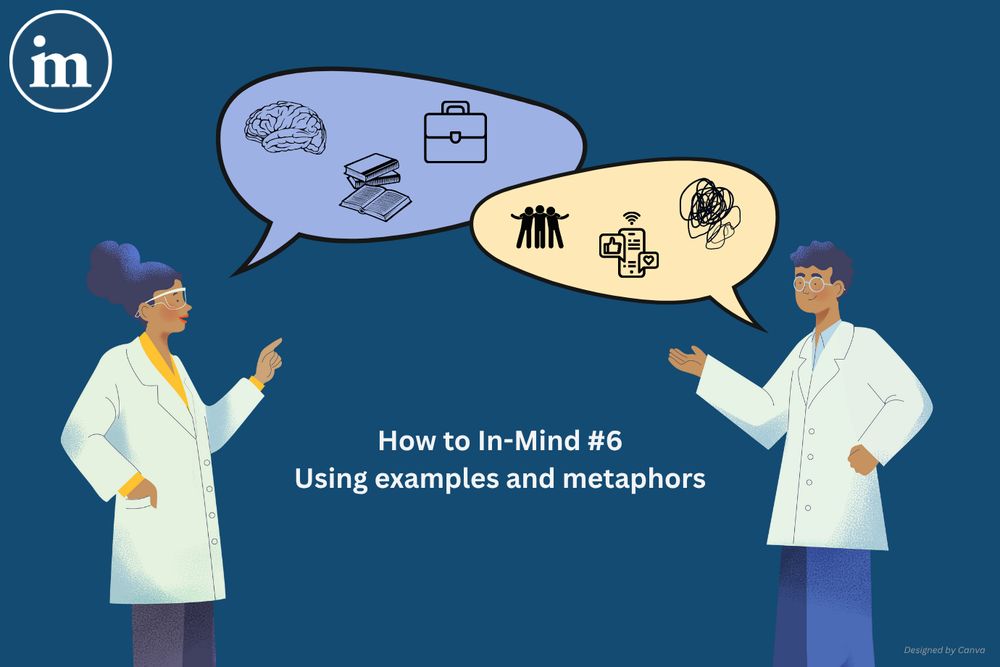
💬 𝗛𝗼𝘄 𝘁𝗼 𝗜𝗻-𝗠𝗶𝗻𝗱 #𝟲: 𝗨𝘀𝗶𝗻𝗴 𝗲𝘅𝗮𝗺𝗽𝗹𝗲𝘀 𝗮𝗻𝗱 𝗺𝗲𝘁𝗮𝗽𝗵𝗼𝗿𝘀 💬
✅ Use relatable examples, real or fictive.
✅ Stick to one or a few examples to frame your article.
✅ Use metaphors sparingly and note limitations.
💡 E.g., “stress is like a pressure cooker” works better than “the brain is a computer.”
✅ Use relatable examples, real or fictive.
✅ Stick to one or a few examples to frame your article.
✅ Use metaphors sparingly and note limitations.
💡 E.g., “stress is like a pressure cooker” works better than “the brain is a computer.”
November 14, 2025 at 9:30 AM
💬 𝗛𝗼𝘄 𝘁𝗼 𝗜𝗻-𝗠𝗶𝗻𝗱 #𝟲: 𝗨𝘀𝗶𝗻𝗴 𝗲𝘅𝗮𝗺𝗽𝗹𝗲𝘀 𝗮𝗻𝗱 𝗺𝗲𝘁𝗮𝗽𝗵𝗼𝗿𝘀 💬
✅ Use relatable examples, real or fictive.
✅ Stick to one or a few examples to frame your article.
✅ Use metaphors sparingly and note limitations.
💡 E.g., “stress is like a pressure cooker” works better than “the brain is a computer.”
✅ Use relatable examples, real or fictive.
✅ Stick to one or a few examples to frame your article.
✅ Use metaphors sparingly and note limitations.
💡 E.g., “stress is like a pressure cooker” works better than “the brain is a computer.”
Reposted by Stella Wernicke
💬 𝙃𝙤𝙬 𝙩𝙤 𝙄𝙣-𝙈𝙞𝙣𝙙 #5: 𝘾𝙝𝙤𝙤𝙨𝙞𝙣𝙜 𝙖 𝙩𝙞𝙩𝙡𝙚 𝙛𝙤𝙧 𝙮𝙤𝙪𝙧 𝙖𝙧𝙩𝙞𝙘𝙡𝙚 💬
✅ Choose the same scope as the article
🗣️ Make sure the title can be understood before reading the article
🌍 Readers across the globe should understand the text
🎯 Choose clarity over catchiness
🔍 Support searchability
✅ Choose the same scope as the article
🗣️ Make sure the title can be understood before reading the article
🌍 Readers across the globe should understand the text
🎯 Choose clarity over catchiness
🔍 Support searchability

October 27, 2025 at 9:02 AM
💬 𝙃𝙤𝙬 𝙩𝙤 𝙄𝙣-𝙈𝙞𝙣𝙙 #5: 𝘾𝙝𝙤𝙤𝙨𝙞𝙣𝙜 𝙖 𝙩𝙞𝙩𝙡𝙚 𝙛𝙤𝙧 𝙮𝙤𝙪𝙧 𝙖𝙧𝙩𝙞𝙘𝙡𝙚 💬
✅ Choose the same scope as the article
🗣️ Make sure the title can be understood before reading the article
🌍 Readers across the globe should understand the text
🎯 Choose clarity over catchiness
🔍 Support searchability
✅ Choose the same scope as the article
🗣️ Make sure the title can be understood before reading the article
🌍 Readers across the globe should understand the text
🎯 Choose clarity over catchiness
🔍 Support searchability
Reposted by Stella Wernicke
📝 𝙄𝙣𝙩𝙚𝙧𝙚𝙨𝙩𝙚𝙙 𝙞𝙣 𝙘𝙤𝙣𝙩𝙧𝙞𝙗𝙪𝙩𝙞𝙣𝙜?
We welcome submissions from psychology researchers at all stages – whether you’re experienced in science communication or just starting out.
🔗 𝗥𝗲𝗹𝗮𝘂𝗻𝗰𝗵 𝗮𝗻𝗻𝗼𝘂𝗻𝗰𝗲𝗺𝗲𝗻𝘁: www.in-mind.org/blog/post/in...
🔗 𝗚𝘂𝗶𝗱𝗲𝗹𝗶𝗻𝗲𝘀 𝗳𝗼𝗿 𝗮𝘂𝘁𝗵𝗼𝗿𝘀: www.in-mind.org/content/for-...
We welcome submissions from psychology researchers at all stages – whether you’re experienced in science communication or just starting out.
🔗 𝗥𝗲𝗹𝗮𝘂𝗻𝗰𝗵 𝗮𝗻𝗻𝗼𝘂𝗻𝗰𝗲𝗺𝗲𝗻𝘁: www.in-mind.org/blog/post/in...
🔗 𝗚𝘂𝗶𝗱𝗲𝗹𝗶𝗻𝗲𝘀 𝗳𝗼𝗿 𝗮𝘂𝘁𝗵𝗼𝗿𝘀: www.in-mind.org/content/for-...
In-Mind has relaunched its blog post | the InMind blog | In-Mind
www.in-mind.org
September 29, 2025 at 5:55 AM
📝 𝙄𝙣𝙩𝙚𝙧𝙚𝙨𝙩𝙚𝙙 𝙞𝙣 𝙘𝙤𝙣𝙩𝙧𝙞𝙗𝙪𝙩𝙞𝙣𝙜?
We welcome submissions from psychology researchers at all stages – whether you’re experienced in science communication or just starting out.
🔗 𝗥𝗲𝗹𝗮𝘂𝗻𝗰𝗵 𝗮𝗻𝗻𝗼𝘂𝗻𝗰𝗲𝗺𝗲𝗻𝘁: www.in-mind.org/blog/post/in...
🔗 𝗚𝘂𝗶𝗱𝗲𝗹𝗶𝗻𝗲𝘀 𝗳𝗼𝗿 𝗮𝘂𝘁𝗵𝗼𝗿𝘀: www.in-mind.org/content/for-...
We welcome submissions from psychology researchers at all stages – whether you’re experienced in science communication or just starting out.
🔗 𝗥𝗲𝗹𝗮𝘂𝗻𝗰𝗵 𝗮𝗻𝗻𝗼𝘂𝗻𝗰𝗲𝗺𝗲𝗻𝘁: www.in-mind.org/blog/post/in...
🔗 𝗚𝘂𝗶𝗱𝗲𝗹𝗶𝗻𝗲𝘀 𝗳𝗼𝗿 𝗮𝘂𝘁𝗵𝗼𝗿𝘀: www.in-mind.org/content/for-...
Reposted by Stella Wernicke
🚀 𝗜𝗻-𝗠𝗶𝗻𝗱'𝘀 𝗯𝗹𝗼𝗴 𝗵𝗮𝘀 𝗿𝗲𝗹𝗮𝘂𝗻𝗰𝗵𝗲𝗱 🚀
Are you passionate about sharing your research with a general audience but short on time?
Alongside full-length science communication articles (1,000–2,000 words), In-Mind now also accepts blog post submissions (300–600 words).
Are you passionate about sharing your research with a general audience but short on time?
Alongside full-length science communication articles (1,000–2,000 words), In-Mind now also accepts blog post submissions (300–600 words).

September 29, 2025 at 5:55 AM
🚀 𝗜𝗻-𝗠𝗶𝗻𝗱'𝘀 𝗯𝗹𝗼𝗴 𝗵𝗮𝘀 𝗿𝗲𝗹𝗮𝘂𝗻𝗰𝗵𝗲𝗱 🚀
Are you passionate about sharing your research with a general audience but short on time?
Alongside full-length science communication articles (1,000–2,000 words), In-Mind now also accepts blog post submissions (300–600 words).
Are you passionate about sharing your research with a general audience but short on time?
Alongside full-length science communication articles (1,000–2,000 words), In-Mind now also accepts blog post submissions (300–600 words).
Reposted by Stella Wernicke
We’re looking for PhD students in psychology or related fields, or Master’s students with plans to continue to a PhD or to work in science communication.
📅 Deadline: 1 October 2025
👉 Apply here: docs.google.com/forms/d/e/1F...
📅 Deadline: 1 October 2025
👉 Apply here: docs.google.com/forms/d/e/1F...

Join the In-Mind Team - Fall 2025
docs.google.com
September 22, 2025 at 11:06 AM
We’re looking for PhD students in psychology or related fields, or Master’s students with plans to continue to a PhD or to work in science communication.
📅 Deadline: 1 October 2025
👉 Apply here: docs.google.com/forms/d/e/1F...
📅 Deadline: 1 October 2025
👉 Apply here: docs.google.com/forms/d/e/1F...
Reposted by Stella Wernicke
🌟 Join the In-Mind Social Media Team! 🌟
Do you want to help make psychology research accessible to a wider audience while sharpening your skills in science communication? In-Mind is looking for 3–4 new volunteers to join our Social Media Team!
Do you want to help make psychology research accessible to a wider audience while sharpening your skills in science communication? In-Mind is looking for 3–4 new volunteers to join our Social Media Team!
September 22, 2025 at 11:06 AM
🌟 Join the In-Mind Social Media Team! 🌟
Do you want to help make psychology research accessible to a wider audience while sharpening your skills in science communication? In-Mind is looking for 3–4 new volunteers to join our Social Media Team!
Do you want to help make psychology research accessible to a wider audience while sharpening your skills in science communication? In-Mind is looking for 3–4 new volunteers to join our Social Media Team!
Reposted by Stella Wernicke
💬 𝐇𝐨𝐰 𝐭𝐨 𝐈𝐧-𝐌𝐢𝐧𝐝 #𝟑: 𝐓𝐫𝐚𝐧𝐬𝐥𝐚𝐭𝐢𝐧𝐠 𝐩𝐮𝐛𝐥𝐢𝐜𝐚𝐭𝐢𝐨𝐧𝐬 𝐢𝐧𝐭𝐨 𝐬𝐜𝐢𝐞𝐧𝐜𝐞 𝐜𝐨𝐦𝐦𝐮𝐧𝐢𝐜𝐚𝐭𝐢𝐨𝐧 💬
Writing for a broad audience means rethinking how you present your research. It’s not just about simplifying – it’s about 𝘤𝘩𝘰𝘰𝘴𝘪𝘯𝘨 𝘸𝘩𝘢𝘵’𝘴 𝘦𝘴𝘴𝘦𝘯𝘵𝘪𝘢𝘭 and structuring it so people outside your field can follow along.
Writing for a broad audience means rethinking how you present your research. It’s not just about simplifying – it’s about 𝘤𝘩𝘰𝘰𝘴𝘪𝘯𝘨 𝘸𝘩𝘢𝘵’𝘴 𝘦𝘴𝘴𝘦𝘯𝘵𝘪𝘢𝘭 and structuring it so people outside your field can follow along.

September 19, 2025 at 7:01 AM
💬 𝐇𝐨𝐰 𝐭𝐨 𝐈𝐧-𝐌𝐢𝐧𝐝 #𝟑: 𝐓𝐫𝐚𝐧𝐬𝐥𝐚𝐭𝐢𝐧𝐠 𝐩𝐮𝐛𝐥𝐢𝐜𝐚𝐭𝐢𝐨𝐧𝐬 𝐢𝐧𝐭𝐨 𝐬𝐜𝐢𝐞𝐧𝐜𝐞 𝐜𝐨𝐦𝐦𝐮𝐧𝐢𝐜𝐚𝐭𝐢𝐨𝐧 💬
Writing for a broad audience means rethinking how you present your research. It’s not just about simplifying – it’s about 𝘤𝘩𝘰𝘰𝘴𝘪𝘯𝘨 𝘸𝘩𝘢𝘵’𝘴 𝘦𝘴𝘴𝘦𝘯𝘵𝘪𝘢𝘭 and structuring it so people outside your field can follow along.
Writing for a broad audience means rethinking how you present your research. It’s not just about simplifying – it’s about 𝘤𝘩𝘰𝘰𝘴𝘪𝘯𝘨 𝘸𝘩𝘢𝘵’𝘴 𝘦𝘴𝘴𝘦𝘯𝘵𝘪𝘢𝘭 and structuring it so people outside your field can follow along.
I’m grateful to have been awarded the biannual 𝗪𝗶𝗹𝗵𝗲𝗹𝗺 𝗪𝗼𝗼𝗿𝘁 𝗔𝗴𝗶𝗻𝗴 𝗥𝗲𝘀𝗲𝗮𝗿𝗰𝗵 𝗣𝗿𝗶𝘇𝗲 today. 🧓🏽
Thank you to the Wilhelm Woort Foundation for supporting aging research, and congratulations to my co-recipient Alexa Häger. 👏
📄 Press release: www.deutsches-stiftungszentrum.de/aktuelles/20...
Thank you to the Wilhelm Woort Foundation for supporting aging research, and congratulations to my co-recipient Alexa Häger. 👏
📄 Press release: www.deutsches-stiftungszentrum.de/aktuelles/20...

September 18, 2025 at 6:34 PM
I’m grateful to have been awarded the biannual 𝗪𝗶𝗹𝗵𝗲𝗹𝗺 𝗪𝗼𝗼𝗿𝘁 𝗔𝗴𝗶𝗻𝗴 𝗥𝗲𝘀𝗲𝗮𝗿𝗰𝗵 𝗣𝗿𝗶𝘇𝗲 today. 🧓🏽
Thank you to the Wilhelm Woort Foundation for supporting aging research, and congratulations to my co-recipient Alexa Häger. 👏
📄 Press release: www.deutsches-stiftungszentrum.de/aktuelles/20...
Thank you to the Wilhelm Woort Foundation for supporting aging research, and congratulations to my co-recipient Alexa Häger. 👏
📄 Press release: www.deutsches-stiftungszentrum.de/aktuelles/20...
Reposted by Stella Wernicke
Interested in applying?
Fill out the application form below, and we'll get in touch. Shortlisted candidates will be invited to an interview.
📅 Deadline: 1 October 2025
👉 More information: www.in-mind.org/blog/post/jo...
👉 Apply here: docs.google.com/forms/d/e/1F...
Fill out the application form below, and we'll get in touch. Shortlisted candidates will be invited to an interview.
📅 Deadline: 1 October 2025
👉 More information: www.in-mind.org/blog/post/jo...
👉 Apply here: docs.google.com/forms/d/e/1F...
Join the In-Mind Team: Help us make psychology accessible to everyone! | the InMind blog | In-Mind
www.in-mind.org
September 16, 2025 at 12:07 PM
Interested in applying?
Fill out the application form below, and we'll get in touch. Shortlisted candidates will be invited to an interview.
📅 Deadline: 1 October 2025
👉 More information: www.in-mind.org/blog/post/jo...
👉 Apply here: docs.google.com/forms/d/e/1F...
Fill out the application form below, and we'll get in touch. Shortlisted candidates will be invited to an interview.
📅 Deadline: 1 October 2025
👉 More information: www.in-mind.org/blog/post/jo...
👉 Apply here: docs.google.com/forms/d/e/1F...
Reposted by Stella Wernicke
We’re looking for active researchers (across all career stages) and enthusiastic students passionate about psychological science communication.
🔹 2 Editors in Clinical Psychology and Human-Technology Interactions
🔹 3–4 members for our Social Media Team
🔹 2 Editors in Clinical Psychology and Human-Technology Interactions
🔹 3–4 members for our Social Media Team
September 16, 2025 at 12:07 PM
We’re looking for active researchers (across all career stages) and enthusiastic students passionate about psychological science communication.
🔹 2 Editors in Clinical Psychology and Human-Technology Interactions
🔹 3–4 members for our Social Media Team
🔹 2 Editors in Clinical Psychology and Human-Technology Interactions
🔹 3–4 members for our Social Media Team
Reposted by Stella Wernicke
💬 𝗛𝗼𝘄 𝘁𝗼 𝗜𝗻-𝗠𝗶𝗻𝗱 #𝟮: 𝗖𝗵𝗼𝗼𝘀𝗶𝗻𝗴 𝗮𝗻 𝗮𝗿𝘁𝗶𝗰𝗹𝗲 𝘁𝗼𝗽𝗶𝗰 💬
Finding the right topic is one of the most important steps when writing about science for the public. Your goal shouldn't be just to share your research, but to make your article 𝘳𝘦𝘭𝘦𝘷𝘢𝘯𝘵 𝘢𝘯𝘥 𝘶𝘯𝘥𝘦𝘳𝘴𝘵𝘢𝘯𝘥𝘢𝘣𝘭𝘦 for people outside your field.
Finding the right topic is one of the most important steps when writing about science for the public. Your goal shouldn't be just to share your research, but to make your article 𝘳𝘦𝘭𝘦𝘷𝘢𝘯𝘵 𝘢𝘯𝘥 𝘶𝘯𝘥𝘦𝘳𝘴𝘵𝘢𝘯𝘥𝘢𝘣𝘭𝘦 for people outside your field.

September 1, 2025 at 8:00 AM
💬 𝗛𝗼𝘄 𝘁𝗼 𝗜𝗻-𝗠𝗶𝗻𝗱 #𝟮: 𝗖𝗵𝗼𝗼𝘀𝗶𝗻𝗴 𝗮𝗻 𝗮𝗿𝘁𝗶𝗰𝗹𝗲 𝘁𝗼𝗽𝗶𝗰 💬
Finding the right topic is one of the most important steps when writing about science for the public. Your goal shouldn't be just to share your research, but to make your article 𝘳𝘦𝘭𝘦𝘷𝘢𝘯𝘵 𝘢𝘯𝘥 𝘶𝘯𝘥𝘦𝘳𝘴𝘵𝘢𝘯𝘥𝘢𝘣𝘭𝘦 for people outside your field.
Finding the right topic is one of the most important steps when writing about science for the public. Your goal shouldn't be just to share your research, but to make your article 𝘳𝘦𝘭𝘦𝘷𝘢𝘯𝘵 𝘢𝘯𝘥 𝘶𝘯𝘥𝘦𝘳𝘴𝘵𝘢𝘯𝘥𝘢𝘣𝘭𝘦 for people outside your field.
Reposted by Stella Wernicke
💬 𝗛𝗼𝘄 𝘁𝗼 𝗜𝗻-𝗠𝗶𝗻𝗱 #𝟭: 𝗪𝗵𝘆 𝗦𝗰𝗶𝗲𝗻𝗰𝗲 𝗖𝗼𝗺𝗺𝘂𝗻𝗶𝗰𝗮𝘁𝗶𝗼𝗻 𝗠𝗮𝘁𝘁𝗲𝗿𝘀 💬
We live in a world flooded with information, but not all of it is reliable. That's why it's essential for researchers to share scientific knowledge with the public. Science communication isn't just a nice-to-have, it's 𝘪𝘯𝘵𝘦𝘨𝘳𝘢𝘭.
We live in a world flooded with information, but not all of it is reliable. That's why it's essential for researchers to share scientific knowledge with the public. Science communication isn't just a nice-to-have, it's 𝘪𝘯𝘵𝘦𝘨𝘳𝘢𝘭.

August 27, 2025 at 9:00 AM
💬 𝗛𝗼𝘄 𝘁𝗼 𝗜𝗻-𝗠𝗶𝗻𝗱 #𝟭: 𝗪𝗵𝘆 𝗦𝗰𝗶𝗲𝗻𝗰𝗲 𝗖𝗼𝗺𝗺𝘂𝗻𝗶𝗰𝗮𝘁𝗶𝗼𝗻 𝗠𝗮𝘁𝘁𝗲𝗿𝘀 💬
We live in a world flooded with information, but not all of it is reliable. That's why it's essential for researchers to share scientific knowledge with the public. Science communication isn't just a nice-to-have, it's 𝘪𝘯𝘵𝘦𝘨𝘳𝘢𝘭.
We live in a world flooded with information, but not all of it is reliable. That's why it's essential for researchers to share scientific knowledge with the public. Science communication isn't just a nice-to-have, it's 𝘪𝘯𝘵𝘦𝘨𝘳𝘢𝘭.
Reposted by Stella Wernicke
Interested in applying?
Fill out the application form below, and we'll get in touch. Shortlisted candidates will be invited to an interview.
📅 Deadline: 1 October 2025
👉 More information: www.in-mind.org/blog/post/jo...
👉 Apply here: docs.google.com/forms/d/e/1F...
Fill out the application form below, and we'll get in touch. Shortlisted candidates will be invited to an interview.
📅 Deadline: 1 October 2025
👉 More information: www.in-mind.org/blog/post/jo...
👉 Apply here: docs.google.com/forms/d/e/1F...
Join the In-Mind Team: Help us make psychology accessible to everyone! | the InMind blog | In-Mind
www.in-mind.org
August 30, 2025 at 3:28 AM
Interested in applying?
Fill out the application form below, and we'll get in touch. Shortlisted candidates will be invited to an interview.
📅 Deadline: 1 October 2025
👉 More information: www.in-mind.org/blog/post/jo...
👉 Apply here: docs.google.com/forms/d/e/1F...
Fill out the application form below, and we'll get in touch. Shortlisted candidates will be invited to an interview.
📅 Deadline: 1 October 2025
👉 More information: www.in-mind.org/blog/post/jo...
👉 Apply here: docs.google.com/forms/d/e/1F...
Reposted by Stella Wernicke
🌟Calling for new team members at In-Mind 🌟
In-Mind is a volunteer-driven project dedicated to making psychology research accessible and engaging while maintaining scientific rigour.
In-Mind is a volunteer-driven project dedicated to making psychology research accessible and engaging while maintaining scientific rigour.
August 30, 2025 at 3:28 AM
🌟Calling for new team members at In-Mind 🌟
In-Mind is a volunteer-driven project dedicated to making psychology research accessible and engaging while maintaining scientific rigour.
In-Mind is a volunteer-driven project dedicated to making psychology research accessible and engaging while maintaining scientific rigour.
Reposted by Stella Wernicke
🧠 Meet the minds behind In-Mind: The Editorial Team 🧠
✨ Stella Wernicke
💼 Editor-in-Chief
🎓 PhD Student @uniofcam.bsky.social
🔍 Research interests: working memory, aging, neurodegeneration, neurodivergence
#MeetTheTeam #Psychology #ScienceCommunication
@stellawernicke.bsky.social
✨ Stella Wernicke
💼 Editor-in-Chief
🎓 PhD Student @uniofcam.bsky.social
🔍 Research interests: working memory, aging, neurodegeneration, neurodivergence
#MeetTheTeam #Psychology #ScienceCommunication
@stellawernicke.bsky.social
June 25, 2025 at 1:50 PM
🧠 Meet the minds behind In-Mind: The Editorial Team 🧠
✨ Stella Wernicke
💼 Editor-in-Chief
🎓 PhD Student @uniofcam.bsky.social
🔍 Research interests: working memory, aging, neurodegeneration, neurodivergence
#MeetTheTeam #Psychology #ScienceCommunication
@stellawernicke.bsky.social
✨ Stella Wernicke
💼 Editor-in-Chief
🎓 PhD Student @uniofcam.bsky.social
🔍 Research interests: working memory, aging, neurodegeneration, neurodivergence
#MeetTheTeam #Psychology #ScienceCommunication
@stellawernicke.bsky.social
Reposted by Stella Wernicke
📢 Update on our special issue “The Dark Side of Social Media” 📢
🌍 We’re excited to announce we’ve received many abstracts worldwide, including Australia, Germany, US & Norway!
The psychological effects of social media are complex, and our upcoming issue explores these impacts.
🌍 We’re excited to announce we’ve received many abstracts worldwide, including Australia, Germany, US & Norway!
The psychological effects of social media are complex, and our upcoming issue explores these impacts.
June 16, 2025 at 3:09 PM
📢 Update on our special issue “The Dark Side of Social Media” 📢
🌍 We’re excited to announce we’ve received many abstracts worldwide, including Australia, Germany, US & Norway!
The psychological effects of social media are complex, and our upcoming issue explores these impacts.
🌍 We’re excited to announce we’ve received many abstracts worldwide, including Australia, Germany, US & Norway!
The psychological effects of social media are complex, and our upcoming issue explores these impacts.
Reposted by Stella Wernicke
🚨 Join In-Mind 🚨
Applications to join our volunteer team at In-Mind are still open until Thursday, May 1 – we would love to hear from you!
🔗 Find out more here: www.in-mind.org/blog/post/jo...
📝 Apply here: docs.google.com/forms/d/e/1F...
#ScienceCommunication #Psychology #OpenScience #SciComm
Applications to join our volunteer team at In-Mind are still open until Thursday, May 1 – we would love to hear from you!
🔗 Find out more here: www.in-mind.org/blog/post/jo...
📝 Apply here: docs.google.com/forms/d/e/1F...
#ScienceCommunication #Psychology #OpenScience #SciComm
Join the In-Mind Team: Help us make psychology accessible to everyone! | the InMind blog | In-Mind
www.in-mind.org
April 29, 2025 at 4:18 PM
🚨 Join In-Mind 🚨
Applications to join our volunteer team at In-Mind are still open until Thursday, May 1 – we would love to hear from you!
🔗 Find out more here: www.in-mind.org/blog/post/jo...
📝 Apply here: docs.google.com/forms/d/e/1F...
#ScienceCommunication #Psychology #OpenScience #SciComm
Applications to join our volunteer team at In-Mind are still open until Thursday, May 1 – we would love to hear from you!
🔗 Find out more here: www.in-mind.org/blog/post/jo...
📝 Apply here: docs.google.com/forms/d/e/1F...
#ScienceCommunication #Psychology #OpenScience #SciComm
Reposted by Stella Wernicke

Die DGPs bekennt sich klar zur Wissenschaftsfreiheit. Forschung braucht Unabhängigkeit, Offenheit & internationale Kooperation – für Erkenntnis, Fortschritt & Demokratie. Statement (Deutsch & Englisch) hier 👉 www.dgps.de/aktuelles/de...
@evalottabrakemeier.bsky.social
@evalottabrakemeier.bsky.social
April 7, 2025 at 6:37 AM
Die DGPs bekennt sich klar zur Wissenschaftsfreiheit. Forschung braucht Unabhängigkeit, Offenheit & internationale Kooperation – für Erkenntnis, Fortschritt & Demokratie. Statement (Deutsch & Englisch) hier 👉 www.dgps.de/aktuelles/de...
@evalottabrakemeier.bsky.social
@evalottabrakemeier.bsky.social
Reposted by Stella Wernicke
🚨 Call for Abstracts for a Special Issue on the Negative Psychological Consequences of Social Media 🚨
We are currently seeking abstracts for the special issue “The Dark Side of Social Media — Unpacking its Psychological Impact”.
🗓️ Abstracts submission deadline: May 2, 2025
We are currently seeking abstracts for the special issue “The Dark Side of Social Media — Unpacking its Psychological Impact”.
🗓️ Abstracts submission deadline: May 2, 2025
April 4, 2025 at 10:07 AM
🚨 Call for Abstracts for a Special Issue on the Negative Psychological Consequences of Social Media 🚨
We are currently seeking abstracts for the special issue “The Dark Side of Social Media — Unpacking its Psychological Impact”.
🗓️ Abstracts submission deadline: May 2, 2025
We are currently seeking abstracts for the special issue “The Dark Side of Social Media — Unpacking its Psychological Impact”.
🗓️ Abstracts submission deadline: May 2, 2025