



SPAC - Social Physics and Complexity @LIP_PT
@spac.bsky.social
Research Group @lip_pt coordinated by joanagsa@bsky
#DigitalEpidemiology# ComputationalSocialSciences #Behaviour #ComplexSystems #Ethics in AI @ERC_Research funded
https://socialcomplexity.eu/
#DigitalEpidemiology# ComputationalSocialSciences #Behaviour #ComplexSystems #Ethics in AI @ERC_Research funded
https://socialcomplexity.eu/
Reposted by SPAC - Social Physics and Complexity @LIP_PT
Thank you, @dereklowe.bsky.social for commenting on our work @spac.bsky.social
More on this soon: across several metrics, we find that it’s not the least knowledgeable who are the most overconfident, it is those who have some knowledge
We call this the IKE - intermediate knowledge effect
More on this soon: across several metrics, we find that it’s not the least knowledgeable who are the most overconfident, it is those who have some knowledge
We call this the IKE - intermediate knowledge effect
"I've been meaning to write about this paper for a while now - it's an attempt to quantify the relationship between the amount of scientific knowledge a person has and the amount that they think they have."
@dereklowe.bsky.social commenting on @joanagsa.bsky.social' s work
@dereklowe.bsky.social commenting on @joanagsa.bsky.social' s work
A Little Knowledge
www.science.org
November 14, 2024 at 8:25 AM
Thank you, @dereklowe.bsky.social for commenting on our work @spac.bsky.social
More on this soon: across several metrics, we find that it’s not the least knowledgeable who are the most overconfident, it is those who have some knowledge
We call this the IKE - intermediate knowledge effect
More on this soon: across several metrics, we find that it’s not the least knowledgeable who are the most overconfident, it is those who have some knowledge
We call this the IKE - intermediate knowledge effect
Reposted by SPAC - Social Physics and Complexity @LIP_PT
We are hiring!
If you are a #Psychology #Sociology #Neuro student, BSc or MSc level, and care about the role of human biases in the spread of #disinformation please consider applying
(Lisbon based)
If you are not but happen to know who is, do share
euraxess.ec.europa.eu/jobs/287003
@spac.bsky.social
If you are a #Psychology #Sociology #Neuro student, BSc or MSc level, and care about the role of human biases in the spread of #disinformation please consider applying
(Lisbon based)
If you are not but happen to know who is, do share
euraxess.ec.europa.eu/jobs/287003
@spac.bsky.social
Research Fellowship (BI – Bachelor) - SPAC Group
The Laboratory of Instrumentation and Experimental Particle Physics (LIP) is opening a selection tender for one Research Student Fellowship (BI – Bachelor) for research activities in the scientific su...
euraxess.ec.europa.eu
November 15, 2024 at 11:46 AM
We are hiring!
If you are a #Psychology #Sociology #Neuro student, BSc or MSc level, and care about the role of human biases in the spread of #disinformation please consider applying
(Lisbon based)
If you are not but happen to know who is, do share
euraxess.ec.europa.eu/jobs/287003
@spac.bsky.social
If you are a #Psychology #Sociology #Neuro student, BSc or MSc level, and care about the role of human biases in the spread of #disinformation please consider applying
(Lisbon based)
If you are not but happen to know who is, do share
euraxess.ec.europa.eu/jobs/287003
@spac.bsky.social
Reposted by SPAC - Social Physics and Complexity @LIP_PT
@spac.bsky.social we don't publish much, but when we do..
Our most recent paper was:
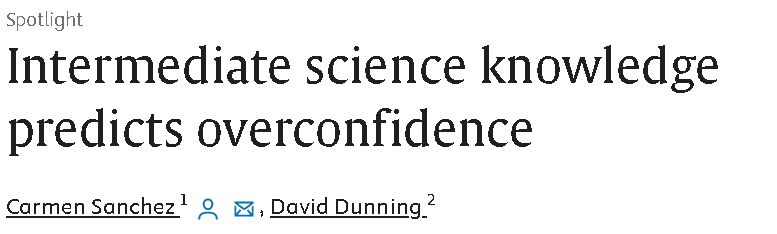
-Spotlighted by Sanchez and Dunning (yes, from Dunning-Kruger Effect) sciencedirect.com/science/arti...
-Highlighted @NatureMedicine
nature.com/articles/d41...
-Visited >9k in <3mo www.nature.com/articles/s41...
Our most recent paper was:
-Spotlighted by Sanchez and Dunning (yes, from Dunning-Kruger Effect) sciencedirect.com/science/arti...
-Highlighted @NatureMedicine
nature.com/articles/d41...
-Visited >9k in <3mo www.nature.com/articles/s41...
December 14, 2023 at 10:03 AM
@spac.bsky.social we don't publish much, but when we do..
Our most recent paper was:
-Spotlighted by Sanchez and Dunning (yes, from Dunning-Kruger Effect) sciencedirect.com/science/arti...
-Highlighted @NatureMedicine
nature.com/articles/d41...
-Visited >9k in <3mo www.nature.com/articles/s41...
Our most recent paper was:
-Spotlighted by Sanchez and Dunning (yes, from Dunning-Kruger Effect) sciencedirect.com/science/arti...
-Highlighted @NatureMedicine
nature.com/articles/d41...
-Visited >9k in <3mo www.nature.com/articles/s41...
Reposted by SPAC - Social Physics and Complexity @LIP_PT
A summary of our recent findings @spac.bsky.social highlighted by Nautilus Magazine.
nautil.us/a-little-bit...
(small correction, we are no longer at Nova, we are at LIP)
nautil.us/a-little-bit...
(small correction, we are no longer at Nova, we are at LIP)
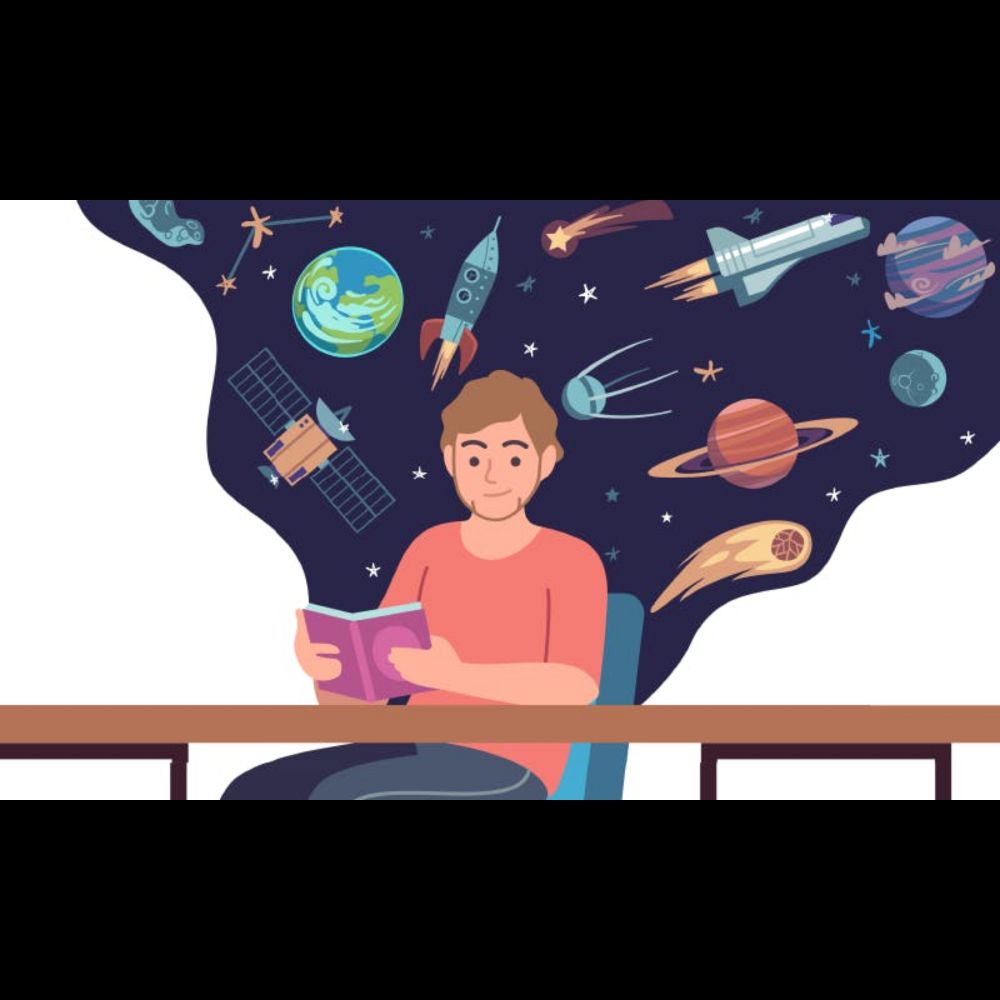
A Little Bit of Science Knowledge Is a Dangerous Thing
You might not know as much about science as you think.
nautil.us
November 6, 2023 at 10:21 AM
A summary of our recent findings @spac.bsky.social highlighted by Nautilus Magazine.
nautil.us/a-little-bit...
(small correction, we are no longer at Nova, we are at LIP)
nautil.us/a-little-bit...
(small correction, we are no longer at Nova, we are at LIP)
Reposted by SPAC - Social Physics and Complexity @LIP_PT
Absolute must read: “Government is too often about confidentiality, closed doors and discretion. Speaking openly has the consequence of not being invited “in the room where it happens”. “
www.theguardian.com/commentisfre...
www.theguardian.com/commentisfre...
November 4, 2023 at 8:23 AM
Absolute must read: “Government is too often about confidentiality, closed doors and discretion. Speaking openly has the consequence of not being invited “in the room where it happens”. “
www.theguardian.com/commentisfre...
www.theguardian.com/commentisfre...
Reposted by SPAC - Social Physics and Complexity @LIP_PT
@spac.bsky.social's most recent paper being featured by
@Nature Human Behaviour.
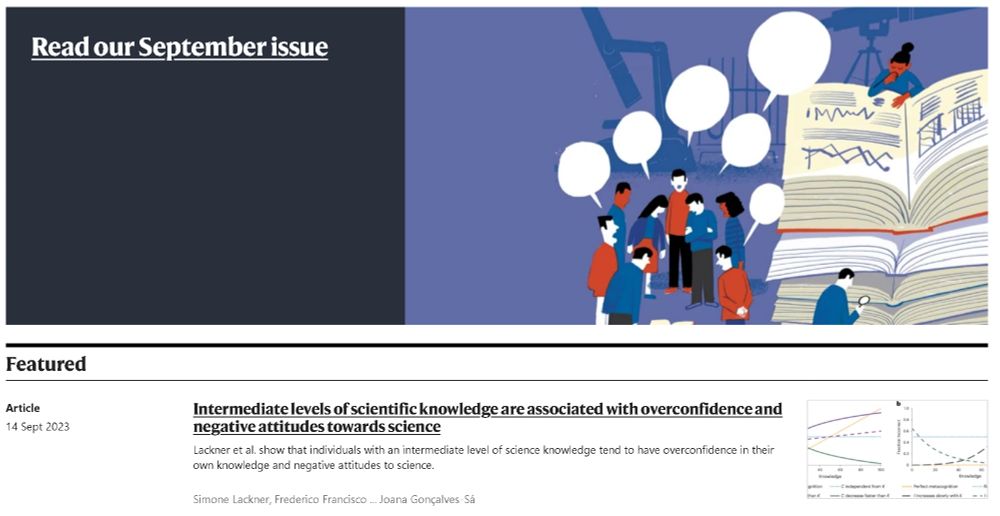
The wonderful illustration was created by #JoaoFazenda to show how a little knowledge may bring too much confidence. Link to the paper: nature.com/articles/s41...
Link to João's excellent artwork: joaofazenda.com
@Nature Human Behaviour.
The wonderful illustration was created by #JoaoFazenda to show how a little knowledge may bring too much confidence. Link to the paper: nature.com/articles/s41...
Link to João's excellent artwork: joaofazenda.com
October 20, 2023 at 11:12 AM
@spac.bsky.social's most recent paper being featured by
@Nature Human Behaviour.
The wonderful illustration was created by #JoaoFazenda to show how a little knowledge may bring too much confidence. Link to the paper: nature.com/articles/s41...
Link to João's excellent artwork: joaofazenda.com
@Nature Human Behaviour.
The wonderful illustration was created by #JoaoFazenda to show how a little knowledge may bring too much confidence. Link to the paper: nature.com/articles/s41...
Link to João's excellent artwork: joaofazenda.com
Reposted by SPAC - Social Physics and Complexity @LIP_PT
Had a fun conversation w/ Conor Dillon and Gabriel Borrud for the #ScienceUnscripted podcast @dw_news
Starting from @spac.bsky.social's recent paper, we discussed how much we should "dumb down" science to make it accessible and lowering the bar for saying "I don't know"
(7min in 1.5x speed ;) )
Starting from @spac.bsky.social's recent paper, we discussed how much we should "dumb down" science to make it accessible and lowering the bar for saying "I don't know"
(7min in 1.5x speed ;) )
'Moderate' knowledge leads to science skepticism
You'd think that the less someone knows, the more likely it is they'll buy in to misinformation. Right? Surprisingly, a new study suggests that, up to a point, it's actually worse to know more.
www.dw.com
October 12, 2023 at 12:24 PM
Had a fun conversation w/ Conor Dillon and Gabriel Borrud for the #ScienceUnscripted podcast @dw_news
Starting from @spac.bsky.social's recent paper, we discussed how much we should "dumb down" science to make it accessible and lowering the bar for saying "I don't know"
(7min in 1.5x speed ;) )
Starting from @spac.bsky.social's recent paper, we discussed how much we should "dumb down" science to make it accessible and lowering the bar for saying "I don't know"
(7min in 1.5x speed ;) )
Super busy week! -27th, learning about medical disinfo w/
@IRIS_Academic
-28th, discussing "Impact(s) of human, data, and algorithmic bias" @JointResearchCouncil disinfo meeting -29th, "What should AI learn from Biology?"
DigitalWPurpose summit
-29th, find us Champalimaud for EU_ResearchersNight
@IRIS_Academic
-28th, discussing "Impact(s) of human, data, and algorithmic bias" @JointResearchCouncil disinfo meeting -29th, "What should AI learn from Biology?"
DigitalWPurpose summit
-29th, find us Champalimaud for EU_ResearchersNight
September 28, 2023 at 11:32 AM
Super busy week! -27th, learning about medical disinfo w/
@IRIS_Academic
-28th, discussing "Impact(s) of human, data, and algorithmic bias" @JointResearchCouncil disinfo meeting -29th, "What should AI learn from Biology?"
DigitalWPurpose summit
-29th, find us Champalimaud for EU_ResearchersNight
@IRIS_Academic
-28th, discussing "Impact(s) of human, data, and algorithmic bias" @JointResearchCouncil disinfo meeting -29th, "What should AI learn from Biology?"
DigitalWPurpose summit
-29th, find us Champalimaud for EU_ResearchersNight
First post on a fresh paper!
Are the least knowledgeable also unaware of it?
How does confidence vary with (scientific) knowledge? After years of working on these questions, our results are out in @NatureHumanBehaviour
Open access fees were obscene but happy to share paper via email
@Behaviour
Are the least knowledgeable also unaware of it?
How does confidence vary with (scientific) knowledge? After years of working on these questions, our results are out in @NatureHumanBehaviour
Open access fees were obscene but happy to share paper via email
@Behaviour
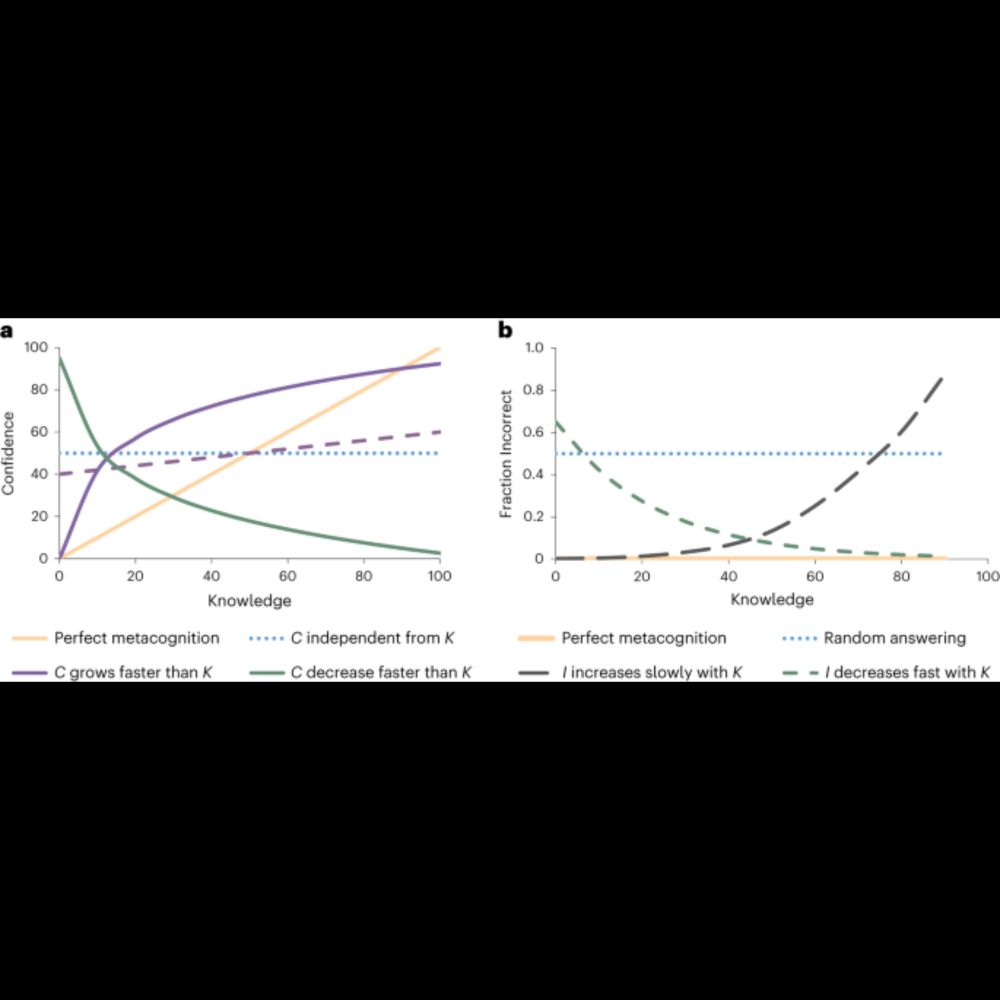
Intermediate levels of scientific knowledge are associated with overconfidence and negative attitude...
Lackner et al. show that individuals with an intermediate level of science knowledge tend to have overconfidence in their own knowledge and negative attitudes to science.
www.nature.com
September 14, 2023 at 11:20 PM
First post on a fresh paper!
Are the least knowledgeable also unaware of it?
How does confidence vary with (scientific) knowledge? After years of working on these questions, our results are out in @NatureHumanBehaviour
Open access fees were obscene but happy to share paper via email
@Behaviour
Are the least knowledgeable also unaware of it?
How does confidence vary with (scientific) knowledge? After years of working on these questions, our results are out in @NatureHumanBehaviour
Open access fees were obscene but happy to share paper via email
@Behaviour