



Simon Ford
@simonford.bsky.social
I see capital, nature and history as antagonistically entwined. My practice considers art / photo not only as expression, but as critical tools for social analysis—a method for uniting diverse knowledges in shaping transformative social understanding.
Everyday Utopias (a work in progress)

November 12, 2025 at 8:38 AM
Everyday Utopias (a work in progress)
Everyday Utopias (a work in progress)

November 9, 2025 at 1:11 PM
Everyday Utopias (a work in progress)
Everday Utopias (a work in progress)

November 9, 2025 at 1:09 PM
Everday Utopias (a work in progress)
My practice uses landscape and photography to examine power, and to dissolve theory/practice divides in seeking alternative ways of knowing. Reclaiming what endures to reimagine futures beyond the logic of profit. Adorno / Benjamin—capital as natural-history.
landscapeasdissection.wordpress.com
landscapeasdissection.wordpress.com

September 25, 2025 at 10:14 AM
My practice uses landscape and photography to examine power, and to dissolve theory/practice divides in seeking alternative ways of knowing. Reclaiming what endures to reimagine futures beyond the logic of profit. Adorno / Benjamin—capital as natural-history.
landscapeasdissection.wordpress.com
landscapeasdissection.wordpress.com
Penarth, South Wales, yesterday.

September 14, 2025 at 7:29 PM
Penarth, South Wales, yesterday.
@stevehanson.bsky.social, last week - the old clay quarry, Summit Brick Works, nr. Littleborough, from the Calderbrook Road.

September 14, 2025 at 7:28 PM
@stevehanson.bsky.social, last week - the old clay quarry, Summit Brick Works, nr. Littleborough, from the Calderbrook Road.
This already seems like a message from the Stone Age.
Marx in mind here, and his musings how capital might destroy itself - including the inability to keep up with its own technological progress. Benjamin comes to mind too, and the Utopian applying of an ‘emergency brake’ on (capitalist) progress.
Marx in mind here, and his musings how capital might destroy itself - including the inability to keep up with its own technological progress. Benjamin comes to mind too, and the Utopian applying of an ‘emergency brake’ on (capitalist) progress.

September 1, 2025 at 12:21 PM
This already seems like a message from the Stone Age.
Marx in mind here, and his musings how capital might destroy itself - including the inability to keep up with its own technological progress. Benjamin comes to mind too, and the Utopian applying of an ‘emergency brake’ on (capitalist) progress.
Marx in mind here, and his musings how capital might destroy itself - including the inability to keep up with its own technological progress. Benjamin comes to mind too, and the Utopian applying of an ‘emergency brake’ on (capitalist) progress.
The photobook Map of a Deracinated Landscape illustrates powerfully my interest in capital as an interminable 'natural-history'. Here, the post-industrial landscape of Ebbw Vale, once the site of Europe's largest steelworks. landscapeasdissection.wordpress.com/map-of-a-deracinated-landscape/

August 22, 2025 at 11:47 PM
The photobook Map of a Deracinated Landscape illustrates powerfully my interest in capital as an interminable 'natural-history'. Here, the post-industrial landscape of Ebbw Vale, once the site of Europe's largest steelworks. landscapeasdissection.wordpress.com/map-of-a-deracinated-landscape/
1. Between 1984–1992, five UK National Garden Festivals transformed post-industrial land. Beyond reclamation, they invited the public into a new era of neoliberalism, shifting values from collective production to consumerism and private ownership.


August 22, 2025 at 11:45 PM
1. Between 1984–1992, five UK National Garden Festivals transformed post-industrial land. Beyond reclamation, they invited the public into a new era of neoliberalism, shifting values from collective production to consumerism and private ownership.
2. Garden Festival Wales, held in 1992 at Ebbw Vale, was the first designed as a “market-led” venture. Its grounds—once Europe’s largest steelworks—now hold layered traces: new builds, festival ruins, and remnants of a vast industrial past.

August 22, 2025 at 11:44 PM
2. Garden Festival Wales, held in 1992 at Ebbw Vale, was the first designed as a “market-led” venture. Its grounds—once Europe’s largest steelworks—now hold layered traces: new builds, festival ruins, and remnants of a vast industrial past.
3. The site can be read, after Walter Benjamin, as a historical fragment: a microcosm where capitalist transformation is inscribed in physical space, revealing the complex overlap of memory, ideology, and material change.


August 22, 2025 at 11:43 PM
3. The site can be read, after Walter Benjamin, as a historical fragment: a microcosm where capitalist transformation is inscribed in physical space, revealing the complex overlap of memory, ideology, and material change.
4. Sections titled Steel, Coal, Limestone, and Ironstone trace the valley’s raw-material histories, following the Ebbw Vale Iron, Steel and Coal Company’s shift from local extraction to global sourcing as resources declined.


August 22, 2025 at 11:41 PM
4. Sections titled Steel, Coal, Limestone, and Ironstone trace the valley’s raw-material histories, following the Ebbw Vale Iron, Steel and Coal Company’s shift from local extraction to global sourcing as resources declined.
5. A section named Capital links these material histories to financial power, mapping flows of profit from local headquarters to corporate sponsors. The valley emerges as a node in global circuits of investment, speculation, and control.


August 22, 2025 at 11:23 PM
5. A section named Capital links these material histories to financial power, mapping flows of profit from local headquarters to corporate sponsors. The valley emerges as a node in global circuits of investment, speculation, and control.
6. In Objects, the next section of the book, found artefacts are paired with first-person narratives, countering macroeconomic analysis with lived experience. This turn to the intimate reframes the site as both personal memory and record of Britain’s economic reordering.


August 22, 2025 at 11:21 PM
6. In Objects, the next section of the book, found artefacts are paired with first-person narratives, countering macroeconomic analysis with lived experience. This turn to the intimate reframes the site as both personal memory and record of Britain’s economic reordering.
New photobook with Robert Galeta, Parks and Other Natural Histories: landscapeasdissection.wordpress.com/parks-and-ot...

August 18, 2025 at 10:39 AM
New photobook with Robert Galeta, Parks and Other Natural Histories: landscapeasdissection.wordpress.com/parks-and-ot...
1. A park is never neutral ground. It is a layered landscape where ideas of nature, culture, work, and leisure intersect. At a time when the meaning of work itself is shifting, parks offer a cipher to understand our past, present, and possible futures.

August 18, 2025 at 10:36 AM
1. A park is never neutral ground. It is a layered landscape where ideas of nature, culture, work, and leisure intersect. At a time when the meaning of work itself is shifting, parks offer a cipher to understand our past, present, and possible futures.
2. The public park, largely a Victorian creation, emerged from industrial wealth, collapse, and philanthropy. Both genuine benevolence and strategic alibi, it offered workers a carefully rationed “dose” of nature—leisure defined by its shadow, labour.

August 18, 2025 at 10:28 AM
2. The public park, largely a Victorian creation, emerged from industrial wealth, collapse, and philanthropy. Both genuine benevolence and strategic alibi, it offered workers a carefully rationed “dose” of nature—leisure defined by its shadow, labour.
3. Before public parks, the Picturesque reimagined estates as curated landscapes for elite enjoyment. “Nature” was staged with artful ruins and framed views, reflecting changing attitudes shaped by technology, taste, and social hierarchy.

August 18, 2025 at 10:24 AM
3. Before public parks, the Picturesque reimagined estates as curated landscapes for elite enjoyment. “Nature” was staged with artful ruins and framed views, reflecting changing attitudes shaped by technology, taste, and social hierarchy.
4. Philosopher Theodor W. Adorno called the intertwining of culture and nature “natural-history.” Parks embody this: they are historical artefacts offering access to a managed “nature” we sense we need, even as they remain shaped by human power.

August 18, 2025 at 10:23 AM
4. Philosopher Theodor W. Adorno called the intertwining of culture and nature “natural-history.” Parks embody this: they are historical artefacts offering access to a managed “nature” we sense we need, even as they remain shaped by human power.
5. No sanctuary is immune to capitalism’s reach. Green space and leisure can be co-opted by profit motives. Yet, as Marx noted, capital may create the seeds of its own end. If work vanishes through automation, what becomes of the park itself?

August 18, 2025 at 10:21 AM
5. No sanctuary is immune to capitalism’s reach. Green space and leisure can be co-opted by profit motives. Yet, as Marx noted, capital may create the seeds of its own end. If work vanishes through automation, what becomes of the park itself?
6. To see parks clearly, we need what Adorno termed “poeticization”—an artful recognition of nature as both alienated and familiar. This view exposes its fragility and invites us to see in each park a mirror of society’s history, desires, and limits.
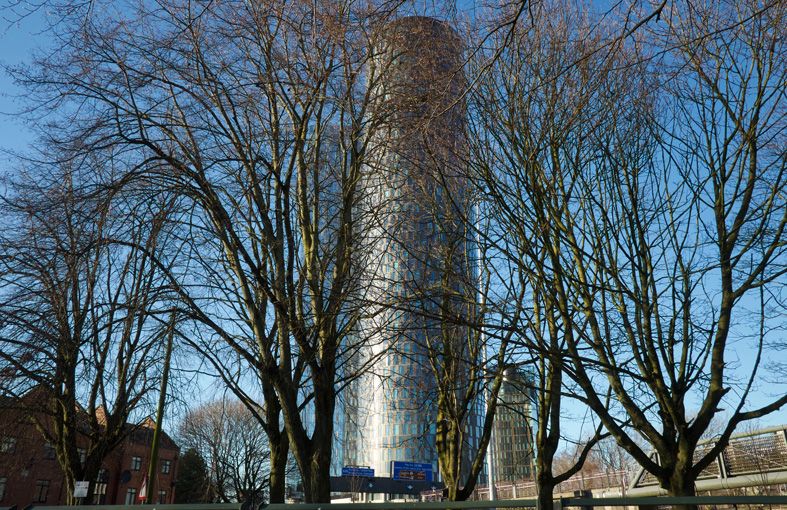
August 18, 2025 at 10:18 AM
6. To see parks clearly, we need what Adorno termed “poeticization”—an artful recognition of nature as both alienated and familiar. This view exposes its fragility and invites us to see in each park a mirror of society’s history, desires, and limits.