



Steven Silverberg
@silverbergastro.bsky.social
Postdoctoral Fellow, Smithsonian Astrophysical Observatory. Focus on low-mass stars and the material around them. PI of Disk Detective.
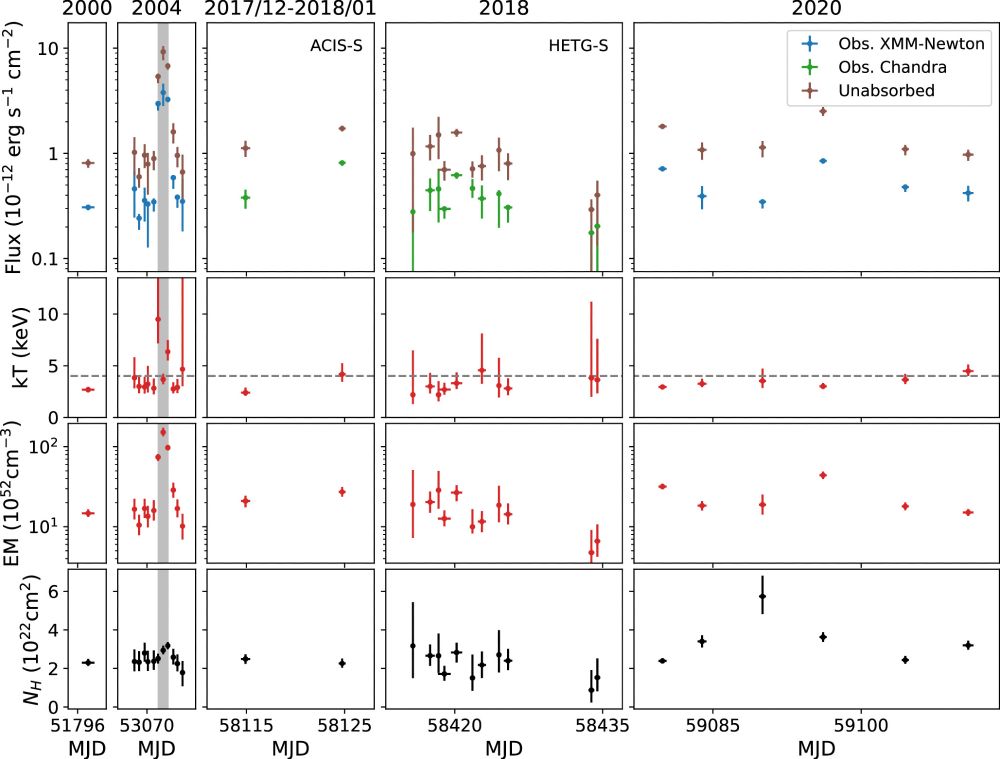
We were able to reprocess and analyze archival Chandra & XMM-Newton observations of HL Tau from 2000, 2004, 2017, and 2018, and look at how it changes (or doesn't) over time. The temperatures stay consistent around 4 keV. The bright 2020 observations are not as bright as a 2004 flare. 9/14
March 5, 2025 at 4:59 PM
We were able to reprocess and analyze archival Chandra & XMM-Newton observations of HL Tau from 2000, 2004, 2017, and 2018, and look at how it changes (or doesn't) over time. The temperatures stay consistent around 4 keV. The bright 2020 observations are not as bright as a 2004 flare. 9/14
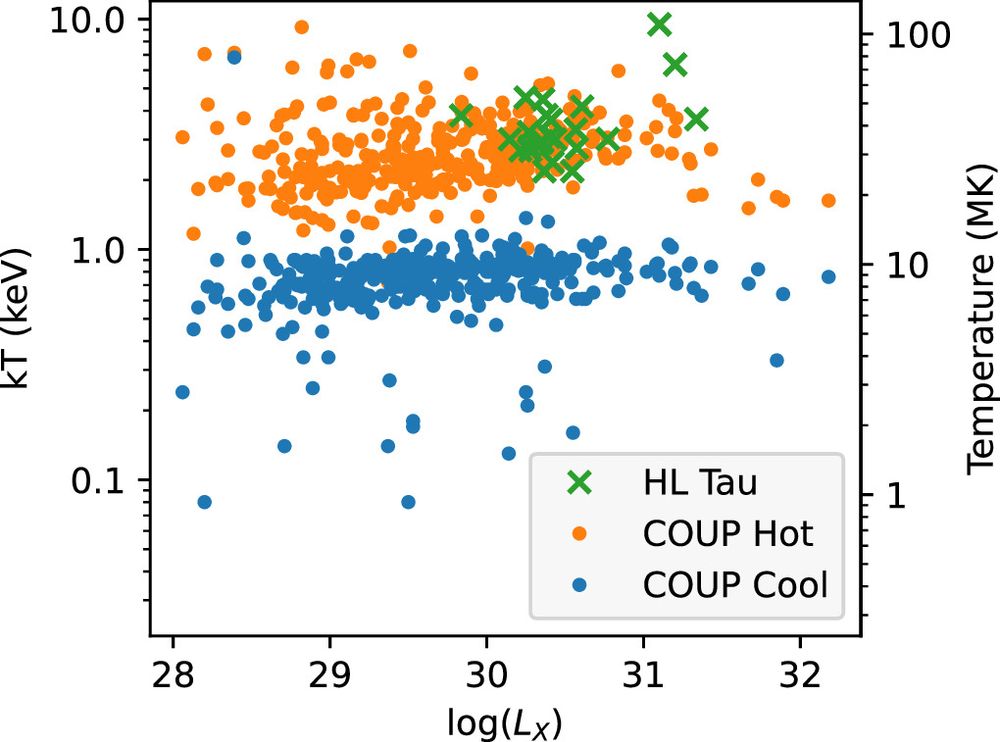
So, what all does this tell us? Our best fit models and the consistent presence of 6.7 keV emission indicate that the spectrum of HL Tau is hot (consistently ~4 keV), on the hot end and bright end of YSOs compared to the COUP observations, but generally consistent with being a Class I YSO. 8/14
March 5, 2025 at 4:59 PM
So, what all does this tell us? Our best fit models and the consistent presence of 6.7 keV emission indicate that the spectrum of HL Tau is hot (consistently ~4 keV), on the hot end and bright end of YSOs compared to the COUP observations, but generally consistent with being a Class I YSO. 8/14
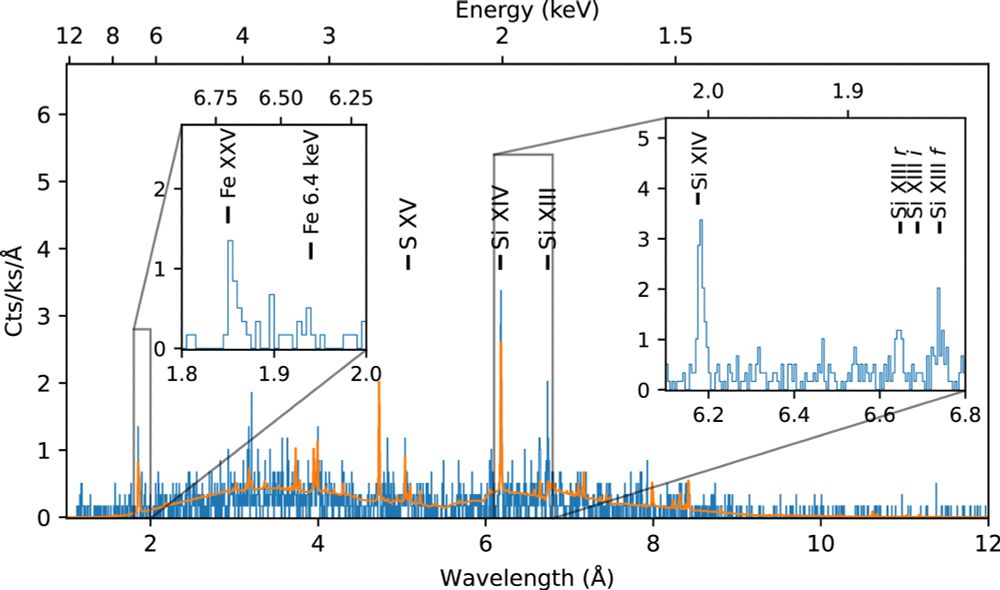
We also got a high-resolution spectrum using the High-Energy Transmission Grating on Chandra! These data show clear emission lines that help constrain the temperature and density of the plasma. We also see indications of cooler plasma hidden by the absorption, and a hint at iron fluorescence! 6/14
March 5, 2025 at 4:59 PM
We also got a high-resolution spectrum using the High-Energy Transmission Grating on Chandra! These data show clear emission lines that help constrain the temperature and density of the plasma. We also see indications of cooler plasma hidden by the absorption, and a hint at iron fluorescence! 6/14
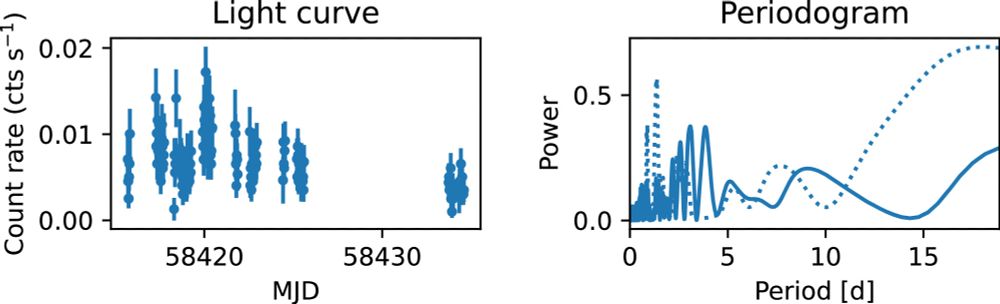
We did similar with the zeroth-order data from our Chandra gratings observations in 2018. The data were taken over 18 days, so we don't have sensitivity to a 21-day signal. There is some rise and fall in the data, but not nearly as clear as in the 2020 data. 5/14
March 5, 2025 at 4:59 PM
We did similar with the zeroth-order data from our Chandra gratings observations in 2018. The data were taken over 18 days, so we don't have sensitivity to a 21-day signal. There is some rise and fall in the data, but not nearly as clear as in the 2020 data. 5/14
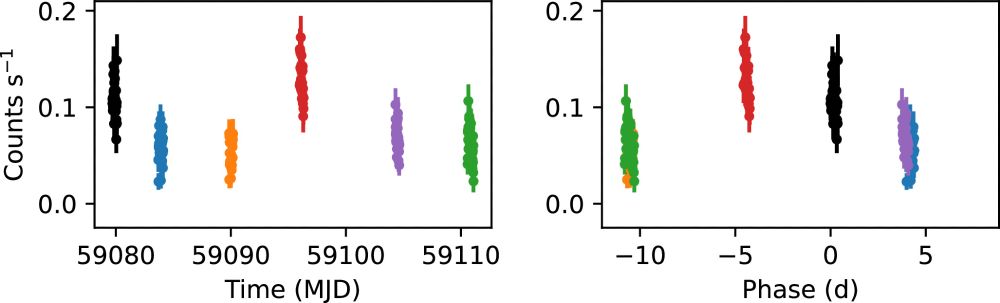
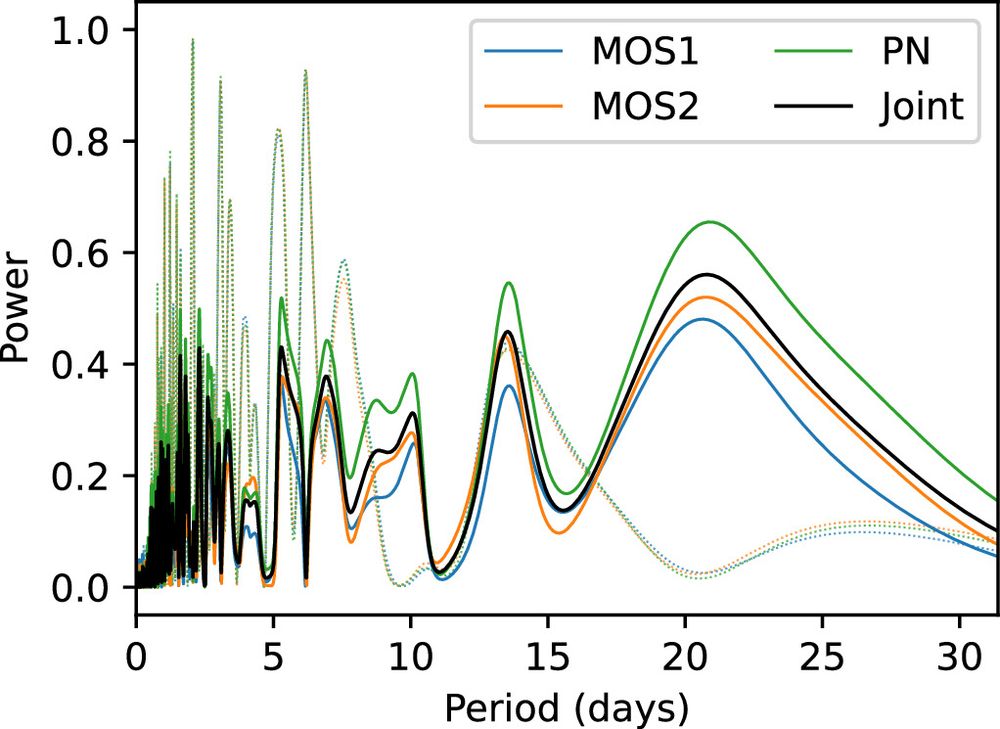
We looked at the variation over time in 2020, and saw something that looked like it might be a period. A Lomb-Scargle periodogram of the data shows a peak signal at 21 days (albeit with other peaks at lower levels at other periods). So, variability on a 21-day timescale! 4/14
March 5, 2025 at 4:59 PM
We looked at the variation over time in 2020, and saw something that looked like it might be a period. A Lomb-Scargle periodogram of the data shows a peak signal at 21 days (albeit with other peaks at lower levels at other periods). So, variability on a 21-day timescale! 4/14
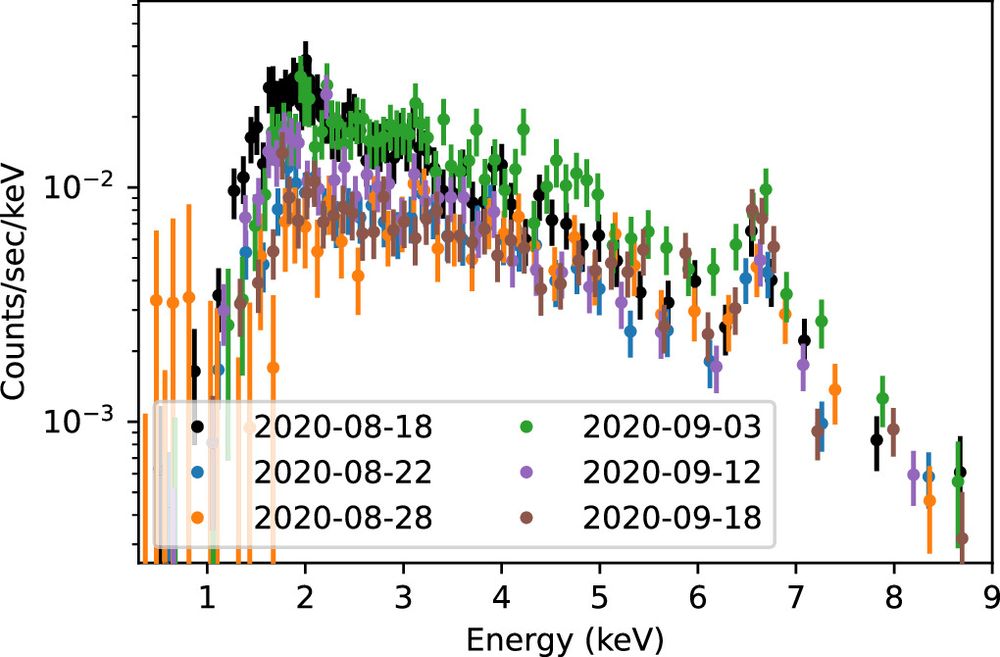
In our paper, we began with monitoring data of HL Tau from the XMM-Newton satellite in 2020, and high-resolution spectroscopy from Chandra in 2018. The monitoring data show that the spectrum is consistently hot, and heavily absorbed below 2 keV. 3/14
March 5, 2025 at 4:59 PM
In our paper, we began with monitoring data of HL Tau from the XMM-Newton satellite in 2020, and high-resolution spectroscopy from Chandra in 2018. The monitoring data show that the spectrum is consistently hot, and heavily absorbed below 2 keV. 3/14
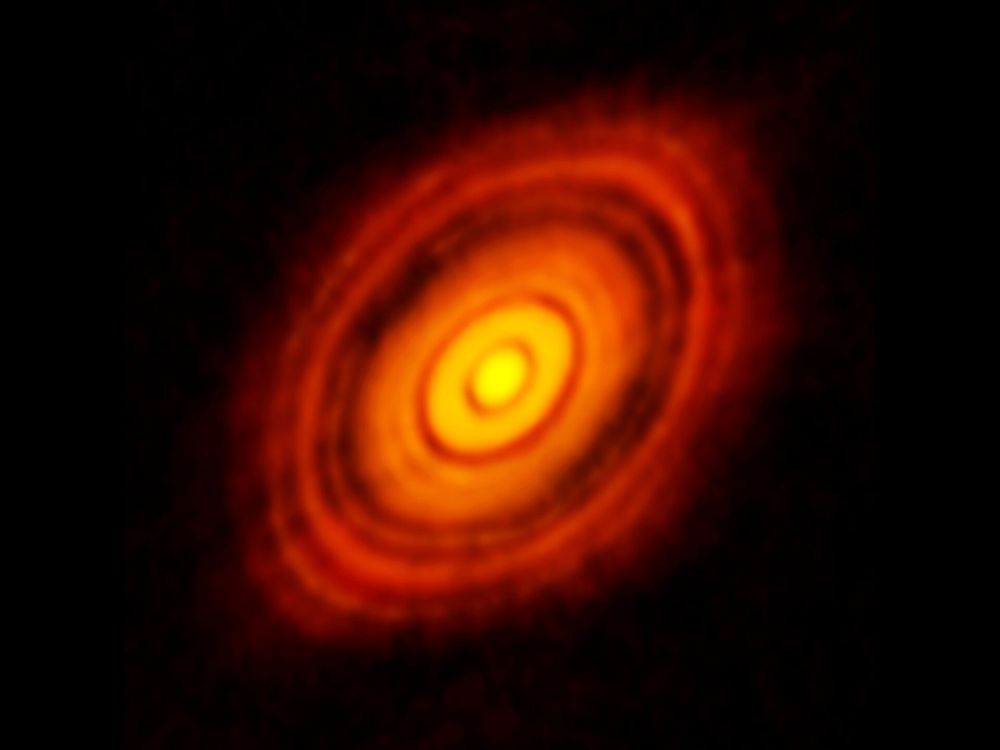
You may recall HL Tau from such hits as "a notable infrared source" and "subject of absolutely beautiful ALMA disk images." It's also an excellent subject for observation in X-rays, which can get at the stellar surface in ways other wavelengths can't as easily (because of absorption). 2/14
March 5, 2025 at 4:59 PM
You may recall HL Tau from such hits as "a notable infrared source" and "subject of absolutely beautiful ALMA disk images." It's also an excellent subject for observation in X-rays, which can get at the stellar surface in ways other wavelengths can't as easily (because of absorption). 2/14
Counterpoint: that's not even the best Cardale tweet. Evidence:

November 1, 2024 at 1:35 AM
Counterpoint: that's not even the best Cardale tweet. Evidence: