




Sonia Eynard
@seynard.bsky.social
Researcher at INRAE Toulouse. Working with omics data 👩💻🧬 across multiple species. Horse person 🐴🐎🦄, amateur beekeeper 🐝 and wildlife lover 🐯🐘🐋
https://scholar.google.com/citations?user=CAloEFcAAAAJ&hl=en
https://scholar.google.com/citations?user=CAloEFcAAAAJ&hl=en
Reposted by Sonia Eynard
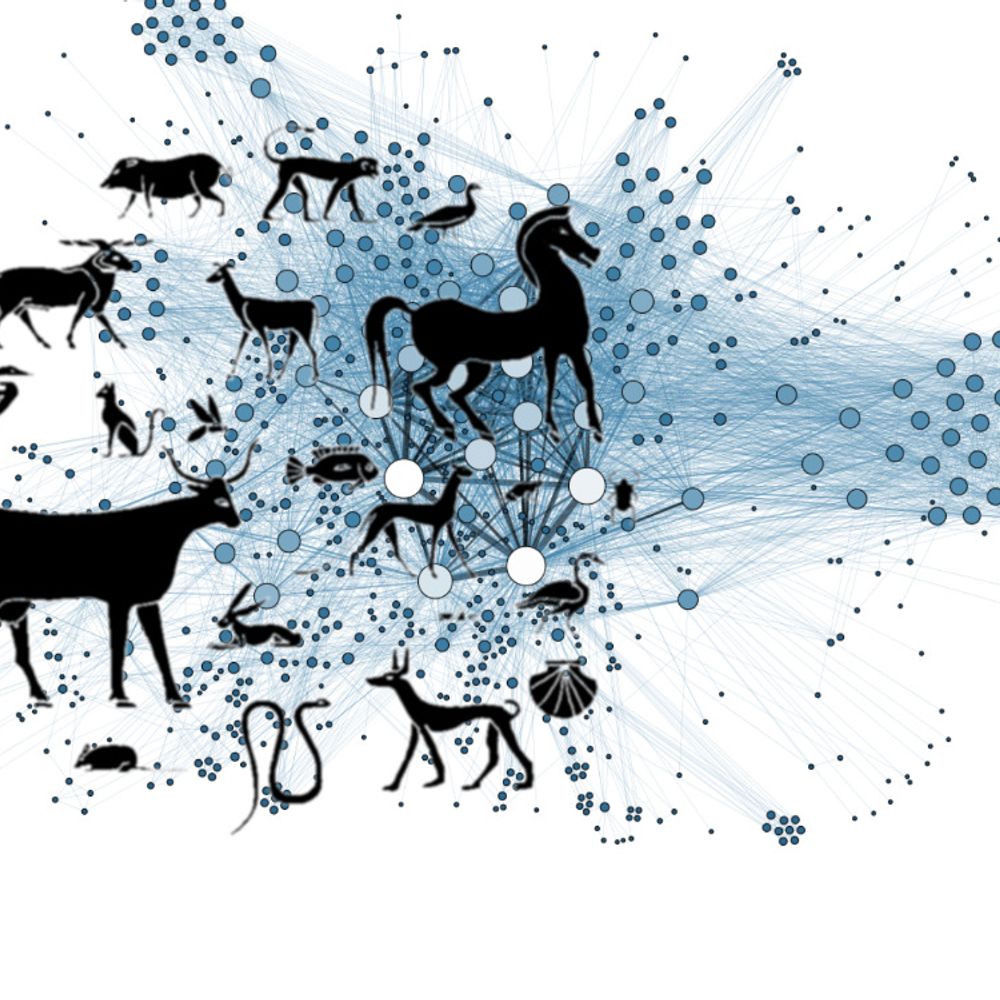
A new #preprint #OpenScience by Devailly et al.:
"The future of systems genetics in farm animal sciences, a route out of the data jungle"
Peer-reviewed and recommended by PCI Animal Science.
🔗 hal.science/hal-05117608
"The future of systems genetics in farm animal sciences, a route out of the data jungle"
Peer-reviewed and recommended by PCI Animal Science.
🔗 hal.science/hal-05117608

October 29, 2025 at 8:39 PM
A new #preprint #OpenScience by Devailly et al.:
"The future of systems genetics in farm animal sciences, a route out of the data jungle"
Peer-reviewed and recommended by PCI Animal Science.
🔗 hal.science/hal-05117608
"The future of systems genetics in farm animal sciences, a route out of the data jungle"
Peer-reviewed and recommended by PCI Animal Science.
🔗 hal.science/hal-05117608
Reposted by Sonia Eynard
2-year postdoctoral position available in Fanny Mondet’s group (Avignon, France) as part of her ERC project, in collaboration with our BeeGEES team in Toulouse
Interested in chemical ecology, transcriptomics, microbiomes, and honey bees? 🐝
Application deadline: November 27, 2025
Thanks for sharing!
Interested in chemical ecology, transcriptomics, microbiomes, and honey bees? 🐝
Application deadline: November 27, 2025
Thanks for sharing!
Postdoctoral position in chemical ecology and genomics: Mechanisms of honey bee resistance to varroa
A two-year position for a postdoctoral researcher is open at the “Bees and Environment” research unit (Avignon, France) affiliated to INRAE (French National Research Institute for Agriculture, Food and Environment), one of the leading institute in the world for the study of relationships between agriculture, environment and food. The postdoc will work on the physiological mechanisms, microbial diversity and molecular adaptation features of collective defenses against diseases in social animals.Background & dutiesInvasive species that reveal themselves as new parasites disrupt established host-pathogen dynamics and can cause immense economic damage. Despite their high susceptibility to invasions and disease spread, many social animals have evolved mechanisms that allow effective defence at the group level. Such defences have been described across the animal kingdom, especially within social insect species, and are known to involve chemical communication. Our team aims to understand the mechanisms that underpin collective behavioural and physiological defences against unhealthy brood in honey bee colonies, in the context of the invasion by the parasite Varroa destructor.Within this project, the postdoc will lead research to decipher the collective defences that are developed against brood diseases, with a particular interest about varroa. The focus will be placed around the understanding of physiological and behavioural mechanisms that are at the basis of honey bee resistance to this parasitic mite. Investigations will be performed through chemical ecology experiments, as well as transcriptomics and metagenomics. The overall goal is to determine the semiochemicals drivers of host defence towards parasitic infestation, to investigate the potential role of microbiome in resistance triggering, as well as to characterise physiological features of individual bees that are actively involved in the host response.Research environment and work conditionsYou will join the “Bees and Environment” research unit of INRAE in Avignon (France), which develops a wide range of research programs to study honey bee and wild bee populations, in the context of sustainable farming and global change. This postdoc project is part of an Interreg Alcotra grant (2023-2027 – Meliorapi) and an ERC Starting grant (2024-2028 – Bee Healthy) led by Fanny Mondet. You will work in close collaboration with our beekeeping technicians, students and postdocs of the team, our research assistant in chemical ecology and our engineer in honey bee genetics. You will benefit from all the lab and field work facilities of the unit, including our experimental apiary and chemical ecology platform. Additionally, the metagenomic work will be developed in close collaboration with the BeeGEES team of the GenPhySE research unit (INRAE) in Toulouse, especially Thibault Leroy. The BeeGEES team is one of the global leaders in honey bee genomics and have recently developed large-scale metagenomic projects. The postdoctoral researcher will be expected to spend periods in Toulouse to benefit from the local expertise in metagenomics, as well as the access to the genomic facilities.The contract will be for 2 years, starting in March 2026.Salary and benefits are according to INRAE rules in France (monthly gross salary ~ 3,100 €).
jobs.inrae.fr
October 25, 2025 at 5:29 AM
2-year postdoctoral position available in Fanny Mondet’s group (Avignon, France) as part of her ERC project, in collaboration with our BeeGEES team in Toulouse
Interested in chemical ecology, transcriptomics, microbiomes, and honey bees? 🐝
Application deadline: November 27, 2025
Thanks for sharing!
Interested in chemical ecology, transcriptomics, microbiomes, and honey bees? 🐝
Application deadline: November 27, 2025
Thanks for sharing!
I forgot to repost that but Stacy Rousse @quailistace.bsky.social first paper is out on biorxiv. Check out our work on transgenerational epigenetics in quails #GEroNIMOH2020

Transgenerational transmission of an environmental modification in quails: changes in phenotypic variance components across three generations https://www.biorxiv.org/content/10.1101/2025.07.04.663137v1
August 27, 2025 at 11:20 AM
I forgot to repost that but Stacy Rousse @quailistace.bsky.social first paper is out on biorxiv. Check out our work on transgenerational epigenetics in quails #GEroNIMOH2020
Stacy Rousse (@quailistace.bsky.social), Keyvan Karami and I are at the Epigenetic Inheritance Symposium in Zurich presenting our work on transgenerational epigenetics within #GEroNIMOH2020


August 27, 2025 at 11:16 AM
Stacy Rousse (@quailistace.bsky.social), Keyvan Karami and I are at the Epigenetic Inheritance Symposium in Zurich presenting our work on transgenerational epigenetics within #GEroNIMOH2020
If you're in #CSHL @cshlmeetings.bsky.social this week following #BOG25 come and have a look at my poster (#111) tonight and discuss genetic and epigenetic selection signatures 😉

May 7, 2025 at 8:21 PM
If you're in #CSHL @cshlmeetings.bsky.social this week following #BOG25 come and have a look at my poster (#111) tonight and discuss genetic and epigenetic selection signatures 😉
Reposted by Sonia Eynard
2000 personnes à Toulouse pour défendre les sciences ! #StandUpForScience

March 7, 2025 at 6:18 PM
2000 personnes à Toulouse pour défendre les sciences ! #StandUpForScience
Reposted by Sonia Eynard
Le 7 mars 2025 : Les sciences en danger,
la communauté scientifique se mobilise à Toulouse.
@standupforscience.bsky.social @standupforscifr.bsky.social
la communauté scientifique se mobilise à Toulouse.
@standupforscience.bsky.social @standupforscifr.bsky.social

March 4, 2025 at 9:55 PM
Le 7 mars 2025 : Les sciences en danger,
la communauté scientifique se mobilise à Toulouse.
@standupforscience.bsky.social @standupforscifr.bsky.social
la communauté scientifique se mobilise à Toulouse.
@standupforscience.bsky.social @standupforscifr.bsky.social
Reposted by Sonia Eynard

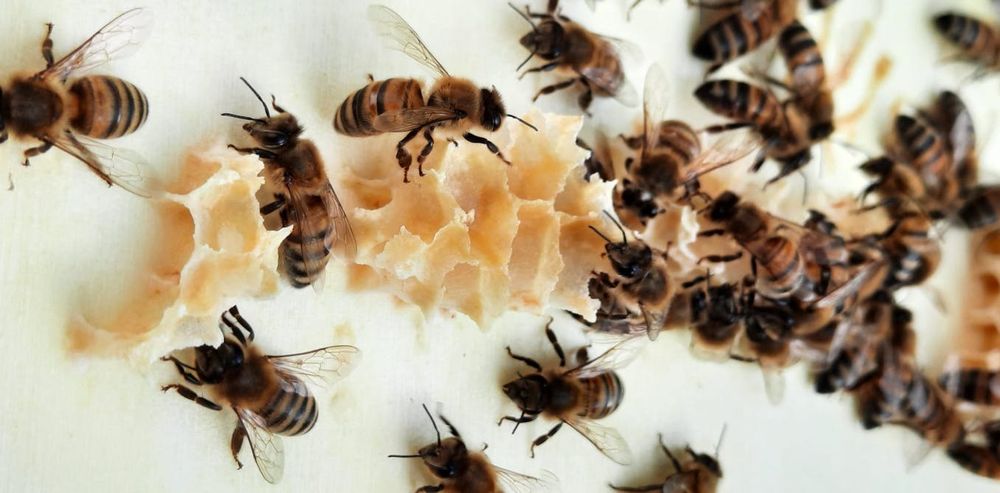
Merci Thibault de m'avoir impliqué dans ce travail 😉
Comment les humains ont bouleversé l’histoire & la diversité des abeilles à miel?
🐝🍯🧬🌍
Article de vulgarisation sur l'histoire des abeilles à miel, l'apiculture, la diversité génétique, la conservation... Bref, un résumé de nos recherches récentes!
Bonne lecture!
theconversation.com/abeilles-a-m...
🐝🍯🧬🌍
Article de vulgarisation sur l'histoire des abeilles à miel, l'apiculture, la diversité génétique, la conservation... Bref, un résumé de nos recherches récentes!
Bonne lecture!
theconversation.com/abeilles-a-m...

Abeilles à miel : comment les humains ont bouleversé leur histoire et leur diversité
Comprendre l’histoire des abeilles à miel et l’impact humain sur leur diversité est essentiel, tant du fait de leur rôle écologique que leur importance en agriculture.
theconversation.com
January 30, 2025 at 7:28 PM
Merci Thibault de m'avoir impliqué dans ce travail 😉
Happy new year to us 🎊 it's finally out doi.org/10.1111/mec....
January 3, 2025 at 5:40 PM
Happy new year to us 🎊 it's finally out doi.org/10.1111/mec....