



SEACS Lab (UNSW)
@seacs.bsky.social
We are a lab of passionate marine ecologists at CMSI UNSW, conducting solutions-based research on human stressors in estuarine and coastal ecosystems.
Pinned
SEACS Lab (UNSW)
@seacs.bsky.social
· Feb 3


Hi everyone! We are the SEACS lab at UNSW, investigating Solutions for Estuarine And Coastal Stressors. Headed by Dr. Mariana Mayer Pinto, we study a diverse range of human impacts, including artificial structures, light pollution and climate change in coastal ecosystems 😊🌱✹🐚💡
New paper alert!! Repetition and order of exposure to salinization and nutrient enrichment drive freshwater microbial community responses, led by PhD student Rose Fuggle with supervisors Mariana Mayer Pinto, Miguel Matias and Ziggy Marzinelli. 🧪🌐🦠
Read here: doi.org/10.1002/ecy....
#microbes
Read here: doi.org/10.1002/ecy....
#microbes

Repetition and order of exposure to salinization and nutrient enrichment drive freshwater microbial community responses
Biological systems face multiple stressors that impact biodiversity and ecosystem functions, with complex interactions that vary spatially and temporally leading to unpredictable outcomes. In freshwa...
doi.org
December 1, 2025 at 10:16 PM
New paper alert!! Repetition and order of exposure to salinization and nutrient enrichment drive freshwater microbial community responses, led by PhD student Rose Fuggle with supervisors Mariana Mayer Pinto, Miguel Matias and Ziggy Marzinelli. 🧪🌐🦠
Read here: doi.org/10.1002/ecy....
#microbes
Read here: doi.org/10.1002/ecy....
#microbes
🚨 𝗡𝗲𝘄 𝗽𝗮𝗽𝗲𝗿 𝗮𝗹𝗲𝗿𝘁! PhD candidate Annemie Rose Janssen exposed kelp populations to copper contamination to see whether kelp from the inner harbour would respond differently to outer harbour kelp. Results indicate local adaptation to contamination in the inner harbour! 🧪🌊🌐
doi.org/10.1016/j.ma...
doi.org/10.1016/j.ma...

November 12, 2025 at 10:50 PM
🚨 𝗡𝗲𝘄 𝗽𝗮𝗽𝗲𝗿 𝗮𝗹𝗲𝗿𝘁! PhD candidate Annemie Rose Janssen exposed kelp populations to copper contamination to see whether kelp from the inner harbour would respond differently to outer harbour kelp. Results indicate local adaptation to contamination in the inner harbour! 🧪🌊🌐
doi.org/10.1016/j.ma...
doi.org/10.1016/j.ma...
Annemie Rose discussing her recent paper on kelp genetic differentiation and local adaptation in Sydney Harbour 🌊🧪🌐
doi.org/10.1016/j.ma...
doi.org/10.1016/j.ma...

October 21, 2025 at 4:07 AM
Annemie Rose discussing her recent paper on kelp genetic differentiation and local adaptation in Sydney Harbour 🌊🧪🌐
doi.org/10.1016/j.ma...
doi.org/10.1016/j.ma...
New paper from PhD student Annemie Rose Jannsen, who found distinct #kelp genotypes in the inner and outer parts of #SydneyHarbour. Genotype-environment analyses suggest adaptation to local conditions.
Super cool results, great work Annemie Rose & coauthors!!
🌊🌐🧪 #marine
doi.org/10.1016/j.ma...
Super cool results, great work Annemie Rose & coauthors!!
🌊🌐🧪 #marine
doi.org/10.1016/j.ma...

October 14, 2025 at 11:03 PM
New paper from PhD student Annemie Rose Jannsen, who found distinct #kelp genotypes in the inner and outer parts of #SydneyHarbour. Genotype-environment analyses suggest adaptation to local conditions.
Super cool results, great work Annemie Rose & coauthors!!
🌊🌐🧪 #marine
doi.org/10.1016/j.ma...
Super cool results, great work Annemie Rose & coauthors!!
🌊🌐🧪 #marine
doi.org/10.1016/j.ma...
PhD student Natalie Coy spoke on Radio National this morning about the Seeds of the Sea citizen science project. This project asks citizen scientists to report sightings of Posidonia seagrass flowers in NSW, to inform future restoration of this endangered species. 🌊🌐🧪
www.abc.net.au/listen/progr...
www.abc.net.au/listen/progr...

Call for beachgoers to snap pics for science - ABC listen
If you've ever been swimming or diving along the south coast of Australia, you might be familiar with the stunning array of colours and textures that make up our native seagrass meadows.
But did you ...
www.abc.net.au
October 13, 2025 at 3:26 AM
PhD student Natalie Coy spoke on Radio National this morning about the Seeds of the Sea citizen science project. This project asks citizen scientists to report sightings of Posidonia seagrass flowers in NSW, to inform future restoration of this endangered species. 🌊🌐🧪
www.abc.net.au/listen/progr...
www.abc.net.au/listen/progr...
A new citizen science project, Seeds of the Sea, run by one of our PhD students Natalie Coy has launched, helping to map seagrass flowering of #Posidonia in south-eastern Australia.
Check out the website and map of sightings here: www.seedsofthesea.org
🧪🌍🦤🦑🌐🌊
Check out the website and map of sightings here: www.seedsofthesea.org
🧪🌍🦤🦑🌐🌊

October 13, 2025 at 3:21 AM
A new citizen science project, Seeds of the Sea, run by one of our PhD students Natalie Coy has launched, helping to map seagrass flowering of #Posidonia in south-eastern Australia.
Check out the website and map of sightings here: www.seedsofthesea.org
🧪🌍🦤🦑🌐🌊
Check out the website and map of sightings here: www.seedsofthesea.org
🧪🌍🦤🦑🌐🌊
Seaweed-associated microbial communities show limited responses to light pollution and warming 🌱💡
New paper assessing the independent and combined effects of #lightpollution and #oceanwarming on microbial communities associated with two habitat-forming #seaweed species 🧪🌐🌊
doi.org/10.1016/j.ma...
New paper assessing the independent and combined effects of #lightpollution and #oceanwarming on microbial communities associated with two habitat-forming #seaweed species 🧪🌐🌊
doi.org/10.1016/j.ma...

September 11, 2025 at 12:05 AM
Seaweed-associated microbial communities show limited responses to light pollution and warming 🌱💡
New paper assessing the independent and combined effects of #lightpollution and #oceanwarming on microbial communities associated with two habitat-forming #seaweed species 🧪🌐🌊
doi.org/10.1016/j.ma...
New paper assessing the independent and combined effects of #lightpollution and #oceanwarming on microbial communities associated with two habitat-forming #seaweed species 🧪🌐🌊
doi.org/10.1016/j.ma...
Congratulations our lab leader, Mariana Mayer Pinto and to the whole Living Seawalls team, who won the 2025 Eureka Prize for Environmental Research! A wonderful achievement. Watch the short video for this project at www.youtube.com/watch?v=9yrR...
#MarineEcology 🧪🌊🌐🌱
#MarineEcology 🧪🌊🌐🌱

September 4, 2025 at 1:02 AM
Congratulations our lab leader, Mariana Mayer Pinto and to the whole Living Seawalls team, who won the 2025 Eureka Prize for Environmental Research! A wonderful achievement. Watch the short video for this project at www.youtube.com/watch?v=9yrR...
#MarineEcology 🧪🌊🌐🌱
#MarineEcology 🧪🌊🌐🌱
Light pollution caused by excessive Artificial Light at Night (ALAN) has harmful effects on wildlife. This petition calls for legislation to limit light pollution, to reduce impacts on wildlife and people. www.aph.gov.au/e-petitions/...

e-petitions
e-petitions
www.aph.gov.au
September 3, 2025 at 4:03 AM
Light pollution caused by excessive Artificial Light at Night (ALAN) has harmful effects on wildlife. This petition calls for legislation to limit light pollution, to reduce impacts on wildlife and people. www.aph.gov.au/e-petitions/...
Another recent paper from our lab on the impact of #bushfires on sediment quality in #estuaries, led by Thayanne Lima Barros, with coauthors Mariana Mayer-Pinto, Katherine Dafforn, Stuart Simpson, Mark Farrell, Sally Bracewell and Emma Johnston.
www.sciencedirect.com/science/arti...
🧪🌎🌐
www.sciencedirect.com/science/arti...
🧪🌎🌐

Impact of wildfires on sediment quality in estuaries in New South Wales, Australia
Climate change is increasing wildfire intensity, introducing new risks to estuarine systems. However, the impacts of wildfires on estuaries and their …
www.sciencedirect.com
August 27, 2025 at 4:07 AM
Another recent paper from our lab on the impact of #bushfires on sediment quality in #estuaries, led by Thayanne Lima Barros, with coauthors Mariana Mayer-Pinto, Katherine Dafforn, Stuart Simpson, Mark Farrell, Sally Bracewell and Emma Johnston.
www.sciencedirect.com/science/arti...
🧪🌎🌐
www.sciencedirect.com/science/arti...
🧪🌎🌐
Recent paper highlight - Multiple stressors affect function rather than taxonomic structure of freshwater microbial communities, headed by PhD student Rose Fuggle supervised by Miguel G. Matias, Mariana Mayer-Pinto & Ezequiel M. Marzinelli.
🧪🌐
www.nature.com/articles/s41...
🧪🌐
www.nature.com/articles/s41...

Multiple stressors affect function rather than taxonomic structure of freshwater microbial communities - npj Biofilms and Microbiomes
npj Biofilms and Microbiomes - Multiple stressors affect function rather than taxonomic structure of freshwater microbial communities
www.nature.com
August 27, 2025 at 4:04 AM
Recent paper highlight - Multiple stressors affect function rather than taxonomic structure of freshwater microbial communities, headed by PhD student Rose Fuggle supervised by Miguel G. Matias, Mariana Mayer-Pinto & Ezequiel M. Marzinelli.
🧪🌐
www.nature.com/articles/s41...
🧪🌐
www.nature.com/articles/s41...
Fieldwork highlight! PhD student Annemie Rose is investigating whether kelps in the inner harbour are more adapted to urbanisation 🌱🌆 Yesterday we collected kelp from inner and outer sites in Sydney Harbour, for experiments where she will test responses to copper and nutrients!
📸 by Aliah Banchik
📸 by Aliah Banchik


April 9, 2025 at 3:48 AM
Fieldwork highlight! PhD student Annemie Rose is investigating whether kelps in the inner harbour are more adapted to urbanisation 🌱🌆 Yesterday we collected kelp from inner and outer sites in Sydney Harbour, for experiments where she will test responses to copper and nutrients!
📸 by Aliah Banchik
📸 by Aliah Banchik
New paper out from PhD student Dana Lanceman, on how to characterise pathways of ecosystem service recovery following restoration. Congratulations Dana!
doi.org/10.1111/gcb....
doi.org/10.1111/gcb....

Ecosystem Service Trajectories in Restored Coastal Habitats
In a restored site, ecosystem values are produced at different rates over time, influenced by environmental and climatic conditions. Here, we outline seven key components that can be used to define h....
doi.org
April 3, 2025 at 11:16 PM
New paper out from PhD student Dana Lanceman, on how to characterise pathways of ecosystem service recovery following restoration. Congratulations Dana!
doi.org/10.1111/gcb....
doi.org/10.1111/gcb....
Reposted by SEACS Lab (UNSW)
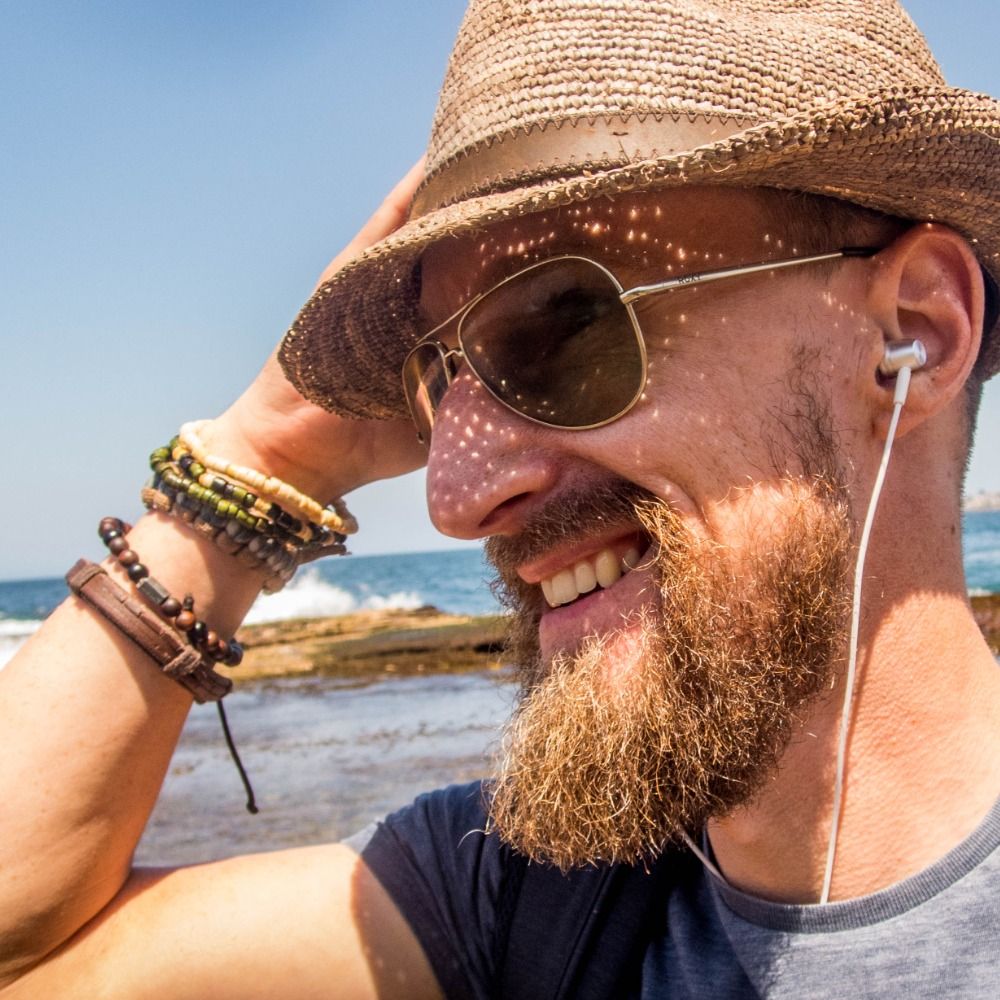
Beaut of a morning for fieldwork at Parsley Bay. Helping @lenaholtmanns.bsky.social with her experiments on ALAN and habitat complexity in the shallow subtidal. @seacs.bsky.social 🧪

February 7, 2025 at 4:10 AM
Beaut of a morning for fieldwork at Parsley Bay. Helping @lenaholtmanns.bsky.social with her experiments on ALAN and habitat complexity in the shallow subtidal. @seacs.bsky.social 🧪
New paper out on the effects of major global ports on light regimes for marine biofouling communities💡🌱🛳☀️
www.sciencedirect.com/science/arti...
www.sciencedirect.com/science/arti...

February 3, 2025 at 5:03 AM
New paper out on the effects of major global ports on light regimes for marine biofouling communities💡🌱🛳☀️
www.sciencedirect.com/science/arti...
www.sciencedirect.com/science/arti...
New paper from our lab, on the effects of artificial light at night on fish predation and herbivory rates in a nearshore reef. 🌱🐟💡 doi.org/10.1016/j.ma...

February 3, 2025 at 4:59 AM
New paper from our lab, on the effects of artificial light at night on fish predation and herbivory rates in a nearshore reef. 🌱🐟💡 doi.org/10.1016/j.ma...
Valuing Darkness Conference on light pollution will take place March 19th-21st in Naarm (Melbourne). Mariana will be sharing research on the effects of light pollution in marine systems, but lots of other interesting talks as well! #ALAN #light
australasiandarkskyalliance.org/program?utm_...
australasiandarkskyalliance.org/program?utm_...

February 3, 2025 at 2:50 AM
Valuing Darkness Conference on light pollution will take place March 19th-21st in Naarm (Melbourne). Mariana will be sharing research on the effects of light pollution in marine systems, but lots of other interesting talks as well! #ALAN #light
australasiandarkskyalliance.org/program?utm_...
australasiandarkskyalliance.org/program?utm_...
Hi everyone! We are the SEACS lab at UNSW, investigating Solutions for Estuarine And Coastal Stressors. Headed by Dr. Mariana Mayer Pinto, we study a diverse range of human impacts, including artificial structures, light pollution and climate change in coastal ecosystems 😊🌱✹🐚💡
February 3, 2025 at 2:40 AM
Hi everyone! We are the SEACS lab at UNSW, investigating Solutions for Estuarine And Coastal Stressors. Headed by Dr. Mariana Mayer Pinto, we study a diverse range of human impacts, including artificial structures, light pollution and climate change in coastal ecosystems 😊🌱✹🐚💡