



Simone Cheli
@scheli.bsky.social
Clinical psychologist
St. John's University
www.simonecheli.com
St. John's University
www.simonecheli.com
Bumblebees often faint in flowers after overindulging in pollen, and now it turns out that among drinking buddies, they encourage each other 😂

October 23, 2025 at 8:20 PM
Bumblebees often faint in flowers after overindulging in pollen, and now it turns out that among drinking buddies, they encourage each other 😂
(iii) evolutionary models are compatible with interpersonal (social brain) and trait (LHT) models; are we certain that there isn't a transitive property? If all PDs are interpersonal, then are all disorders interpersonal?
August 9, 2025 at 7:23 PM
(iii) evolutionary models are compatible with interpersonal (social brain) and trait (LHT) models; are we certain that there isn't a transitive property? If all PDs are interpersonal, then are all disorders interpersonal?
(1/2) Three points always surprise me: (i) large portion of evolved psychological mechanisms are nonoptimal designs, consistently boundaries are fuzzy or better arbitrary; (ii) reference to Sullivan would imply to include all disorders & not just PDs in interpersonal disorders.
August 9, 2025 at 7:22 PM
(1/2) Three points always surprise me: (i) large portion of evolved psychological mechanisms are nonoptimal designs, consistently boundaries are fuzzy or better arbitrary; (ii) reference to Sullivan would imply to include all disorders & not just PDs in interpersonal disorders.
Reposted by Simone Cheli

Part of the Phil Trans special issue "Selection Shapes Diverse Animal Minds", edited with @ellileadbeater.bsky.social.
Thanks to co-authors Andoni Sergiou, @josharbon.bsky.social, @inesfuertbauer.bsky.social & @shoalgroup.bsky.social and all the special issue contributors.
tinyurl.com/35mn84ty
Thanks to co-authors Andoni Sergiou, @josharbon.bsky.social, @inesfuertbauer.bsky.social & @shoalgroup.bsky.social and all the special issue contributors.
tinyurl.com/35mn84ty
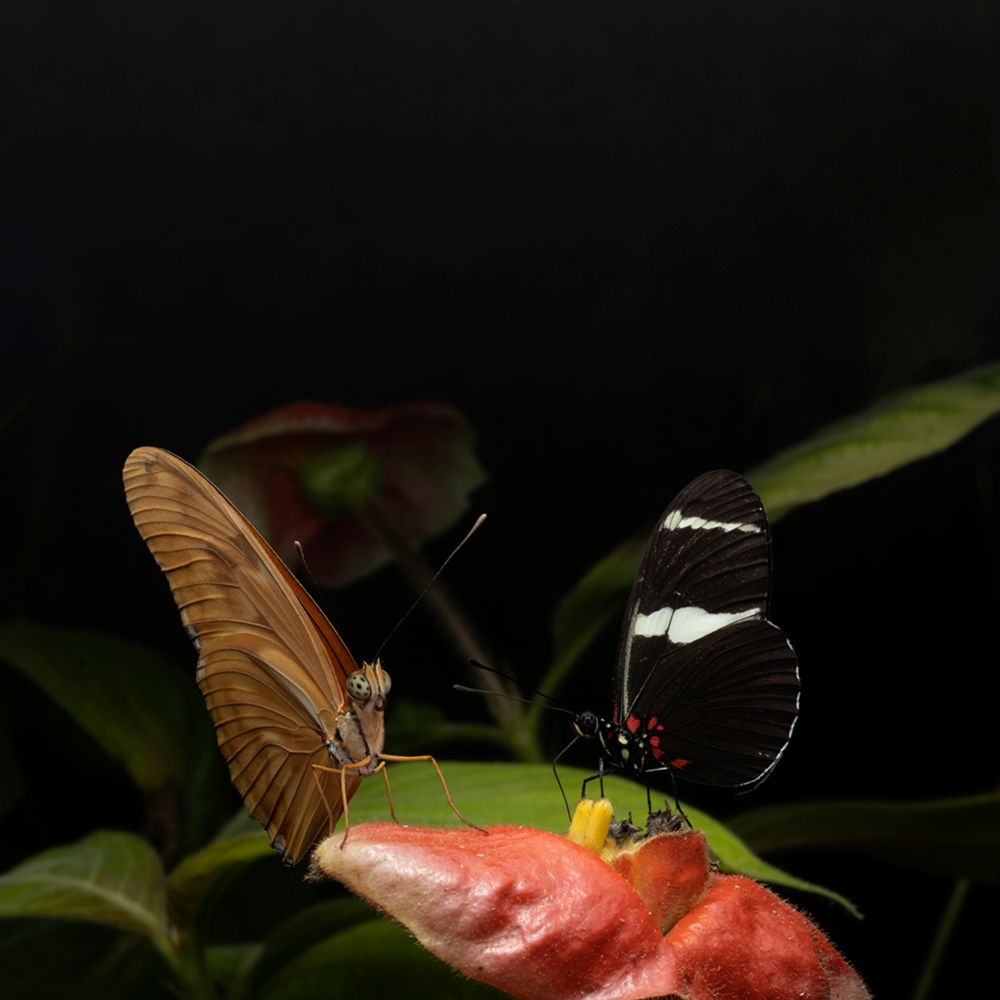
Philosophical Transactions of the Royal Society B: Biological Sciences: Vol 380, No 1929
Can't sign in? Forgot your password?
tinyurl.com
June 26, 2025 at 5:08 PM
Part of the Phil Trans special issue "Selection Shapes Diverse Animal Minds", edited with @ellileadbeater.bsky.social.
Thanks to co-authors Andoni Sergiou, @josharbon.bsky.social, @inesfuertbauer.bsky.social & @shoalgroup.bsky.social and all the special issue contributors.
tinyurl.com/35mn84ty
Thanks to co-authors Andoni Sergiou, @josharbon.bsky.social, @inesfuertbauer.bsky.social & @shoalgroup.bsky.social and all the special issue contributors.
tinyurl.com/35mn84ty
The universe is so upset that it goes back to the big bang. That makes sense!
March 19, 2025 at 10:21 PM
The universe is so upset that it goes back to the big bang. That makes sense!
