



Zaven Sargsyan
@sargsyanz.bsky.social
Internist at Baylor College of Medicine, Houston
Part 2: 🙄
Click back.
Click back.
November 17, 2025 at 1:33 AM
Part 2: 🙄
Click back.
Click back.
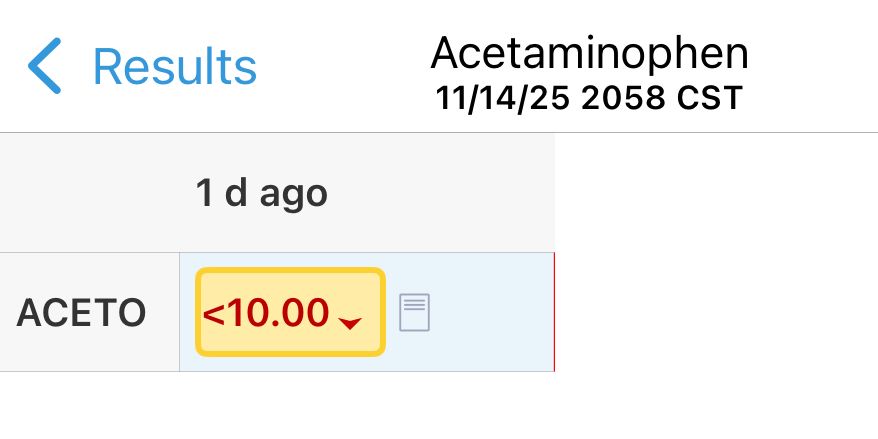
Part 1: Oh no, red exclamation mark, acetaminophen level must be high.
Click.
Click.

November 17, 2025 at 1:33 AM
Part 1: Oh no, red exclamation mark, acetaminophen level must be high.
Click.
Click.
What does that remind me of….

November 16, 2025 at 9:04 PM
What does that remind me of….
Telling the team I prefer bedside rounds
October 31, 2025 at 7:58 PM
Telling the team I prefer bedside rounds
Hold on let me find my “hyponatremia algorithm to rule them all.”

October 21, 2025 at 2:14 PM
Hold on let me find my “hyponatremia algorithm to rule them all.”
Good paper, thanks.
This bit was in line with the main themes, but also stood out for additional/tangential reasons.
This bit was in line with the main themes, but also stood out for additional/tangential reasons.

October 21, 2025 at 3:07 AM
Good paper, thanks.
This bit was in line with the main themes, but also stood out for additional/tangential reasons.
This bit was in line with the main themes, but also stood out for additional/tangential reasons.
5/
CT cholangiography is a completely different scan from your usual contrast-enhanced CT… it uses a special contrast agent with hepatobiliary excretion, producing images like this one.
Closer to a HIDA or ERCP in many ways than a normal CT.
Image source PMID 18349445
CT cholangiography is a completely different scan from your usual contrast-enhanced CT… it uses a special contrast agent with hepatobiliary excretion, producing images like this one.
Closer to a HIDA or ERCP in many ways than a normal CT.
Image source PMID 18349445

October 17, 2025 at 10:39 PM
5/
CT cholangiography is a completely different scan from your usual contrast-enhanced CT… it uses a special contrast agent with hepatobiliary excretion, producing images like this one.
Closer to a HIDA or ERCP in many ways than a normal CT.
Image source PMID 18349445
CT cholangiography is a completely different scan from your usual contrast-enhanced CT… it uses a special contrast agent with hepatobiliary excretion, producing images like this one.
Closer to a HIDA or ERCP in many ways than a normal CT.
Image source PMID 18349445
2/
This number might have come from a 2022 review on cholecystitis in JAMA, that includes the table below.
tinyurl.com/55yn3suk
This number might have come from a 2022 review on cholecystitis in JAMA, that includes the table below.
tinyurl.com/55yn3suk

October 17, 2025 at 10:39 PM
2/
This number might have come from a 2022 review on cholecystitis in JAMA, that includes the table below.
tinyurl.com/55yn3suk
This number might have come from a 2022 review on cholecystitis in JAMA, that includes the table below.
tinyurl.com/55yn3suk
Amazing episode, thanks @juancarlosqvelez.bsky.social @coreimpodcast.bsky.social and crew!
Something I've always struggled with below. Appreciate any insights!
Something I've always struggled with below. Appreciate any insights!

October 17, 2025 at 12:50 AM
Amazing episode, thanks @juancarlosqvelez.bsky.social @coreimpodcast.bsky.social and crew!
Something I've always struggled with below. Appreciate any insights!
Something I've always struggled with below. Appreciate any insights!
"Diplococci were seen in 20% of neutrophils" (of which many were bands like this one, I'd guess). Striking reminder of the virulence of strep pneumo, and how much its burden has been reduced by vaccination.
www.nejm.org/doi/full/10....
www.nejm.org/doi/full/10....

October 16, 2025 at 12:50 AM
"Diplococci were seen in 20% of neutrophils" (of which many were bands like this one, I'd guess). Striking reminder of the virulence of strep pneumo, and how much its burden has been reduced by vaccination.
www.nejm.org/doi/full/10....
www.nejm.org/doi/full/10....
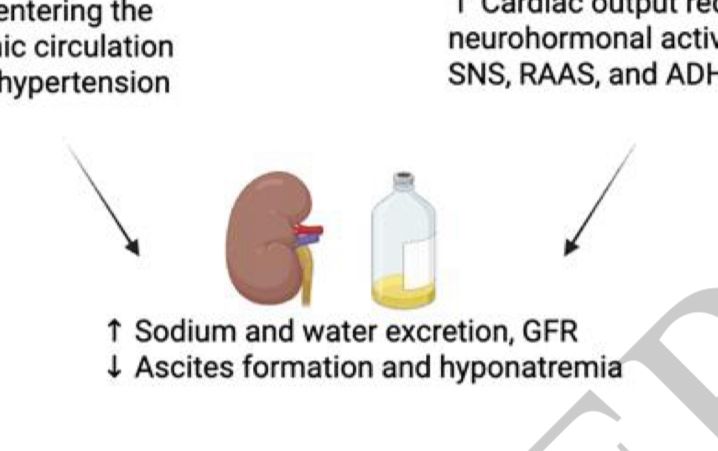
Also I love the thirsty evacuated container as the image of “decreased ascites formation” 😄
October 9, 2025 at 6:20 PM
Also I love the thirsty evacuated container as the image of “decreased ascites formation” 😄
Thanks for this, learned a lot.
Another benefit of IBCC: easier to fix typos!
Another benefit of IBCC: easier to fix typos!

October 4, 2025 at 5:02 PM
Thanks for this, learned a lot.
Another benefit of IBCC: easier to fix typos!
Another benefit of IBCC: easier to fix typos!
An intervention with a NNT of 20 for mortality costs negative dollars, involves taking fewer pills, and has 0 side effects.
The intervention is stopping aspirin in patients with chronic CAD (including stents >6 mo old) who take an oral anticoagulant.
The intervention is stopping aspirin in patients with chronic CAD (including stents >6 mo old) who take an oral anticoagulant.

October 2, 2025 at 7:10 PM
An intervention with a NNT of 20 for mortality costs negative dollars, involves taking fewer pills, and has 0 side effects.
The intervention is stopping aspirin in patients with chronic CAD (including stents >6 mo old) who take an oral anticoagulant.
The intervention is stopping aspirin in patients with chronic CAD (including stents >6 mo old) who take an oral anticoagulant.
Pap-ular, I know about pap-u-u-lar

September 29, 2025 at 6:40 PM
Pap-ular, I know about pap-u-u-lar
There are many things that look scary despite being benign, but Schmorl’s nodes take the care.

September 28, 2025 at 2:39 PM
There are many things that look scary despite being benign, but Schmorl’s nodes take the care.
Sometimes “hemolysis labs” are labs we already have.
But does anyone have good references for how sensitive a combination of normal bili + AST + K is for ruling out significant hemolysis?
But does anyone have good references for how sensitive a combination of normal bili + AST + K is for ruling out significant hemolysis?

September 19, 2025 at 7:34 PM
Sometimes “hemolysis labs” are labs we already have.
But does anyone have good references for how sensitive a combination of normal bili + AST + K is for ruling out significant hemolysis?
But does anyone have good references for how sensitive a combination of normal bili + AST + K is for ruling out significant hemolysis?

September 19, 2025 at 12:50 AM

September 9, 2025 at 7:33 PM
Doesn't definitively answer this particular question--"the legal basis for such restrictions remains unclear"--but a good article by my friend and colleague @hollandkaplan.bsky.social et al


September 7, 2025 at 4:38 PM
Doesn't definitively answer this particular question--"the legal basis for such restrictions remains unclear"--but a good article by my friend and colleague @hollandkaplan.bsky.social et al

Interesting, I pulled up the 2018 JAMA meta-analysis by Busse et al, indeed tons of trials, many high quality.
Also 22.8 to 9.3 is a 59% decrease, not 41%. Probably an editing mishap, maybe original version was "it's 41% of what it was."
Also 22.8 to 9.3 is a 59% decrease, not 41%. Probably an editing mishap, maybe original version was "it's 41% of what it was."

August 27, 2025 at 9:57 PM
Interesting, I pulled up the 2018 JAMA meta-analysis by Busse et al, indeed tons of trials, many high quality.
Also 22.8 to 9.3 is a 59% decrease, not 41%. Probably an editing mishap, maybe original version was "it's 41% of what it was."
Also 22.8 to 9.3 is a 59% decrease, not 41%. Probably an editing mishap, maybe original version was "it's 41% of what it was."
Narrator: “Today was not a Saturday. Today was a Sunday.”

August 25, 2025 at 2:09 PM
Narrator: “Today was not a Saturday. Today was a Sunday.”


Nice examples, thanks @imcrit.bsky.social
Here's two other examples--each within the same patient--demonstrating potential effect of positioning / gravity in allowing an optimizing window. Obvi can't make someone prone, but rotating leftward, or sitting up and leaning forward, can do the trick
Here's two other examples--each within the same patient--demonstrating potential effect of positioning / gravity in allowing an optimizing window. Obvi can't make someone prone, but rotating leftward, or sitting up and leaning forward, can do the trick


August 21, 2025 at 5:53 PM
Nice examples, thanks @imcrit.bsky.social
Here's two other examples--each within the same patient--demonstrating potential effect of positioning / gravity in allowing an optimizing window. Obvi can't make someone prone, but rotating leftward, or sitting up and leaning forward, can do the trick
Here's two other examples--each within the same patient--demonstrating potential effect of positioning / gravity in allowing an optimizing window. Obvi can't make someone prone, but rotating leftward, or sitting up and leaning forward, can do the trick
Admission order sets

August 7, 2025 at 11:37 PM
Admission order sets