


Sandra Savio
@sandrasavio.bsky.social
MSc Geology student | Phytoliths & paleoecology | Passionate about micropaleontology & science outreach
It seems like the silica structure or any associated organic residues in the phytoliths interact more strongly with the green and red excitation wavelengths. Possibly linked to thermal alteration.Your observations on wood ash layers sound fascinating, would love to compare notes sometime!
May 24, 2025 at 3:45 AM
It seems like the silica structure or any associated organic residues in the phytoliths interact more strongly with the green and red excitation wavelengths. Possibly linked to thermal alteration.Your observations on wood ash layers sound fascinating, would love to compare notes sometime!
I used a GFP filter set (470/525 nm) and an RFP set (531/593 nm), and both produced noticeable fluorescence in the phytoliths. Interestingly, the DAPI filter set (357/447 nm) didn’t show any response.
May 24, 2025 at 3:43 AM
I used a GFP filter set (470/525 nm) and an RFP set (531/593 nm), and both produced noticeable fluorescence in the phytoliths. Interestingly, the DAPI filter set (357/447 nm) didn’t show any response.
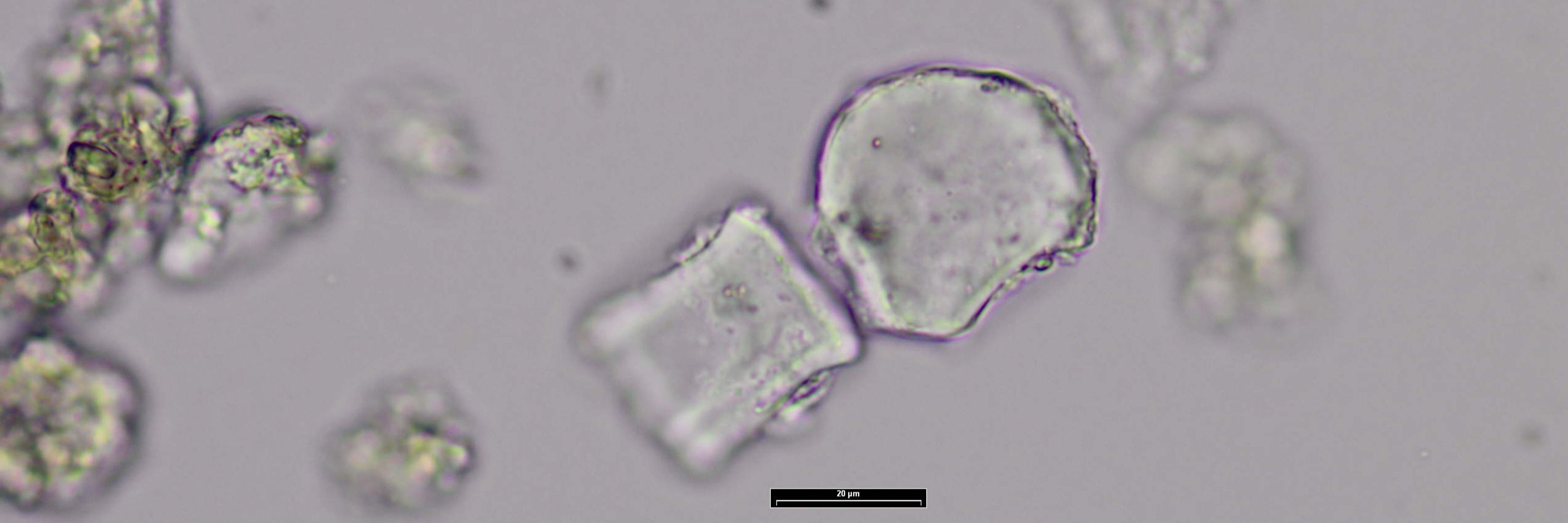
Yes, it's fluorescence! The glow you're seeing comes from phytoliths that have become auto-fluorescent due to exposure to heat.
May 23, 2025 at 5:32 PM
Yes, it's fluorescence! The glow you're seeing comes from phytoliths that have become auto-fluorescent due to exposure to heat.