



@samuelfthompson.bsky.social
Reposted
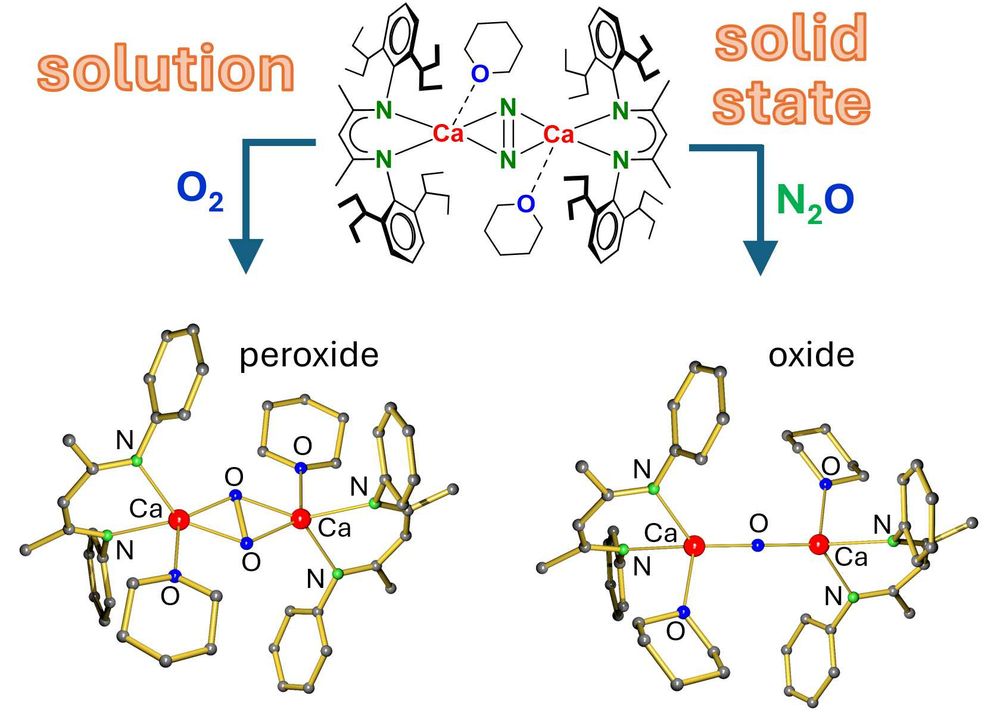
A Ca(I) synthon with bridging N2 is key to the synthesis of homometallic Ca peroxide and oxide complexes. In solution, the Ca oxide complex decomposes even at -80 C. It can only be prepared in the solid state. @ChemCommun @RoySocChem shorturl.at/AUoWM
July 4, 2025 at 12:02 PM
A Ca(I) synthon with bridging N2 is key to the synthesis of homometallic Ca peroxide and oxide complexes. In solution, the Ca oxide complex decomposes even at -80 C. It can only be prepared in the solid state. @ChemCommun @RoySocChem shorturl.at/AUoWM
Reposted
We are excited to announce details for the upcoming USIC & Scottish Dalton conference on the 28th and 29th of August at the University of Strathclyde.
We have lectures from invited speakers @clairecarmalt.bsky.social @evaheviagroup.bsky.social and Dr Andrew Jupp.
www.rsc.org/events/detai...
We have lectures from invited speakers @clairecarmalt.bsky.social @evaheviagroup.bsky.social and Dr Andrew Jupp.
www.rsc.org/events/detai...

June 18, 2025 at 2:05 PM
We are excited to announce details for the upcoming USIC & Scottish Dalton conference on the 28th and 29th of August at the University of Strathclyde.
We have lectures from invited speakers @clairecarmalt.bsky.social @evaheviagroup.bsky.social and Dr Andrew Jupp.
www.rsc.org/events/detai...
We have lectures from invited speakers @clairecarmalt.bsky.social @evaheviagroup.bsky.social and Dr Andrew Jupp.
www.rsc.org/events/detai...
Reposted
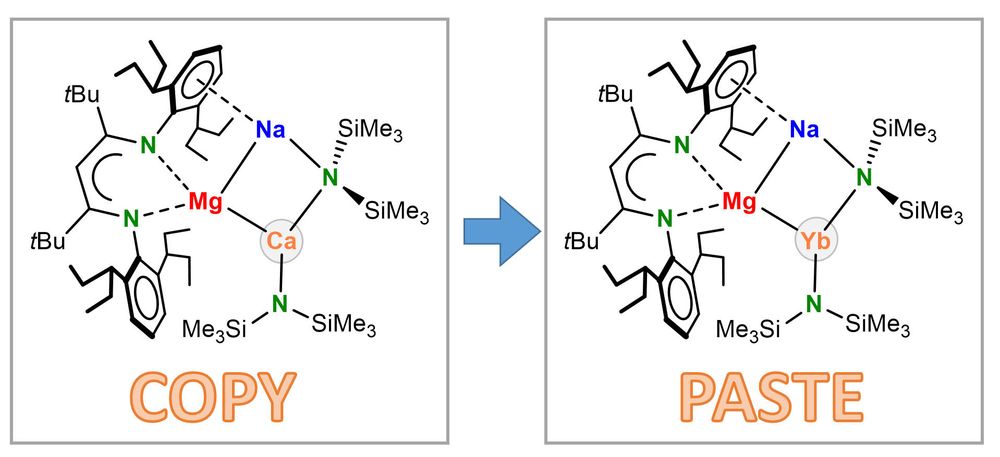
Exploiting the similarity between Ca(II) and Yb(II), first Mg-lanthanide bonding has been realised. The peculiarities of this unique Mg-Yb bond are discussed. Mg(0)-Yb(II)? Mg(I)-Yb(I)? @JACS pubs.acs.org/doi/10.1021/...
April 4, 2025 at 6:15 PM
Exploiting the similarity between Ca(II) and Yb(II), first Mg-lanthanide bonding has been realised. The peculiarities of this unique Mg-Yb bond are discussed. Mg(0)-Yb(II)? Mg(I)-Yb(I)? @JACS pubs.acs.org/doi/10.1021/...
Reposted
OXIDATION STATE CONFUSION: Al(I)-Sn(II)? Al(II)-Sn(I)? Al(III)-Sn(0)? The crooked structure of this complex can be explained by a Al-donor Sn-acceptor bond. Details can be found here: chemistry-europe.onlinelibrary.wiley.com/doi/10.1002/...

March 25, 2025 at 2:37 PM
OXIDATION STATE CONFUSION: Al(I)-Sn(II)? Al(II)-Sn(I)? Al(III)-Sn(0)? The crooked structure of this complex can be explained by a Al-donor Sn-acceptor bond. Details can be found here: chemistry-europe.onlinelibrary.wiley.com/doi/10.1002/...
Reposted

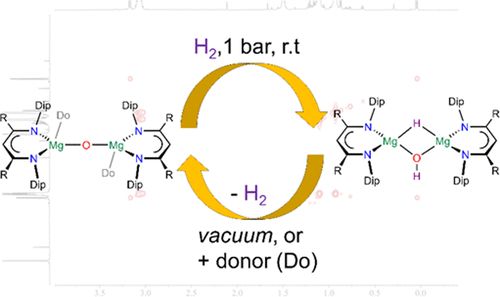
The Stasch group @standrewschem.bsky.social report in
JACS on how to teach a low-coordinate MgO fragment to reversibly activate dihydrogen under very mild conditions: pubs.acs.org/doi/10.1021/...
JACS on how to teach a low-coordinate MgO fragment to reversibly activate dihydrogen under very mild conditions: pubs.acs.org/doi/10.1021/...
February 18, 2025 at 4:30 PM
The Stasch group @standrewschem.bsky.social report in
JACS on how to teach a low-coordinate MgO fragment to reversibly activate dihydrogen under very mild conditions: pubs.acs.org/doi/10.1021/...
JACS on how to teach a low-coordinate MgO fragment to reversibly activate dihydrogen under very mild conditions: pubs.acs.org/doi/10.1021/...
Reposted
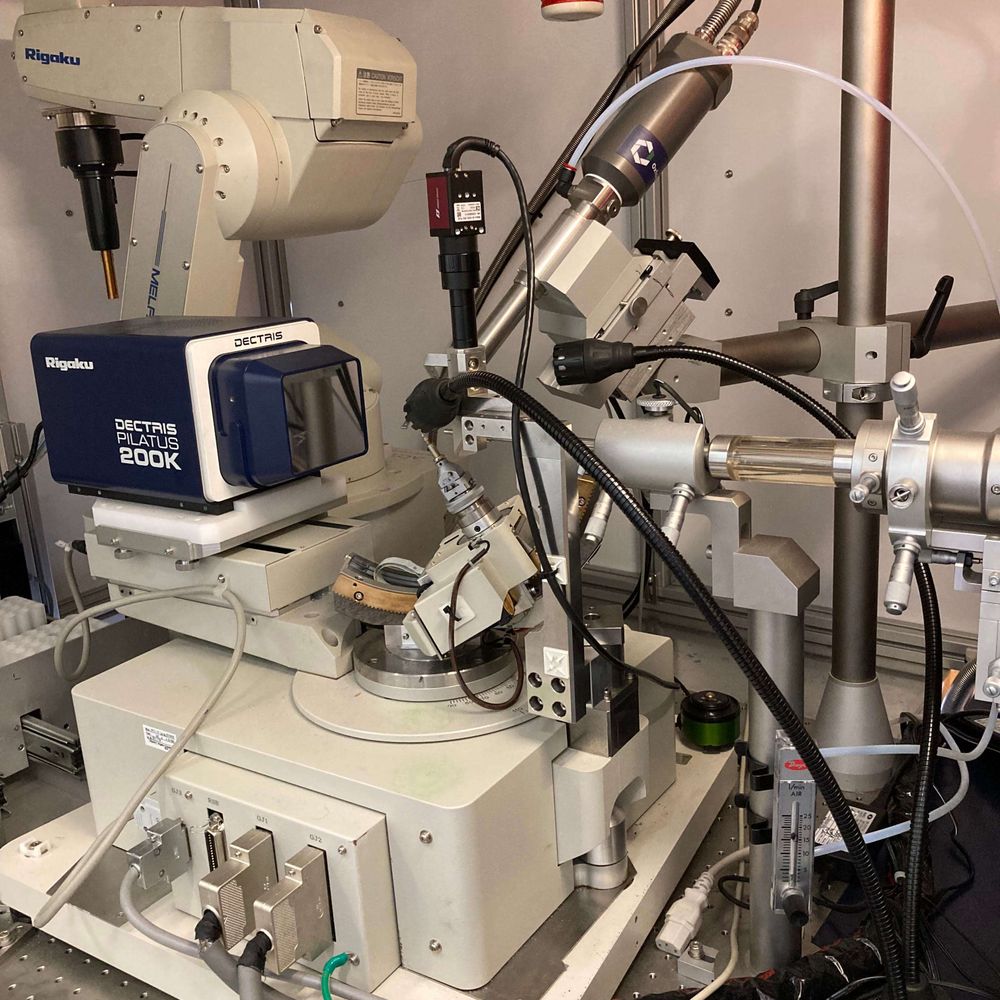
An accepted paper with the Stasch group in JACS @pubs.acs.org (doi.org/10.1021/jacs...). The paper contains 19 structures from data collected over the last four and a half years, looking at the reversible activation of hydrogen by molecular magnesium oxide complexes. @st-andrewschem.bsky.social


January 29, 2025 at 11:43 AM
An accepted paper with the Stasch group in JACS @pubs.acs.org (doi.org/10.1021/jacs...). The paper contains 19 structures from data collected over the last four and a half years, looking at the reversible activation of hydrogen by molecular magnesium oxide complexes. @st-andrewschem.bsky.social