



Sam Laki
@samlaki.bsky.social
Emissary at the machine frontier.
this site is green baby
this site is green baby


holy moly the other place is fucked up
July 9, 2025 at 12:42 AM
holy moly the other place is fucked up


Reposted by Sam Laki

new work on computing distances between stochastic processes ***based on sample paths only***! we can now:
- learn distances between Markov chains
- extract "encoder-decoder" pairs for representation learning
- with sample- and computational-complexity guarantees
read on for some quick details..
1/n
- learn distances between Markov chains
- extract "encoder-decoder" pairs for representation learning
- with sample- and computational-complexity guarantees
read on for some quick details..
1/n
May 26, 2025 at 1:27 PM
new work on computing distances between stochastic processes ***based on sample paths only***! we can now:
- learn distances between Markov chains
- extract "encoder-decoder" pairs for representation learning
- with sample- and computational-complexity guarantees
read on for some quick details..
1/n
- learn distances between Markov chains
- extract "encoder-decoder" pairs for representation learning
- with sample- and computational-complexity guarantees
read on for some quick details..
1/n
Reposted by Sam Laki

This is awesome. I worked on this with him on this a teeny bit a long time ago! www.ft.com/content/0ab6...

Lone coder cracks 50-year puzzle to find Boggle’s top-scoring board
‘Remarkably old-school’ method establishes supremacy of 1,045-word grid
www.ft.com
May 23, 2025 at 9:45 PM
This is awesome. I worked on this with him on this a teeny bit a long time ago! www.ft.com/content/0ab6...

man's a legend

alright i'm down to try this place again but you people have to promise to have a sense of humor, courtesy like all my posts, and repost
May 23, 2025 at 8:51 PM
man's a legend
this site is so 2023 me
i likey
i likey
May 23, 2025 at 11:31 AM
this site is so 2023 me
i likey
i likey
Reposted by Sam Laki

In case it's of interest to anybody: I got in touch with YN himself to ask a bit about the motivations behind his fast gradient method. I attach here (the relevant part of) what I asked:

March 10, 2025 at 5:54 PM
In case it's of interest to anybody: I got in touch with YN himself to ask a bit about the motivations behind his fast gradient method. I attach here (the relevant part of) what I asked:
Reposted by Sam Laki

Delighted to share our new position paper: arxiv.org/abs/2412.16075!
The o1/o3 path to math reasoning is based on LLMs and large-scale test-time search. We argue for a different path that uses formal proof assistants for
✅ creating high-quality synthetic data
✅ rigorous test-time feedback. (1/2)
The o1/o3 path to math reasoning is based on LLMs and large-scale test-time search. We argue for a different path that uses formal proof assistants for
✅ creating high-quality synthetic data
✅ rigorous test-time feedback. (1/2)


December 23, 2024 at 2:49 PM
Delighted to share our new position paper: arxiv.org/abs/2412.16075!
The o1/o3 path to math reasoning is based on LLMs and large-scale test-time search. We argue for a different path that uses formal proof assistants for
✅ creating high-quality synthetic data
✅ rigorous test-time feedback. (1/2)
The o1/o3 path to math reasoning is based on LLMs and large-scale test-time search. We argue for a different path that uses formal proof assistants for
✅ creating high-quality synthetic data
✅ rigorous test-time feedback. (1/2)
Reposted by Sam Laki

Mini thread on developer trust for #AMD.
Effectively: the default assumption for AMD is that the stack will be broken.
The community tried to help, but as Dave Airlie said years ago “throwing source code over the fence doesn’t make you FOSS”
#HPC #ROCm
Effectively: the default assumption for AMD is that the stack will be broken.
The community tried to help, but as Dave Airlie said years ago “throwing source code over the fence doesn’t make you FOSS”
#HPC #ROCm
(Not directed at you personally Phil) my concern is around trust. Years ago, the community got rocm working on RDNA1, submitted patches to amd, and those languished until the PRs became stale. Same for RDNA 2. Same for the DC versions of those GPUs. Official support for anything less than 10K is …
December 23, 2024 at 9:34 PM
Reposted by Sam Laki

Reposted by Sam Laki
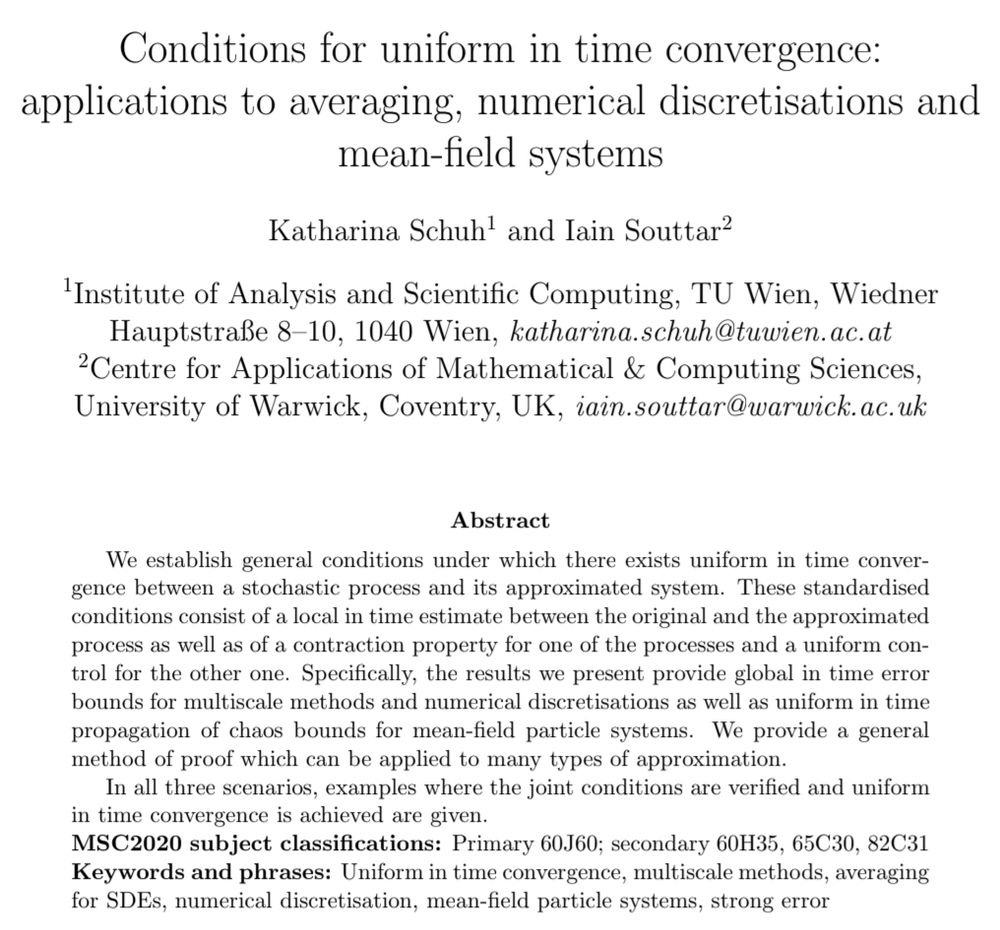
Splendid stuff; very digestible and usable:
arxiv.org/abs/2412.05239
'Conditions for uniform in time convergence: applications to averaging, numerical discretisations, and mean-field systems'
- Katharina Schuh, Iain Souttar
arxiv.org/abs/2412.05239
'Conditions for uniform in time convergence: applications to averaging, numerical discretisations, and mean-field systems'
- Katharina Schuh, Iain Souttar
December 9, 2024 at 11:08 AM
Splendid stuff; very digestible and usable:
arxiv.org/abs/2412.05239
'Conditions for uniform in time convergence: applications to averaging, numerical discretisations, and mean-field systems'
- Katharina Schuh, Iain Souttar
arxiv.org/abs/2412.05239
'Conditions for uniform in time convergence: applications to averaging, numerical discretisations, and mean-field systems'
- Katharina Schuh, Iain Souttar
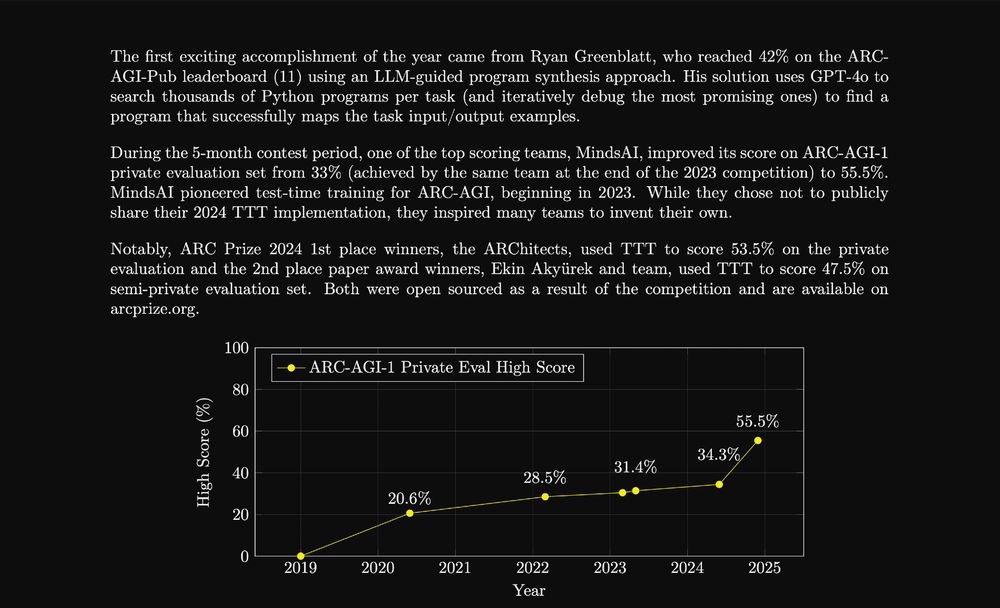
wow TTT is truly incredible.... @pinkddle.bsky.social how were your experiments with it??
December 9, 2024 at 11:31 AM
wow TTT is truly incredible.... @pinkddle.bsky.social how were your experiments with it??
Reposted by Sam Laki
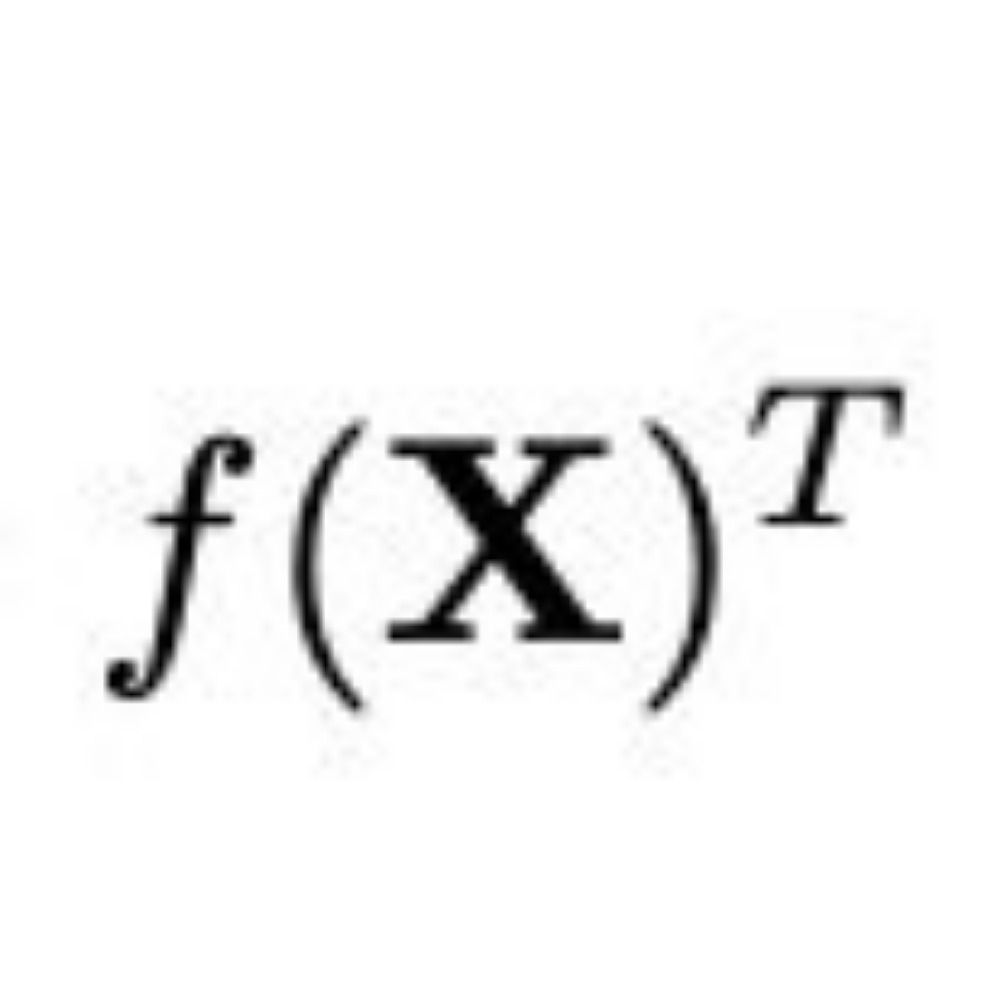
Literally just made this slide

December 7, 2024 at 4:08 PM
Literally just made this slide
structured matrices save me

December 7, 2024 at 4:05 PM
structured matrices save me

i need a huge TV as a monitor fr

November 28, 2024 at 3:15 PM
i need a huge TV as a monitor fr

Reposted by Sam Laki

Just had a new paper hit the arxiv (will appear at NeurIPS '24), joint with Sungjin Im, Thomas Lavastida, Ben Moseley, Aidin Niaparast, and @vsergei.bsky.social: arxiv.org/abs/2411.16030 . I think it's super cool, so a quick thread!

Binary Search with Distributional Predictions
Algorithms with (machine-learned) predictions is a powerful framework for combining traditional worst-case algorithms with modern machine learning. However, the vast majority of work in this space ass...
arxiv.org
November 26, 2024 at 8:21 PM
Just had a new paper hit the arxiv (will appear at NeurIPS '24), joint with Sungjin Im, Thomas Lavastida, Ben Moseley, Aidin Niaparast, and @vsergei.bsky.social: arxiv.org/abs/2411.16030 . I think it's super cool, so a quick thread!
how it feels to use a fountain pen for the first time in 10 years and write absolute chicken scratch
November 26, 2024 at 6:09 PM
how it feels to use a fountain pen for the first time in 10 years and write absolute chicken scratch
arrgh goddamn roommates have a party with a loudass speaker
November 24, 2024 at 5:46 AM
arrgh goddamn roommates have a party with a loudass speaker
