



Rodrigo Cabral-Carvalho
@rodrigocc.bsky.social
Living without "metaphysical crutches" to be happy.
Working forward to a more integrated neuroscience.
Working forward to a more integrated neuroscience.
Thank you, @ruffini.bsky.social! Great to hear from you!
May 6, 2025 at 12:16 PM
Thank you, @ruffini.bsky.social! Great to hear from you!
(8/8)
I also want to acknowledge @robincarhartharris.bsky.social , whose work has been inspiration for my personal visions and research direction, and also @ruffini.bsky.social for his methodological insights and great conversations at the Brain Modes conference!
I also want to acknowledge @robincarhartharris.bsky.social , whose work has been inspiration for my personal visions and research direction, and also @ruffini.bsky.social for his methodological insights and great conversations at the Brain Modes conference!
April 30, 2025 at 2:48 PM
(8/8)
I also want to acknowledge @robincarhartharris.bsky.social , whose work has been inspiration for my personal visions and research direction, and also @ruffini.bsky.social for his methodological insights and great conversations at the Brain Modes conference!
I also want to acknowledge @robincarhartharris.bsky.social , whose work has been inspiration for my personal visions and research direction, and also @ruffini.bsky.social for his methodological insights and great conversations at the Brain Modes conference!
(6/8)
In the subacute group, ΔT (condition - baseline scans) correlated with the “affect” subscale of the Hallucinogen Rating Scale (HRS), p < 0.01 and was better explained in the ayahuasca group (adj. R² = 0.58) compared to the placebo (adj. R² = -0.05).
In the subacute group, ΔT (condition - baseline scans) correlated with the “affect” subscale of the Hallucinogen Rating Scale (HRS), p < 0.01 and was better explained in the ayahuasca group (adj. R² = 0.58) compared to the placebo (adj. R² = -0.05).

April 30, 2025 at 2:48 PM
(6/8)
In the subacute group, ΔT (condition - baseline scans) correlated with the “affect” subscale of the Hallucinogen Rating Scale (HRS), p < 0.01 and was better explained in the ayahuasca group (adj. R² = 0.58) compared to the placebo (adj. R² = -0.05).
In the subacute group, ΔT (condition - baseline scans) correlated with the “affect” subscale of the Hallucinogen Rating Scale (HRS), p < 0.01 and was better explained in the ayahuasca group (adj. R² = 0.58) compared to the placebo (adj. R² = -0.05).
(5/8) Main results start now: Change in Ising-inferred temperature (ΔT) was significantly higher in both the acute (p < 0.001) and subacute (24 h, p < 0.05) ayahuasca groups vs. placebo, indicating a sustained entropy elevation.

April 30, 2025 at 2:47 PM
(5/8) Main results start now: Change in Ising-inferred temperature (ΔT) was significantly higher in both the acute (p < 0.001) and subacute (24 h, p < 0.05) ayahuasca groups vs. placebo, indicating a sustained entropy elevation.
(4/8)
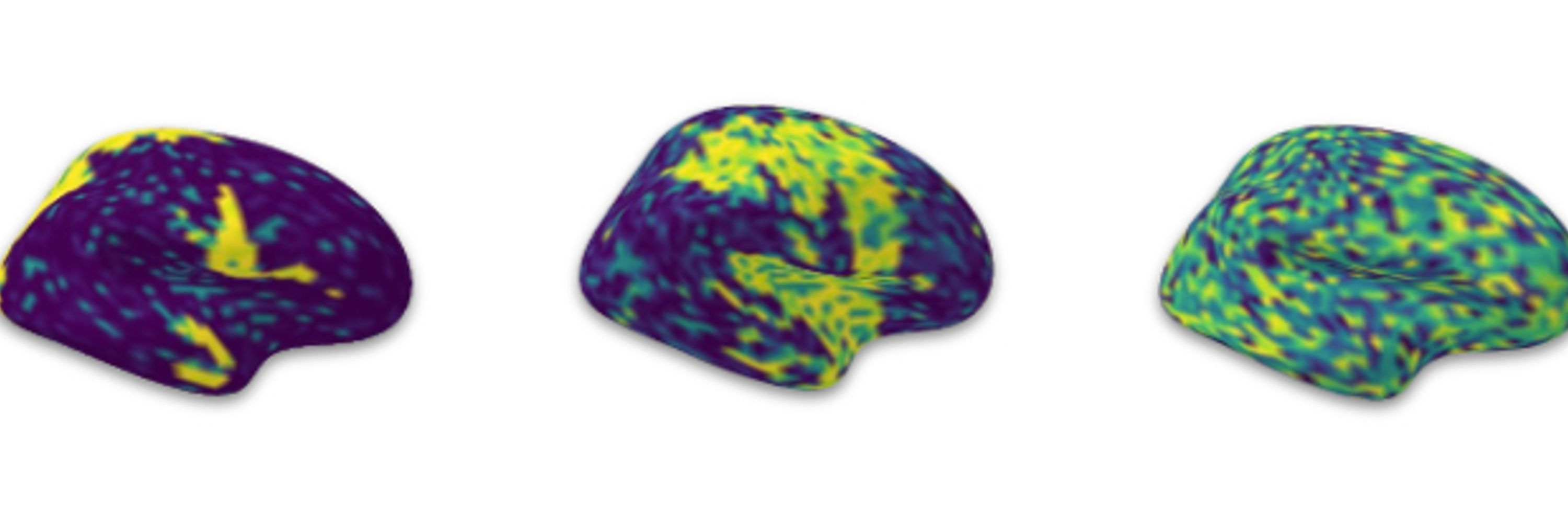
With less prominent network changes in subacute dataset.
With less prominent network changes in subacute dataset.

April 30, 2025 at 2:47 PM
(4/8)
With less prominent network changes in subacute dataset.
With less prominent network changes in subacute dataset.
(3/8) Acute ayahuasca produced ↓segregation & modularity and ↑clustering & path length—especially in auditory, somatomotor & attention networks—pointing to more globally integrated, less modular dynamics as we may know.

April 30, 2025 at 2:46 PM
(3/8) Acute ayahuasca produced ↓segregation & modularity and ↑clustering & path length—especially in auditory, somatomotor & attention networks—pointing to more globally integrated, less modular dynamics as we may know.
(2/8)
The main method infer Ising temperature using a GNN model, developed by me and published in Network Neuroscience (Cabral-Carvalho et al., 2025).
The main method infer Ising temperature using a GNN model, developed by me and published in Network Neuroscience (Cabral-Carvalho et al., 2025).

April 30, 2025 at 2:45 PM
(2/8)
The main method infer Ising temperature using a GNN model, developed by me and published in Network Neuroscience (Cabral-Carvalho et al., 2025).
The main method infer Ising temperature using a GNN model, developed by me and published in Network Neuroscience (Cabral-Carvalho et al., 2025).
(1/8)
• Acute dataset: n=8 regular ayahuasca users, fMRI pre vs. 40 min post-dose
• Subacute dataset: n=19 aya vs. n=18 placebo, fMRI pre vs. 24 h post
• Analyses: graph metrics (segregation, clustering, path-length, modularity, etc.) + Ising temperature
• Acute dataset: n=8 regular ayahuasca users, fMRI pre vs. 40 min post-dose
• Subacute dataset: n=19 aya vs. n=18 placebo, fMRI pre vs. 24 h post
• Analyses: graph metrics (segregation, clustering, path-length, modularity, etc.) + Ising temperature

April 30, 2025 at 2:45 PM
(1/8)
• Acute dataset: n=8 regular ayahuasca users, fMRI pre vs. 40 min post-dose
• Subacute dataset: n=19 aya vs. n=18 placebo, fMRI pre vs. 24 h post
• Analyses: graph metrics (segregation, clustering, path-length, modularity, etc.) + Ising temperature
• Acute dataset: n=8 regular ayahuasca users, fMRI pre vs. 40 min post-dose
• Subacute dataset: n=19 aya vs. n=18 placebo, fMRI pre vs. 24 h post
• Analyses: graph metrics (segregation, clustering, path-length, modularity, etc.) + Ising temperature