



Robin Broersen
@robinbro.bsky.social
Neuroscientist 🧠🔬: superior colliculus, visual processing and cerebellum @ Erasmus MC | in vivo patch clamp enthusiast | 🇳🇱
https://neuro.nl/person/Robin-Broersen
https://neuro.nl/person/Robin-Broersen
This study brings science one step closer to unravelling the complex workings of the brain and how sensory information is translated into behavior. As a result, it lays the foundation for the development of new applications and therapies. (7/7)
February 21, 2025 at 12:08 PM
This study brings science one step closer to unravelling the complex workings of the brain and how sensory information is translated into behavior. As a result, it lays the foundation for the development of new applications and therapies. (7/7)
Why is this important? Understanding these mechanisms helps us comprehend how animals, including humans, react to acute danger. We shed light on survival mechanisms, but also on how the brain combines information from each eye. (6/7)
February 21, 2025 at 12:08 PM
Why is this important? Understanding these mechanisms helps us comprehend how animals, including humans, react to acute danger. We shed light on survival mechanisms, but also on how the brain combines information from each eye. (6/7)
Further, we found that binocular vision facilitates escape/freeze responses to a visual threat, behaviors that depend on the SC. We discovered that when confronted with a predator, mice with two eyes predominantly chose to escape, while mice with one eye froze more often. (5/7)
February 21, 2025 at 12:08 PM
Further, we found that binocular vision facilitates escape/freeze responses to a visual threat, behaviors that depend on the SC. We discovered that when confronted with a predator, mice with two eyes predominantly chose to escape, while mice with one eye froze more often. (5/7)
Neurons in the SC combine these inputs, but they do not follow simple arithmetic rules. The responses when stimulating both eyes simultaneously was less than what you would expect if you simply added up the responses from stimulating each eye individually. (4/7)
February 21, 2025 at 12:08 PM
Neurons in the SC combine these inputs, but they do not follow simple arithmetic rules. The responses when stimulating both eyes simultaneously was less than what you would expect if you simply added up the responses from stimulating each eye individually. (4/7)
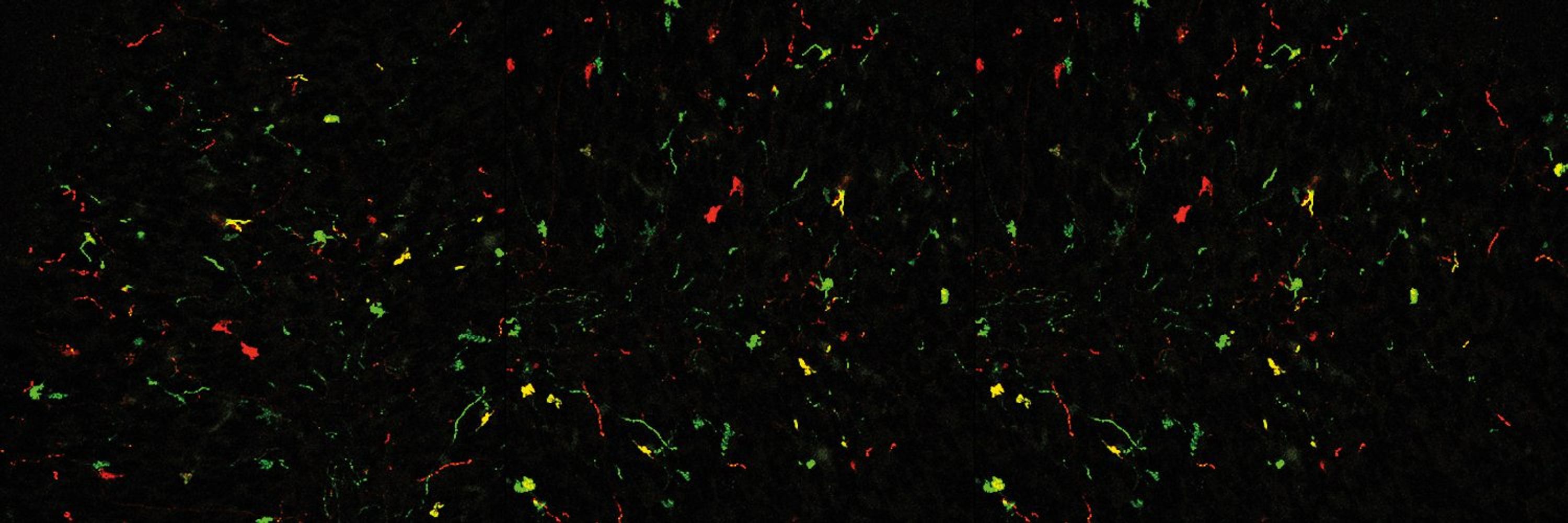
🔬We found that a considerable % of SC neurons receive inputs from both eyes, but not all inputs are direct inputs from the retina. Connections between the SC in each hemisphere and the connections from the visual cortex also convey visual input from the eyes to the SC. (3/7)
February 21, 2025 at 12:08 PM
🔬We found that a considerable % of SC neurons receive inputs from both eyes, but not all inputs are direct inputs from the retina. Connections between the SC in each hemisphere and the connections from the visual cortex also convey visual input from the eyes to the SC. (3/7)
🔍In this study we explore how binocular visual inputs converge in a brain area called the superior colliculus (SC), how the visual signals get there, and what role binocular vision—seeing with both eyes—plays in mouse’s survival responses to visual threats. (2/7)
February 21, 2025 at 12:08 PM
🔍In this study we explore how binocular visual inputs converge in a brain area called the superior colliculus (SC), how the visual signals get there, and what role binocular vision—seeing with both eyes—plays in mouse’s survival responses to visual threats. (2/7)