



QuOI Theory
@quoi-theory.at
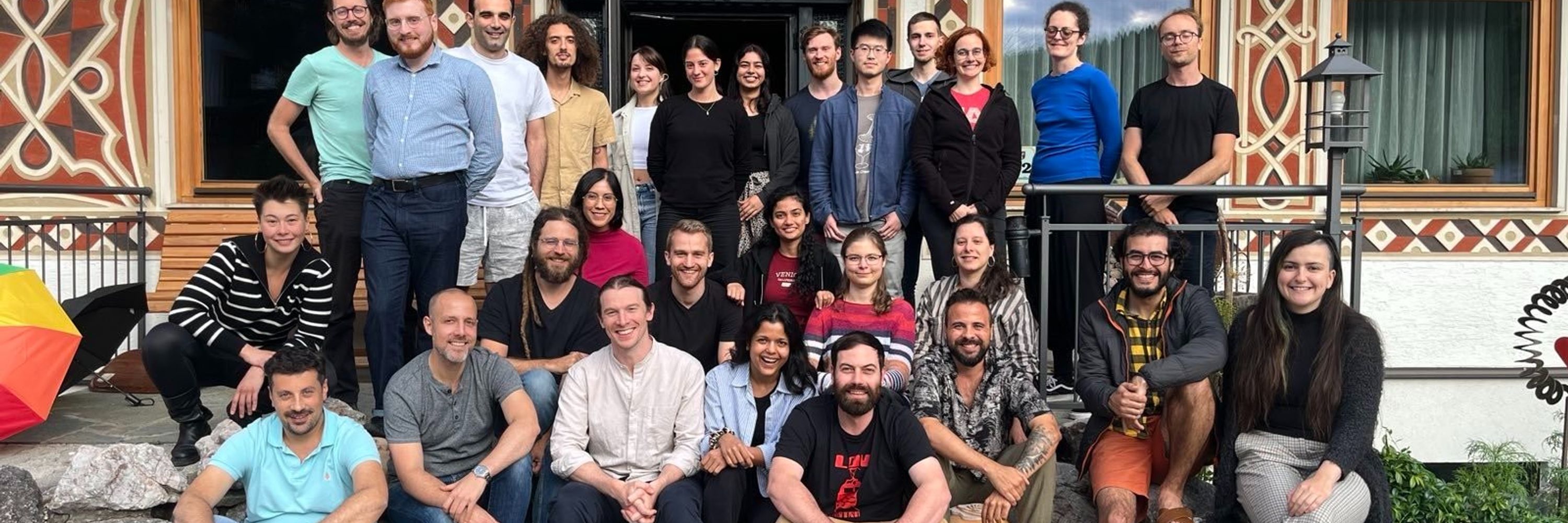
We're Quantum Optics & Information: the theory division of TU Wien's Atominstitut. Also with groups for quantum thermo, foundations, computing, and more! We ❤️ open, diverse science + good coffee! Find us at https://quoi-theory.at/
Posts by @tomrivlin.com
Posts by @tomrivlin.com
Hey quantum Bluesky! Allow us to reintroduce ourselves! You may know us as QuIT: Marcus Huber's Quantum Information and Thermodynamics group at TU Wien. But we're so much more than that, and it's time our name reflected it.
So say hello to... 𝗤𝘂𝗢𝗜?
quoi-theory.at
So say hello to... 𝗤𝘂𝗢𝗜?
quoi-theory.at

January 27, 2026 at 4:20 PM
Hey quantum Bluesky! Allow us to reintroduce ourselves! You may know us as QuIT: Marcus Huber's Quantum Information and Thermodynamics group at TU Wien. But we're so much more than that, and it's time our name reflected it.
So say hello to... 𝗤𝘂𝗢𝗜?
quoi-theory.at
So say hello to... 𝗤𝘂𝗢𝗜?
quoi-theory.at
New preprint! Master's student Jian joins Marcus, Nico, and Pharnam in finding a new way to model the impact of noise on quantum thermodynamic protocols, with interesting implications for certain cooling algorithms
arxiv.org/abs/2601.16317
arxiv.org/abs/2601.16317


January 26, 2026 at 10:40 AM
New preprint! Master's student Jian joins Marcus, Nico, and Pharnam in finding a new way to model the impact of noise on quantum thermodynamic protocols, with interesting implications for certain cooling algorithms
arxiv.org/abs/2601.16317
arxiv.org/abs/2601.16317
Reposted by QuOI Theory
From one tick to the next, small timing uncertainties in clocks usually add up because of the independence of errors. Using fermions tunneling through a quantum wire as clock ticks, we found a way to build a clock where errors cancel out rather than accumulate. arxiv.org/abs/2601.10785

January 19, 2026 at 11:36 AM
From one tick to the next, small timing uncertainties in clocks usually add up because of the independence of errors. Using fermions tunneling through a quantum wire as clock ticks, we found a way to build a clock where errors cancel out rather than accumulate. arxiv.org/abs/2601.10785
New preprint! Florian, Yuri, Marcus, and collaborators' clock research ticks forward yet again. This time, they show how a clock can autonomously self-correct ticks using quantum correlations, leading to exponential advantage in precision
arxiv.org/abs/2601.10785
arxiv.org/abs/2601.10785
January 19, 2026 at 10:02 AM
New preprint! Florian, Yuri, Marcus, and collaborators' clock research ticks forward yet again. This time, they show how a clock can autonomously self-correct ticks using quantum correlations, leading to exponential advantage in precision
arxiv.org/abs/2601.10785
arxiv.org/abs/2601.10785
Interesting new preprint from our group's visiting professor Carlos. He and his colleagues statistically study the linguistic content of papers in different fields of physics, finding that they can predict the journal a paper is in from the words used www.preprints.org/manuscript/2...
January 16, 2026 at 4:09 PM
Interesting new preprint from our group's visiting professor Carlos. He and his colleagues statistically study the linguistic content of papers in different fields of physics, finding that they can predict the journal a paper is in from the words used www.preprints.org/manuscript/2...
Five members of our team are on this new preprint, including Dorian's first first authorship! Congrats to Dorian, Alexandra, Florian, Pauli, and Marcus for finding a new way to produce high-dimensional time-bin entanglement, and verifying it with a new QKD protocol! arxiv.org/abs/2601.07678
January 13, 2026 at 11:50 AM
Five members of our team are on this new preprint, including Dorian's first first authorship! Congrats to Dorian, Alexandra, Florian, Pauli, and Marcus for finding a new way to produce high-dimensional time-bin entanglement, and verifying it with a new QKD protocol! arxiv.org/abs/2601.07678
This is now out in Phys. Rev. A! journals.aps.org/pra/abstract...
(1/7)On a train to Styria, headed for a weekend of hiking I kept thinking 𝘤𝘢𝘯 𝘢 𝘩𝘦𝘢𝘵 𝘦𝘹𝘤𝘩𝘢𝘯𝘨𝘦 𝘣𝘦 𝘶𝘴𝘦𝘥 𝘧𝘰𝘳 𝘢 𝘤𝘰𝘮𝘱𝘶𝘵𝘢𝘵𝘪𝘰𝘯?
In today's arXiv, I show that a heat exchange between a qubit and a thermal machine can be used to solve some old school query complexity problems.
scirate.com/arxiv/2505.1...
In today's arXiv, I show that a heat exchange between a qubit and a thermal machine can be used to solve some old school query complexity problems.
scirate.com/arxiv/2505.1...

January 12, 2026 at 10:22 AM
This is now out in Phys. Rev. A! journals.aps.org/pra/abstract...
Our Research Unit had a pretty amazing year in 2025. In total:
-3️⃣7️⃣ preprints were released
-5️⃣ of those were also fully published
-1️⃣9️⃣ more preprints from previous years were fully published
Congrats, everyone! ❤️ Here's to a fun year of research in 2026
www.quitphysics.info/publications
-3️⃣7️⃣ preprints were released
-5️⃣ of those were also fully published
-1️⃣9️⃣ more preprints from previous years were fully published
Congrats, everyone! ❤️ Here's to a fun year of research in 2026
www.quitphysics.info/publications
Publications — Atominstitut Theory Division
www.quitphysics.info
January 7, 2026 at 4:08 PM
Our Research Unit had a pretty amazing year in 2025. In total:
-3️⃣7️⃣ preprints were released
-5️⃣ of those were also fully published
-1️⃣9️⃣ more preprints from previous years were fully published
Congrats, everyone! ❤️ Here's to a fun year of research in 2026
www.quitphysics.info/publications
-3️⃣7️⃣ preprints were released
-5️⃣ of those were also fully published
-1️⃣9️⃣ more preprints from previous years were fully published
Congrats, everyone! ❤️ Here's to a fun year of research in 2026
www.quitphysics.info/publications
Reposted by QuOI Theory
Quite happy seeing this work out now in @prxquantum.bsky.social
It was great fun working with my collaborators on this one. Especially pleased to have brought some graph theoretic combinatorics to Quantum Thermodynamics 🔥🧊
journals.aps.org/prxquantum/a...
It was great fun working with my collaborators on this one. Especially pleased to have brought some graph theoretic combinatorics to Quantum Thermodynamics 🔥🧊
journals.aps.org/prxquantum/a...
December 20, 2025 at 12:17 PM
Quite happy seeing this work out now in @prxquantum.bsky.social
It was great fun working with my collaborators on this one. Especially pleased to have brought some graph theoretic combinatorics to Quantum Thermodynamics 🔥🧊
journals.aps.org/prxquantum/a...
It was great fun working with my collaborators on this one. Especially pleased to have brought some graph theoretic combinatorics to Quantum Thermodynamics 🔥🧊
journals.aps.org/prxquantum/a...
Today we had The Journies, the annual "Papers of the Year" award at our quantum theory journal club. After an informal, just-for-fun vote, the winners were:
1. Most well-written paper: A Friendly Guide to Exorcising Maxwell’s Demon; A. de Oliveira Junior et. al. journals.aps.org/prxquantum/a...
1. Most well-written paper: A Friendly Guide to Exorcising Maxwell’s Demon; A. de Oliveira Junior et. al. journals.aps.org/prxquantum/a...
December 17, 2025 at 5:09 PM
Today we had The Journies, the annual "Papers of the Year" award at our quantum theory journal club. After an informal, just-for-fun vote, the winners were:
1. Most well-written paper: A Friendly Guide to Exorcising Maxwell’s Demon; A. de Oliveira Junior et. al. journals.aps.org/prxquantum/a...
1. Most well-written paper: A Friendly Guide to Exorcising Maxwell’s Demon; A. de Oliveira Junior et. al. journals.aps.org/prxquantum/a...
New in Phys Rev Research! Marcus, Max, and Manu (while he was still working in Vienna) propose a dynamic model of quantum measurements as an equilibration process, motivated by the laws of thermodynamics: The Measurement-Equilibration Hypothesis
journals.aps.org/prresearch/a...
journals.aps.org/prresearch/a...
Quantum measurements and equilibration: The emergence of objective outcomes via entropy maximization
The measurement postulate of quantum theory stands in conflict with the laws of thermodynamics and has evoked debate regarding what actually constitutes a measurement. With the help of modern quantum ...
journals.aps.org
December 11, 2025 at 9:57 AM
New in Phys Rev Research! Marcus, Max, and Manu (while he was still working in Vienna) propose a dynamic model of quantum measurements as an equilibration process, motivated by the laws of thermodynamics: The Measurement-Equilibration Hypothesis
journals.aps.org/prresearch/a...
journals.aps.org/prresearch/a...
Reposted by QuOI Theory
Notably, this makes it a double-double of 🇪🇺 #ERC grants for the Atominstitut this year — 🏅Andreas Schindewolf and 🏅Uroš Delić received an #ERCStG, while 🏅Philipp Haslinger and 🏅I received an #ERCCoG — and a double-triple for the #Physics Department at @tuwien.at

Was für ein Erfolg! Gleich drei ERC Consolidator Grants gehen an die TU Wien. Wir freuen uns und gratulieren den Preisträgern! 🥳
Mehr dazu: www.tuwien.at/tu-wien/aktu...
Mehr dazu: www.tuwien.at/tu-wien/aktu...

December 11, 2025 at 8:19 AM
Notably, this makes it a double-double of 🇪🇺 #ERC grants for the Atominstitut this year — 🏅Andreas Schindewolf and 🏅Uroš Delić received an #ERCStG, while 🏅Philipp Haslinger and 🏅I received an #ERCCoG — and a double-triple for the #Physics Department at @tuwien.at
Reposted by QuOI Theory
Very happy to see our latest work out in PRL doi.org/10.1103/5rtj... and highlighted by both @apsphysics.bsky.social Physics and @physicsworld.bsky.social
Small thread below 🧵⬇️
Small thread below 🧵⬇️

Quantum fluctuations produce no entropy, so if you can count those fluctuations as clock “ticks”, you can make a clock with no entropy and nonzero precision. Or can you? New research hints at why there is (still) no free lunch, even in the #quantum world. ⚛️🧪 physicsworld.com/a/researcher...

Researchers pin down the true cost of precision in quantum clocks – Physics World
Trade-off between precision and entropy production lies in measurement process
physicsworld.com
November 16, 2025 at 5:06 PM
Very happy to see our latest work out in PRL doi.org/10.1103/5rtj... and highlighted by both @apsphysics.bsky.social Physics and @physicsworld.bsky.social
Small thread below 🧵⬇️
Small thread below 🧵⬇️
November 11, 2025 at 8:34 AM
New preprint! Eliza and colleagues demonstrate how a quasiprobability representation of a measurement is altered when said measurement is over- or undercomplete, including in scenarios with noise. This has implications for which states can be called 'classical'
arxiv.org/abs/2511.04274
arxiv.org/abs/2511.04274
November 10, 2025 at 10:27 AM
New preprint! Eliza and colleagues demonstrate how a quasiprobability representation of a measurement is altered when said measurement is over- or undercomplete, including in scenarios with noise. This has implications for which states can be called 'classical'
arxiv.org/abs/2511.04274
arxiv.org/abs/2511.04274
Two new arXiv postings by Shuheng today! Both on the subject of using Wigner functions to detect genuine multipartite entanglement (GME). The first preprint shows that if you have "enough" negativity in your Wigner function, that certifies that you have GME arxiv.org/abs/2510.26761
October 31, 2025 at 10:37 AM
Two new arXiv postings by Shuheng today! Both on the subject of using Wigner functions to detect genuine multipartite entanglement (GME). The first preprint shows that if you have "enough" negativity in your Wigner function, that certifies that you have GME arxiv.org/abs/2510.26761
Reposted by QuOI Theory
In our new paper arxiv.org/abs/2510.15693, EntaQCT www.quitphysics.info/entaqct team member Ida Mishra and myself on the side of @tuwien.at had the pleasure of collaborating with the team of Ben Lanyon at the @uniinnsbruck.bsky.social 4/8

Generation of multipartite photonic entanglement using a trapped-ion quantum processing node
The ability to establish entanglement between the nodes of future quantum networks is essential for enabling a wide range of new applications in science and technology. A promising approach involves t...
arxiv.org
October 24, 2025 at 7:40 AM
In our new paper arxiv.org/abs/2510.15693, EntaQCT www.quitphysics.info/entaqct team member Ida Mishra and myself on the side of @tuwien.at had the pleasure of collaborating with the team of Ben Lanyon at the @uniinnsbruck.bsky.social 4/8
Reposted by QuOI Theory
Quantum networks might one day enable more secure options for communication and distributed computation and are therefore currently a hot research topic, one which presents many challenges: One is the on-demand distribution of quantum systems that feature genuine multipartite entanglement (GME). 1/8
October 24, 2025 at 7:40 AM
Quantum networks might one day enable more secure options for communication and distributed computation and are therefore currently a hot research topic, one which presents many challenges: One is the on-demand distribution of quantum systems that feature genuine multipartite entanglement (GME). 1/8
New preprint! Ida and Nico join a team of experimentalists working on new ways to produce genuinely multipartite entanglement in photons using a trapped-ion quantum processor
arxiv.org/abs/2510.15693
arxiv.org/abs/2510.15693

Generation of multipartite photonic entanglement using a trapped-ion quantum processing node
The ability to establish entanglement between the nodes of future quantum networks is essential for enabling a wide range of new applications in science and technology. A promising approach involves t...
arxiv.org
October 20, 2025 at 11:55 AM
New preprint! Ida and Nico join a team of experimentalists working on new ways to produce genuinely multipartite entanglement in photons using a trapped-ion quantum processor
arxiv.org/abs/2510.15693
arxiv.org/abs/2510.15693
Congrats to Phila for being the DPG "Physikerin der Woche" this week! www.dpg-physik.de/vereinigunge...
October 17, 2025 at 11:33 AM
Congrats to Phila for being the DPG "Physikerin der Woche" this week! www.dpg-physik.de/vereinigunge...
New preprint from Nico. A pretty cool theoretical result demonstrated experimentally: genuine multipartite entanglement activation from two copies of a biseparable three-qubit state
arxiv.org/abs/2510.12457
arxiv.org/abs/2510.12457
Experimental verification of multi-copy activation of genuine multipartite entanglement
A central concept in quantum information processing is genuine multipartite entanglement (GME), a type of correlation beyond biseparability, that is, correlations that cannot be explained by statistic...
arxiv.org
October 15, 2025 at 11:20 AM
New preprint from Nico. A pretty cool theoretical result demonstrated experimentally: genuine multipartite entanglement activation from two copies of a biseparable three-qubit state
arxiv.org/abs/2510.12457
arxiv.org/abs/2510.12457
Congrats to the three new physics Nobel laureates, who helped lay the groundwork for superconducting quantum computing. As always, nobelprize.org has a great technical summary of the results that won the prize and the wider research context
www.nobelprize.org/prizes/physi...
www.nobelprize.org/prizes/physi...

Nobel Prize in Physics 2025
The Nobel Prize in Physics 2025 was awarded to John Clarke, Michel H. Devoret and John M. Martinis “for the discovery of macroscopic quantum mechanical tunnelling and energy quantisation in an electri...
www.nobelprize.org
October 7, 2025 at 10:14 AM
Congrats to the three new physics Nobel laureates, who helped lay the groundwork for superconducting quantum computing. As always, nobelprize.org has a great technical summary of the results that won the prize and the wider research context
www.nobelprize.org/prizes/physi...
www.nobelprize.org/prizes/physi...
Reposted by QuOI Theory
Amazing to see the work of @itsmealeale.bsky.social and Partyk L Bartosik highlighted like this.
Having followed it as it was written and knowing the hard work that was poured into it, really brings a smile to one's face to see it highlighted.
Yes to detecting entanglement using thermodynamics!
Having followed it as it was written and knowing the hard work that was poured into it, really brings a smile to one's face to see it highlighted.
Yes to detecting entanglement using thermodynamics!

A Thermometer for Measuring Quantumness | Quanta Magazine
“Anomalous” heat flow, which at first appears to violate the second law of thermodynamics, gives physicists a way to detect quantum entanglement without destroying it.
www.quantamagazine.org
October 1, 2025 at 3:00 PM
Amazing to see the work of @itsmealeale.bsky.social and Partyk L Bartosik highlighted like this.
Having followed it as it was written and knowing the hard work that was poured into it, really brings a smile to one's face to see it highlighted.
Yes to detecting entanglement using thermodynamics!
Having followed it as it was written and knowing the hard work that was poured into it, really brings a smile to one's face to see it highlighted.
Yes to detecting entanglement using thermodynamics!
Yet another new preprint from Philipp this week! Here, he and his colleagues introduce a full quantum model for bright squeezed vacuum pulses on femtosecond timescales in strongly light-driven nonlinear media
arxiv.org/abs/2509.19608
arxiv.org/abs/2509.19608
September 26, 2025 at 9:20 AM
Yet another new preprint from Philipp this week! Here, he and his colleagues introduce a full quantum model for bright squeezed vacuum pulses on femtosecond timescales in strongly light-driven nonlinear media
arxiv.org/abs/2509.19608
arxiv.org/abs/2509.19608
New preprint! Here Philipp takes a look at the connection between high harmonic generation and Bose-Einstein condensates, asking what happens to a BEC when it's hit by an intense, short laser pulse
arxiv.org/abs/2509.19022
arxiv.org/abs/2509.19022
High harmonic generation from a Bose-Einstein condensate
Lasers provide intense coherent radiation, essential to cool and trap atoms into a Bose-Einstein condensate or can alternatively drive the non-linear dynamics of high-order harmonic generation. Yet, t...
arxiv.org
September 24, 2025 at 12:03 PM
New preprint! Here Philipp takes a look at the connection between high harmonic generation and Bose-Einstein condensates, asking what happens to a BEC when it's hit by an intense, short laser pulse
arxiv.org/abs/2509.19022
arxiv.org/abs/2509.19022