



Patryk Poliński
@ppolinski.bsky.social
Postdoc at @EMBLBarcelona. Working on unusual forms of splicing.
Great session by Sara Monaco introducing ReviewCommons at the EMBL international postdoc retreat! Insightful discussion on how transparent peer review can accelerate and improve publishing #OpenScience @embl.org @saramonaco-rc.bsky.social @embo.org

November 20, 2025 at 1:50 PM
Great session by Sara Monaco introducing ReviewCommons at the EMBL international postdoc retreat! Insightful discussion on how transparent peer review can accelerate and improve publishing #OpenScience @embl.org @saramonaco-rc.bsky.social @embo.org

Expansion of: nature.com/articles/s41...
June 10, 2025 at 7:20 AM
Expansion of: nature.com/articles/s41...
The last step was to perform rescue experiments.
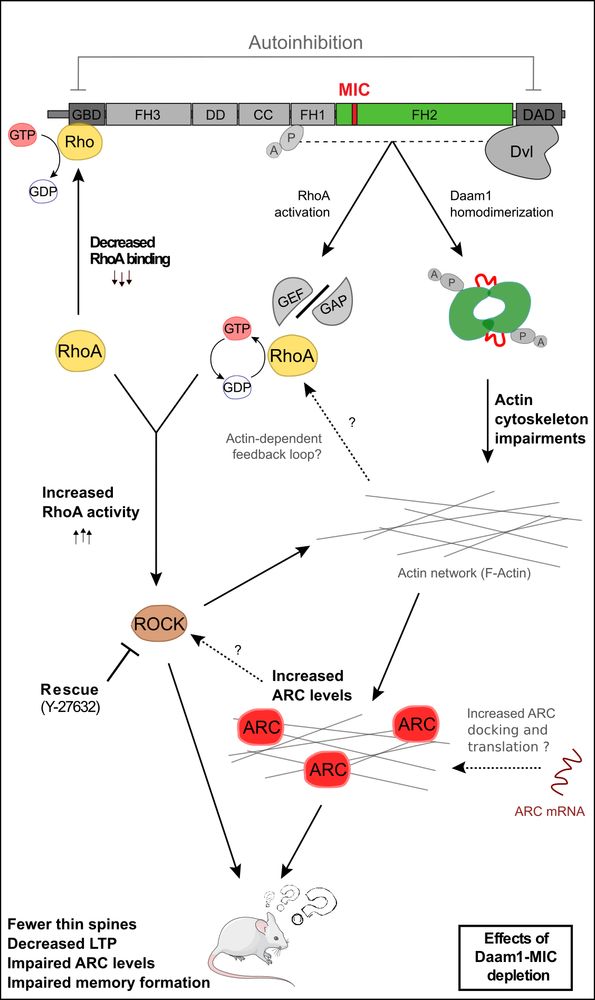
Excitingly, treatment with a ROCK inhibitor partially rescued observed phenotypes, including learning deficits!
Excitingly, treatment with a ROCK inhibitor partially rescued observed phenotypes, including learning deficits!

May 9, 2025 at 9:35 AM
The last step was to perform rescue experiments.
Excitingly, treatment with a ROCK inhibitor partially rescued observed phenotypes, including learning deficits!
Excitingly, treatment with a ROCK inhibitor partially rescued observed phenotypes, including learning deficits!
Next, we investigated in detail the molecular mechanism of the observed phenotypes.
One of the leads guided us to increased RHOA/ROCK signaling in KO neurons! RhoA is a direct interactor of Daam1, whose activity is commonly associated with the number of “learning spines”.
One of the leads guided us to increased RHOA/ROCK signaling in KO neurons! RhoA is a direct interactor of Daam1, whose activity is commonly associated with the number of “learning spines”.

May 9, 2025 at 9:35 AM
Next, we investigated in detail the molecular mechanism of the observed phenotypes.
One of the leads guided us to increased RHOA/ROCK signaling in KO neurons! RhoA is a direct interactor of Daam1, whose activity is commonly associated with the number of “learning spines”.
One of the leads guided us to increased RHOA/ROCK signaling in KO neurons! RhoA is a direct interactor of Daam1, whose activity is commonly associated with the number of “learning spines”.
With help from @maradierssen.bsky.social, we found that DAAM1-MIC KO reduced long-term potentiation (LTP) in hippocampal neurons.
Moreover, dendritic spine analysis by @eloisaherrera.bsky.social revealed defects mainly in postsynaptic regions and a significant decrease in thin "learning spines."
Moreover, dendritic spine analysis by @eloisaherrera.bsky.social revealed defects mainly in postsynaptic regions and a significant decrease in thin "learning spines."

May 9, 2025 at 9:35 AM
With help from @maradierssen.bsky.social, we found that DAAM1-MIC KO reduced long-term potentiation (LTP) in hippocampal neurons.
Moreover, dendritic spine analysis by @eloisaherrera.bsky.social revealed defects mainly in postsynaptic regions and a significant decrease in thin "learning spines."
Moreover, dendritic spine analysis by @eloisaherrera.bsky.social revealed defects mainly in postsynaptic regions and a significant decrease in thin "learning spines."
Yet, the most exciting part began when we generated genetically engineered DAAM1-MIC KO mice!
We performed multiple assays to evaluate animal behavior. Strikingly, they showed clear learning impairments after microexon removal. What are the cellular and molecular bases for this?
We performed multiple assays to evaluate animal behavior. Strikingly, they showed clear learning impairments after microexon removal. What are the cellular and molecular bases for this?

May 9, 2025 at 9:35 AM
Yet, the most exciting part began when we generated genetically engineered DAAM1-MIC KO mice!
We performed multiple assays to evaluate animal behavior. Strikingly, they showed clear learning impairments after microexon removal. What are the cellular and molecular bases for this?
We performed multiple assays to evaluate animal behavior. Strikingly, they showed clear learning impairments after microexon removal. What are the cellular and molecular bases for this?
But, does it affect neuronal function?
We KO the microexon in mESCs using CRISPR/Cas9, differentiated them into neurons in vitro, and examined changes in synaptic functioning. Microexon removal increased Ca2+ flux, suggesting enhanced neuronal firing.
@gercrcat.bsky.social
@vhir.bsky.social
We KO the microexon in mESCs using CRISPR/Cas9, differentiated them into neurons in vitro, and examined changes in synaptic functioning. Microexon removal increased Ca2+ flux, suggesting enhanced neuronal firing.
@gercrcat.bsky.social
@vhir.bsky.social

May 9, 2025 at 9:35 AM
But, does it affect neuronal function?
We KO the microexon in mESCs using CRISPR/Cas9, differentiated them into neurons in vitro, and examined changes in synaptic functioning. Microexon removal increased Ca2+ flux, suggesting enhanced neuronal firing.
@gercrcat.bsky.social
@vhir.bsky.social
We KO the microexon in mESCs using CRISPR/Cas9, differentiated them into neurons in vitro, and examined changes in synaptic functioning. Microexon removal increased Ca2+ flux, suggesting enhanced neuronal firing.
@gercrcat.bsky.social
@vhir.bsky.social
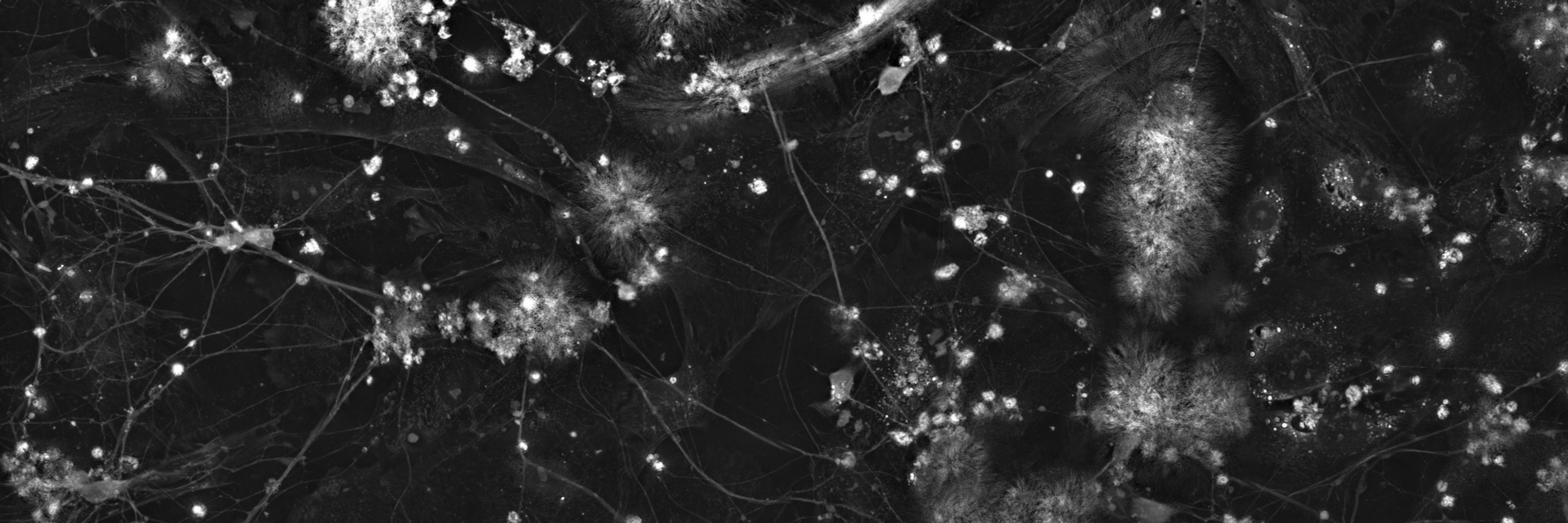
Microscopy-based 🔬 biochemical assays showed that microexon inclusion significantly affects actin polymerization, both quantitatively and qualitatively, likely due to differential actin binding.

May 9, 2025 at 9:35 AM
Microscopy-based 🔬 biochemical assays showed that microexon inclusion significantly affects actin polymerization, both quantitatively and qualitatively, likely due to differential actin binding.
I focused on formin proteins, the most versatile actin regulators.
Bioinformatic analysis identified a neural-specific and evolutionarily conserved microexon in DAAM1 (DAAM1-MIC) that modifies its core enzymatic unit without major structural changes.
Bioinformatic analysis identified a neural-specific and evolutionarily conserved microexon in DAAM1 (DAAM1-MIC) that modifies its core enzymatic unit without major structural changes.

May 9, 2025 at 9:35 AM
I focused on formin proteins, the most versatile actin regulators.
Bioinformatic analysis identified a neural-specific and evolutionarily conserved microexon in DAAM1 (DAAM1-MIC) that modifies its core enzymatic unit without major structural changes.
Bioinformatic analysis identified a neural-specific and evolutionarily conserved microexon in DAAM1 (DAAM1-MIC) that modifies its core enzymatic unit without major structural changes.